Unseen leaks and unexplained water bills can quickly drain your property’s budget. For California property managers, managing multifamily buildings means balancing resident satisfaction with rising utility costs. By harnessing smart leak detection solutions and real-time water monitoring, you can take control of both water conservation and operational expenses before they spiral. Discover how proactive assessment, advanced technology, and data-driven insights create stronger, more sustainable management strategies.
- Step 1: Assess Current Water Usage And Identify Leak Risks
- Step 2: Install Smart Leak Detection And Metering Systems
- Step 3: Activate Real-Time Monitoring And Automated Alerts
- Step 4: Analyze Water Usage Data To Spot Inefficiencies
- Step 5: Implement Targeted Water-Saving Measures
Quick Summary
| Key Insight | Explanation |
|---|---|
| 1. Assess Water Usage Regularly | Analyze historical water bills for unusual patterns to detect leaks early and reduce costs. |
| 2. Invest in Smart Leak Detection | Implement IoT-enabled systems for real-time monitoring and alerts, preventing extensive water damage. |
| 3. Activate Real-Time Monitoring | Set up automated alerts to receive notifications on irregular water use, minimizing waste and expenses. |
| 4. Conduct Comprehensive Data Analysis | Regularly analyze water usage data to uncover inefficiencies and identify areas for cost savings. |
| 5. Implement Targeted Water-Saving Measures | Adopt strategic water conservation technologies and practices to significantly lower water expenses over time. |
Step 1: Assess current water usage and identify leak risks
Identifying water waste in your California property requires a systematic approach to monitoring consumption and detecting potential leaks. By implementing strategic assessment techniques, you’ll uncover hidden inefficiencies that can significantly impact your operational costs.
Start by gathering historical water usage data from utility bills for the past 12-24 months. Look for inconsistent billing patterns or unexpected spikes that might indicate underlying leak problems. Analyze your water consumption across different property zones and compare seasonal variations. The EPA water quality tracking tool can provide additional insights into local water conditions that might affect your assessment.
- Review monthly water bills for unusual consumption patterns
- Compare current usage against historical baseline data
- Identify unexplained increases in water consumption
- Check for consistent usage across different building sections
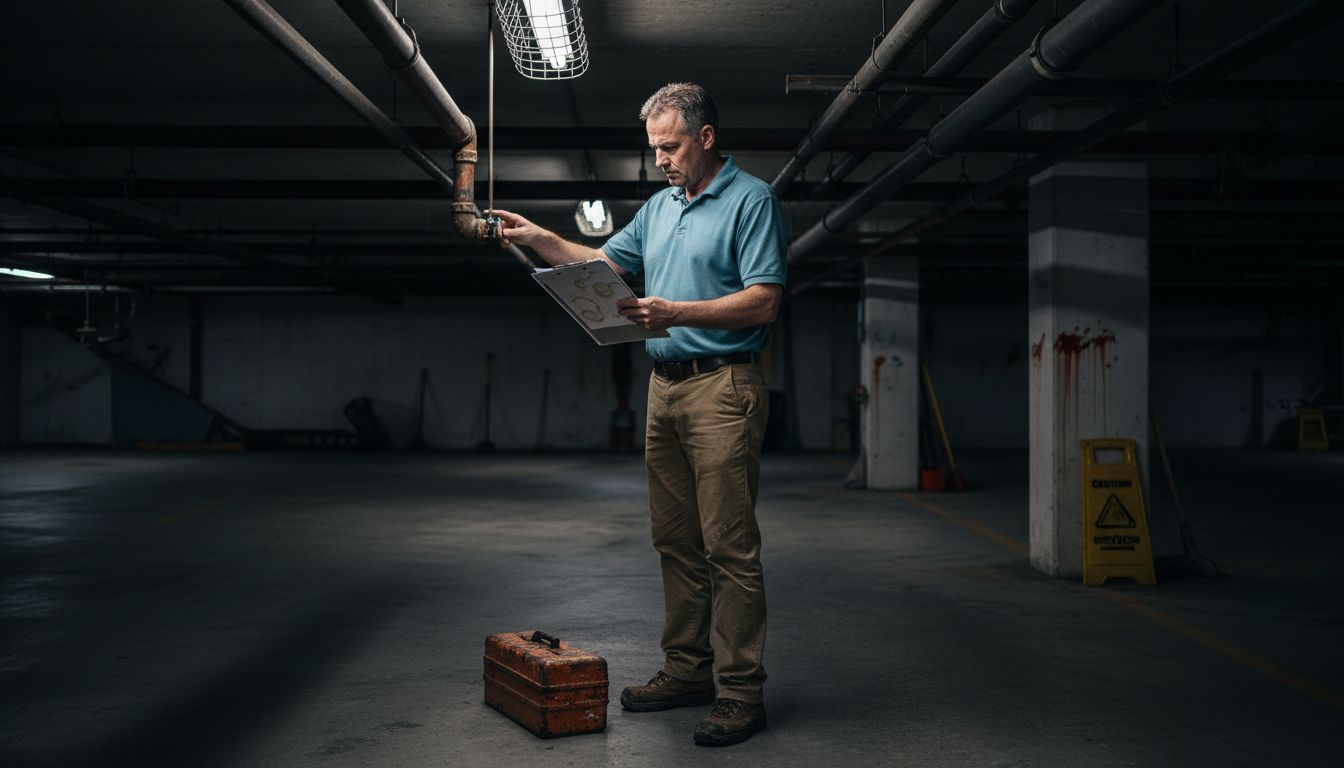
Next, conduct a comprehensive physical inspection of your property’s water infrastructure. Focus on key areas prone to leakage:
- Inspect all visible plumbing connections
- Check water meter readings during periods of zero occupancy
- Look for water stains, mold, or dampness near pipes
- Examine irrigation systems and outdoor water fixtures
Proactively identifying water waste can reduce your property’s annual water expenses by up to 30%.
Pro tip: Consider installing smart water leak sensors that provide real-time monitoring and immediate alerts for potential water waste scenarios.
Step 2: Install smart leak detection and metering systems
Installing smart leak detection systems represents a critical investment for California property managers seeking to minimize water waste and reduce operational expenses. These advanced technologies provide real-time monitoring and immediate insights into your property’s water consumption patterns.
Begin by selecting IoT-enabled water monitoring devices that integrate seamlessly with your existing infrastructure. Automated water management systems leverage sensors that can track water flow, detect irregularities, and generate instant alerts when potential leaks are identified.
Key considerations for installation include:
- Compatibility with your current plumbing infrastructure
- Wireless connectivity capabilities
- Scalability across multiple building zones
- Cloud-based data reporting features
Implement your smart metering solution through these strategic steps:
- Conduct a comprehensive property water system assessment
- Select sensors compatible with your specific building layout
- Plan sensor placement at critical water connection points
- Ensure reliable internet connectivity for real-time monitoring
Smart leak detection technologies can prevent up to 90% of potential water damage before significant losses occur.
Pro tip: Prioritize systems offering professional installation to guarantee optimal sensor placement and maximum detection accuracy.
Step 3: Activate real-time monitoring and automated alerts
Activating comprehensive real-time monitoring systems transforms how you manage water resources across your California property. These advanced technologies provide instantaneous insights and critical notifications about potential water-related issues before they escalate into costly problems.
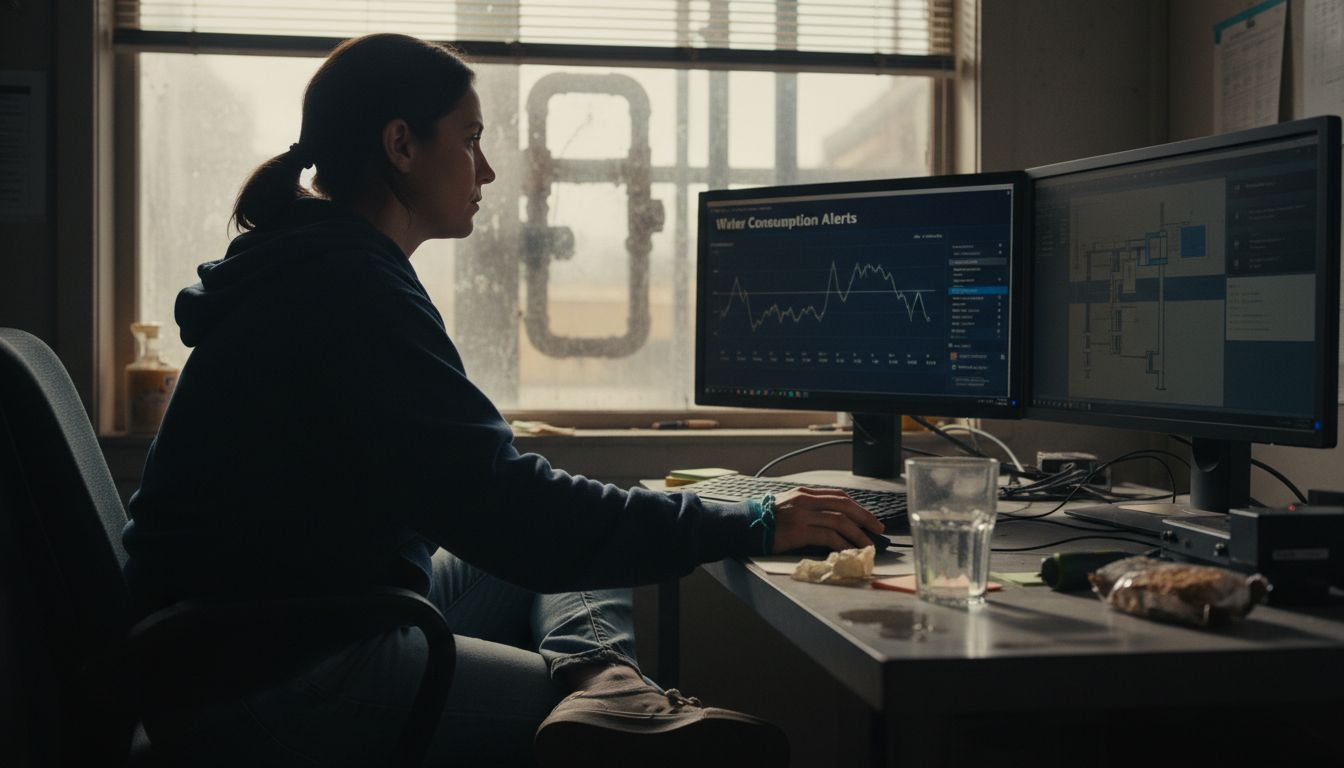
Real-time water monitoring infrastructure enables property managers to receive immediate alerts about unusual water consumption patterns, potential leaks, and system anomalies. By configuring your automated alert system strategically, you can minimize water waste and prevent significant financial losses.
Key configuration steps for your monitoring system include:
Below is a summary of smart water monitoring features and their business impacts:
| Feature | Function | Business Impact |
|---|---|---|
| Real-Time Alerts | Immediate leak notification | Prevents expensive water damage |
| Data Analytics | Tracks and analyzes consumption | Identifies hidden inefficiencies |
| Cloud Reporting | Accessible dashboards | Easy remote property management |
| Mobile Notifications | Instant updates on devices | Enables fast response to issues |
- Set custom alert thresholds based on historical water usage
- Define notification channels (email, SMS, mobile app)
- Configure sensitivity levels for leak detection
- Establish emergency contact protocols
Implement your automated monitoring system through these detailed actions:
- Log into your water monitoring dashboard
- Configure notification preferences
- Test alert system with simulated scenarios
- Validate communication channels
Proactive real-time monitoring can reduce unexpected water damage costs by up to 75%.
Pro tip: Schedule quarterly system audits to ensure your alert thresholds remain accurate and aligned with changing property usage patterns.
Step 4: Analyze water usage data to spot inefficiencies
Understanding and interpreting your property’s water consumption patterns is crucial for identifying potential waste and reducing operational costs. By systematically examining your water usage data, you can uncover hidden inefficiencies that directly impact your bottom line.
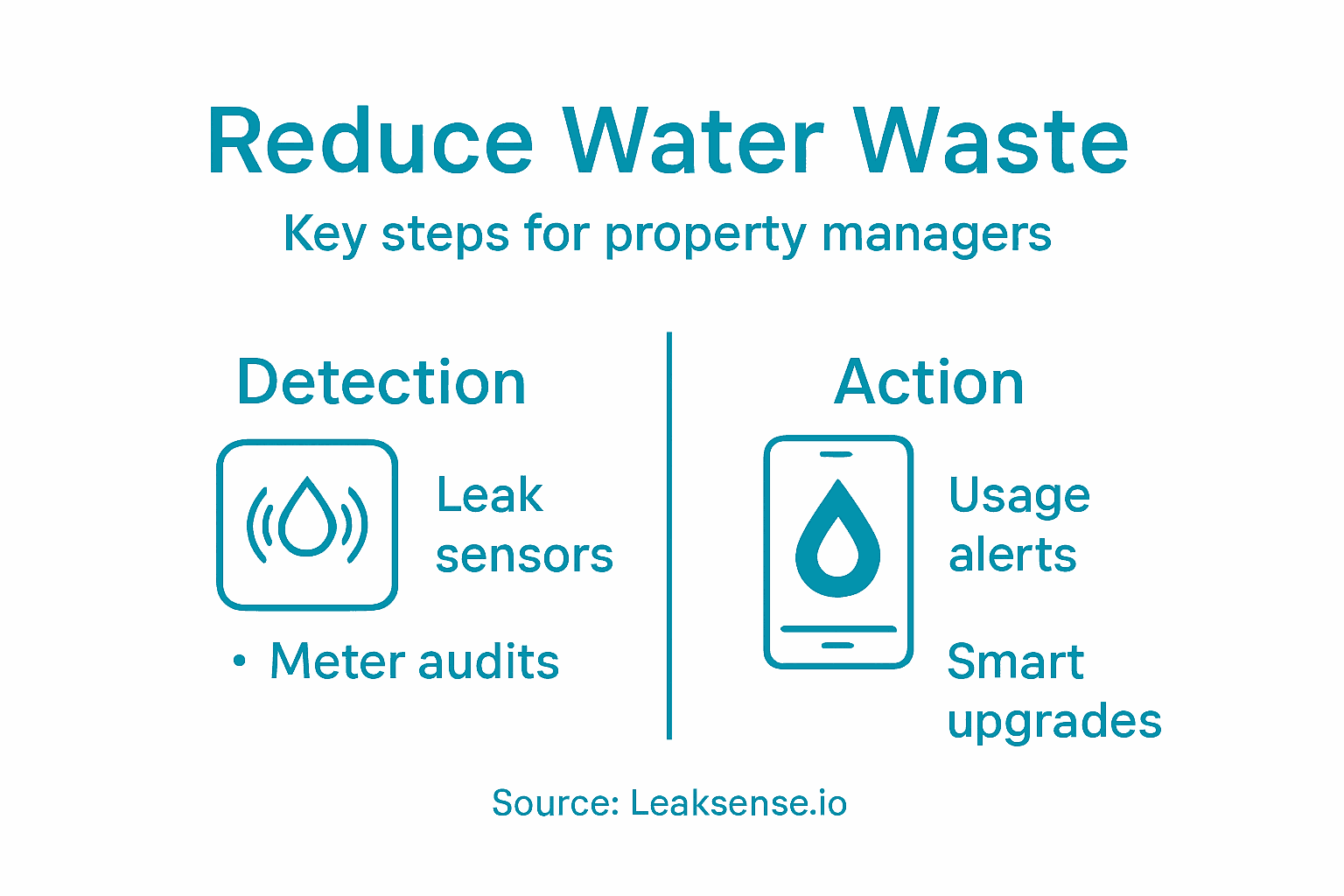
Water audit methodology provides a structured approach to evaluating water consumption across different property zones and identifying potential sources of waste. Start by collecting comprehensive water usage records from the past 12-24 months, looking for consistent patterns, unexpected spikes, and unusual consumption trends.
Key strategies for data analysis include:
- Compare monthly water bills against occupancy rates
- Identify seasonal variations in water consumption
- Track water usage by specific property zones or units
- Calculate average per-unit water consumption
Break down your water usage analysis through these systematic steps:
- Aggregate historical water billing data
- Create visual consumption trend charts
- Calculate baseline water usage benchmarks
- Identify statistically significant anomalies
A comprehensive water usage analysis can reveal potential savings of up to 30% on water-related expenses.
Pro tip: Leverage data visualization tools to transform complex water consumption data into easily understandable graphical representations that highlight inefficiencies.
Step 5: Implement targeted water-saving measures
Transforming water consumption requires strategic and deliberate interventions tailored to your specific property characteristics. By implementing precise water-saving measures, you can dramatically reduce waste and create substantial long-term cost savings for your California multi-unit property.
Water conservation strategies offer multiple approaches to reducing water consumption across residential and commercial properties. Focus on a comprehensive implementation plan that addresses both infrastructure upgrades and behavioral modification techniques.
Key targeted water-saving measures include:
Here’s a quick comparison of water-saving technologies for California properties:
| Technology | Key Benefit | Typical ROI Timeframe | Ideal Application |
|---|---|---|---|
| Smart Leak Detection | Prevents major water losses | 1-2 years | Multi-unit |
| Low-Flow Fixtures | Reduces daily water usage | 6-12 months | Residential units |
| Greywater Recycling | Reuses household water | 2-4 years | Outdoor irrigation |
| Smart Irrigation Controllers | Cuts landscape water waste | 1 year | Outdoor areas |
- Install low-flow fixtures in all units
- Upgrade irrigation systems with smart controllers
- Implement greywater recycling systems
- Replace outdated appliances with water-efficient models
Prioritize your water-saving implementation through these strategic steps:
- Conduct a comprehensive property water audit
- Rank potential interventions by cost-effectiveness
- Develop a phased implementation timeline
- Create tenant education programs
Strategic water conservation can reduce property water expenses by up to 40% within the first year of implementation.
Pro tip: Design incentive programs that reward tenants for demonstrating water conservation behaviors to accelerate adoption of efficiency practices.
Take Control of Water Waste and Cut Costs Today
The article “How to Reduce Property Water Waste for Cost Savings” highlights the critical challenges property managers face in identifying hidden leaks, monitoring real-time water usage, and implementing effective water-saving strategies. If you manage multifamily or commercial properties in California, you know that preventing costly water damage and ensuring compliance with regulations like Title 24 are top priorities. Leaks, inefficient fixtures, and uncontrolled irrigation waste not only increase operational costs but also create stress and risk for your property and tenants.
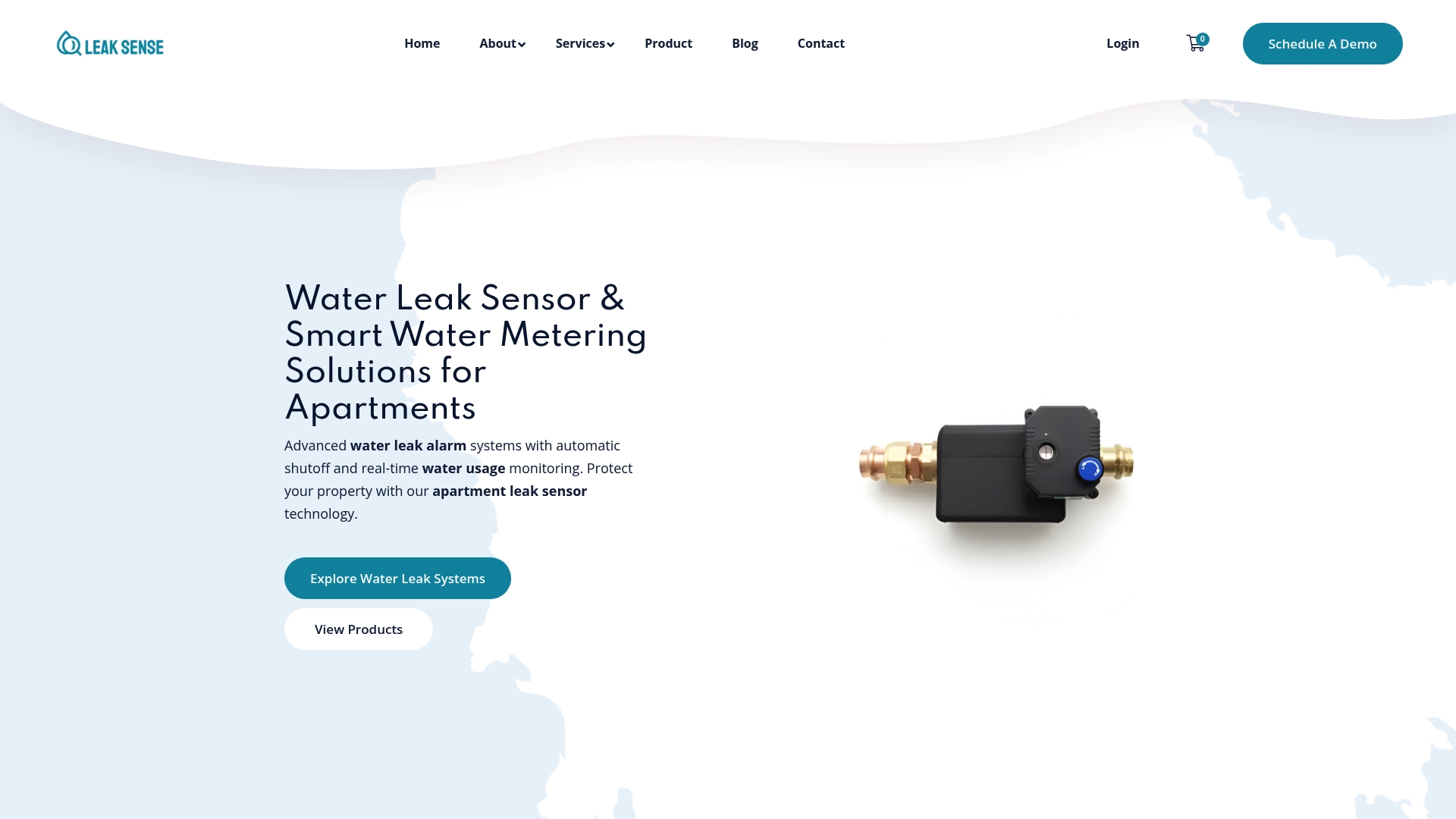
Leaksense.io offers a tailored smart water leak detection and metering platform designed to solve these exact problems. Our IoT-enabled sensors provide continuous real-time monitoring with automated alerts and remote water shutoff capabilities. By partnering with us, you gain access to professional installation, detailed water usage analytics, and tools that help you reduce water bills while supporting environmental sustainability. Take charge of your property’s water management today with proven solutions that protect your investments and promote tenant satisfaction. Visit Leaksense.io now to explore how our smart systems can minimize waste, ensure compliance, and maximize savings.
Frequently Asked Questions
How can I assess my property’s current water usage?
To assess your property’s current water usage, gather historical water bills for the past 12-24 months and look for unusual patterns or spikes. Analyze water consumption across different areas of the property to identify zones with potential leaks or inefficiencies.
What are common strategies to detect water leaks in my property?
Common strategies to detect water leaks include inspecting plumbing connections for visible signs of damage, checking water meters during periods of zero occupancy, and looking for water stains or mold near pipes. Conduct a physical inspection in key areas like bathrooms, kitchens, and irrigation systems to spot potential leaks.
How can I implement real-time monitoring for water usage?
You can implement real-time monitoring by installing IoT-enabled water sensors that track water flow and notify you of irregularities. Plan sensor placement at critical connection points and ensure a reliable internet connection for consistent alerts.
What actions should I take after analyzing water usage data?
After analyzing water usage data, identify patterns and anomalies to determine specific areas of excess use. Based on your findings, implement targeted water-saving measures, such as upgrading fixtures or adjusting irrigation practices, to reduce waste by up to 30% in the first year.
How do I educate tenants about water conservation efforts?
To educate tenants about water conservation efforts, create informative programs that explain the importance of saving water and the benefits of efficient practices. Consider implementing incentive programs that reward tenants for reducing water usage and fostering a culture of conservation throughout the property.