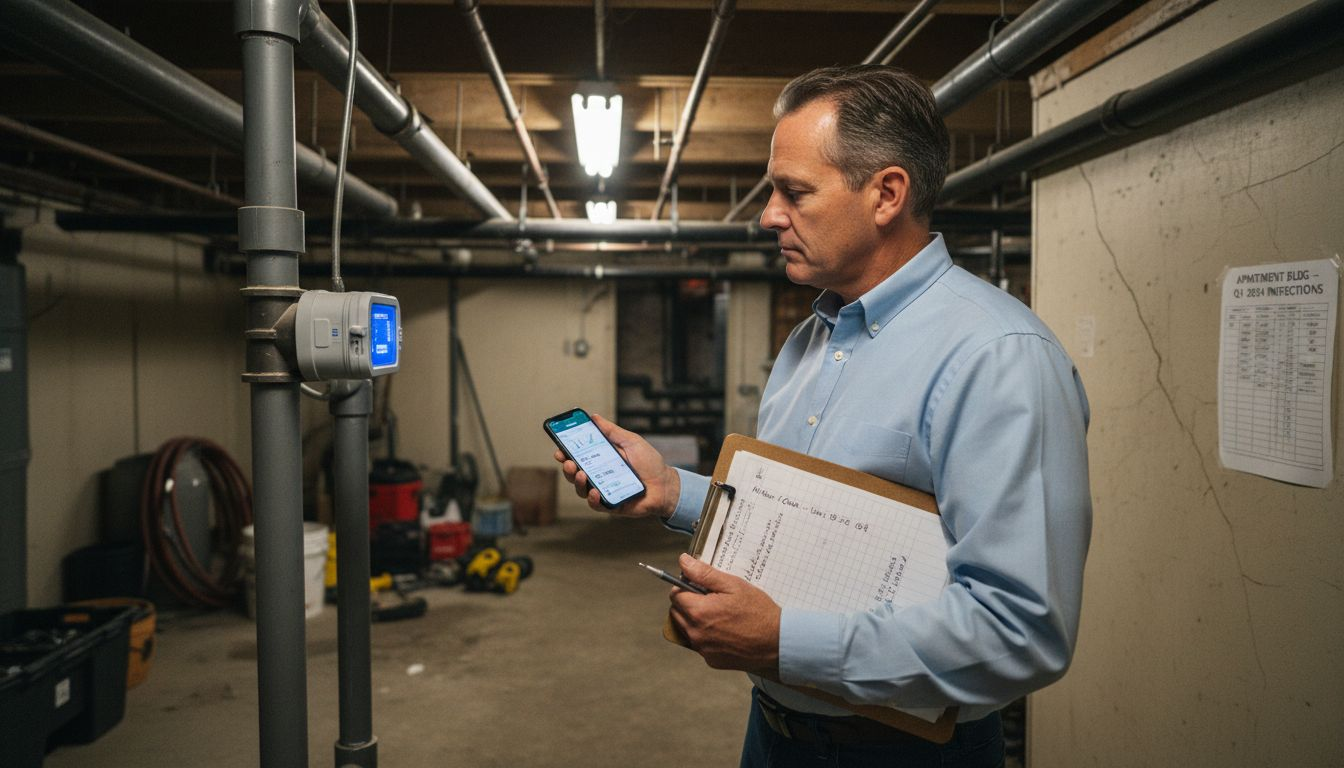
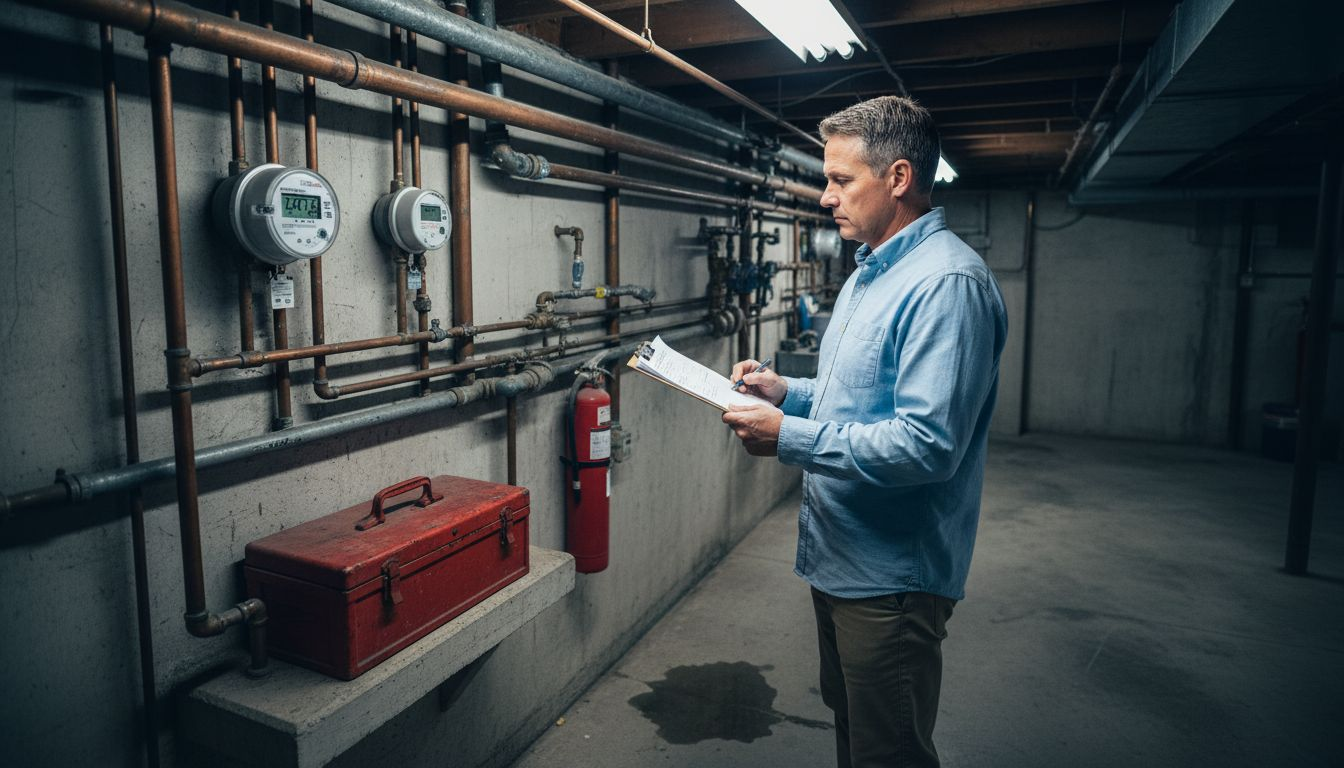
Soaring water costs and the threat of hidden leaks constantly challenge property managers across California. As drought conditions persist, achieving both regulatory compliance and efficient water use demands more than guesswork. Real-time monitoring and advanced metering technologies are now reshaping how multifamily buildings track, manage, and reduce water consumption while helping owners meet strict Title 24 standards. Discover how these intelligent systems empower you to protect your property, your budget, and your compliance record.
- Defining Water Usage Monitoring Systems
- Types of Sensors And Metering Technologies
- How Real-Time Monitoring Prevents Water Damage
- Regulatory Compliance And Title 24 Standards
- Financial Impact And Tenant Billing Implications
- Avoiding Common Mistakes In Water Management
Key Takeaways
| Point | Details |
|---|---|
| Importance of Monitoring Systems | Water usage monitoring systems are essential for tracking consumption, preventing leaks, and enabling proactive water management, especially in drought-prone areas like California. |
| Types of Metering Technologies | Various water metering technologies, such as Ultrasonic and Electronic meters, offer accuracy and require minimal maintenance, benefiting property management. |
| Regulatory Compliance | Adhering to Title 24 building standards is critical for property managers to avoid penalties and enhance water efficiency and sustainability. |
| Financial Benefits of Submetering | Water submetering allows for accurate billing based on actual consumption, encouraging tenant conservation and leading to reduced overall water expenses. |
Defining Water Usage Monitoring Systems
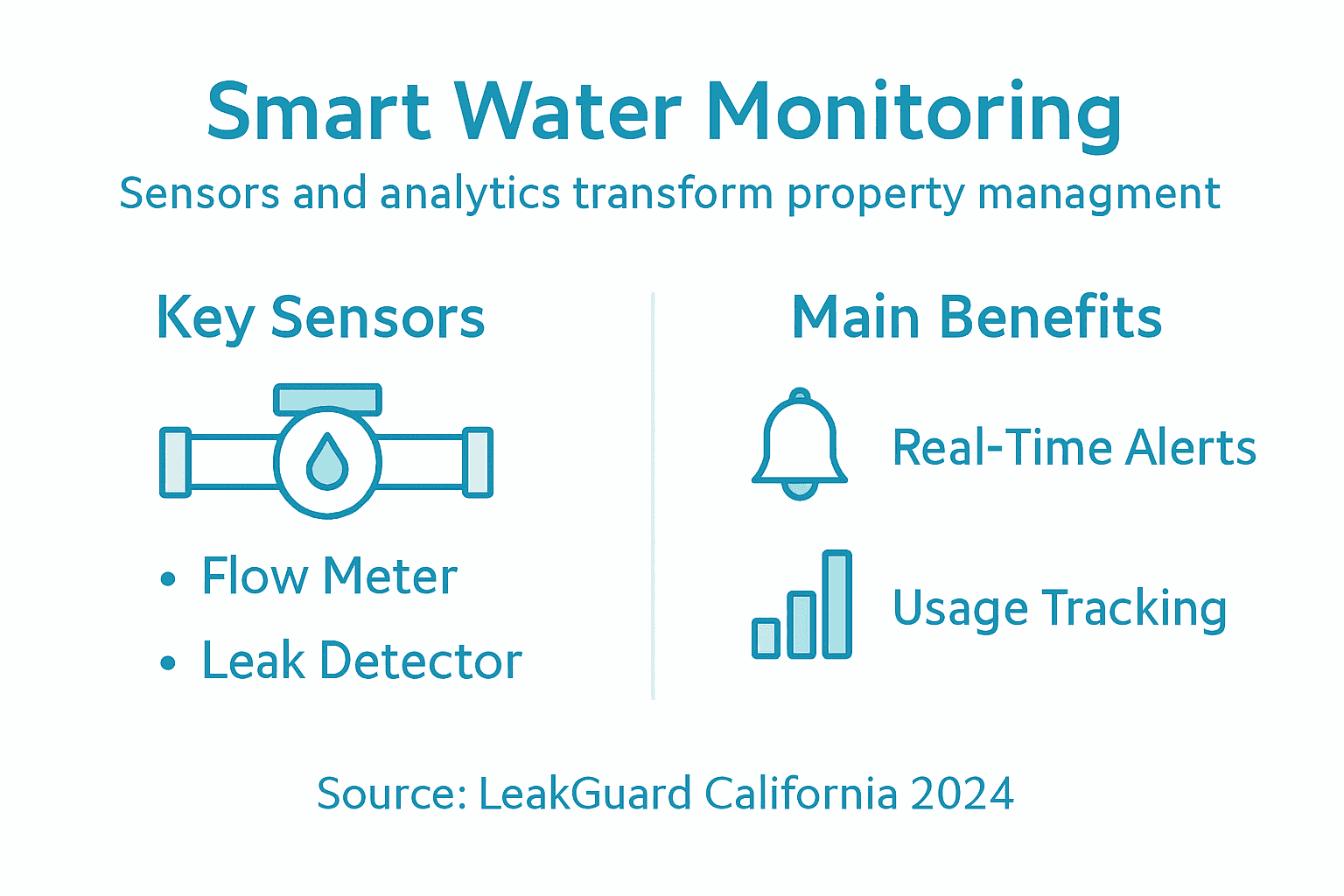
Water usage monitoring systems are sophisticated technological frameworks designed to track, measure, and analyze water consumption across residential and commercial properties. In California, these systems have become increasingly critical due to ongoing drought conditions and stringent water conservation regulations. The primary goal of these monitoring solutions is to provide real-time insights into water utilization, detect potential leaks, and enable proactive management of water resources.
A comprehensive water usage monitoring system typically includes several key components:
- Water flow sensors that measure precise water consumption
- Digital meters capable of tracking usage in real-time
- Analytics platforms for detailed consumption reporting
- Automated leak detection mechanisms
- Remote monitoring capabilities
These systems go beyond simple measurement, offering comprehensive water management strategies that enable property managers to understand consumption patterns, identify inefficiencies, and implement targeted conservation strategies.
Modern water monitoring technologies leverage advanced IoT sensors and cloud-based analytics to transform raw data into actionable insights. Property managers can now receive instant alerts about abnormal water usage, potential leaks, and consumption trends, allowing for rapid intervention and cost management.
Pro tip: Implement a comprehensive water monitoring system before peak summer months to maximize water conservation and prevent unexpected infrastructure damage.
Types of Sensors and Metering Technologies
In California’s evolving water management landscape, advanced sensor and metering technologies have become increasingly sophisticated, offering property managers unprecedented insights into water consumption patterns. Advanced Metering Infrastructure (AMI) represents a technological leap forward, transforming traditional water monitoring approaches with cutting-edge digital solutions.
Water metering technologies in California can be categorized into several primary types:
- Displacement meters
- Oscillating piston designs
- Nutating disc mechanisms
- Velocity-based meters
- Single-jet meters
- Multi-jet meters
- Turbine meters
- Electronic meters
- Electromagnetic sensors
- Ultrasonic water meters
These technologies offer distinct advantages for property managers seeking comprehensive water usage tracking. Ultrasonic and electromagnetic meters, for instance, provide exceptional accuracy by measuring water flow without mechanical moving parts, reducing maintenance requirements and potential mechanical failures.
Modern smart water meter systems integrate multiple technological capabilities, enabling real-time data transmission, automated leak detection, and detailed consumption analytics. These systems not only track water usage but also provide instant alerts about potential infrastructure issues, helping property managers proactively manage their water resources and minimize unexpected expenses.
Here’s a quick comparison of common water meter technologies and their typical applications:
| Meter Type | Key Benefit | Best Application |
|---|---|---|
| Displacement Meter | High accuracy for low flows | Residential units |
| Velocity Meter | Suitable for high volume usage | Commercial properties |
| Electronic Meter | Minimal maintenance needed | Smart buildings, new installs |
| Ultrasonic Meter | No moving parts, precise data | Retrofit projects, campuses |
Pro tip: Select water metering technologies that offer compatibility with existing building management systems to maximize integration and data analysis capabilities.
How Real-Time Monitoring Prevents Water Damage
Water damage represents one of the most significant and costly risks for California property managers, with potential losses ranging from minor repairs to complete structural devastation. Real-time water monitoring systems provide a critical technological solution that transforms reactive maintenance into proactive risk management.
The key advantages of real-time water damage prevention include:
- Immediate leak detection
- Sensors identify water flow anomalies within seconds
- Automated alerts sent to property management
- Precise location tracking
- Pinpoint exact source of potential water damage
- Minimize investigative time and repair costs
- Continuous system surveillance
- 24/7 monitoring of water infrastructure
- Comprehensive protection against unexpected failures
Modern smart monitoring technologies leverage artificial intelligence and advanced sensor networks to provide unprecedented insights into water system performance. These systems can detect microscopic leaks, predict potential failures, and automatically shut off water supply to prevent extensive damage, potentially saving property managers thousands of dollars in repair costs.
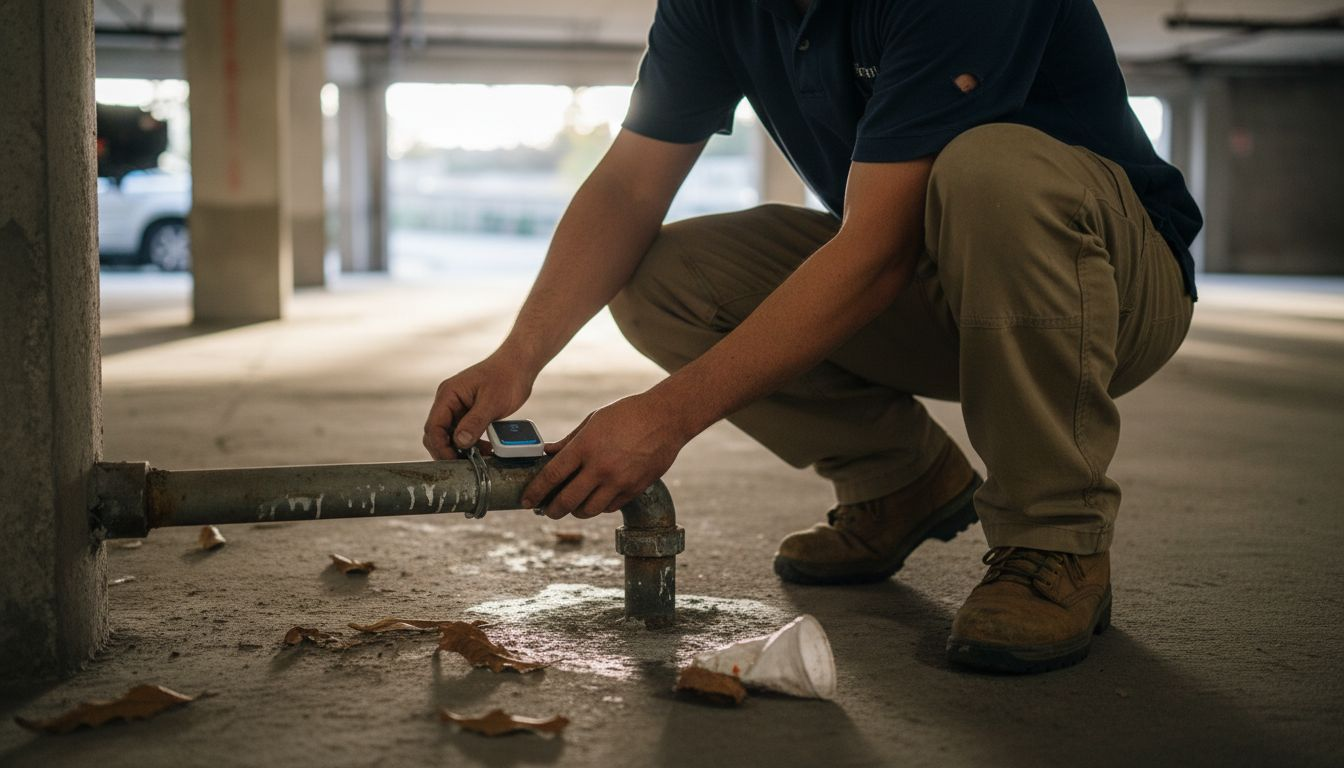
By integrating real-time monitoring, California property managers can significantly reduce their risk exposure, lower insurance premiums, and demonstrate a commitment to sustainable property management practices. The ability to instantly respond to water-related incidents transforms traditional maintenance approaches, creating more resilient and efficient building management strategies.
Pro tip: Configure monitoring systems to send instant notifications to multiple contacts to ensure rapid response during potential water emergencies.
Regulatory Compliance and Title 24 Standards
California’s water management landscape is increasingly defined by stringent regulatory requirements designed to promote conservation and sustainable infrastructure. Title 24 building standards represent a critical framework that mandates water efficiency across residential and commercial properties, compelling property managers to adopt advanced monitoring technologies.
Key compliance requirements under Title 24 include:
- Water use efficiency measures
- Installation of low-flow fixtures
- Advanced water metering systems
- Mandatory water consumption reporting
- Technological infrastructure standards
- Submetering requirements
- Real-time water consumption tracking
- Automated leak detection systems
- Sustainability performance metrics
- Reduction in water waste
- Energy-efficient water management
- Comprehensive usage documentation
The 2025 edition of Title 24 introduces more comprehensive regulations that directly impact property managers, requiring not just measurement but proactive water resource management. These standards transform water monitoring from an optional practice to a mandatory operational requirement, with significant implications for building design, maintenance, and operational protocols.
Non-compliance can result in substantial financial penalties, decreased property valuation, and potential legal challenges. By implementing robust water monitoring systems that meet or exceed Title 24 standards, property managers can simultaneously achieve regulatory compliance, reduce operational costs, and contribute to California’s broader water conservation objectives.
Pro tip: Conduct a comprehensive water systems audit annually to ensure ongoing compliance with the latest Title 24 regulatory updates.
Financial Impact and Tenant Billing Implications
Water submetering represents a sophisticated financial strategy for property managers seeking to optimize utility cost recovery and promote responsible water consumption. California water submetering regulations mandate precise tracking of individual unit water usage, transforming traditional billing approaches and creating significant economic incentives for conservation.
Key financial benefits of implementing water submetering include:
- Direct cost recovery
- Accurate tenant billing based on actual consumption
- Elimination of shared utility cost models
- Transparent pricing mechanisms
- Operational cost reduction
- Decreased overall water expenses
- Lower maintenance and repair costs
- Incentivized tenant conservation behavior
- Financial risk mitigation
- Reduced unexpected infrastructure damage costs
- Improved property asset management
- Enhanced long-term property value
Modern water monitoring technologies enable property managers to implement nuanced billing strategies that align with California’s conservation objectives. By providing tenants with granular insights into their water consumption, these systems create a direct financial incentive for responsible resource management, ultimately benefiting both property owners and residents.
Implementing comprehensive water submetering can result in substantial long-term financial advantages, with some properties reporting up to 30% reduction in water-related expenses. The initial investment in monitoring technologies quickly translates into ongoing operational savings and improved environmental sustainability.
Pro tip: Develop a transparent communication strategy when introducing water submetering to ensure tenant understanding and compliance with new billing practices.
Avoiding Common Mistakes in Water Management
Property managers in California face complex challenges in maintaining water management compliance, with potential legal and financial risks lurking in overlooked details. Water management regulatory compliance demands meticulous attention to prevent costly enforcement actions and infrastructure failures.
Common water management mistakes include:
- Monitoring Failures
- Inconsistent data collection
- Inadequate leak detection protocols
- Insufficient record-keeping
- Regulatory Non-Compliance
- Outdated permit documentation
- Missed reporting deadlines
- Incomplete water usage tracking
- Infrastructure Negligence
- Delayed maintenance repairs
- Ignoring minor system anomalies
- Postponing equipment upgrades
Successful water management requires a proactive approach that anticipates potential issues before they escalate. Advanced monitoring technologies enable property managers to transform reactive maintenance into strategic infrastructure protection, identifying and addressing potential problems quickly and efficiently.
Each overlooked water management detail can translate into significant financial risk. A single undetected leak can result in thousands of dollars in damage, while regulatory non-compliance can trigger substantial penalties. By implementing comprehensive monitoring strategies and maintaining rigorous documentation, property managers can mitigate these risks and demonstrate responsible resource management.
The table below summarizes the risks of poor water management and the advantages of advanced monitoring:
| Risk Without Monitoring | Resulting Issue | How Advanced Monitoring Helps |
|---|---|---|
| Undetected leaks | Structural damage, high costs | Instant alerts, early intervention |
| Regulatory non-compliance | Fines, legal challenges | Automates reporting, ensures records |
| Shared tenant billing | Disputes, wasted resources | Enables accurate submetered invoices |
Pro tip: Develop a comprehensive water management checklist that includes monthly system audits, regulatory compliance reviews, and preventative maintenance schedules.
Take Control of Water Usage to Prevent Damage and Cut Costs Today
California property managers face growing challenges from strict Title 24 regulations and costly water damage risks due to undetected leaks and inefficient water use. If you want to transform your reactive water management into a proactive strategy that ensures regulatory compliance and lowers operational expenses, smart water monitoring is essential. Systems that offer real-time leak detection, automated alerts, and remote shutoff capabilities make it easier than ever to avoid expensive repairs while supporting sustainable water conservation.
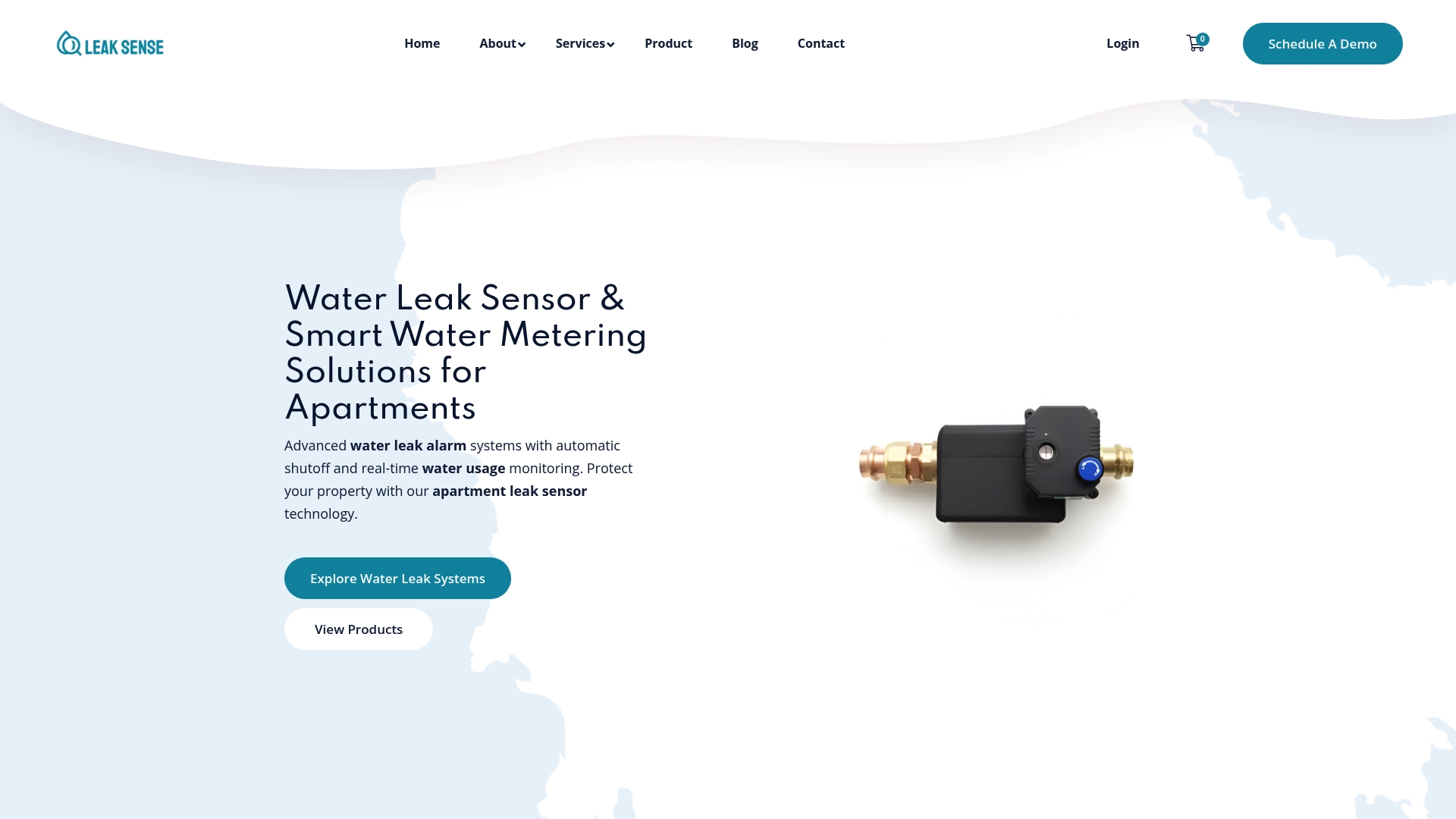
Don’t wait for costly water incidents to happen. Explore how smart water leak detection and metering solutions from Leaksense.io provide California multifamily and commercial property managers with the tools to monitor usage continuously, simplify tenant billing, and maintain full compliance with evolving regulatory standards. Act now to protect your investments and improve your property’s efficiency with proven, IoT-enabled technologies. Visit Leaksense.io and discover how you can start saving water and money immediately.
Frequently Asked Questions
Why is water usage monitoring important in properties?
Water usage monitoring is crucial for tracking real-time consumption, identifying leaks, and implementing conservation strategies. It helps property managers reduce water waste, lower operational costs, and ensure compliance with regulations.
What technologies are used in water usage monitoring systems?
Water usage monitoring systems typically use technologies such as water flow sensors, digital meters, automated leak detection systems, and advanced metering infrastructure (AMI) for comprehensive tracking and analysis of water consumption.
How can real-time monitoring prevent water damage?
Real-time monitoring detects water flow anomalies immediately, allowing for automated alerts to property managers. This helps pinpoint the source of leaks, ensuring rapid intervention and minimizing damage and associated repair costs.
What are the benefits of implementing water submetering for tenants?
Water submetering enables accurate billing based on individual tenant consumption, promotes responsible water use, and can lead to lower overall utility costs while improving financial transparency for both property managers and residents.
Recommended
- Water Submetering & Leak Detection for Apartments | LeakSense
- Water Metering Systems for Apartments | Compare Plans | LeakSense
- California Water Compliance Support | Title 24 & CPUC Standards | LeakSense
- Water Leak Sensors & Smart Water Metering | LeakSense California
- Corrosion Protection: Safeguarding Water Facilities