

Water can silently threaten California communities if overlooked, especially for HOA board members juggling resident safety, property value, and legal responsibilities. With flood risks affecting all counties and strict regulations shaping maintenance, staying ahead requires more than quick fixes. This guide highlights actionable, California-specific methods for assessing vulnerabilities, using smart technologies, and achieving regulatory compliance to protect your multifamily buildings from costly water damage.
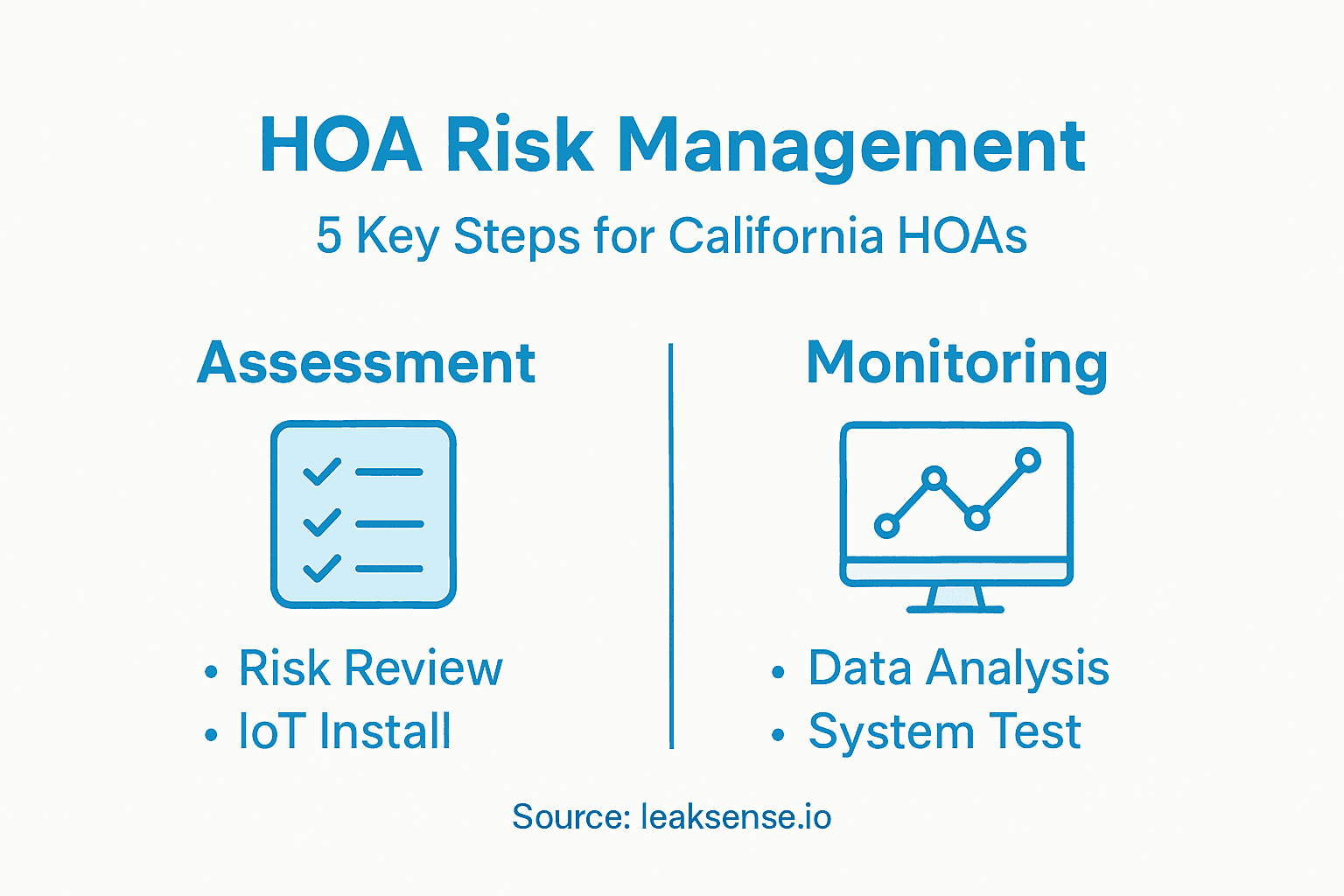
- Step 1: Assess Water-Related Risks In Your Buildings
- Step 2: Implement Iot Water Detection And Shutoff Systems
- Step 3: Establish Regulatory Compliance Protocols
- Step 4: Monitor And Analyze Water Usage Data
- Step 5: Verify Effectiveness Through Regular System Tests
Quick Summary
| Key Point | Explanation |
|---|---|
| 1. Assess water-related risks regularly | Conduct thorough evaluations of drainage, plumbing, and flood exposure to prevent significant damage. |
| 2. Implement IoT water detection systems | Utilize advanced technologies for real-time monitoring and automatic shutdown to mitigate leaks. |
| 3. Establish regulatory compliance protocols | Create detailed practices to meet California’s water and safety regulations and avoid penalties. |
| 4. Monitor and analyze water usage data | Track usage patterns to identify inefficiencies and implement water conservation strategies. |
| 5. Verify effectiveness through regular testing | Regularly test systems to ensure performance and compliance, safeguarding community assets. |
Step 1: Assess water-related risks in your buildings
Understanding and mitigating water-related risks is critical for California HOAs to protect property values and resident safety. By systematically evaluating potential water damage scenarios, you can develop proactive strategies that minimize financial and structural vulnerabilities.
Begin by conducting a comprehensive assessment of your property’s water management infrastructure. This involves examining several key risk factors:
- Surface drainage patterns in and around your buildings
- Age and condition of plumbing systems
- Proximity to flood zones and groundwater levels
- Historical water damage incidents
- Building design and potential water intrusion points
California’s unique environmental conditions require special attention. flood risks affect all counties through various mechanisms like extreme rainfall, infrastructure failures, and climate change impacts. HOA boards should prioritize understanding these localized risks.
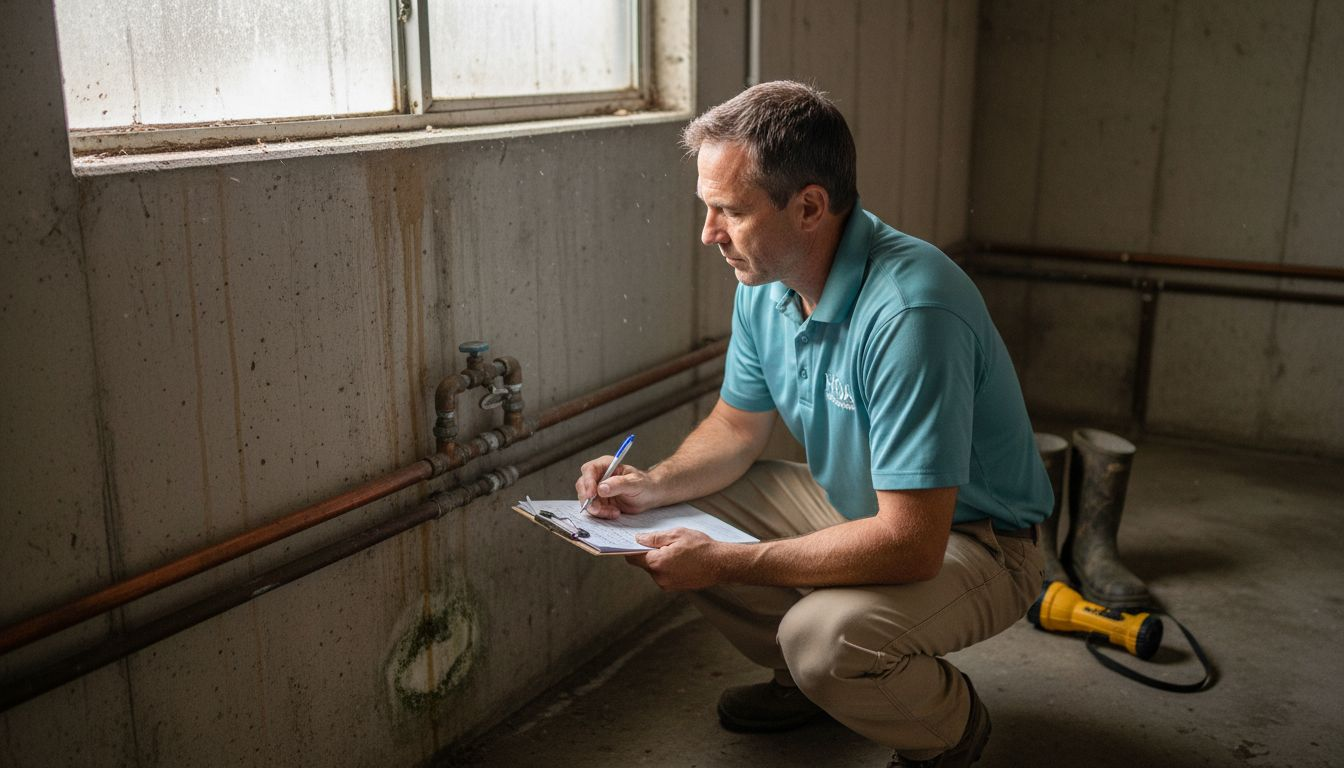
Here’s a comparison of common water-related risks and their potential HOA impacts:
| Water Risk Scenario | Possible Consequence | Long-Term Impact |
|---|---|---|
| Poor surface drainage | Basement flooding | High repair costs |
| Aging plumbing | Pipe bursts and leaks | Insurance premium increases |
| Flood zone proximity | Flooding from storms | Property value reduction |
| Previous water incidents | Recurring mold or rot | Expensive remediation |
| Design flaws | Persistent water intrusion | Ongoing maintenance |
To effectively assess risks, develop a systematic inspection protocol that includes:
- Professional infrastructure assessment
- Detailed property drainage mapping
- Review of historical water-related maintenance records
- Analysis of potential water flow disruptions
Water management is not just about preventing damage - it’s about protecting your community’s most valuable asset.
Pro tip: Consider engaging a professional water risk consultant who specializes in California multifamily properties to conduct a comprehensive risk assessment.
Step 2: Implement IoT water detection and shutoff systems
Implementing advanced IoT water detection technologies represents a critical strategy for California HOAs to proactively manage water-related risks and prevent costly infrastructure damage. These intelligent systems offer real-time monitoring and automated response capabilities that can dramatically reduce potential water-related losses.
Advanced Metering Infrastructure (AMI) enables precise water usage tracking and leak detection through smart sensor technologies. Key implementation steps include:
- Select compatible IoT water sensors that integrate with your existing building infrastructure
- Identify critical water flow and potential leak points
- Install sensors with professional technical support
- Configure automated shutoff protocols
- Establish real-time monitoring and alert systems
The technical implementation involves several crucial components:
- Evaluate sensor compatibility with your building’s plumbing system
- Map potential water intrusion zones
- Install sensors at strategic monitoring points
- Connect sensors to central monitoring platform
- Test and validate system responsiveness
Proactive water management through IoT technologies can prevent thousands of dollars in potential damage and insurance claims.
Pro tip: Choose IoT water detection systems that offer professional installation and include comprehensive training for your maintenance team to ensure optimal system performance.
Step 3: Establish regulatory compliance protocols
Navigating California’s complex regulatory landscape requires HOAs to develop comprehensive compliance protocols that address water management, structural safety, and environmental standards. Understanding and implementing these protocols is crucial for protecting your community and avoiding potential legal complications.
Structural inspection mandates require HOAs to maintain meticulous documentation and proactively manage building safety requirements. Key elements of establishing robust compliance protocols include:
- Document retention and management for inspection reports
- Create systematic tracking mechanisms for regulatory deadlines
- Develop comprehensive repair and remediation workflows
- Train board members and maintenance staff on compliance requirements
- Establish regular internal audit processes
The compliance protocol implementation involves several critical steps:
- Review all applicable California water and building safety regulations
- Conduct a comprehensive gap analysis of current practices
- Develop standardized compliance documentation templates
- Create a centralized compliance tracking system
- Schedule regular internal and external compliance reviews
Proactive regulatory compliance is not just about avoiding penalties - it’s about ensuring the long-term safety and value of your community.
Pro tip: Consider engaging a professional compliance consultant who specializes in California HOA regulations to help streamline your regulatory documentation and review processes.
Step 4: Monitor and analyze water usage data
Effective water management for California HOAs demands sophisticated data monitoring and analysis strategies that transform raw water usage information into actionable insights. By implementing systematic tracking and evaluation methods, you can identify inefficiencies, detect potential leaks, and optimize overall water consumption.
Water use efficiency data platforms provide HOAs with comprehensive tools to track and analyze water consumption patterns across their properties. Essential monitoring strategies include:
- Establish baseline water consumption metrics for each property
- Implement real-time digital tracking systems
- Create comparative performance dashboards
- Set targeted water reduction goals
- Develop anomaly detection protocols
The data monitoring and analysis process requires several strategic steps:
- Select appropriate water monitoring technology
- Configure data collection parameters
- Set up automated reporting mechanisms
- Conduct regular performance reviews
- Translate data insights into actionable strategies
Data-driven water management can reduce consumption by up to 30% and minimize potential infrastructure damage.
Pro tip: Invest in IoT-enabled water monitoring systems that offer automated analytics and real-time alerts to streamline your data tracking and management processes.
This table summarizes the benefits of combining IoT systems with regular monitoring in HOAs:
| Approach | Main Benefit | Added Value |
|---|---|---|
| IoT water detection | Real-time leak alerts | Minimizes downtime and repairs |
| Water use analytics | Usage trend identification | Supports targeted conservation |
| Regular system testing | Early issue detection | Ensures regulatory compliance |
| Regulatory tracking technology | Deadline reminders | Reduces risk of penalties |
Step 5: Verify effectiveness through regular system tests
Validating the performance of your water management systems requires a structured approach to testing and verification that goes beyond simple visual inspections. Comprehensive system testing helps California HOAs identify potential vulnerabilities, ensure regulatory compliance, and maintain the long-term reliability of water infrastructure.
Inspection rules and compliance documentation mandate rigorous verification processes that protect both residents and property management entities. Critical testing strategies include:
- Schedule comprehensive diagnostic assessments
- Perform pressure and flow rate evaluations
- Test automated shutoff and leak detection mechanisms
- Validate sensor accuracy and responsiveness
- Document and archive all testing results
The system verification process involves several precise steps:
- Develop a detailed testing protocol
- Select qualified professional inspectors
- Conduct systematic functionality tests
- Analyze test data and performance metrics
- Create remediation plans for identified issues
Proactive system testing is not an expense - it’s an investment in your property’s long-term resilience and safety.
Pro tip: Create a standardized testing checklist that can be consistently applied across all properties to ensure uniform and comprehensive system verification.
Protect Your California HOA from Costly Water Damage with Smart Solutions
Managing water-related risks is a top priority for California HOAs seeking to safeguard property value and comply with stringent regulatory requirements like Title 24. From early leak detection and automated shutoff systems to real-time water usage analytics, proactive water management transforms potential crises into controlled situations. If you want to eliminate uncertainty around water leaks and reduce costly repairs highlighted in the article’s step-by-step risk management plan, specialized IoT-based solutions are your strongest ally.
Leaksense.io offers tailored smart water leak detection and metering systems designed specifically for multifamily buildings and commercial properties in California. Our professional installation and cloud-connected monitoring empower property managers to detect leaks immediately, automate shutoffs remotely, and maintain compliance with state regulations all while optimizing water conservation efforts.
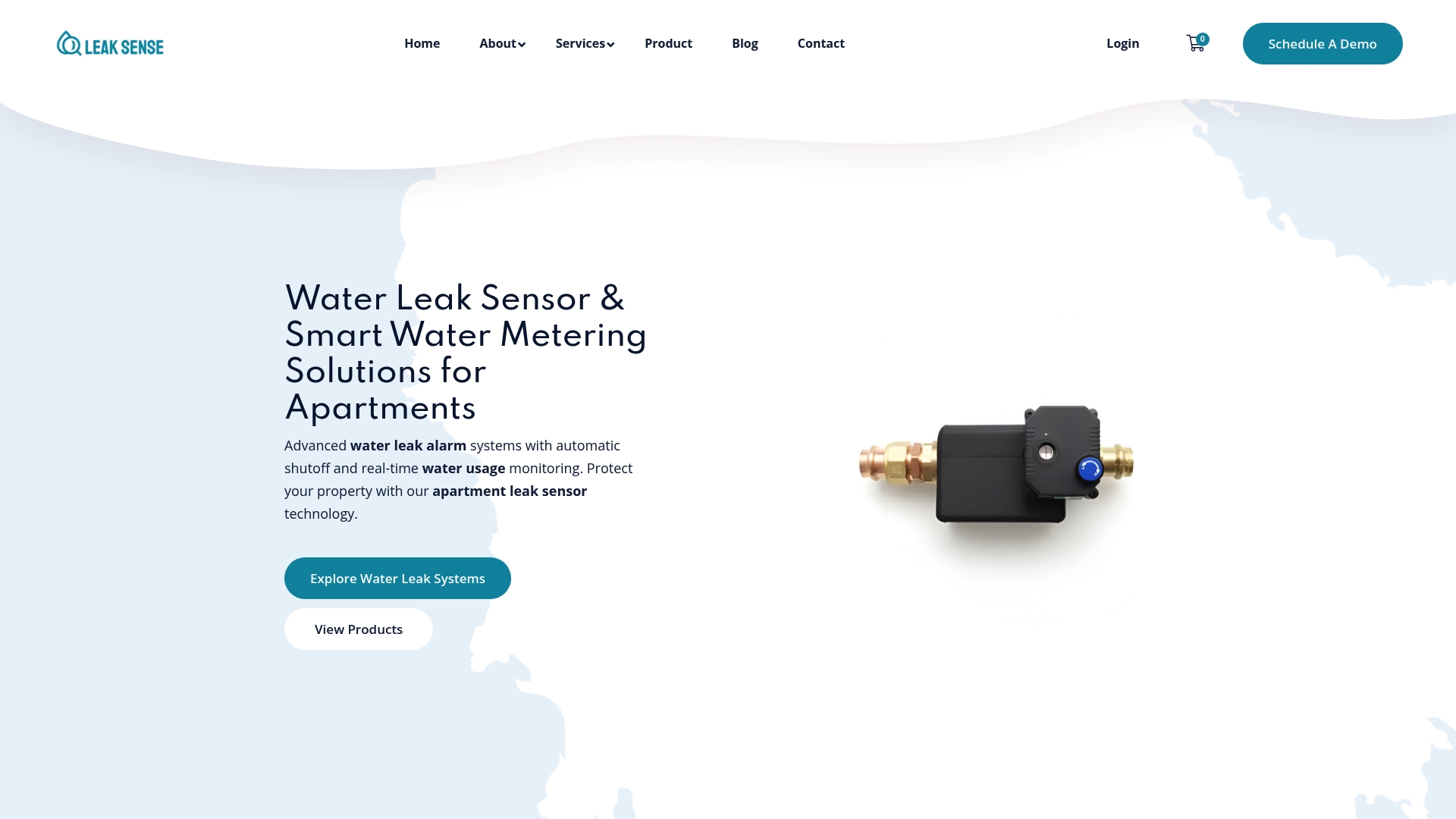
Take control of your HOA’s water safety today. Discover how our expert solutions align with each risk management step you need, including regulatory compliance and regular system verification, by visiting Leaksense.io. Learn more about the benefits of combining IoT sensors with automated alerts on our landing page and start protecting your community before the next water incident strikes.
Frequently Asked Questions
How can an HOA assess water-related risks in its buildings?
To assess water-related risks, an HOA should conduct a comprehensive inspection of its property’s water management infrastructure. Start by evaluating surface drainage patterns, the condition of plumbing systems, and historical water damage incidents to identify potential vulnerabilities and develop targeted mitigation strategies.
What steps should an HOA take to implement IoT water detection systems?
An HOA should begin by selecting compatible IoT water sensors that integrate with existing plumbing. Then, identify key water flow points, install the sensors, and configure automated shutoff protocols to create an efficient monitoring system that can prevent costly water damage.
How can an HOA ensure compliance with California water management regulations?
To ensure compliance, an HOA must review applicable California water and building safety regulations, keeping careful documentation of inspections and repairs. Develop streamlined compliance tracking systems and regular internal audits to maintain adherence to regulations and protect the community’s interests.
What are effective methods for monitoring and analyzing water usage data?
Effective monitoring requires establishing baseline water consumption metrics and utilizing real-time tracking systems. Create performance dashboards to visualize data trends and identify inefficiencies to make informed decisions and set targeted water reduction goals.
How often should an HOA verify the effectiveness of its water management systems?
An HOA should schedule comprehensive testing of its water management systems at least once a year. Conduct diagnostic assessments, validate sensor functionality, and document results to identify issues early and maintain the systems’ long-term reliability and compliance with regulations.