
Water damage can strike unexpectedly, leaving property managers scrambling to address repairs and regulatory requirements. In California, where strict standards shape multifamily building management, implementing smart leak detection is more than just a precaution. IoT leak alarms provide real-time alerts and automate responses, minimizing costly damage while supporting Title 24 compliance. Discover how advanced leak alarm systems protect your assets, keep residents safe, and simplify risk management in today’s competitive housing market.
- Core Functions of Leak Alarms Explained
- Types of Leak Detection Technologies Used
- How IoT Leak Alarms Operate in Multifamily
- California Title 24 Compliance and Leak Alarms
- Insurance, Liability, and Cost Implications
- Best Practices and Common Pitfalls to Avoid
Key Takeaways
| Point | Details |
|---|---|
| Core Functions of Leak Alarms | Leak alarms provide continuous monitoring, immediate detection, automated alerts, and shutoff capabilities to prevent water and gas-related disasters in multifamily properties. |
| IoT Integration | IoT leak alarms enhance property management through real-time data processing, predictive maintenance, and automated response mechanisms for effective water damage prevention. |
| Compliance with Regulations | Adhering to California’s Title 24 standards is essential for leak alarm implementation, ensuring safety and legal compliance throughout multifamily buildings. |
| Financial Impact | Investing in advanced leak detection systems can lead to reduced insurance premiums, liability protection, and long-term cost savings associated with water-related damages. |
Core Functions of Leak Alarms Explained
Leak alarms serve as critical safety and protective technology in multifamily buildings, designed to detect and mitigate potential water and gas-related risks before they escalate into costly disasters. These sophisticated devices represent a proactive approach to property management, enabling early intervention and preventing substantial damage.
Multifamily leak alarms typically perform several core functions:
- Continuous Monitoring: Provide real-time tracking of water flow and potential leak locations
- Immediate Detection: Quickly identify abnormal water usage patterns or active leaks
- Automated Alerts: Send instant notifications to property managers and residents
- Automated Shutoff: Automatically stop water flow when significant leaks are detected
The critical safety function of leak detection systems extends beyond mere water damage prevention. These systems integrate advanced sensor technologies that can distinguish between normal water usage and potential hazardous leaks, providing an essential layer of protection for multifamily properties.
In California, where water conservation and property protection are paramount, leak alarms play an increasingly sophisticated role. Modern systems not only detect leaks but also provide detailed analytics about water consumption, helping property managers optimize resource usage and identify potential inefficiencies.
Key Technical Capabilities include:
- Precision sensor technology
- Wireless connectivity
- Cloud-based monitoring
- Machine learning algorithms for pattern recognition
Leak alarms represent a critical intersection of safety, technology, and resource management in modern multifamily housing.
Pro tip: Install leak alarm sensors in high-risk areas like water heaters, under sinks, and near washing machine connections to maximize early detection potential.
Types of Leak Detection Technologies Used
Leak detection technologies have rapidly evolved, offering multifamily property managers sophisticated solutions to protect against water damage and optimize resource management. These advanced systems leverage cutting-edge sensors and intelligent algorithms to provide comprehensive monitoring and early warning capabilities.
Primary Types of Leak Detection Technologies include:
- Electronic Sensing Systems: Utilize electrical conductivity to detect water presence
- Flow-Based Monitoring: Track water usage patterns and detect abnormal consumption
- Acoustic Sensors: Detect sound frequencies associated with potential leaks
- Pressure Differential Sensors: Measure changes in water system pressure
Water leak sensors utilize advanced detection mechanisms including conductivity, capacitance, and optical sensing technologies. These sophisticated systems integrate seamlessly with building management platforms, enabling real-time monitoring and instant notification protocols for property managers.
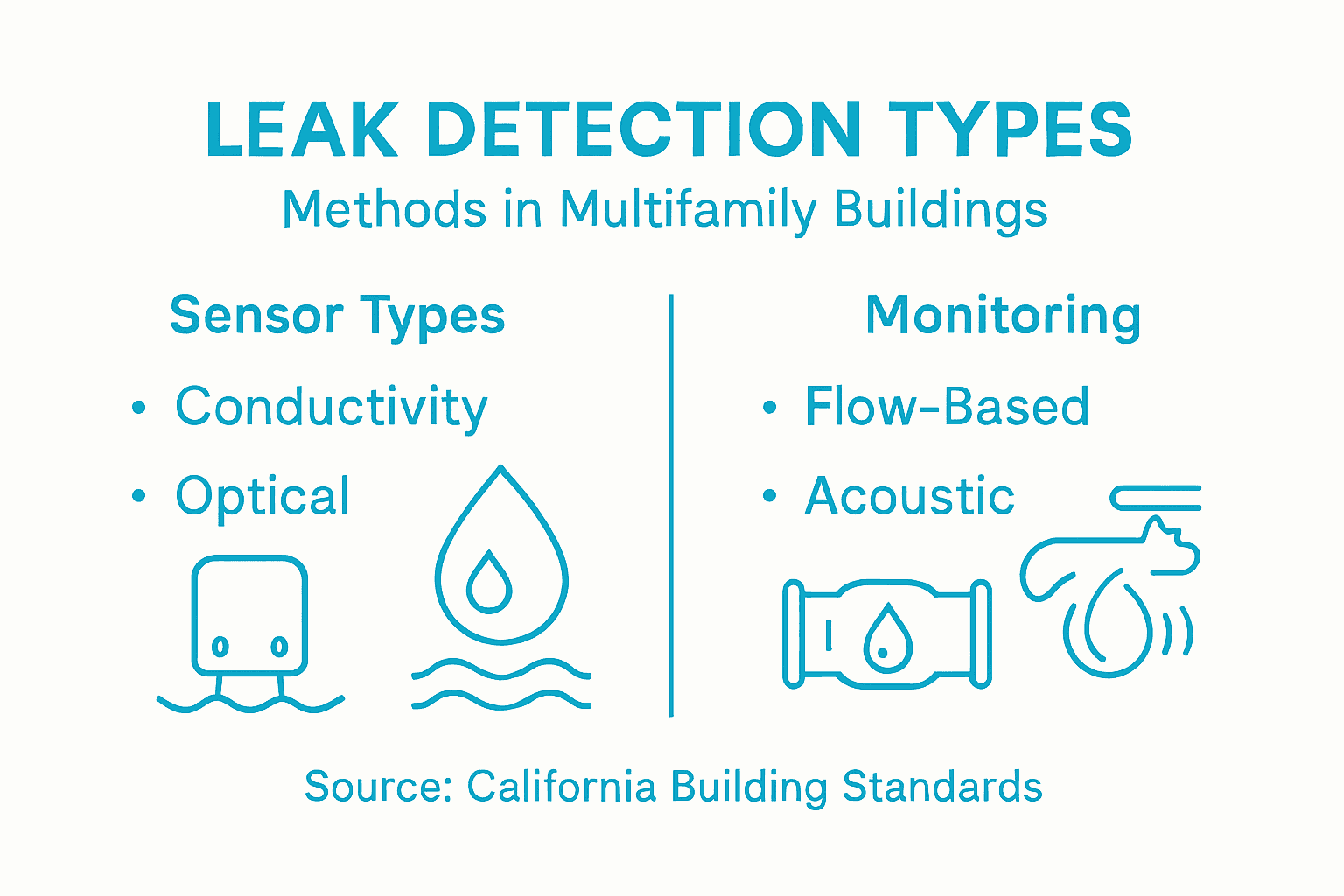
Here’s a summary comparing the main leak detection technologies used in multifamily buildings:
| Technology Type | How It Detects Leaks | Typical Use Case |
|---|---|---|
| Electronic Sensing | Senses electrical signals from water contact | Appliance leak monitoring |
| Flow-Based Monitoring | Analyzes abnormal water patterns | Main supply line supervision |
| Acoustic Sensors | Listens for unusual pipe noises | Hidden pipe leak identification |
| Pressure Differential | Detects sudden pressure drops | Network-wide system integrity |
Electronic Leak Detection (ELD) technologies offer precise monitoring capabilities across different environments. These systems can be categorized into low and high voltage methods, each designed to identify potential breaches in water delivery infrastructure with remarkable accuracy.
Key Technological Innovations in leak detection include:
- Machine learning algorithms for predictive leak identification
- Wireless sensor networks
- Cloud-based analytics platforms
- Multi-parameter sensing technologies
Advanced leak detection represents a critical intersection between technology, property management, and resource conservation.
Pro tip: Implement a multi-layered leak detection strategy by combining different sensor technologies to maximize comprehensive coverage and minimize potential water damage risks.
How IoT Leak Alarms Operate in Multifamily
IoT leak alarms represent a transformative technology for multifamily property management, leveraging advanced sensor networks and intelligent data processing to provide comprehensive water monitoring and damage prevention strategies. These sophisticated systems go far beyond traditional leak detection methods by integrating real-time monitoring, predictive analytics, and automated response mechanisms.
Key Components of IoT Leak Alarm Systems include:
- Smart Sensors: Placed strategically throughout plumbing infrastructure
- Wireless Connectivity: Enables instant data transmission
- Cloud-Based Analytics: Process and interpret sensor data
- Automated Alert Mechanisms: Notify property managers immediately
IoT technology plays a key role in smart building management by connecting leak detection sensors with centralized platforms. These intelligent systems continuously collect environmental data, tracking water flow patterns, pressure changes, and potential anomalies that might indicate emerging infrastructure problems.

Multifamily properties benefit from IoT leak alarm technologies through enhanced predictive maintenance capabilities. By analyzing historical usage data and real-time sensor inputs, these systems can identify potential issues before they escalate, significantly reducing repair costs and minimizing potential water damage.
Operational Stages of IoT Leak Detection include:
- Continuous sensor monitoring
- Data collection and transmission
- Algorithmic analysis of water flow patterns
- Automated alert generation
- Potential automatic water shutoff
Smart leak detection transforms reactive maintenance into proactive risk management for multifamily properties.
Pro tip: Configure IoT leak alarm sensitivity levels to match specific building characteristics and create customized notification protocols for different types of potential water-related incidents.
California Title 24 Compliance and Leak Alarms
California’s Title 24 building standards represent a comprehensive regulatory framework that sets rigorous requirements for safety, energy efficiency, and technological integration in multifamily properties. These standards specifically address leak alarm systems, establishing critical guidelines that property managers must navigate to ensure legal compliance and occupant protection.
Key Compliance Requirements for leak alarms include:
- Performance Specifications: Detailed sensor accuracy standards
- Installation Protocols: Precise placement and mounting requirements
- Testing Mandates: Regular functionality verification
- Reporting Requirements: Documentation of system performance
California Title 24 establishes building standards encompassing safety, energy efficiency, and environmental regulations for new construction and renovations. These regulations specifically mandate comprehensive leak detection systems that go beyond simple monitoring, requiring integrated safety approaches that protect both property and residents.
Multifamily property owners must understand that Title 24 compliance is not optional. The regulations outline specific technical requirements for leak alarm technologies, including precise installation locations, sensitivity levels, and integration with broader building management systems. Failure to meet these standards can result in significant penalties and potential legal liabilities.
Compliance Implementation Stages:
- Comprehensive system design review
- Professional installation meeting code specifications
- Initial system certification
- Ongoing maintenance and testing
- Documentation and reporting
Proactive compliance with Title 24 transforms leak detection from a reactive measure to a strategic risk management approach.
Pro tip: Consult a certified Title 24 compliance specialist to ensure your leak alarm system meets all current regulatory requirements and technical specifications.
Insurance, Liability, and Cost Implications
Multifamily property managers face increasingly complex financial landscapes where leak alarm investments directly impact insurance premiums, liability exposure, and overall operational costs. Strategic implementation of advanced leak detection technologies can significantly mitigate potential financial risks associated with water damage and insurance claims.
Key Financial Considerations for leak alarm systems include:
- Insurance Premium Reductions: Potential discounts for proactive risk management
- Liability Protection: Demonstrable risk mitigation strategies
- Damage Prevention: Minimizing potential water-related repair costs
- Long-Term Cost Savings: Reducing overall maintenance expenses
Rising property insurance costs impact multifamily building operations by increasing operating expenses and requiring strategic risk management approaches. Insurance providers increasingly evaluate technological investments that demonstrate proactive damage prevention capabilities.
Insurance underwriters carefully assess risk factors, with leak alarm systems representing a critical component of their evaluation process. By implementing comprehensive leak detection technologies, property managers can potentially negotiate more favorable insurance terms, reduce claim frequencies, and demonstrate a commitment to risk mitigation.
Financial Impact Stages:
To clarify the financial impact, here is a summary table of leak alarm investments and risk management:
| Investment Stage | Financial Benefit | Long-Term Impact |
|---|---|---|
| Technology Purchase | Initial capital expenditure | Enables advanced protection |
| Insurance Premium Review | Potential premium reduction | Improves risk profile |
| Maintenance and Testing | Prevents system failure expenses | Extends device lifespan |
| Data-Driven Risk Mitigation | Fewer water damage claims | Reduces future costs |
- Initial technology investment
- Insurance premium assessment
- Potential risk reduction verification
- Long-term cost benefit analysis
- Ongoing risk management
Proactive leak alarm investments transform financial risk management from reactive expense management to strategic asset protection.
Pro tip: Request a comprehensive insurance assessment that specifically evaluates potential premium reductions associated with advanced leak detection system implementations.
Best Practices and Common Pitfalls to Avoid
Successful implementation of leak alarm systems in multifamily buildings requires a strategic approach that balances technological sophistication with practical operational considerations. Property managers must navigate a complex landscape of technical requirements, regulatory compliance, and effective system management to maximize the effectiveness of their leak detection investments.
Critical Best Practices for leak alarm implementation include:
- Regular System Maintenance: Scheduled professional inspections
- Comprehensive Staff Training: Ensuring proper response protocols
- Strategic Sensor Placement: Optimizing detection coverage
- Continuous System Calibration: Maintaining sensor accuracy
- Documentation and Record Keeping: Tracking system performance
Best practices for leak alarms include systematic maintenance and testing to ensure consistent functionality across multifamily building environments. Proper installation, integration with building management systems, and proactive staff training are essential components of an effective leak detection strategy.
Common pitfalls can significantly undermine the effectiveness of leak alarm systems. Property managers must be vigilant about potential issues such as neglecting sensor calibration, ignoring repeated false alarms, and failing to implement comprehensive staff training programs. These oversights can render even the most advanced technological solutions ineffective.
Key Risk Mitigation Stages:
- Initial system design and selection
- Professional installation
- Comprehensive staff training
- Regular maintenance and calibration
- Periodic system performance review
Effective leak alarm implementation transforms risk management from a reactive process to a proactive strategy.
Pro tip: Develop a comprehensive leak alarm management protocol that includes quarterly professional inspections, monthly staff training refreshers, and detailed documentation of all system interactions and responses.
Protect Your California Multifamily Property with Smarter Leak Detection Solutions
Water leaks and compliance challenges present significant risks in multifamily buildings throughout California. The article highlights the critical importance of precise leak alarms that align with Title 24 standards and the need for continuous, real-time monitoring to prevent costly water damage, control liability exposure, and optimize operational efficiency. Property managers face pressure to implement reliable leak detection systems that integrate advanced sensor technology, automated shutoff, and actionable data insights to stay ahead of potential threats.
Leaksense.io offers tailored smart water leak detection and metering solutions designed specifically for California multifamily properties. Our IoT-enabled sensors provide real-time alerts and automated shutoff capabilities that help you meet regulatory requirements and reduce water-related costs. With professional installation and cloud-based water usage analytics, you can proactively manage risk while promoting conservation and sustainability.
Discover how integrating automated leak alarms can transform your property management approach and help you stay compliant.
Take control today by exploring our comprehensive solutions at Leaksense.io. Act now to protect your investment, improve tenant safety, and unlock potential insurance savings with smart leak detection technology specifically built for California multifamily communities.
Frequently Asked Questions
What are the core functions of leak alarms in multifamily buildings?
Leak alarms serve critical functions such as continuous monitoring of water flow, immediate detection of leaks, automated alerts to property managers and residents, and automated shutoff to prevent significant water damage.
How do IoT leak alarms enhance monitoring in multifamily properties?
IoT leak alarms leverage smart sensors, wireless connectivity, and cloud-based analytics to provide real-time water monitoring, predictive maintenance capabilities, and automated alerts, transforming maintenance from reactive to proactive strategies.
What types of leak detection technologies are commonly used in multifamily buildings?
Common leak detection technologies include electronic sensing systems that detect water presence, flow-based monitoring that analyzes water patterns, acoustic sensors that listen for leaks, and pressure differential sensors that measure changes in water system pressure.
How does California’s Title 24 affect leak alarm systems in multifamily properties?
California’s Title 24 sets specific performance specifications, installation protocols, testing mandates, and reporting requirements for leak alarm systems, ensuring legal compliance and occupant safety in multifamily buildings.