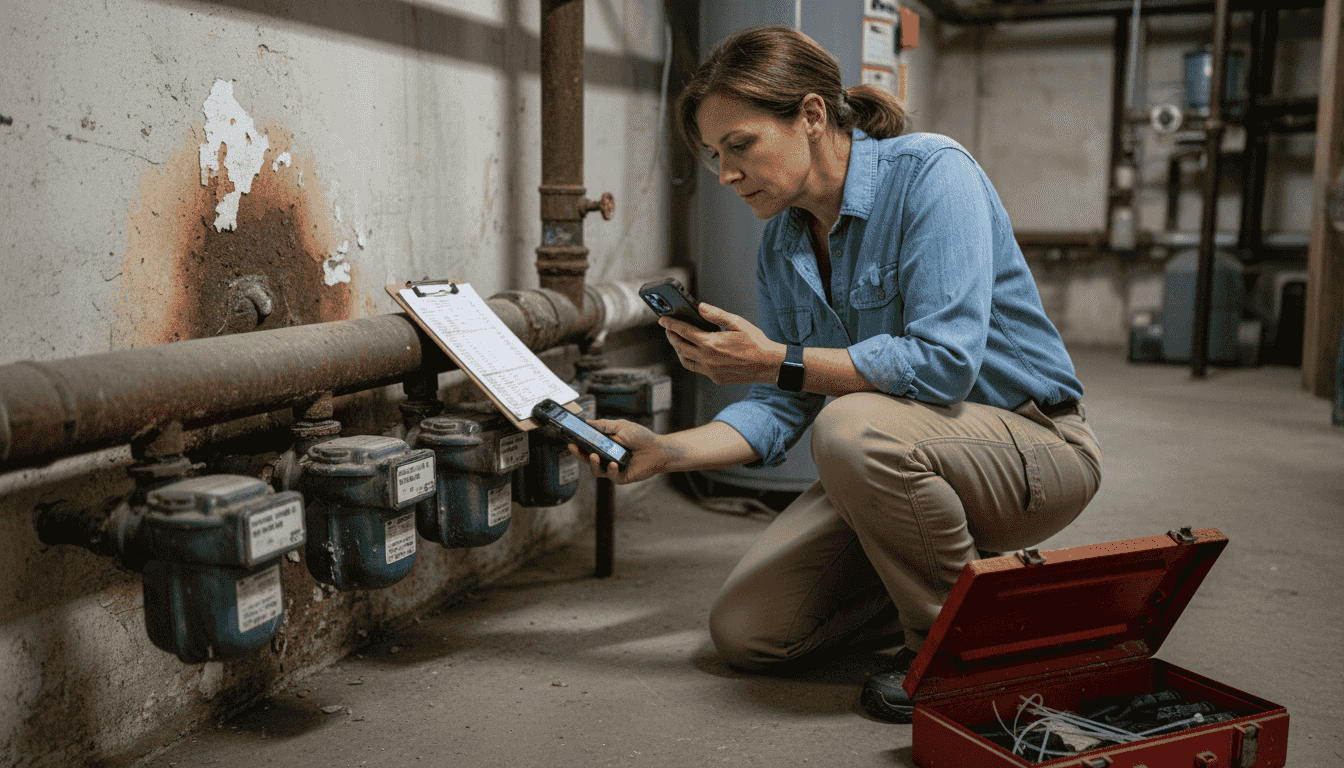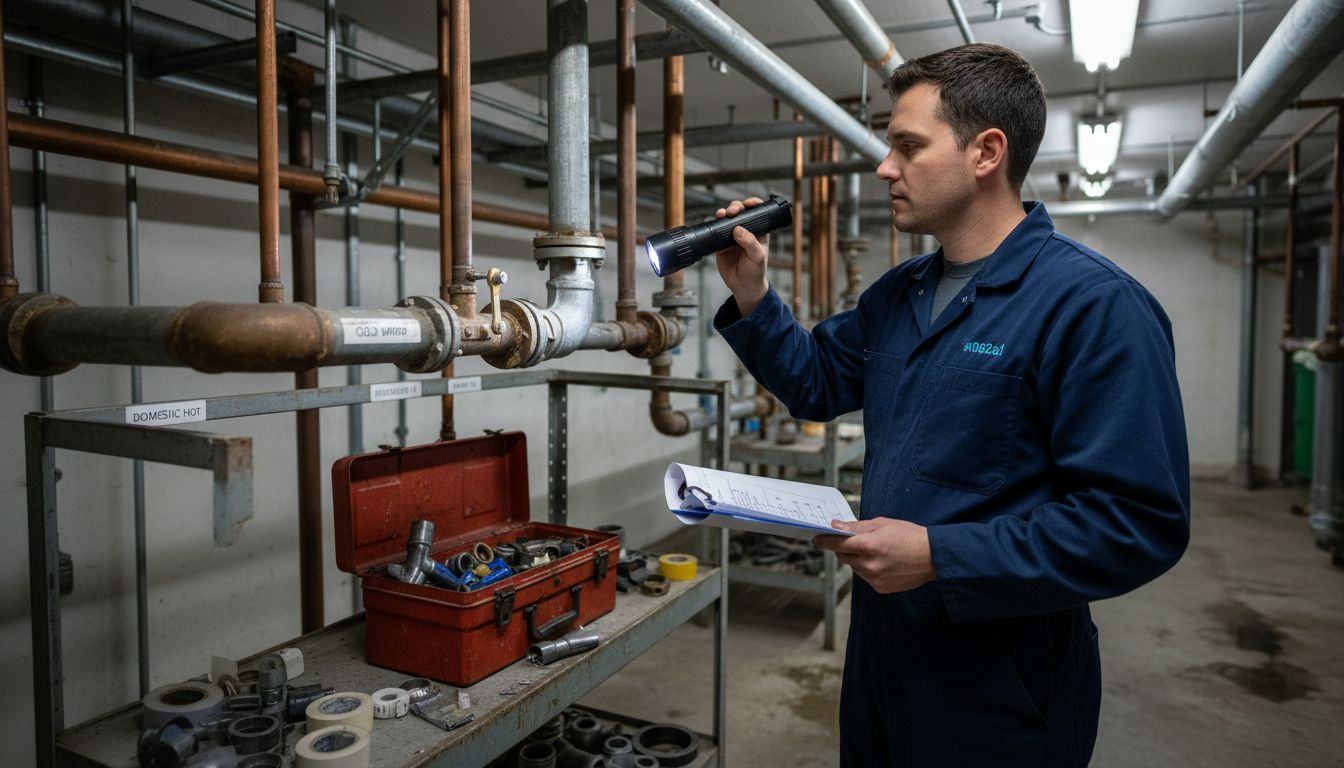
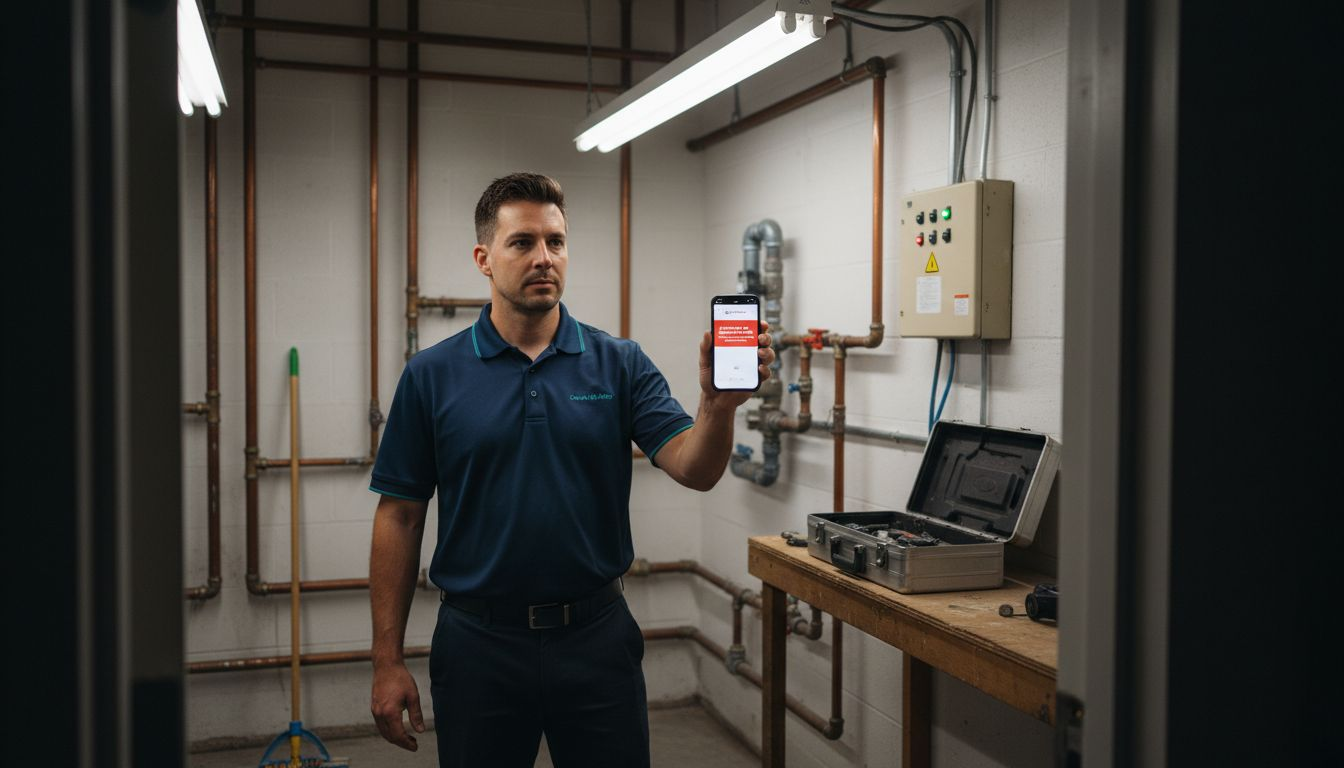
A single leaking pipe can cause chaos in a California multifamily property long before anyone spots puddles or stained ceilings. Water damage moves quickly, impacting multiple units, driving up repair expenses, and frustrating tenants. Automated leak alarms offer a smarter, faster way to spot trouble early—using real-time sensors, instant alerts, and even automatic shutoff to halt disasters in their tracks. Discover how real-time detection systems can protect your budget and reputation while meeting strict local standards.
- What Automated Leak Alarms Are And How They Work
- Types Of Leak Alarm Technologies For Multifamily Buildings
- Key Benefits: Damage Prevention, Compliance, Savings
- California Regulations: Title 24 And Insurance Impact
- Implementation Mistakes And Best Practices To Avoid
Key Takeaways
| Point | Details |
|---|---|
| Automated Leak Alarms | These systems offer real-time detection and automatic responses to prevent costly water damage. |
| Sensor Placement Matters | Effective leak detection requires strategically placing sensors in high-risk areas around the property. |
| Meeting Compliance | Implementing these systems helps fulfill California’s strict water management regulations and reduces insurance costs. |
| Proactive Management | Regular maintenance and testing of leak detection systems ensure their effectiveness and reliability. |
What Automated Leak Alarms Are and How They Work
Automated leak alarms are real-time detection systems that identify water leaks before they become costly disasters. They combine sensors, smart valves, and monitoring technology to protect your multifamily property 24/7.
Think of them as an early warning system for your building. The moment water appears where it shouldn’t, the system alerts you—and can even shut off water automatically to prevent damage.
How Sensors Detect Water
Strategically placed sensors monitor high-risk locations throughout your property. These areas include spaces under sinks, behind toilets, near water heaters, and around appliances like washing machines and dishwashers.
When sensors detect moisture, they send signals to your central monitoring system. Leak detection systems use sensors to monitor factors such as pressure, flow rates, and temperature to identify leaks in pipelines. This data helps pinpoint exactly where water is escaping.
Sensors work independently of internet connectivity, meaning they function even during network outages. Local-first automation ensures protection when your building needs it most.
The Alert and Response Process
When a leak is detected, the system triggers immediate notifications to your phone, email, or management dashboard. You don’t wait for a tenant to report water damage—you know about it first.
Many modern systems include automatic shutoff capabilities. Smart valves can close water flow instantly when a leak is detected, minimizing water waste and preventing structural damage.
Here’s what happens in order:
- Sensor detects moisture or abnormal water flow
- System verifies the leak through data analysis
- Instant alerts sent to property manager
- Automatic shutoff activated (if configured)
- Maintenance team responds with pinpoint accuracy
This rapid response significantly reduces repair costs and prevents mold growth, tenant complaints, and insurance claims.
Why This Matters for California Multifamily Properties
California’s water regulations and aging infrastructure make leak detection critical. With 24/7 automatic leak detection for apartments available, you can monitor water usage continuously and catch problems instantly.
Water damage in multifamily buildings spreads quickly across units. One leaking pipe can affect multiple tenants, creating liability and costly repairs. Automated alarms stop problems at the source before they escalate.
Automated leak detection systems reduce water damage repair costs by up to 80% when properly installed and monitored.
Pro tip: Install sensors in every unit and common area—the upfront investment in comprehensive coverage pays for itself after preventing just one major leak incident.
Types of Leak Alarm Technologies for Multifamily Buildings
Multifamily properties have several leak detection technology options, each designed to catch water problems at different stages. Understanding your choices helps you select the right solution for your building’s specific needs.
Modern leak detection combines multiple approaches. Some systems focus on what happens inside pipes, while others detect problems from the outside. The most effective systems integrate multiple technologies for comprehensive coverage.
Pressure and Flow Monitoring
Pressure sensors track water flow through your building’s main lines and individual unit risers. When flow rates spike or drop unexpectedly, the system flags a potential leak.
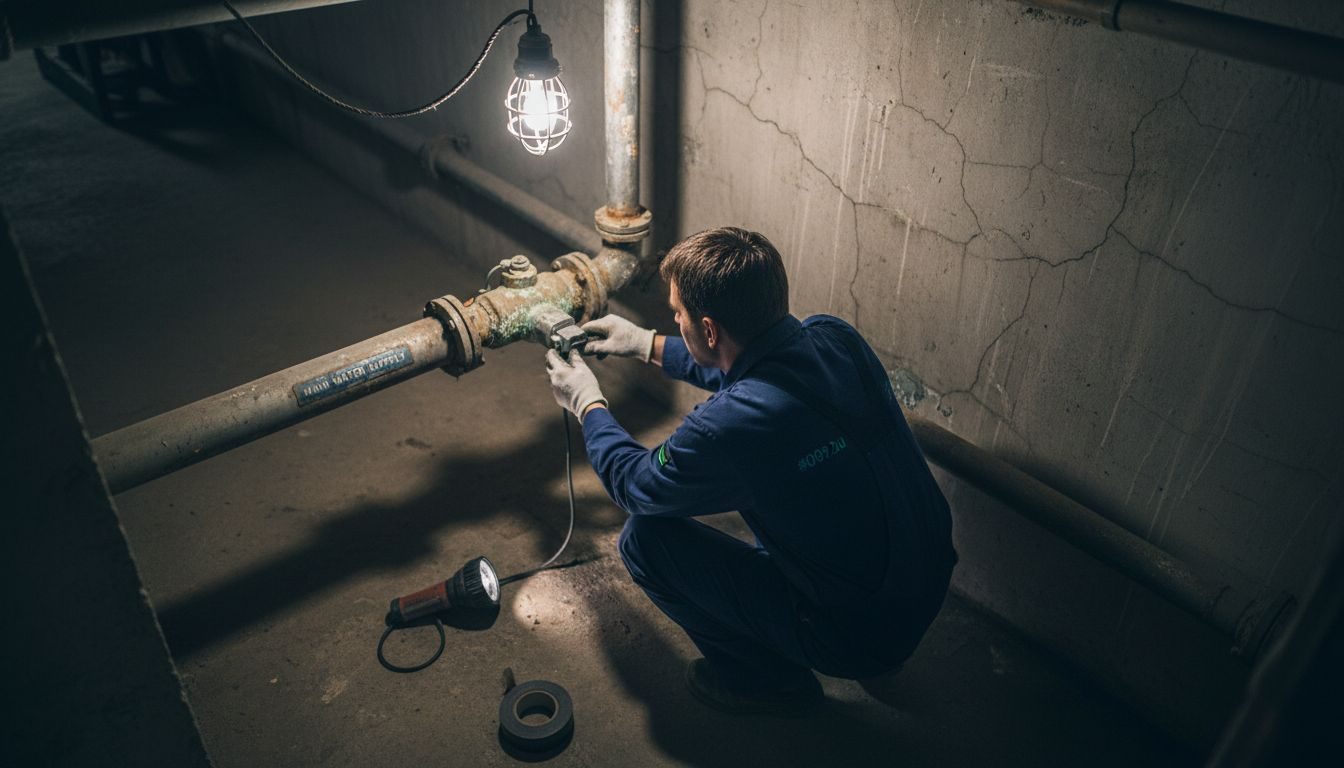
These sensors detect abnormal water movement instantly. A sudden pressure drop indicates a break or rupture somewhere in your system. Flow monitoring catches leaks that traditional sensors might miss.
This technology works continuously without human intervention. Your building’s water supply stays monitored 24/7, alerting your team to issues before tenants even notice wet walls or ceilings.
Acoustic and Vibration Detection
Acoustic microphones listen for the distinctive sounds of water escaping from pipes. Leaking water creates specific frequencies that the system recognizes and reports.
Modern leak detectors combine sensor networks that detect pressure gradients or acoustic signals associated with leaks. This technology pinpoints not just that a leak exists, but roughly where in your system it’s located.
Acoustic detection works especially well for hidden leaks inside walls or under floors. You discover problems before structural damage spreads to multiple units.
Moisture Sensors at Risk Points
Moisture sensors are your first line of defense in specific locations. Place them under sinks, behind toilets, near HVAC systems, and around water heaters throughout your building.
These sensors trigger instantly when they detect dampness. They catch leaks at the source before water spreads throughout the building or causes extensive damage.
Key benefits of moisture sensors:
- Detect leaks in occupied units immediately
- Alert tenants and management simultaneously
- Work independently without network connectivity
- Minimize water waste and damage severity
- Enable rapid tenant response
Fiber-Optic and Advanced Technologies
Larger multifamily properties benefit from fiber-optic cable systems. These sophisticated networks monitor temperature changes along entire water lines, identifying leaks anywhere in your system.
Advanced systems can pinpoint leak locations to within a few feet. This precision reduces investigation time and gets maintenance teams to the right spot faster.
Choosing the right technology depends on building size, budget, and risk tolerance. Top leak detection systems for multifamily buildings combine multiple technologies for maximum protection and accuracy.
Here’s a side-by-side comparison of common leak detection technologies and their ideal applications:
| Technology Type | Best Suited Locations | Key Detection Method |
|---|---|---|
| Pressure Monitoring | Main supply lines, risers | Detects flow/pressure drops |
| Acoustic Detection | Walls, flooring, hidden pipes | Senses leak sound frequencies |
| Moisture Sensors | Under sinks, near appliances | Detects surface moisture |
| Fiber-Optic Systems | Large pipelines, extensive runs | Measures temperature changes |
The most reliable multifamily leak detection systems integrate pressure monitoring, acoustic detection, and strategically placed moisture sensors for complete coverage.
Pro tip: Start with moisture sensors in every unit and pressure monitoring on main lines, then add acoustic detection if your building has hidden or recurring leak problems.
Key Benefits: Damage Prevention, Compliance, Savings
Automated leak alarms deliver three critical advantages for California multifamily properties: they stop water damage before it spreads, they help you meet regulatory requirements, and they dramatically reduce costs. These benefits compound over time, protecting your asset and your bottom line.
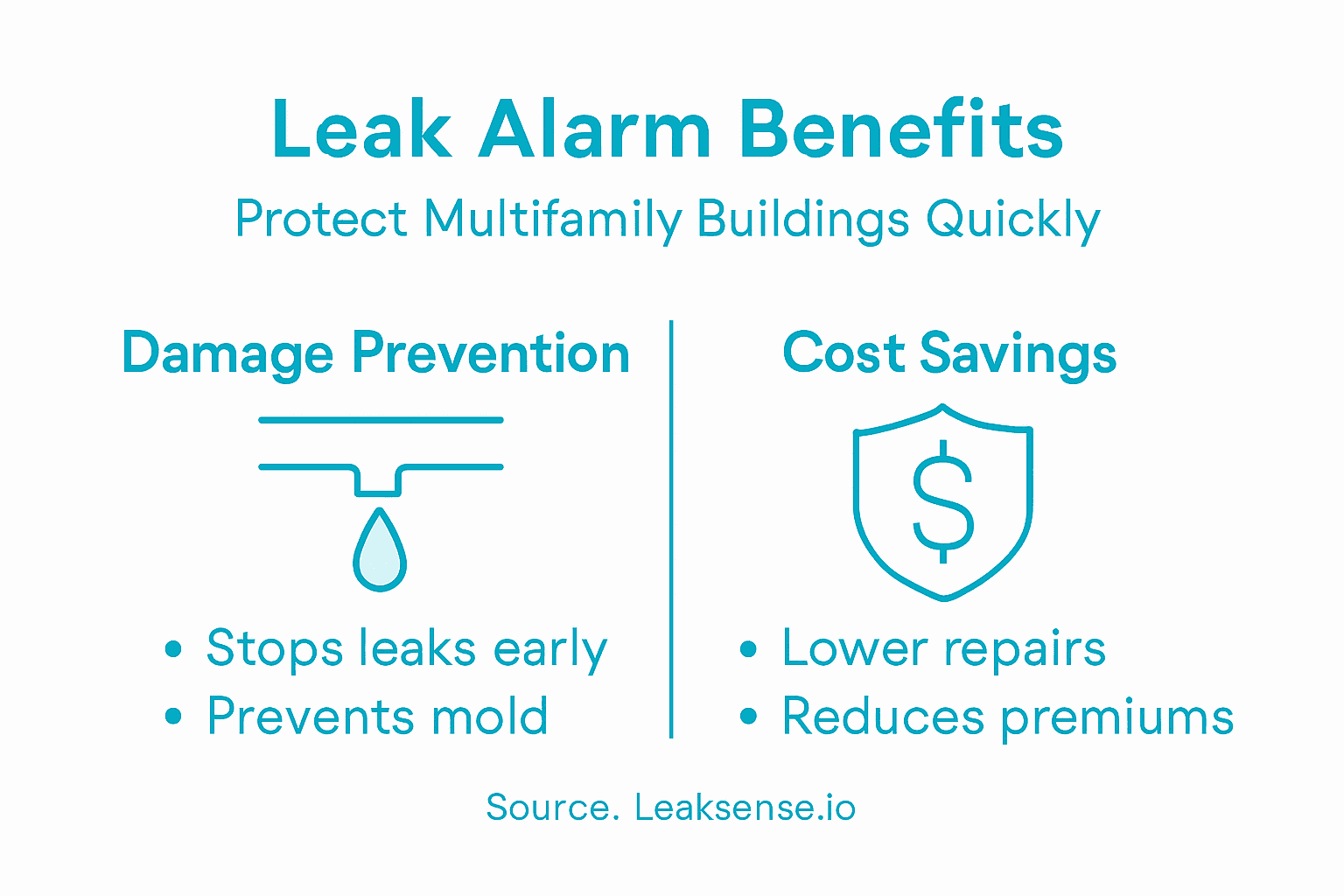
Property managers who implement leak detection systems shift from reactive crisis management to proactive asset protection. The financial and operational impact is substantial.
Preventing Water Damage
Water damage spreads fast in multifamily buildings. One leaking pipe affects multiple units, causes mold growth, and ruins finishes, flooring, and structural materials.
Early detection stops damage at the source. When sensors catch a leak in minutes instead of days, you prevent the cascade of problems that follow. Water stays contained to a small area instead of soaking through walls and spreading to adjacent units.
Repair costs drop dramatically. A small pinhole leak caught immediately costs hundreds to fix. The same leak ignored for a week costs thousands in water damage restoration, mold remediation, and tenant relocation.
Tenant satisfaction improves too. Residents appreciate that you catch problems before their furniture gets ruined or their living space becomes uninhabitable. Quick response time builds trust and reduces complaint volume.
Meeting California Compliance Requirements
California regulations around water management are strict. Title 24 energy standards and local water conservation ordinances require documented water monitoring in many properties.
Automated leak alarms help comply with building safety standards while optimizing operational costs. Real-time monitoring creates the audit trail regulators expect, showing your building meets conservation requirements.
Compliance benefits:
- Demonstrate water conservation efforts to local agencies
- Generate documentation for regulatory inspections
- Support Title 24 energy compliance records
- Enable tenant billing accuracy when required
- Reduce liability from water waste violations
Reducing Operational and Insurance Costs
Automated leak detection cuts costs across multiple categories. Water waste decreases immediately when you catch leaks fast. Insurance companies recognize the risk reduction and often provide premium discounts for properties with verified leak detection systems.
Sensors in smart building management systems reduce insurance costs by mitigating risks and enhance sustainability through efficient water use. Typical savings include lower water bills, avoided repair expenses, and insurance rate reductions.
The math works quickly. Many properties recover their entire investment after preventing one major leak incident. Then years of savings accumulate as water efficiency improves and insurance costs decline.
See how automated leak alarm benefits compare for California multifamily properties:
| Benefit Area | Immediate Impact | Long-Term Value |
|---|---|---|
| Damage Control | Faster leak response | Lower repair/restoration costs |
| Compliance | Real-time documentation | Simplifies Title 24 audits |
| Cost Savings | Reduces water waste | Insurance premium discount |
| Resident Trust | Fewer complaints | Higher tenant retention rates |
Cost reduction breakdown:
- Water waste elimination (5-15% reduction in usage)
- Insurance premium discounts (10-20% on water-related coverage)
- Avoided emergency repairs (thousands per incident prevented)
- Reduced tenant turnover (fewer complaints, lower vacancy)
- Lower claims on property coverage (documented prevention)
Properties with automated leak detection systems avoid an average of $12,000-$25,000 in water damage costs annually through early detection and prevention.
Pro tip: Document every leak detection event and maintenance action—this record proves to insurers that your property actively prevents water damage, supporting your case for premium reductions.
California Regulations: Title 24 and Insurance Impact
California’s regulatory environment makes automated leak alarms essential, not optional. Title 24 standards and insurance underwriting practices both reward properties with verified leak detection systems. Understanding these requirements helps you stay compliant and reduce costs.
Ignoring these regulations creates liability and missed savings. Properties that meet standards enjoy lower insurance premiums and regulatory approval.
Title 24 Compliance Requirements
Title 24 is California’s Building Standards Code. It mandates specific plumbing and building safety requirements for multifamily properties, particularly around water conservation and leak prevention.
Title 24 of the California Building Standards Code requires leak detection devices and shutoff valves in new and renovated properties. The code emphasizes water conservation, safety, and resilience through advanced technologies.
Key Title 24 requirements include:
- Installation of leak alarms in high-risk areas
- Automated shutoff valves on water lines
- Real-time monitoring systems for water usage
- Documentation of compliance for inspections
- Regular testing and maintenance records
Non-compliance risks include failed inspections, renovation delays, and inability to obtain permits for future improvements. Many jurisdictions in California enforce Title 24 strictly during property transfers or major renovations.
The 2025 Updates and What Changed
California updated Title 24 standards for 2025. Enhanced water safety and energy efficiency standards now require advanced leak detection systems and automated alarms to minimize water loss and damage.
These updates apply to new construction and renovations. Properties undergoing upgrades must meet the new standards, making this the perfect time to install comprehensive leak detection if you haven’t already.
The updates focus on:
- Advanced leak detection technology requirements
- Automated alarm systems for rapid notification
- Integration with building management systems
- Enhanced documentation and monitoring
- Stricter penalties for non-compliance
Insurance Impact and Premium Reductions
Insurance carriers use Title 24 compliance as a key underwriting criterion. Properties with verified leak detection systems qualify for premium discounts because insurers see reduced risk of water damage claims.
Insurance companies recognize that automated alarms catch problems early, preventing the expensive claims that drive up premiums. A property with documented leak detection infrastructure presents lower risk and costs less to insure.
Typical insurance benefits include:
- 10-20% reduction on water damage coverage premiums
- Lower deductibles on water-related claims
- Faster claim approval with documentation
- Potential eligibility for loss prevention credits
- Better rates at policy renewal
To maximize insurance savings, keep detailed records of all leak detection events, maintenance performed, and prevention measures implemented. Insurance underwriters review this documentation when calculating premiums.
Properties that meet Title 24 standards and maintain automated leak detection systems can reduce annual insurance costs by thousands of dollars while ensuring regulatory compliance and protecting assets.
Pro tip: Contact your insurance provider before installing leak detection to verify which systems qualify for premium discounts—some insurers offer immediate rate reductions once systems are verified and operational.
Implementation Mistakes and Best Practices to Avoid
Many property managers install leak detection systems but fail to maximize their effectiveness. Common mistakes undermine the technology, leaving your building vulnerable despite having the right equipment. Understanding what to avoid saves money, prevents false alarms, and ensures your system actually protects your property.
Proper implementation requires attention to sensor placement, system redundancy, and ongoing maintenance. Skip these details and your investment won’t deliver results.
The Sensor Placement Problem
Poor sensor placement is the most common implementation mistake. Sensors installed in accessible areas or obvious locations often miss the leaks that actually matter—those hidden inside walls, under cabinets, or behind appliances.
High-risk areas require strategic coverage. Under sinks, behind toilets, near water heaters, around washing machines, and in crawl spaces are where leaks develop and spread quickly. Sensors must reach these concealed locations.
Placement mistakes include:
- Installing sensors only in tenant-accessible areas
- Skipping high-risk appliance zones
- Placing sensors too far from leak sources
- Failing to cover common area water infrastructure
- Ignoring secondary risks like roof drains and HVAC condensation
Correct placement catches leaks at the source before water reaches living spaces or structural components. Work with installation professionals who understand your building’s water system architecture.
Network and Power Dependency Failures
Reliance on unstable internet connections creates a critical vulnerability. If your internet goes down or your network experiences interference, your leak alarms can’t notify you during the exact moment you need protection most.
Local-first automation systems communicate reliably even during network failures. The best systems detect and respond to leaks locally, then transmit data when connectivity returns. This ensures protection continues without interruption.
Power backup is equally critical. Automated shutoff valves require reliable power to close when a leak is detected. Without battery backup or redundant power systems, your shutoff capability vanishes during outages—exactly when emergencies happen.
Essential redundancies:
- Battery backup for all sensors and shutoff valves
- Local decision-making independent of internet
- Redundant communication pathways (cellular, landline, WiFi)
- Uninterruptible power supply for critical components
- Manual override capability if automation fails
False Alarms and Detection Thresholds
Poorly calibrated alarm thresholds trigger constant false alarms. When sensors scream wolf every time humidity spikes slightly, staff stop responding. Real leaks get ignored.
Effective alarm system implementation requires adherence to standards such as ISO 22329 and IEC 62682, which provide guidelines for alarm design and testing. These standards help establish appropriate thresholds that catch real leaks without false positives.
Tuning involves balancing sensitivity. Too sensitive and you waste response time. Too loose and you miss actual problems. Professional configuration and regular testing prevent this critical failure.
Maintenance and Testing Gaps
Systems installed and forgotten deteriorate. Sensors corrode, batteries drain, calibration drifts, and connections fail silently. Regular testing catches degradation before it costs you.
Best practices for ongoing management:
- Test all sensors quarterly
- Replace batteries annually
- Review alarm logs monthly
- Verify shutoff valve operation twice yearly
- Update system software as released
- Train new staff on procedures
- Document all maintenance performed
Systems that receive quarterly testing and maintenance catch 95% of actual leaks, while neglected systems miss 40% or more of developing problems.
Pro tip: Establish a maintenance schedule with your installation provider and set calendar reminders for quarterly sensor testing—catching calibration drift early prevents catastrophic failures when you need protection most.
Protect Your Multifamily Property with Smart Automated Leak Alarms
Water leaks are a top concern for multifamily property managers who want to avoid costly water damage, tenant complaints, and regulatory headaches. This article highlights how automated leak alarms detect issues early and trigger immediate alerts or shutoffs to stop damage in its tracks. If you want to confidently address challenges like sensor placement, false alarms, and 24/7 real-time monitoring, choosing the right partner is essential.
At Leaksense.io, we specialize in tailored smart water leak detection and automated shutoff systems designed specifically for California multifamily buildings. Our professional installation, advanced IoT sensors, and cloud-based analytics ensure you stay compliant with Title 24 regulations while saving on water bills and insurance premiums. Start protecting your investment now and reduce water-related costs with solutions that catch leaks early and respond instantly.
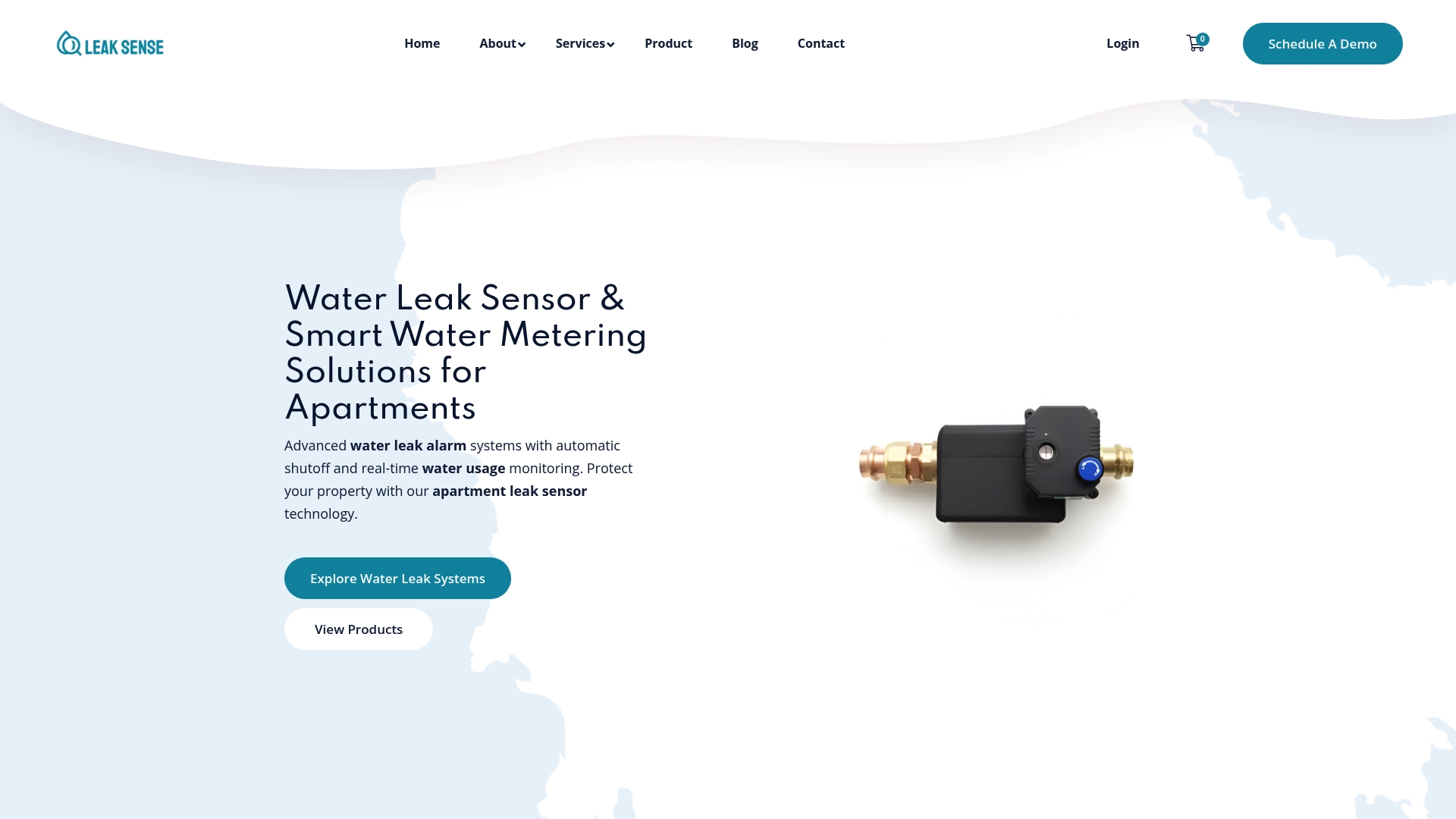
Don’t wait for the next major water incident to disrupt your property. Discover how automated leak alarms can safeguard your building, simplify tenant billing, and promote sustainability. Visit Leaksense.io today to learn more and schedule a consultation that puts you on the path to proactive water management.
Frequently Asked Questions
What is an automated leak alarm, and how does it work?
Automated leak alarms are real-time detection systems that identify water leaks before they escalate into costly problems. They use sensors to monitor high-risk areas in your property and alert managers immediately upon detecting moisture, often including automatic shutoff features to prevent further damage.
How do sensors detect water in leak detection systems?
Sensors are strategically placed in high-risk areas such as under sinks, behind toilets, and near water heaters. They detect moisture or abnormal flow rates and send alerts to the central monitoring system, allowing for rapid response to any leaks.
What technologies are available in automated leak detection systems?
Automated leak detection systems can utilize several technologies, including pressure and flow monitoring, acoustic and vibration detection, moisture sensors at risk points, and advanced fiber-optic systems. Combining these technologies provides comprehensive coverage against leaks.
How can automated leak alarms help reduce water damage costs?
Automated leak alarms significantly minimize water damage by enabling early detection and rapid response. Promptly identifying leaks allows property managers to address issues before they escalate, thus saving on costly repairs and minimizing potential mold growth and tenant complaints.