
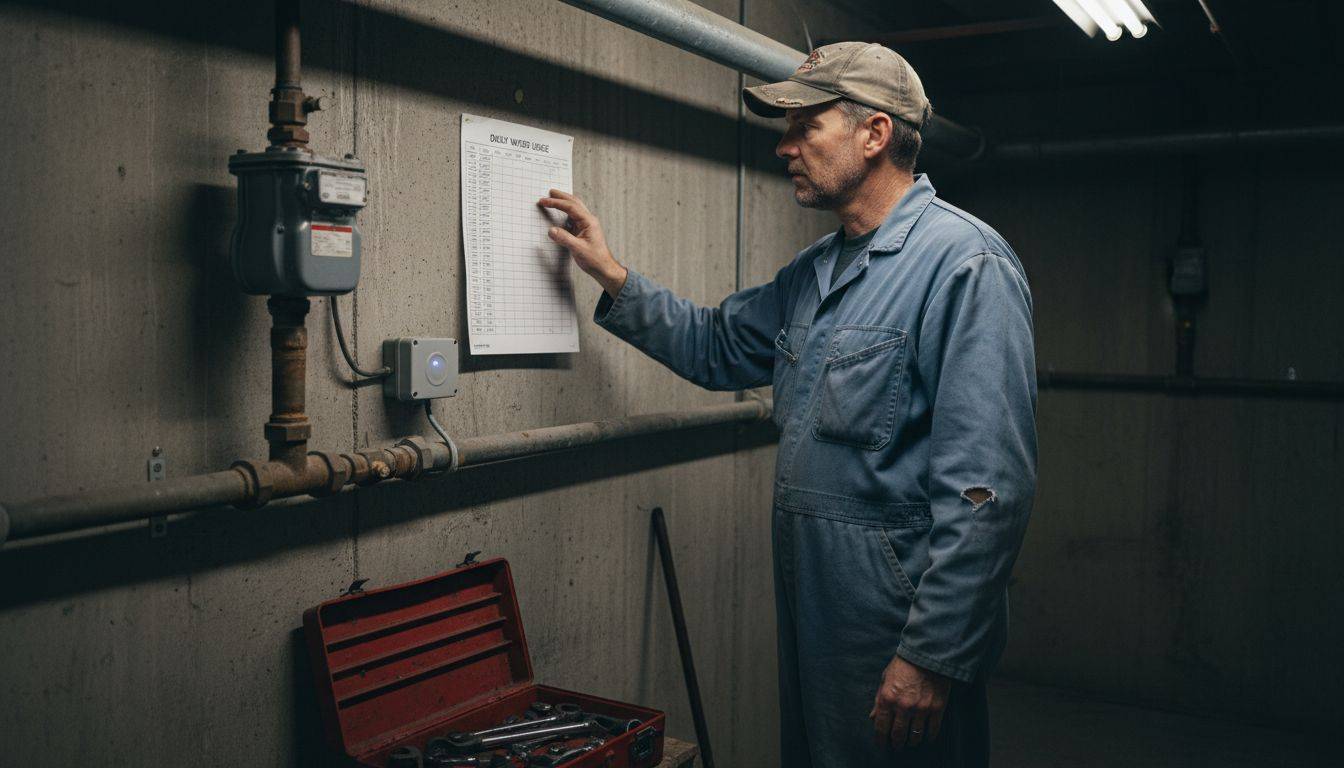
Every property manager in California knows how quickly a hidden leak or unnoticed water spike can escalate into thousands in repairs and potential violations. Navigating strict regulations and growing demand for transparency means you need more than guesswork to protect your multifamily building. By focusing on precise water monitoring and real-time smart sensor integration, you gain the insight and control needed to confidently manage consumption, satisfy compliance, and prevent expensive surprises.
Table of Contents
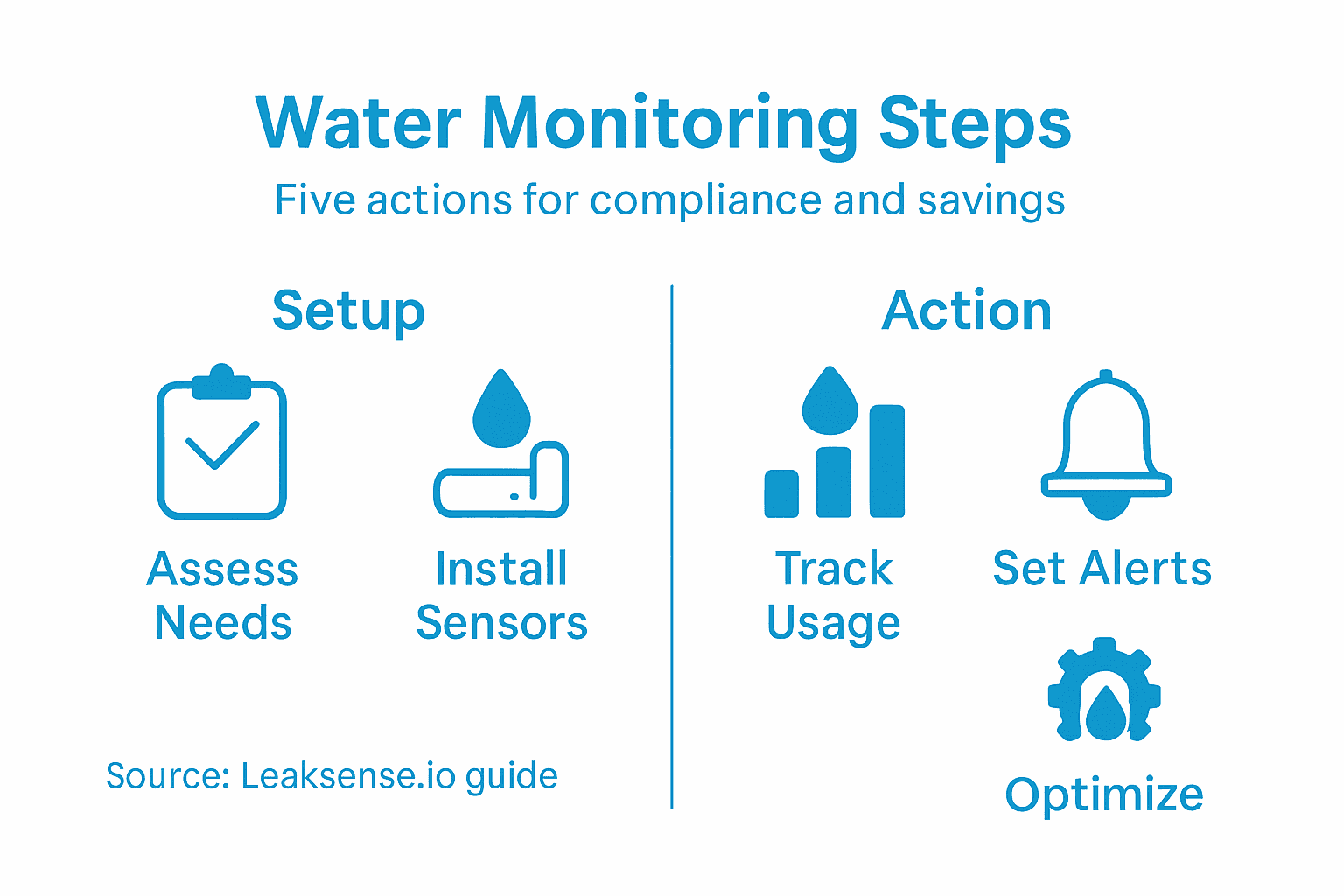
- Step 1: Assess Property Water Monitoring Needs
- Step 2: Select And Install Smart Water Sensors
- Step 3: Activate Real-Time Water Usage Tracking
- Step 4: Set Up Automated Leak Alerts And Shutoff
- Step 5: Verify Data Analytics And Optimize Usage
Quick Summary
| Key Point | Explanation |
|---|---|
| 1. Assess water monitoring needs | Identify your property's water consumption patterns and compliance requirements to inform monitoring strategies. |
| 2. Choose and install sensors carefully | Select smart sensors based on risk areas, ensuring proper installation for accurate data capture. |
| 3. Activate real-time tracking | Connect sensors to a monitoring platform and configure alerts to proactively manage water usage and leaks. |
| 4. Set up automated alerts and shutoff | Establish thresholds for alerts and identify shutoff points to prevent costly water damage from leaks. |
| 5. Analyze data to optimize usage | Regularly verify data accuracy and develop an optimization plan based on consumer patterns and inefficiencies. |
Step 1: Assess property water monitoring needs
You're about to make a decision that affects your entire property's water management strategy. Assessing your monitoring needs means understanding what you actually need to track, why you need to track it, and what problems you're trying to prevent. This foundation shapes everything that comes next.
Start by identifying your property's specific water consumption patterns. Does your multifamily building have a single meter feeding all units, or individual meters for each apartment? Are there common areas like pools, landscaping, or laundry facilities that consume significant water? Document your current setup honestly. Understanding water availability and usage patterns across your property helps you define exactly what instrumentation you'll actually need.
Next, consider your compliance obligations. California's Title 24 standards and other state regulations now require specific tracking and reporting of water usage. Are you currently compliant? What gaps exist in your current monitoring? Are residents demanding transparency on their individual water consumption? These regulatory and tenant-driven factors should directly inform which areas of your property need monitoring most urgently.
Think about your leak risk profile. Where have leaks occurred before in your building? Which pipes are oldest? What's your current damage history? Properties with aging plumbing, previous water incidents, or complex piping systems face higher risk and typically benefit from more comprehensive monitoring. A single catastrophic leak in a multifamily building can cost $50,000 to $500,000 in repairs and recovery.
Finally, define your monitoring goals clearly. Are you primarily focused on preventing costly damage? Meeting regulatory requirements? Helping residents reduce consumption? Identifying theft or unauthorized usage? Your answer determines where you place sensors and what data you prioritize. Different goals require different strategies.
Pro tip: Interview your maintenance staff and building engineers first. They know where your problem areas are and can point you toward the highest-risk zones that need monitoring attention immediately.
Step 2: Select and install smart water sensors
Now that you understand your property's needs, it's time to choose the right sensors and get them in place. Selecting and installing smart water sensors is where your monitoring strategy becomes concrete. The right sensors deliver accurate data. Poor choices waste money and leave blind spots.
Start by identifying exactly where sensors need to go. You want coverage at your main water line coming into the building, at each submetered area, and at high-risk zones where leaks commonly occur. This strategic placement captures representative data that actually reflects what's happening across your property. Sensors should sit where water naturally flows, away from freezing temperatures and excessive vibration. Think about accessibility too. You'll need technicians to access these sensors periodically for maintenance and calibration.
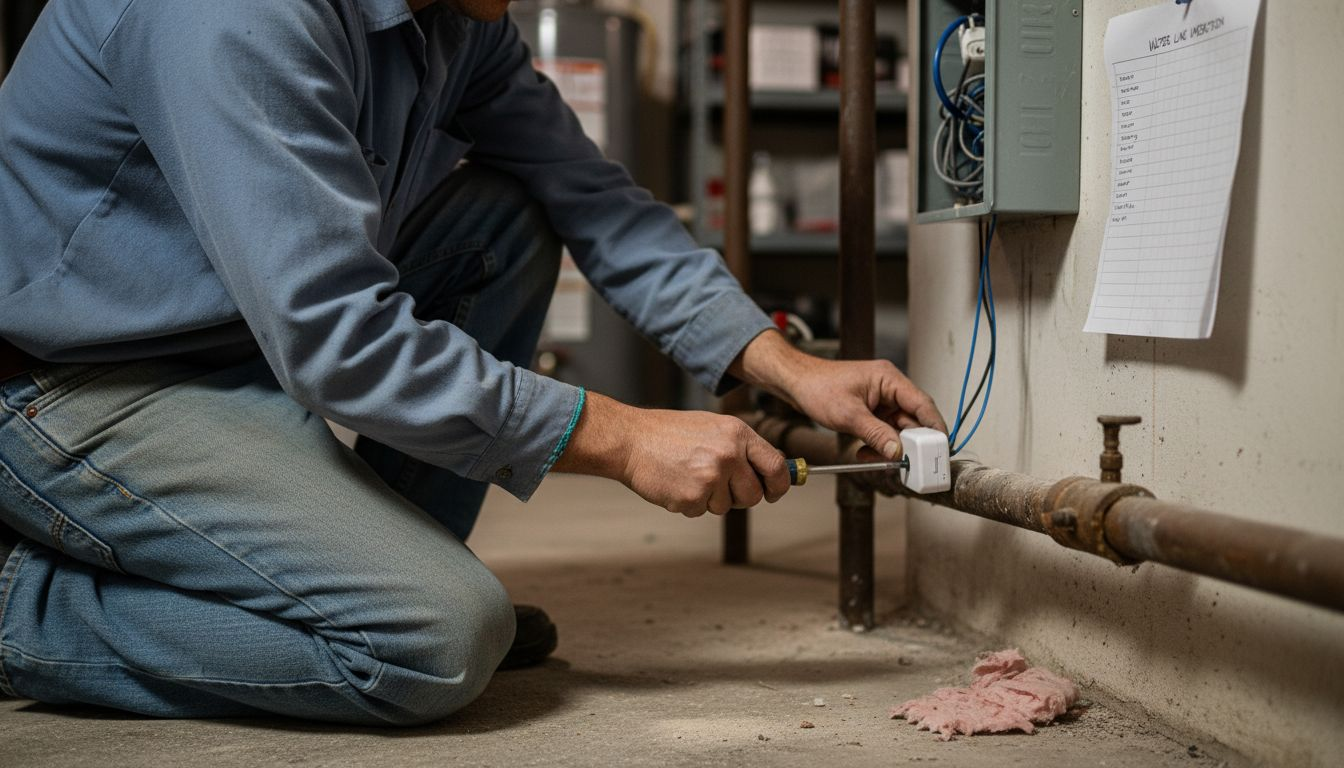
When selecting sensors themselves, prioritize smart sensor technology with real-time data capabilities. Look for sensors that offer fast response times and minimal calibration requirements. You want devices that can handle your water pressure and temperature ranges without failing. Check the detection range against your expected flow rates. A sensor designed for commercial buildings might be overkill for a small residential unit, while a residential sensor might miss important variations in your main line.
Installation matters as much as sensor selection. Improper installation creates data gaps or false readings that undermine your entire monitoring system. Work with experienced technicians who understand both plumbing and IoT sensor networks. They should install sensors on straight pipe sections, not near elbows or valves where water turbulence affects readings. Sensors must be secured firmly to prevent movement that causes inconsistent measurements. Your installation crew should document exactly where each sensor goes with photos and descriptions.
After installation, don't just assume everything works. Test your entire system end to end. Run water through known volumes and verify your sensors report accurate consumption. Check that data transmits reliably from sensors to your monitoring platform. Confirm alarms trigger properly when you simulate leak scenarios. This testing phase catches problems while they're still easy to fix.
Pro tip: Install sensors at multiple elevation points if your building has significant height variation. Pressure differences across floors affect flow rates, and sensors at different levels help you pinpoint exactly which area is consuming water or losing it to leaks.
Here's how different types of water sensors meet various monitoring needs:
| Sensor Type | Best Use Case | Business Impact |
|---|---|---|
| Main Line Flow Sensor | Whole-property consumption & leak detection | Rapid leak identification; regulatory compliance |
| Submetering Sensor | Individual unit monitoring | Enables billing transparency; tenant engagement |
| Leak Detector | High-risk or remote locations | Early warning minimizes damage costs |
| Pressure Sensor | Older or tall buildings | Helps pinpoint leaks due to pressure loss |
Step 3: Activate real-time water usage tracking
Your sensors are installed and tested. Now comes the moment that transforms data into action. Activating real-time water usage tracking means connecting your sensors to a monitoring platform that continuously collects and analyzes data. This is where you shift from reactive problem-solving to proactive management.
Start by logging into your monitoring platform and configuring your sensor network. Each sensor needs to be registered and mapped to its physical location in your building. Label them clearly so you know which sensor monitors your main line, which watches individual units, and which tracks high-risk areas. This organization matters because when an alert fires at 2 AM, you need to immediately understand what it means and where to look.
Set up your alert thresholds carefully. You want alerts that catch real problems without overwhelming your team with false alarms. A sudden spike in flow that exceeds your normal peak usage is worth knowing about immediately. A gradual increase over days suggests a slow leak. Different patterns need different responses. Real-time data collection systems provide continuous information that helps you distinguish between normal usage variations and actual anomalies.
Configure your dashboard to show the metrics that actually matter for your property. Do you care most about total consumption? Per-unit usage for billing? Leak detection alerts? Peak flow times? Different stakeholders need different views. Your maintenance team needs alerts and trend data. Building managers need summary reports. Residents might see their individual consumption. Design your dashboard with each audience in mind.
Once real-time tracking is active, spend the first week simply observing. Learn your building's normal water consumption patterns. What are your peak usage times? How much variation do you see day to day? What baseline are you comparing alerts against? Properties often discover they have no idea what normal actually looks like at their building. Understanding your baseline prevents chasing phantom problems.
After that first week, integrate your real-time data into your regular operations. Check your dashboard daily. Review consumption trends weekly. Share reports with your management team monthly. Make water usage data part of your standard property conversations, not just an emergency response tool.
Pro tip: Enable automatic alerts to both email and SMS simultaneously during your first month. The redundancy ensures critical leaks never get missed while you're still learning your system's reliability.
Step 4: Set up automated leak alerts and shutoff
You've got real-time visibility into your water system. Now it's time to add the safety net that stops small problems from becoming catastrophic ones. Setting up automated leak alerts and shutoff capabilities transforms your monitoring from a warning system into an active protection mechanism. This is your insurance policy against water damage.
Start by configuring your alert parameters in your monitoring platform. Set thresholds for sudden flow spikes that indicate potential burst pipes or active leaks. Most systems allow you to define multiple alert levels, so you might get a warning text for a small spike and an urgent page for major anomalies. Be specific about what constitutes abnormal behavior at your property. A toilet running continuously in one unit looks different from a main line rupture, and your alerts should reflect that difference.
Next, identify which shutoff points make sense for automatic triggering. You could install an automatic shutoff valve on your main water line that closes when flow exceeds a dangerous threshold. Some properties prefer individual unit shutoffs so a leak in one apartment doesn't cut water to everyone else. Automated shutoff systems can be triggered remotely or automatically to mitigate damage when sensors detect critical conditions. Think about your building's layout and risk profile when deciding.
Test your alert system thoroughly before relying on it. Simulate a major leak scenario by running water at unusually high volumes and confirm alerts fire immediately. Verify that your shutoff valve responds correctly. Check that notifications actually reach the right people with clear information about what's happening and where. A broken alert system is worse than no system at all because you trust it.
Establish clear protocols for how your team responds when alerts trigger. Who gets notified first? What's the decision tree for automatic shutoff versus manual inspection? Should residents be notified immediately or after you assess the situation? Document these procedures so everyone responds consistently when something goes wrong at 3 AM on a Saturday.
Configure a backup notification system. If your primary alert channel fails, you need redundancy. Use email plus text message plus phone calls. Consider alerting both your maintenance staff and external emergency contacts.
Pro tip: Start with automated alerts only, not automatic shutoff, for your first 30 days. This gives you time to understand false alarm patterns before water actually stops flowing in your building.
Step 5: Verify data analytics and optimize usage
Raw data means nothing without interpretation. You've collected months of water usage information, but that data only becomes valuable when you analyze it properly. Verifying your data analytics and optimizing usage based on real patterns is what transforms monitoring from a safety tool into a cost-saving strategy.
Begin by validating your data quality. Look for gaps, outliers, or impossible readings that suggest sensor errors. Does one unit consistently show zero consumption? Did your main line meter record a sudden impossible spike? These anomalies need investigation before you trust your analytics. Cross-reference sensor data against actual meter readings when possible. A discrepancy of 5 percent is normal. A 30 percent gap means something is wrong.
Once you've verified accuracy, examine your consumption patterns seriously. What are your peak usage hours? Which units consume far more than similar units? Where are your biggest inefficiencies hiding? Analytics help detect patterns, inefficiencies, and potential leaks that might not be obvious in raw numbers. Multifamily properties often discover that a single malfunctioning toilet accounts for thousands of gallons monthly, or that peak demand happens during a narrow window when you could implement usage restrictions.
Identify your lowest-hanging fruit for optimization. Sometimes it's fixing a single leaky fixture that costs less than two hundred dollars but wastes twenty thousand gallons per month. Other times it's identifying resident behavior patterns where education could drive consumption down by 15 percent. Sometimes it's upgrading old fixtures to modern low-flow models. Your data tells you which interventions will actually move the needle at your property.
Develop a written optimization plan based on your findings. Prioritize actions by impact and cost. Some properties discover they can reduce water consumption by 25 percent simply by fixing maintenance issues and installing aerators. Set realistic targets. Track your progress against baseline consumption. Share results with your management team and residents. People change behavior when they see data proving their efforts matter.
Pro tip: Create a monthly water dashboard comparing your consumption to the same month last year. Seasonal variations matter in California, and year-over-year comparisons reveal whether your optimization efforts are actually working.
Key analytics metrics for optimizing water usage:
| Metric | Purpose | Typical Business Action |
|---|---|---|
| Peak Usage Time | Identify demand spikes | Adjust irrigation or operations |
| Per-Unit Consumption | Reveal outliers, spot waste | Target maintenance or education |
| Year-over-Year Change | Track seasonal efficiency gains | Justify investments or upgrades |
| Instantaneous Flow Rate | Detect sudden leaks | Trigger alerts or shutoff |
Take Control of Your Multifamily Water Monitoring and Compliance Efforts Today
The detailed guide on water usage monitoring highlights key challenges faced by multifamily property managers such as precise leak detection, regulatory compliance with California's Title 24, and optimizing water consumption across complex building systems. If you are tackling issues like assessing leak risks, managing multiple sensors, or activating real-time alerts for rapid response, you know how critical accurate data and automated actions are to preventing costly water damage and meeting compliance demands.
Experience peace of mind with LeakSense Home Page, a dedicated SaaS platform designed specifically to address these pain points. Our advanced IoT-enabled water leak sensors with automatic shutoff capabilities and comprehensive analytics empower you to monitor every part of your property efficiently. From precise sensor placement to immediate leak alerts and shutoff, our integrated system supports your goal of predictive water management and cost savings. Don’t wait for a major water event to cause devastating damage or compliance issues. Start your journey to smart water monitoring and protect your investment now with Leaksense.io.
Frequently Asked Questions
How can I assess my property's water monitoring needs?
To assess your property's water monitoring needs, start by documenting your water consumption patterns, such as whether you have individual meters for each unit or a single meter for the entire building. Identify high-risk areas for leaks and consider compliance with local regulations to determine where monitoring is most urgent.
What types of sensors should I install for effective water monitoring?
For effective water monitoring, consider installing main line flow sensors for whole-property consumption, submetering sensors for individual units, and leak detectors in high-risk areas. Place sensors strategically for optimal data collection, ensuring proper installation to avoid false readings.
How do I set up and configure automated leak alerts?
To set up automated leak alerts, configure your monitoring platform to define alert thresholds for abnormal flow patterns that indicate potential leaks. Clearly document your response protocols, so your team knows how to react when alerts are triggered, ensuring a quick response to mitigate damage.
What steps should I take to verify data accuracy after installation?
To verify data accuracy after installation, compare sensor measurements with actual meter readings to identify discrepancies. Investigate any anomalies, such as zero consumption readings or sudden spikes, and resolve them to ensure your analytics are reliable and actionable.
How can I optimize water usage based on collected data?
To optimize water usage, analyze data trends to identify peak usage hours and potential inefficiencies, such as leaky fixtures. Develop a written optimization plan prioritizing actions based on impact and cost, and track progress to measure your water savings over time.
How often should I review my water consumption data?
Review your water consumption data at least weekly to identify fluctuations and ensure you understand normal usage patterns. This ongoing observation helps in making data-driven decisions to reduce waste and improve efficiency, potentially lowering water consumption by 15% or more.