A single undetected leak in a multifamily building can silently drain resources and strain both budgets and sustainability goals. For property managers in California, where water regulations are strict and conservation matters, understanding water metering is no longer optional. By adopting individual water submetering and smart metering technology, you gain precise control over water consumption, simplify compliance with state laws, and proactively safeguard your properties from costly damage.
- What Is Water Metering in Multifamily Buildings
- Why Multifamily Properties Need Individual Metering
- What Water Metering Actually Measures
- Smart Metering Vs. Traditional Submeters
- How Water Metering Supports Compliance
- Types of Water Metering and Submetering Systems
- Mechanical Flow Measurement Systems
- Electronic and Smart Metering Technology
- Traditional Vs. Smart Submetering Comparison
- Choosing the Right System for Your Property
- How New SB 7 Requirements Shape Compliance
- What SB 7 Actually Requires
- Installation and Testing Obligations
- Billing and Tenant Communication
- Timeline Considerations for 2026
- Smart Metering for Leak Prevention and Savings
- How Real-Time Detection Works
- Measurable Savings From Early Detection
- Integration With Automated Shutoff Systems
- Tenant Engagement and Behavior Change
- Beyond Cost Reduction: Regulatory and Insurance Benefits
- Tenant Billing, Costs, and Compliance Risks
- Legal Requirements for Accurate Tenant Billing
- Costs Associated With Compliant Billing Systems
- Common Billing Compliance Mistakes
- Managing Tenant Disputes Over Water Bills
- Regulatory Oversight and Audit Preparation
Key Takeaways
| Point | Details |
|---|---|
| Water Metering Enhances Fair Billing | Individual submeters allow tenants to be charged based on actual consumption, promoting water conservation and transparency. |
| Compliance with Legislative Requirements | California’s SB 7 mandates individual metering for new multifamily constructions, ensuring compliance with state water conservation standards. |
| Smart Metering Offers Increased Efficiency | Smart meter systems provide real-time data and rapid leak detection, which can prevent significant property damage and reduce operational costs. |
| Transparent Communication Reduces Disputes | Clearly communicating billing methods and providing access to meter readings helps in fostering better tenant relationships and minimizing billing disputes. |
What Is Water Metering in Multifamily Buildings
Water metering in multifamily buildings is the practice of measuring and tracking water consumption at the individual unit level rather than relying solely on a master meter for the entire property. This system lets you assign water costs fairly to tenants based on their actual usage instead of splitting bills equally among all residents.
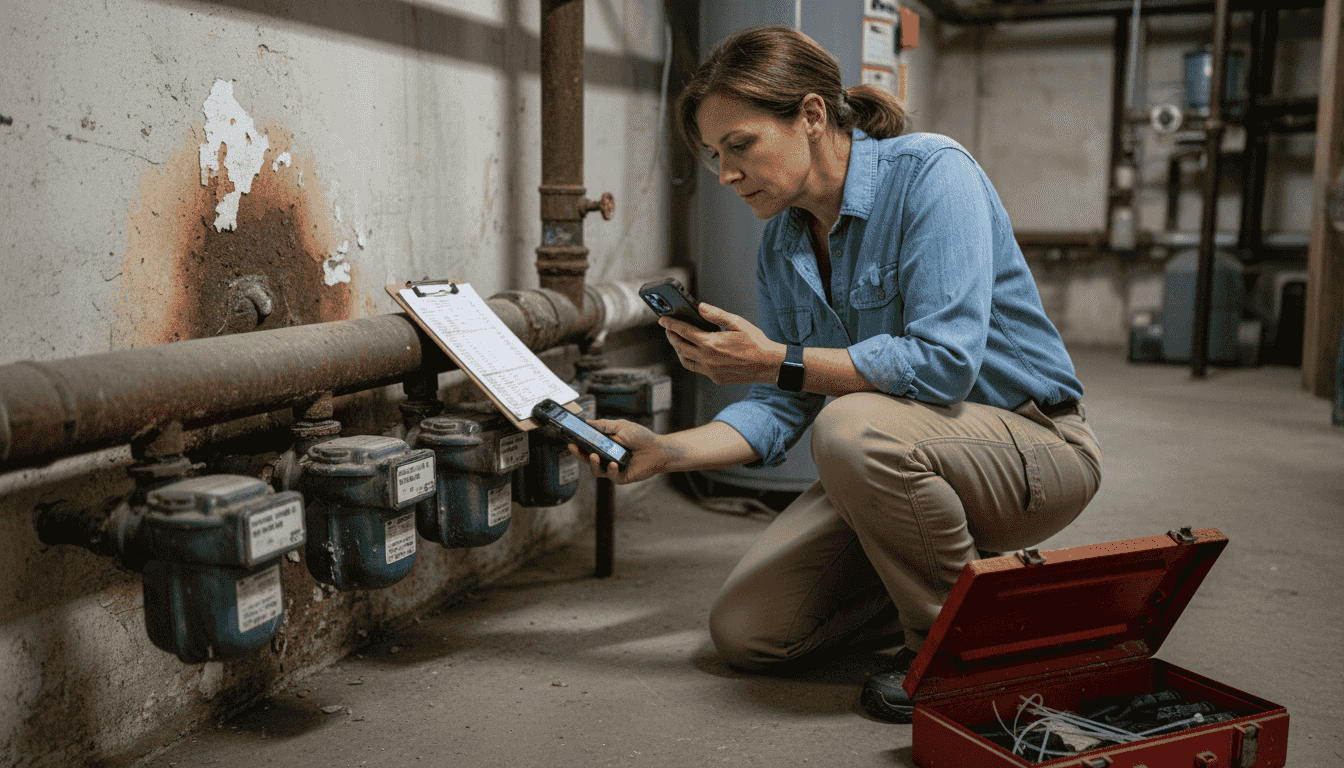
In California multifamily properties, water submetering has become the standard approach for tracking consumption by dwelling unit. Each unit gets its own submeter that records how much water flows through that apartment or condo, creating transparency and accountability for water use.
Why Multifamily Properties Need Individual Metering
Multifamily buildings consume water differently than single-family homes. When dozens or hundreds of units share one master meter, pinpointing leaks becomes nearly impossible. A hidden leak could waste thousands of gallons monthly without anyone knowing where the problem originates.
Accurate measurement also supports fair billing. Tenants who conserve water pay less; those who use more pay accordingly. This creates natural incentives for water conservation across your property.
California law reinforces this approach. New multifamily construction must install water submeters for individual units, and property owners must either read them or arrange for the water provider to do so.
What Water Metering Actually Measures
Each submeter tracks the volume of water delivered to a specific unit over time. Modern systems go beyond basic flow measurement to provide:
- Real-time consumption data accessible remotely
- Historical usage patterns showing trends week-to-week
- Leak alerts when water flow indicates an abnormal pattern
- Automated shutoff capabilities during emergencies
Proper water metering transforms reactive maintenance into proactive water management, protecting your property from costly damage while reducing waste.
Smart Metering vs. Traditional Submeters
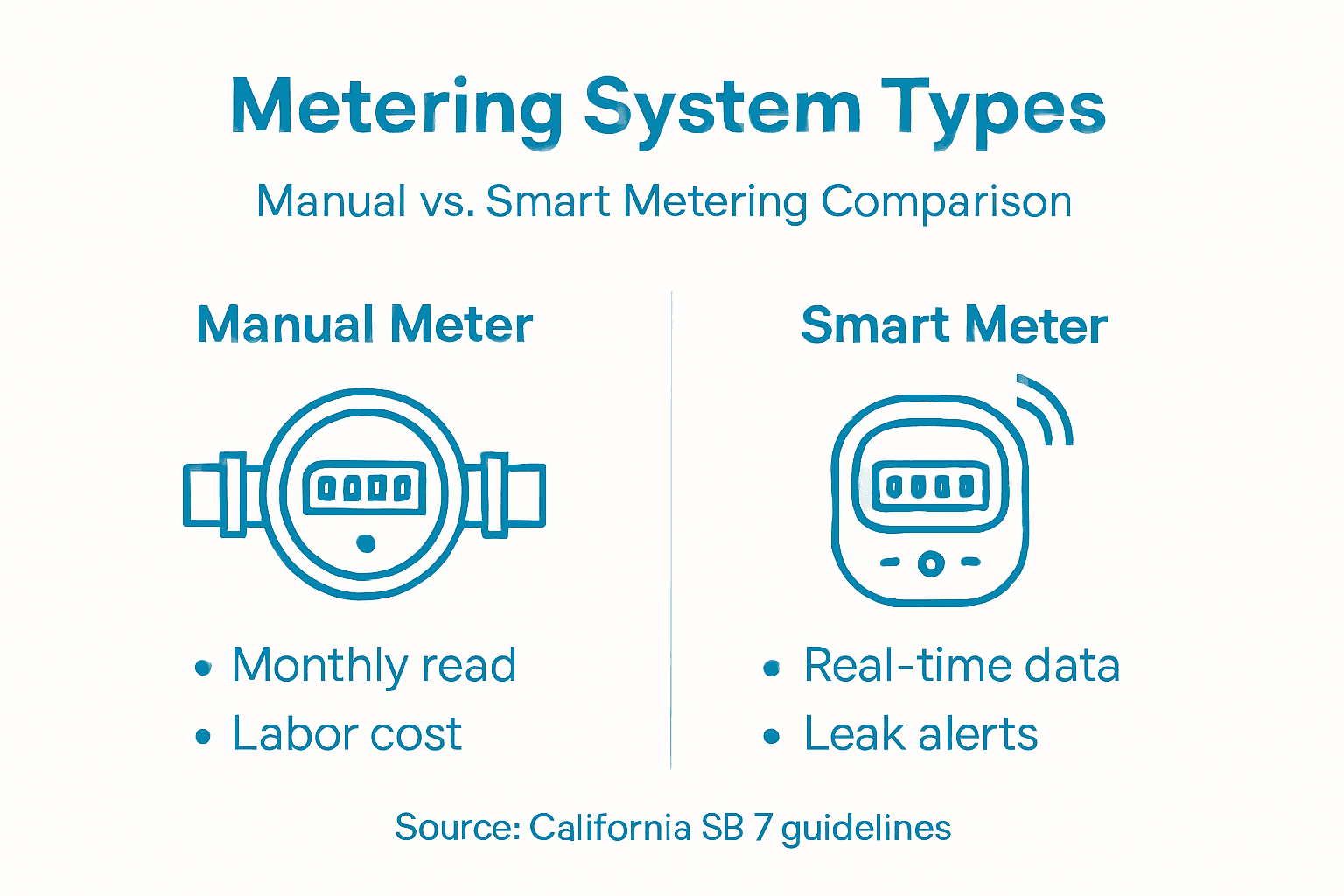
Traditional submeters require someone to physically read each unit monthly. Smart water metering systems connect to cloud-based platforms where you monitor all units simultaneously from your office or smartphone.
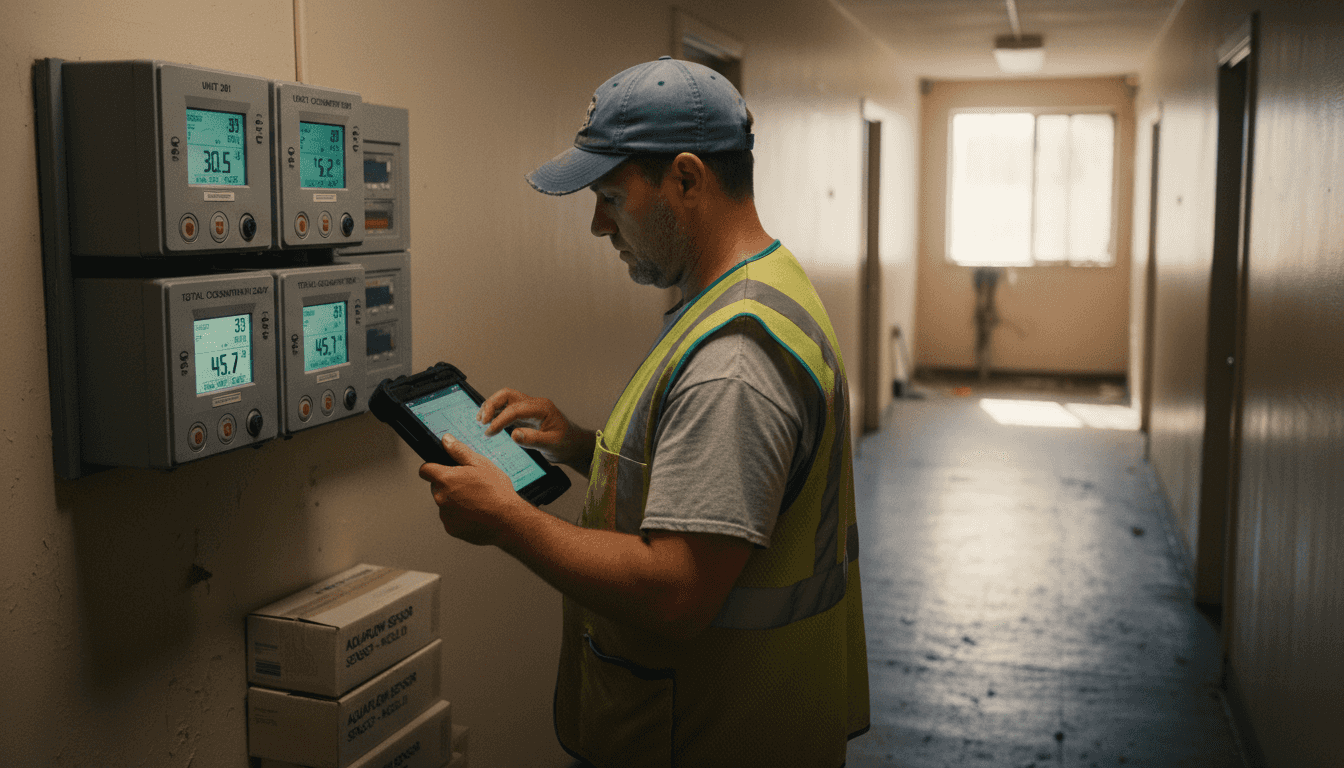
Smart systems detect leaks faster because they track consumption continuously rather than waiting for monthly readings. When a toilet runs constantly or a pipe develops a small crack, the system alerts you within hours, not weeks.
Many California property managers pair smart metering with automated shutoff technology to stop water flow immediately when a major leak is detected, preventing thousands in damage.
Here’s how traditional and smart water metering systems differ in key areas:
| Aspect | Traditional Manual Submeter | Smart Metering System |
|---|---|---|
| Reading Method | In-person monthly check | Remote, real-time data |
| Leak Detection Speed | Days to weeks | Often within hours |
| Billing Process | Manual data entry | Automatic integration |
| Admin Workload | High | Significantly reduced |
| Upfront Cost | Lower | Higher initial, faster ROI |
| Ongoing Labor Cost | Recurring | Minimal |
| Tenant Transparency | Limited access | Online dashboard access |
How Water Metering Supports Compliance
California’s Title 24 and related water conservation standards require multifamily properties to track water consumption accurately. Water metering provides the documentation regulators expect to see.
Proper metering also helps you meet lease agreement requirements around water cost allocation and demonstrates to insurance carriers that you’re managing water-related risks responsibly.
Pro tip: Install submeters during major renovations or when replacing old water lines to reduce installation costs, and choose systems that integrate with your existing property management software to streamline billing and leak detection.
Types of Water Metering and Submetering Systems
Water metering systems vary widely depending on your property’s size, layout, and regulatory requirements. Understanding the differences helps you choose the right technology to track consumption accurately and detect leaks before they cause damage.
There are two main categories: traditional meters that require manual reading and smart meters that provide continuous remote monitoring. Within each category, different flow measurement technologies serve specific purposes in multifamily properties.
Mechanical Flow Measurement Systems
Mechanical meters have been the industry standard for decades. These systems use physical components to measure water movement through pipes and work reliably in most building applications.
Common mechanical types include:
- Displacement meters (oscillating piston, nutating disc) that trap and count water volumes
- Velocity meters (single-jet, multi-jet, turbine) that measure how fast water flows through the meter
- Nutating disc meters frequently used in residential submetering due to accuracy and durability
Mechanical meters are affordable and require minimal maintenance. However, they demand manual reading monthly, which creates delays in detecting leaks and billing errors.
Electronic and Smart Metering Technology
Smart metering systems use electromagnetic and ultrasonic measurement technologies to provide real-time data without moving parts. Electromagnetic meters measure water conductivity, while ultrasonic meters use sound waves to calculate flow rates.
These systems connect to cloud platforms where you monitor all units from your office or mobile device. Real-time alerts notify you of unusual consumption patterns within hours, not weeks.
Smart meters eliminate the lag time between water waste and detection, protecting your property from the catastrophic costs of hidden leaks.
Traditional vs. Smart Submetering Comparison
Traditional submetering requires someone to physically access each unit monthly to read consumption. Data entry into billing systems happens manually, creating opportunities for errors.
Smart submetering automates the entire process. The system reads all meters simultaneously, calculates tenant usage, and often integrates directly with property management software. This reduces administrative work by hours each month.
Many California property managers choosing between systems discover that smart water metering systems offer leak detection capabilities that mechanical meters cannot provide, justifying the investment quickly through damage prevention.
Choosing the Right System for Your Property
Your building’s age, occupancy level, and budget guide this decision. Older properties with existing mechanical meters may upgrade incrementally, installing smart devices on a unit-by-unit basis during renovations.
Newer multifamily properties should install smart systems from the start. The cost difference pays for itself within 2-3 years through leak prevention and reduced administrative overhead.
Consider your insurance requirements and Title 24 compliance needs. Most insurers now offer premium discounts for properties with continuous leak detection systems.
Pro tip: Request a pilot installation in one building section first to test system reliability and integration with your property management software before committing to a full property rollout.
How New SB 7 Requirements Shape Compliance
California Senate Bill 7 fundamentally changed how multifamily properties handle water billing and metering. If you own or manage apartments in California, understanding SB 7 is no longer optional—it directly affects your operational and financial practices.
SB 7 requires that all new multifamily buildings install individual water submeters for each dwelling unit starting January 1, 2018. The law mandates billing tenants based on actual consumption rather than fixed fees or proportional allocation.
What SB 7 Actually Requires
SB 7 regulations mandate individual submeters per dwelling unit with property owners responsible for proper installation, testing, and maintenance. Owners must also bill tenants directly based on metered consumption, eliminating the practice of splitting water costs equally among units.
The law applies to new construction and renovations involving water system upgrades. If you’re replacing pipes, upgrading fixtures, or expanding your property, SB 7 compliance becomes mandatory.
Tenant disclosure is critical under SB 7. You must provide written notice explaining how water costs are calculated and billed. Tenants have the right to request meter readings and understand their individual consumption.
Installation and Testing Obligations
Your submeters must meet state accuracy standards and be accessible for reading by both tenants and management. Installation cannot be delegated to just anyone—you need certified professionals to ensure systems comply with California specifications.
Testing happens before billing begins. Each submeter must be verified for accuracy to within acceptable tolerances. Documentation of this testing is your compliance record if regulators or tenants question billing accuracy.
Common installation requirements include:
- Meters installed at building entrance or unit entry point
- Easily accessible for monthly or remote readings
- Labeled clearly to identify which unit each meter serves
- Shut-off valves installed for maintenance access
- Proper backflow prevention devices for safety
SB 7 compliance transforms water metering from optional best practice into legal requirement, with penalties for non-compliance reaching thousands of dollars annually.
Billing and Tenant Communication
Once meters are installed, billing practices must reflect actual consumption. You cannot charge flat fees or proration methods that ignore individual usage patterns.
Many property managers worry that transitioning to consumption-based billing will create tenant disputes. In practice, transparency about water usage encourages conservation and reduces complaints compared to fixed-fee systems where big users subsidize low users.
Your lease agreements must clearly state that tenants pay based on metered consumption. Update your lease language to comply with SB 7 before implementing new billing practices.
Timeline Considerations for 2026
Properties built before 2018 often still operate on master-metered systems. By 2026, expect increasing regulatory pressure and potential local ordinances extending SB 7 principles to older buildings during major renovations.
Plan your capital improvement budgets now. Installing submeters during planned pipe replacements or HVAC upgrades costs significantly less than retrofitting later as an emergency measure.
Pro tip: Document your SB 7 compliance efforts thoroughly—keep installation records, testing certificates, tenant notices, and billing documentation organized for at least seven years to demonstrate good faith compliance if ever audited by regulators.
Smart Metering for Leak Prevention and Savings
Smart metering systems detect water leaks before they become catastrophic problems. Unlike traditional meters that wait for monthly readings, smart systems monitor consumption continuously and alert you to unusual patterns in real-time.
The financial impact is substantial. A single hidden leak can waste 10,000 gallons monthly—enough to damage walls, ceilings, and structural components. Early detection prevents insurance claims, tenant disruptions, and emergency repairs that cost thousands.
How Real-Time Detection Works
Advanced metering infrastructure collects detailed consumption data remotely, enabling rapid leak identification across your entire property. Smart systems establish baseline consumption patterns for each unit, then flag deviations that suggest problems.
When a toilet runs continuously or a pipe develops a pinhole leak, consumption spikes appear immediately in the system dashboard. You receive an alert within hours, not weeks.
This speed matters enormously. The difference between detecting a leak on day one versus day thirty can be $3,000 to $15,000 in water damage alone, plus mold remediation costs and potential tenant displacement.
Measurable Savings From Early Detection
Property managers implementing smart metering report typical savings of 15-30 percent on water costs. Some properties achieve even higher reductions by combining leak detection with tenant engagement around conservation.
These savings come from three sources:
- Preventing water loss from undetected leaks and running fixtures
- Identifying high-use patterns that indicate equipment failures or tenant negligence
- Encouraging conservation through transparent, per-unit consumption data
Smart metering systems pay for themselves through leak prevention alone—often within 18-24 months—before accounting for reduced administrative overhead or insurance discounts.
Integration With Automated Shutoff Systems
Some smart metering solutions include automated shutoff capabilities. When the system detects a major leak (like a burst pipe), it can cut water supply to that unit automatically, stopping damage within minutes instead of hours.
This feature protects your building while tenants are away or sleeping. You avoid scenarios where a catastrophic leak floods an entire floor because no one noticed until morning.
Automated shutoff requires professional installation but adds significant liability protection to your property management strategy.
Tenant Engagement and Behavior Change
When tenants see their individual water consumption, usage patterns shift. Transparency creates accountability. Tenants using excessive water adjust habits knowing costs reflect actual usage rather than being hidden in building overhead.
This behavioral change compounds your savings. Smart metering alone saves money through leak detection. Add tenant visibility, and conservation savings accelerate dramatically.
Beyond Cost Reduction: Regulatory and Insurance Benefits
California regulators increasingly expect properties to demonstrate proactive water management. Smart metering documentation shows you’re monitoring consumption responsibly, supporting Title 24 compliance efforts.
Insurance carriers also recognize the value. Many offer 5-15 percent premium discounts for properties with continuous leak detection systems, recognizing reduced water damage claims.
Pro tip: Start with a pilot installation in one building section or a few high-risk units to measure actual water savings and ROI before committing your entire property—this gives you concrete numbers to justify the investment to ownership or boards.
Tenant Billing, Costs, and Compliance Risks
Transitioning to submeter-based tenant billing creates operational complexity that property managers often underestimate. Accurate billing seems straightforward—measure consumption, charge tenants accordingly—but compliance gaps expose you to disputes, regulatory penalties, and operational headaches.
The stakes are real. Billing errors, lack of transparency, or improper meter maintenance violate California law and damage tenant relationships. Understanding the compliance landscape protects your property and bottom line.
Legal Requirements for Accurate Tenant Billing
Multifamily property owners must bill tenants based on submeters measuring individual water consumption while maintaining detailed records of installation, testing, and maintenance. Billing transparency is mandatory—tenants have legal rights to understand how charges are calculated and to request meter readings.
Your billing practices must align with lease language. If your lease states water is included in rent, transitioning to consumption-based billing requires written lease amendments and proper tenant notification periods.
Failure to comply risks substantial penalties. Regulatory agencies can impose fines, require billing corrections with refunds, and sanction properties for continued violations.
Costs Associated With Compliant Billing Systems
Implementing proper submeter billing involves multiple cost layers beyond equipment purchase:
- Installation and testing ($500-$2,000 per unit for professional work)
- System software and billing integration ($100-$500 monthly)
- Monthly meter reading or data collection (eliminated with smart systems)
- Tenant notification and documentation (one-time legal/administrative costs)
- Ongoing meter maintenance and calibration ($50-$200 per meter annually)
These costs vary by system type. Smart metering systems reduce ongoing labor costs but require higher upfront investment. Traditional systems cost less initially but demand ongoing manual reading and administrative overhead.
Here’s a summary of typical costs and savings for submetered water billing in multifamily properties:
| Cost/Saving Category | Traditional Submeter | Smart Metering System |
|---|---|---|
| Installation Cost (per unit) | $500–$1,000 | $1,000–$2,000 |
| Ongoing Maintenance (per year) | $50–$150 | $100–$200 |
| Labor/Admin Savings | Minimal | Up to 70% less |
| Water Waste Savings | Low | 15–30% reduction |
| Leak-Related Insurance Discount | Not typical | 5–15% possible |
Compliance costs are non-negotiable; noncompliance costs far more through penalties, refunds, and tenant litigation.
Common Billing Compliance Mistakes
Property managers frequently encounter these pitfalls:
- Inaccurate meter readings caused by misidentification or data entry errors
- Improper allocation of common area water use (lobbies, landscaping, maintenance)
- Missing tenant notification about billing method changes or rate adjustments
- Meter calibration drift causing inflated or underestimated consumption data
- Inadequate documentation of compliance efforts when challenged by regulators
Each mistake creates liability. Tenants dispute bills, file complaints with regulatory agencies, and pursue small claims cases when they believe billing is unfair.
Managing Tenant Disputes Over Water Bills
Transparent communication prevents most billing disputes. Tenants accepting submeter billing perform better when they understand how charges are calculated and can see their consumption data.
Provide tenants with clear documentation:
- Written explanation of billing methodology
- Individual meter readings or access to online consumption dashboards
- Breakdown showing meter usage, rates applied, and calculation
- Contact information for billing questions or disputes
When disputes arise, respond quickly. Most stem from meter misidentification or calculation errors rather than fundamental disagreement about consumption-based billing. Resolving issues promptly demonstrates good faith compliance.
Regulatory Oversight and Audit Preparation
California’s water agency increasingly audits multifamily billing practices. Preparation involves maintaining organized documentation:
- Meter installation certificates and testing results
- Calibration records and maintenance logs
- Tenant billing notifications and lease amendments
- Monthly billing records and consumption data
- Communication logs addressing tenant complaints
Keeping records organized for seven years protects you during regulatory inquiries. Auditors specifically look for evidence that billing accuracy standards were met and tenants received proper notification.
Pro tip: Implement a property management software that integrates directly with your smart meters and automatically generates compliant billing documentation—this eliminates manual errors, maintains audit trails, and reduces administrative time by 70 percent compared to spreadsheet-based systems.
Take Control of Water Metering Compliance and Leak Prevention Today
The article highlights the critical challenges multifamily property managers face with water metering compliance under California laws like SB 7 and Title 24. Key pain points include the risk of costly water damage from undetected leaks, the complexity of tenant billing, and the need for timely, accurate consumption data. Managing these requires smart solutions that provide real-time monitoring, automated leak alerts, and seamless integration with billing systems to reduce administrative burdens and prevent devastating damage.
Leaksense.io offers exactly that smart compliance edge you need for 2026 and beyond. Our IoT-enabled sensors and automated shutoff technology deliver continuous water usage analytics and immediate leak detection. This empowers you to stay ahead of costly leaks and meet regulatory requirements effortlessly. Discover how our professional installation paired with cloud-based monitoring transforms water management into a proactive operation that protects your property and improves tenant satisfaction.
Ready to upgrade your multifamily building’s water metering to a fully compliant, smart system that saves money and mitigates risk? Explore our comprehensive solutions at Leaksense.io and learn how easy it is to stay ahead with smart water metering. Start your journey now for peace of mind and financial savings before 2026 compliance deadlines hit.
Frequently Asked Questions
What is water metering in multifamily buildings?
Water metering in multifamily buildings refers to the practice of measuring individual unit water consumption through submeters instead of using a single master meter for the entire property. This helps ensure fair billing based on actual usage.
Why is individual water metering important for multifamily properties?
Individual water metering is crucial because it allows accurate tracking of water consumption, leading to fair billing for tenants, quicker leak detection, and encourages conservation, reducing waste and operational costs.
What are the differences between traditional submeters and smart metering systems?
Traditional submeters require manual monthly readings, while smart metering systems provide remote, real-time monitoring. Smart systems also facilitate faster leak detection and automatic billing integration, significantly reducing administrative workloads.
How do SB 7 requirements affect water metering practices?
SB 7 requires all new multifamily buildings to install individual submeters for each dwelling unit and bill tenants based on actual consumption. This ensures compliance with state laws and promotes transparency in billing practices.