A sudden water leak in a multifamily building can disrupt lives and leave costly repairs behind. With property managers in California facing growing legal obligations under Title 24, finding a reliable solution to prevent water damage is more urgent than ever. Automated water shutoff systems offer intelligent, real-time protection capable of detecting leaks at their source, protecting both your property and your compliance status. IoT-enabled sensors and smart controls now make preventive water management easier and more effective than traditional methods.
- Automated Water Shutoff Systems Explained
- Key Types and Core Technologies Compared
- How Detection and Shutoff Mechanisms Work
- California Title 24 and Legal Compliance
- Financial Impact, Insurance, and Sustainability
Key Takeaways
| Point | Details |
|---|---|
| Automated Water Shutoff Systems | These systems utilize IoT-enabled sensors to detect water flow anomalies, allowing for immediate intervention to prevent water damage. |
| Types of Systems | The two primary types are Integrated Valve Controllers for new builds and Motorized Ball Valve Actuators for existing homes, each catering to different installation needs. |
| Detection Mechanisms | Advanced sensors like ultrasonic and magnetic flow sensors monitor water movement and identify leaks with high precision. |
| Financial Impact and Sustainability | Implementing these systems can lead to significant insurance discounts and water cost savings, while also promoting environmental sustainability through responsible water management. |
Automated Water Shutoff Systems Explained
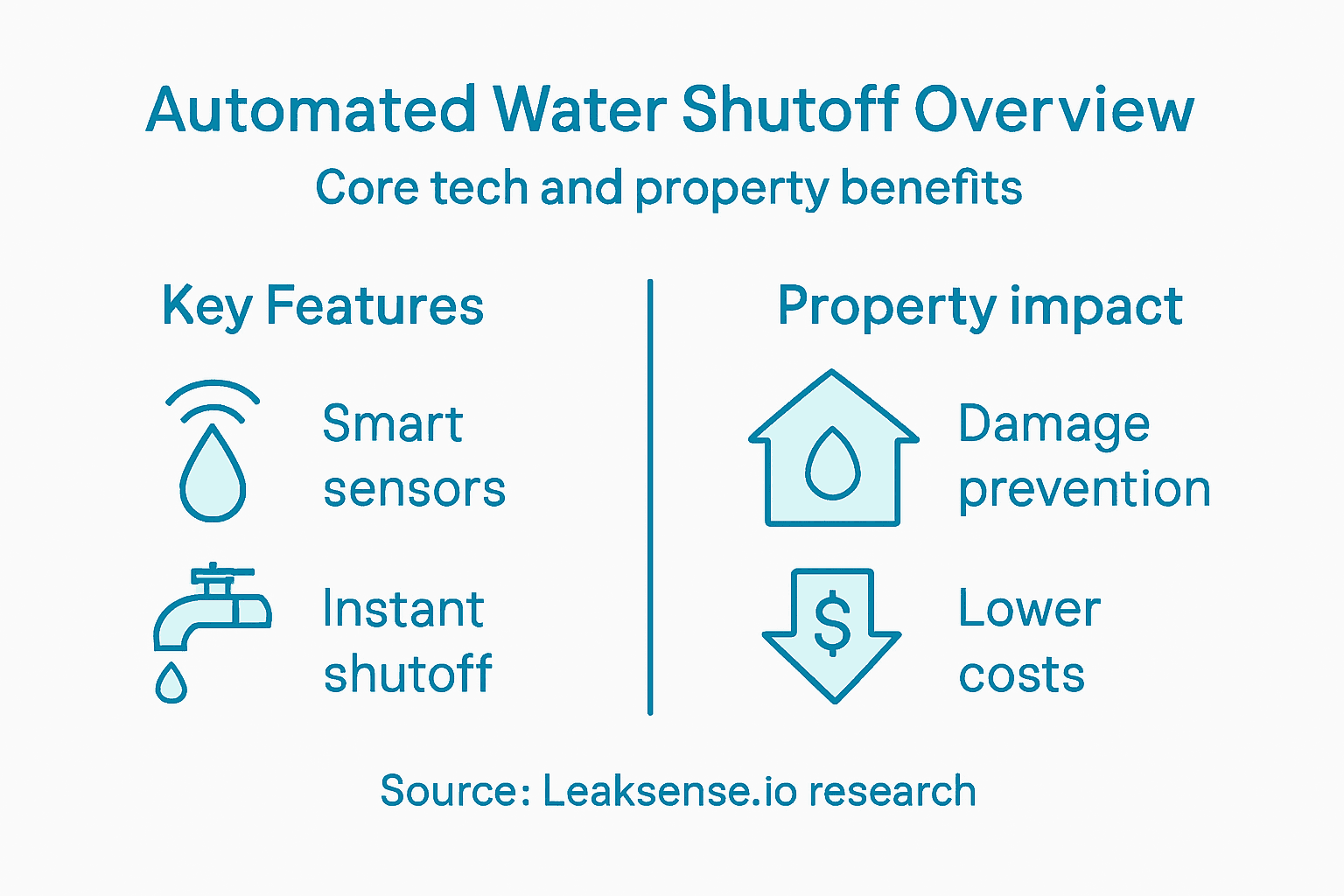
Automated water shutoff systems represent a critical technological solution for preventing catastrophic water damage in residential and commercial properties. These intelligent systems utilize advanced sensor technology and real-time monitoring to detect unexpected water flow patterns, enabling immediate intervention when potential leaks are detected.
At their core, these systems leverage IoT-enabled sensors to continuously track water movement through property pipelines. Advanced sensor technologies enable precise detection of anomalies that might indicate emerging leaks, ranging from minor drips to significant pipe ruptures. The key components typically include:
- Water flow sensors
- Smart control valves
- Central monitoring units
- Wireless communication interfaces
- Real-time analytics platforms
When an unusual water flow pattern is detected, the system automatically triggers the main water valve to close, effectively stopping potential water damage before it escalates. This proactive approach can prevent thousands of dollars in property damage and protect critical infrastructure from unexpected water-related risks.
The integration of machine learning and advanced analytics further enhances these systems’ capabilities. By establishing baseline water consumption patterns, the technology can distinguish between normal usage fluctuations and genuine leak scenarios with remarkable precision. Property managers gain unprecedented visibility into their water infrastructure, transforming reactive maintenance into a predictive, data-driven approach.
Pro tip: Install automated water shutoff systems with professional calibration to ensure maximum sensitivity and minimal false alarms.
Key Types and Core Technologies Compared
Automated water shutoff systems employ diverse technologies to detect and prevent water damage, with multiple approaches addressing different property management needs. Valve control technologies range from sophisticated integrated systems to more straightforward retrofit solutions, each offering unique advantages for property managers.
The primary categories of automated water shutoff systems include:
-
Integrated Valve Controllers
- Completely replace existing plumbing infrastructure
- Provide direct water flow control
- Require professional installation
- Ideal for new construction or major renovations
-
Motorized Ball Valve Actuators
- Install over existing manual valves
- Easier homeowner-level installation
- More cost-effective retrofit solution
- Adaptable to current plumbing configurations
Detection technologies further differentiate these systems, utilizing multiple sensor strategies to identify potential water issues. Leak detection mechanisms typically combine flow-based monitoring with strategic sensor placement, creating multilayered protection against water damage.
Advanced systems integrate machine learning algorithms that can distinguish between normal water usage fluctuations and genuine leak scenarios, providing unprecedented precision in water management.
Property managers must carefully evaluate their specific infrastructure, budget constraints, and installation requirements when selecting an automated water shutoff system. Each technology offers distinct benefits, with some prioritizing comprehensive monitoring while others focus on rapid emergency response.
Here’s a quick comparison of automated water shutoff system types and their best-use scenarios:
| System Type | Ideal Property Type | Installation Complexity | Best-Use Scenario |
|---|---|---|---|
| Integrated Valve Controller | New builds, major renovations | Professional plumbing needed | Full infrastructure replacement |
| Motorized Ball Valve Actuator | Existing homes, retrofits | DIY or basic professional | Upgrade with minimal disruption |
Pro tip: Consult a professional water management specialist to conduct a comprehensive property assessment before selecting an automated water shutoff system.
How Detection and Shutoff Mechanisms Work
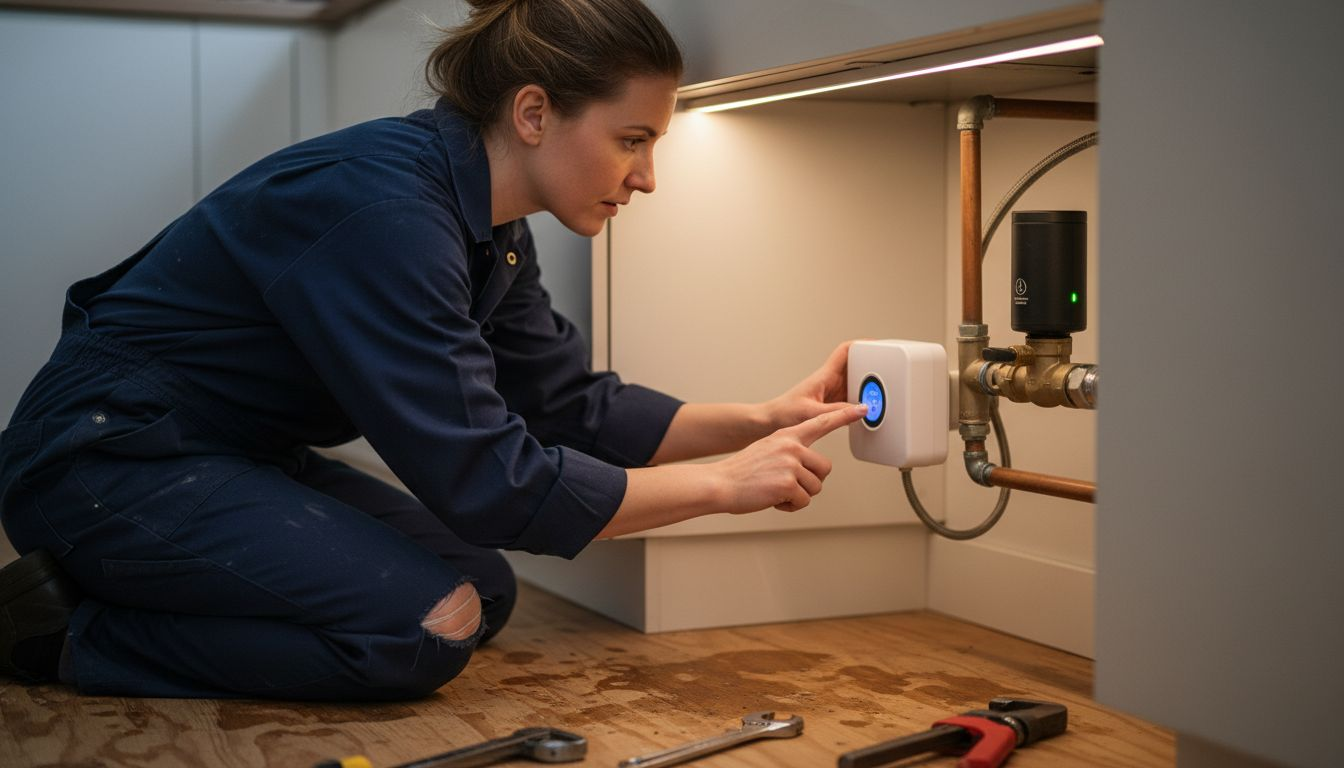
Automated water shutoff systems employ sophisticated technologies to detect and prevent potential water damage through a complex, multilayered monitoring approach. Detection mechanisms rely on three critical components working in precise synchronization: advanced sensors, intelligent controllers, and motorized shutoff valves.
The core detection process involves multiple sophisticated sensor technologies:
-
Ultrasonic Flow Sensors
- Measure water flow with high precision
- Detect minute changes in water movement
- Can identify even microscopic leaks
- Provide real-time flow rate monitoring
-
Magnetic Flow Sensors
- Track water movement through magnetic field disruptions
- Highly accurate in different pipe configurations
- Less susceptible to mechanical wear
- Suitable for diverse water infrastructure
-
Spot Moisture Sensors
- Detect water presence at specific locations
- Ideal for monitoring high-risk areas
- Can trigger immediate alerts
- Provide localized leak detection
The intelligent controller serves as the system’s brain, continuously analyzing sensor data against preset usage thresholds and historical patterns. When anomalies are detected, the controller cross-references multiple data points to confirm potential leak scenarios, minimizing false alarms while ensuring rapid response to genuine water-related risks.
Cutting-edge systems now incorporate machine learning algorithms that can distinguish between normal water usage fluctuations and actual leak indicators with remarkable precision.
Upon confirmed detection, the motorized shutoff valve immediately closes, stopping water flow and preventing potential catastrophic damage. This rapid response can save property managers thousands of dollars in potential repair and restoration costs.
Below is a summary of core sensor technologies and their key detection capabilities:
| Sensor Type | Main Function | Detection Sensitivity |
|---|---|---|
| Ultrasonic Flow | Measures flow changes quickly | Detects micro leaks |
| Magnetic Flow | Monitors pipe water movement | Handles complex pipe layouts |
| Spot Moisture | Finds water in high-risk areas | Pinpoints local leak sites |
Pro tip: Configure your automated water shutoff system with graduated response levels to balance between immediate protection and avoiding unnecessary water supply interruptions.
California Title 24 and Legal Compliance
California’s water regulation landscape has evolved significantly, with stringent legal frameworks designed to protect residents and ensure responsible water management. Water Shutoff Protection Act regulations mandate comprehensive protections for water service consumers, establishing clear guidelines for water providers and property managers.
Key compliance requirements for water systems in California include:
-
Notification Requirements
- Minimum 60-day delinquency period before shutoff
- Written notice of potential service interruption
- Clear explanation of payment alternatives
- Contact information for dispute resolution
-
Consumer Protection Provisions
- Mandatory payment plan options
- Protection for vulnerable population groups
- Appeal procedures for contested shutoffs
- Documentation of communication attempts
The legal framework specifically addresses critical aspects of water service management, ensuring that water providers cannot arbitrarily disconnect services without extensive procedural safeguards. These regulations apply to all community water systems serving 15 or more connections, creating a standardized approach to water service management across California.
Property managers must understand that compliance is not optional - violations can result in significant penalties and potential legal actions by state authorities.
Specifically, Title 24 and related water regulations require urban and community water systems to implement policies that prevent unauthorized water shutoffs. These legal requirements aim to balance fiscal responsibilities of water providers with fundamental consumer protections, particularly for vulnerable populations.
Pro tip: Maintain detailed documentation of all water service communications and payment interactions to ensure compliance with California water shutoff regulations.
Financial Impact, Insurance, and Sustainability
Property managers and owners increasingly recognize automated water shutoff systems as strategic investments with multifaceted financial benefits. Smart water management solutions provide substantial economic advantages through proactive water damage prevention and resource optimization.
Key financial benefits include:
-
Insurance Premium Reductions
- Up to 20% insurance discount potential
- Lower risk profile for underwriters
- Reduced water damage claim frequency
- Enhanced property insurance marketability
-
Water Cost Savings
- Potential 30% reduction in water bills
- Precise leak detection and prevention
- Real-time consumption monitoring
- Immediate anomaly identification
Insurance companies increasingly view automated water shutoff systems as risk mitigation technologies. These systems demonstrate a property owner’s commitment to proactive maintenance, which translates directly into more favorable insurance terms and potentially significant premium reductions.
Sustainable water management is no longer optional - it’s a critical strategy for financial and environmental responsibility.
Beyond direct financial benefits, these technologies contribute meaningfully to broader environmental sustainability efforts. By preventing water waste, reducing unnecessary consumption, and minimizing potential infrastructure damage, automated shutoff systems represent a holistic approach to resource conservation and responsible property management.
Pro tip: Document and track water savings from your automated system to demonstrate tangible sustainability improvements to insurers and stakeholders.
Protect Your Property with Advanced Automated Water Shutoff Solutions
Water damage can strike without warning and lead to costly repairs along with insurance challenges. This article highlights the critical need for automated water shutoff systems that detect leaks early and stop water flow immediately. If you manage multifamily residential or commercial properties in California, staying compliant with Title 24 regulations and minimizing water waste is essential. Leaksense.io specializes in smart leak detection and automated shutoff technology designed to tackle exactly these challenges by combining IoT-enabled sensors with real-time monitoring and analytics.
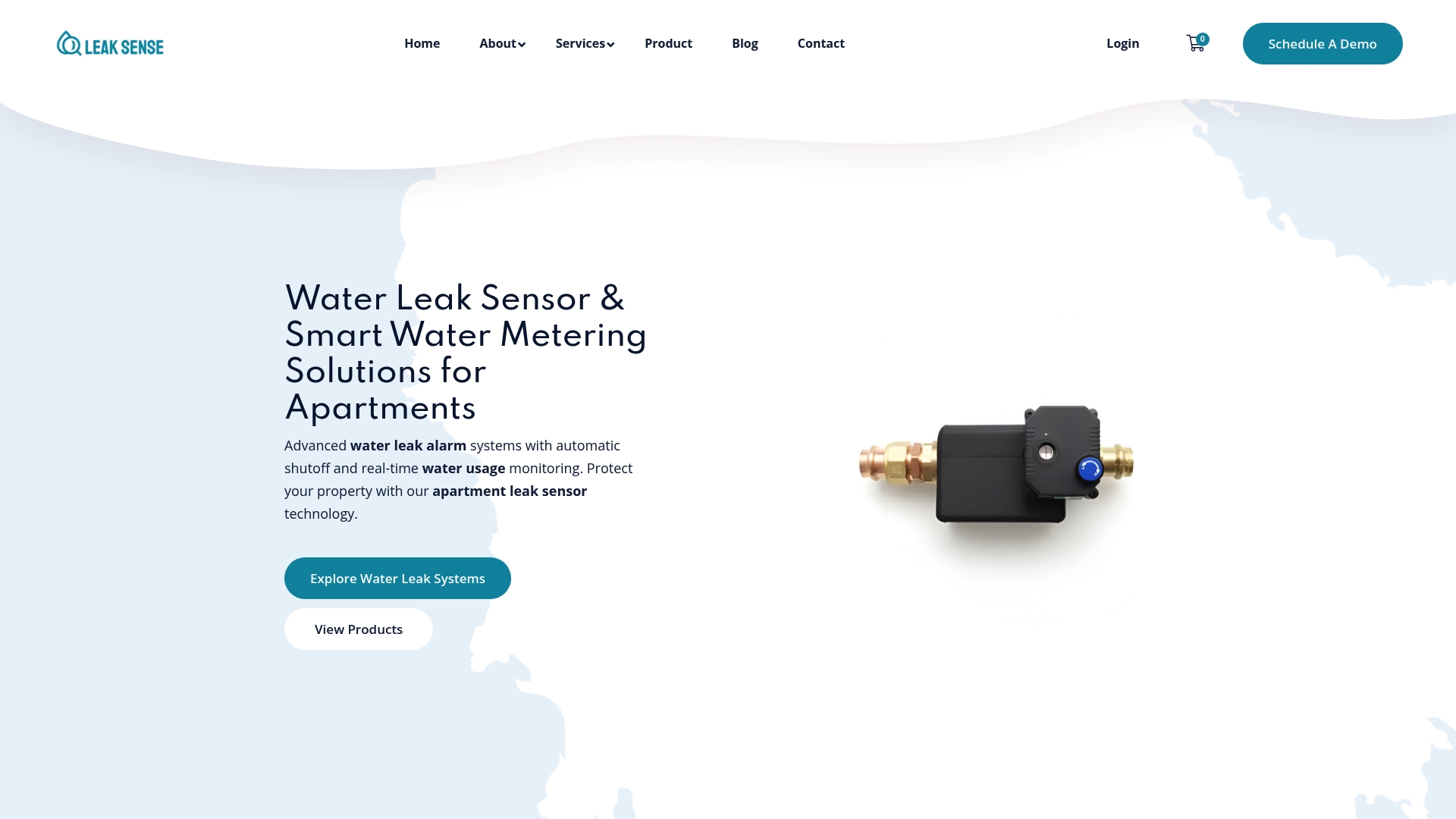
Take control of your water management today with Leaksense.io’s professional installation and reliable solutions built to protect your assets, reduce insurance premiums, and support sustainability efforts. Visit Leaksense.io now to explore how our real-time monitoring and automated water shutoff services can safeguard your property and ensure legal compliance. Don’t wait for water damage to happen—act now to secure peace of mind and significant cost savings.
Frequently Asked Questions
What is an automated water shutoff system?
Automated water shutoff systems are technological solutions designed to detect unexpected water flow patterns in properties. They utilize IoT-enabled sensors to identify potential leaks and automatically shut off the main water valve to prevent damage.
How do automated water shutoff systems detect leaks?
These systems use advanced sensors like ultrasonic and magnetic flow sensors to continuously monitor water movement. When anomalies are detected, the intelligent controller analyzes the data to confirm leaks and quickly activates the motorized shutoff valve to stop water flow.
What are the main benefits of installing an automated water shutoff system?
The primary benefits include preventing water damage, reducing insurance premiums, saving on water bills, and promoting sustainable water management practices. They also provide property managers with real-time monitoring and insights into water usage patterns.
Are there different types of automated water shutoff systems?
Yes, there are primarily two types: integrated valve controllers, which replace existing plumbing, and motorized ball valve actuators, which retrofit over existing valves. Each type has distinct advantages depending on property needs and installation capabilities.