TL;DR:
- Water leaks in California buildings are predictable risks that can be effectively managed with advanced sensor technology. Installing layered systems that include point detectors, leak cables, and automatic shutoff valves significantly reduces water damage, costs, and insurance claims. Proper calibration, maintenance, and integration with building management systems are essential for maximizing ROI and compliance.
Water leaks are not the unpredictable disasters most property managers assume they are. In California’s multifamily and commercial buildings, leaks account for billions in annual property damage, yet the technology to detect and stop them exists right now. Sensor-based plumbing management has moved well beyond simple flood alarms, offering real-time analytics, automated shutoff, and compliance reporting that directly impact your bottom line. This article walks through the types of sensors available, how to integrate them into your building systems, what ROI looks like in practice, and the strategic steps you need to take today.
- Why plumbing sensors are essential for California property managers
- Types of plumbing sensors and their functions
- Integrating sensors with building management systems for best results
- Real-world results: Cost savings, compliance, and ROI from sensor adoption
- What most property managers miss when deploying plumbing sensors
- Next steps: Implement sensor solutions for your property
- Frequently asked questions
Key Takeaways
| Point | Details |
|---|---|
| Layered sensor strategy | Combining multiple sensor types delivers the most reliable leak detection and prevention. |
| Proactive plumbing management | Sensors shift leak response from costly repairs to prevention, saving money and complying with insurance requirements. |
| Integration boosts ROI | Connecting sensors to building systems ensures rapid response and measurable cost savings. |
| Maintenance is critical | Regular calibration and testing maximize accuracy and reliability of sensor networks. |
| Real-world savings | Sensor adoption cuts claims by up to 90% and reduces maintenance by 15-30% in California multifamily properties. |
Why plumbing sensors are essential for California property managers
Water damage is consistently one of the most expensive claims in commercial and multifamily real estate. A single slow leak behind a wall can saturate insulation, promote mold growth, and lead to six-figure remediation costs before anyone notices. In California, where strict water conservation regulations and Title 24 compliance requirements add another layer of accountability, the stakes are even higher.
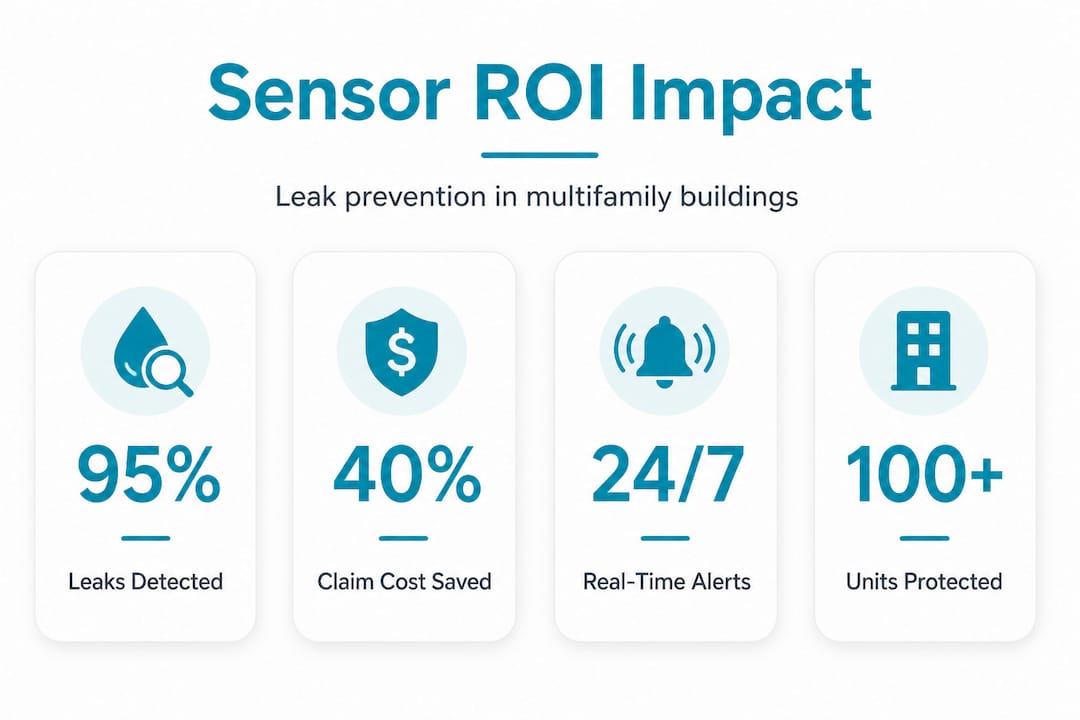
The financial case for sensor adoption is strong. Proactive prevention strategies show that sensors shift plumbing management from reactive repairs to proactive prevention, enabling property managers in California multifamily and commercial buildings to cut costs by 15-30% and reduce claims by 70-90%. That is not a marginal improvement. It is a fundamental change in how risk is managed at the property level.
Beyond cost, insurers are paying attention. Many carriers now offer premium discounts to properties with certified leak detection systems installed. Some are beginning to require flood prevention measures as a condition of coverage. California regulators, meanwhile, are pushing water submetering requirements for new multifamily construction, making sensor-based monitoring not just smart but necessary for compliance.
Properties that benefit most from sensor deployment include:
- Multifamily residential buildings with shared plumbing risers and high unit density
- Commercial office and retail buildings with large mechanical rooms and HVAC-connected water systems
- Mixed-use developments where water damage in one zone can cascade into adjacent residential or retail units
- Hotels and hospitality properties where guest unit leaks often go unreported for hours
- Senior living facilities where residents may not notice or report leaks promptly
FM Global water damage insights reinforce this point clearly: water is now treated with the same urgency as fire risk in commercial property loss prevention, and the expectation is that property managers use layered sensor systems rather than relying on visual inspections alone.
“Sensors shift plumbing management from reactive repairs to proactive prevention, enabling property managers in California multifamily and commercial buildings to achieve compliance, cut costs 15-30%, reduce claims 70-90%, and handle edge cases like silent leaks via real-time, unit-level data.”
Systems with 95% leak detection accuracy are no longer theoretical. They are deployed in California properties today, reducing water damage exposure while generating the data needed for insurance documentation and regulatory reporting.
Types of plumbing sensors and their functions
Not all sensors work the same way or protect the same areas of your building. Understanding the categories helps you make strategic decisions about where to invest and how to layer your protection. Smart sensors overview provides a strong starting point for multifamily applications specifically.
Here is a comparison of the primary sensor types available for California property managers:
| Sensor type | How it works | Best application | Key advantage |
|---|---|---|---|
| Point detectors | Moisture-sensitive probes trigger alert on contact with water | Under sinks, near appliances, mechanical rooms | Low cost, easy install |
| Leak detection cables | Conductive cable changes resistance when wet along its length | Along pipe runs, in raised floors, server rooms | Linear coverage for large areas |
| Automatic shutoff valves | Flow sensor triggers valve closure on abnormal usage | Main supply lines, unit-level shutoffs | Stops damage at the source |
| LoRaWAN submeters | Long-range wireless devices track flow at the unit or zone level | Multifamily billing, compliance reporting | Real-time usage data and alerts |
The way these systems work in sequence matters as much as the individual components. Here is how a fully layered sensor system responds to a leak event:
- Detection: A point detector or leak cable identifies moisture at the source location and sends a signal to the central monitoring platform.
- Verification: Edge analytics or AI algorithms analyze the signal against known patterns to confirm it is a genuine leak, not a false positive from condensation or cleaning.
- Alert: The platform sends an immediate notification to the property manager, maintenance team, and optionally the tenant via SMS or app.
- Automated response: If an automatic shutoff valve is connected, it closes the supply line to the affected zone within seconds, stopping water flow before damage escalates.
- Work order generation: Integration with a computerized maintenance management system (CMMS) creates a repair ticket automatically, timestamped and documented for insurance purposes.
- Data logging: All event data is stored in the cloud platform for compliance reporting, insurance claims, and trend analysis.
Pro Tip: Always layer sensor types. No single sensor protects the whole property. Point detectors catch localized pooling, leak cables cover linear pipe runs, and flow-based shutoffs handle supply line failures. Each type fills a gap the others cannot.
FM basic sensor recommendations are clear on this: combining cables, point detectors, and auto valves provides the redundancy needed to catch the wide variety of leak scenarios found in multifamily and commercial buildings. Regular calibration and testing are non-negotiable to maintain reliability.
BACnet integration allows sensors to communicate directly with building management systems (BMS), enabling facility managers to view leak status alongside HVAC, electrical, and access control data in a single interface. LoRaWAN-based devices work well in large or older buildings where running wired infrastructure is impractical. For a detailed comparison of how these technologies stack up, sensor system comparisons offers a practical side-by-side analysis.
You can also review the step-by-step leak detection process for a more operational view of deployment.
Integrating sensors with building management systems for best results
Installing sensors is only the first step. The real value comes from connecting them to your existing building infrastructure so that responses are automated, documented, and traceable. Setting up sensor systems walks through the integration process in detail.
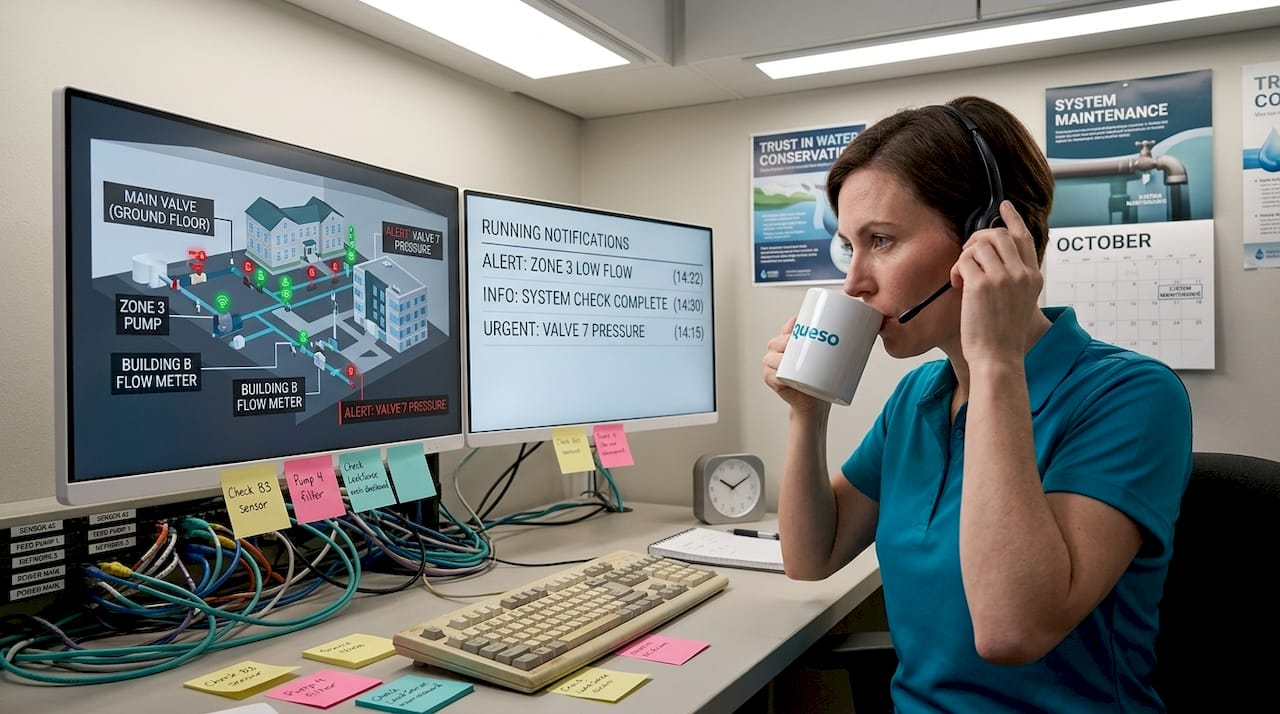
Here is a breakdown of the main integration pathways available to California property managers:
| Integration type | What it connects | Key benefit | Typical use case |
|---|---|---|---|
| BMS (Building Management System) | Centralized building controls | Unified dashboard for all building systems | Commercial office, large multifamily |
| CMMS (Maintenance Management) | Work order and asset tracking | Auto-generates repair tickets on alert | Facilities with maintenance teams |
| BACnet protocol | Direct device-to-device communication | Seamless data exchange without middleware | Mixed-system buildings |
| LoRaWAN network | Wireless, long-range IoT connectivity | Works in thick-walled or older buildings | Retrofit multifamily, commercial |
The benefits of integrating your sensor network with these platforms are significant:
- Faster response times: Automated workflows mean maintenance teams are dispatched within minutes, not hours.
- Reduced false alarms: AI and edge analytics cross-reference sensor data with building usage patterns, filtering out false positives before they create unnecessary disruptions.
- Compliance documentation: Every leak event, shutoff action, and repair order is logged automatically, creating the audit trail regulators and insurers require.
- Tenant communication: Integrated platforms can send real-time alerts to affected tenants, reducing complaints and demonstrating responsiveness.
- Insurance alignment: Documented system performance data supports claims for premium discounts and demonstrates compliance with carrier flood prevention requirements.
Pro Tip: Regular calibration and cross-system checks prevent sensor drift and false alarms. Schedule calibration at least twice a year for high-humidity areas like laundry rooms and mechanical spaces, and annually for all other zones.
A well-integrated system follows a clear workflow: leak detected, auto shutdown activated, property manager and maintenance team notified simultaneously, work order created in the CMMS, and tenant informed if their unit is affected. The entire sequence from detection to notification can happen in under 60 seconds with a properly configured system.
IoT app integration is advancing rapidly, and modern building apps now support direct sensor data feeds, push notifications, and remote valve control from mobile devices. This gives property managers genuine oversight even when they are off-site.
For properties evaluating smart water metering as part of their compliance strategy, integration with BMS and CMMS platforms is a key factor in maximizing the value of submetering data. The best leak detection systems for multifamily applications are those designed with integration in mind from the start, not bolted on afterward.
Real-world results: Cost savings, compliance, and ROI from sensor adoption
The numbers behind sensor adoption in California multifamily and commercial buildings are compelling. Treating water like fire shows that properties with layered sensor systems consistently achieve 15-30% reductions in water-related operational costs and 70-90% reductions in insurance claims. Those figures cover both the direct savings from prevented damage and the indirect savings from lower premiums and reduced maintenance labor.
The top sources of ROI break down as follows:
- Avoided repair costs: Catching a leak early, before it saturates flooring or drywall, typically costs a few hundred dollars to fix. Catching it after significant damage can cost $50,000 or more.
- Reduced insurance premiums: Carriers that recognize certified leak detection systems routinely offer 5-15% premium discounts, with some offering higher reductions for properties with automatic shutoff valves.
- Water bill savings: FM Global leak sensor insights highlight that silent leaks, the kind that drip undetected through pipe joints or toilet flappers, can waste tens of thousands of gallons per year. Sensors catch these before they appear on a quarterly utility bill.
- Regulatory compliance: California’s evolving Title 24 and water submetering requirements create financial exposure for non-compliant properties. Sensor systems with logging capability simplify compliance reporting and reduce audit risk.
- Tenant retention: Properties with documented water management systems report fewer tenancy disputes related to water damage, which reduces turnover costs.
“ROI depends on system calibration, layered sensors, and routine maintenance. Properties that invest in integration and testing see the highest return, while those that treat sensor installation as a one-time fix often underperform.”
Consider a concrete example: a 120-unit multifamily building in the San Francisco Bay Area installed a layered sensor system combining point detectors at each unit’s water-connected appliances, LoRaWAN submeters on each floor, and automatic shutoff valves on the main supply risers. Before installation, the property averaged two major water damage events per year at an average remediation cost of $35,000 each. In the 18 months following installation, there were zero major damage events, two minor leaks caught within minutes, and a 22% reduction in total water consumption. The insurance carrier reduced the annual premium by 11%.
24/7 leak detection is the operational standard that makes this kind of outcome repeatable. Automatic shutoff systems are the mechanism that turns a detected leak into a stopped leak before damage escalates.
What most property managers miss when deploying plumbing sensors
Here is the perspective that rarely gets discussed in vendor materials: sensor technology works exactly as advertised when it is deployed correctly, maintained consistently, and integrated with your actual operational workflows. When it falls short, the failure almost always traces back to one of three avoidable mistakes.
The first mistake is over-reliance on a single sensor type. Point detectors near appliances give managers confidence that common leak points are covered. But they say nothing about a slow drip from a third-floor pipe joint, a pinhole leak in a buried supply line, or an HVAC condensate overflow on the roof. Layered deployment is not a premium option; it is the only approach that delivers the claim reduction numbers the data supports.
The second mistake is skipping calibration. Sensors drift. Moisture thresholds that were accurate at installation can shift over 12-18 months due to temperature cycling, dust accumulation, and hardware aging. A miscalibrated sensor generates false alarms, which trains your maintenance team to dismiss alerts. That is exactly when a real leak gets missed.
Common pitfalls to avoid:
- Over-relying on one sensor type and assuming it covers all risk zones
- Ignoring workflow integration, leaving sensors as standalone alarms disconnected from maintenance systems
- Skipping annual calibration, which degrades sensor accuracy and increases false positive rates
- Failing to test shutoff valves periodically, discovering they have seized only after a major supply line failure
Pro Tip: Make annual calibration part of your preventive maintenance schedule. Skipping this step is the costliest mistake property managers make with sensor systems, and it is entirely preventable.
The third and most strategic mistake is thinking about leak management as a plumbing problem rather than a water loss prevention program. When you frame it as plumbing, it stays in the maintenance budget and gets cut when cash is tight. When you frame it as risk management, it belongs in the same conversation as your insurance strategy, your compliance obligations, and your long-term asset value. That shift in framing changes how decisions get made and how resources get allocated.
Exploring cost-saving alternatives can also reveal that enterprise-grade protection does not always require enterprise-grade pricing, especially when solutions are purpose-built for California multifamily properties.
Next steps: Implement sensor solutions for your property
Water leak sensors are no longer optional infrastructure for California property managers. They are the foundation of a defensible risk management strategy, a compliance tool, and a measurable driver of operational savings. The educational case is clear. The data supports investment. The question is which system fits your specific property type, building age, and operational workflow.
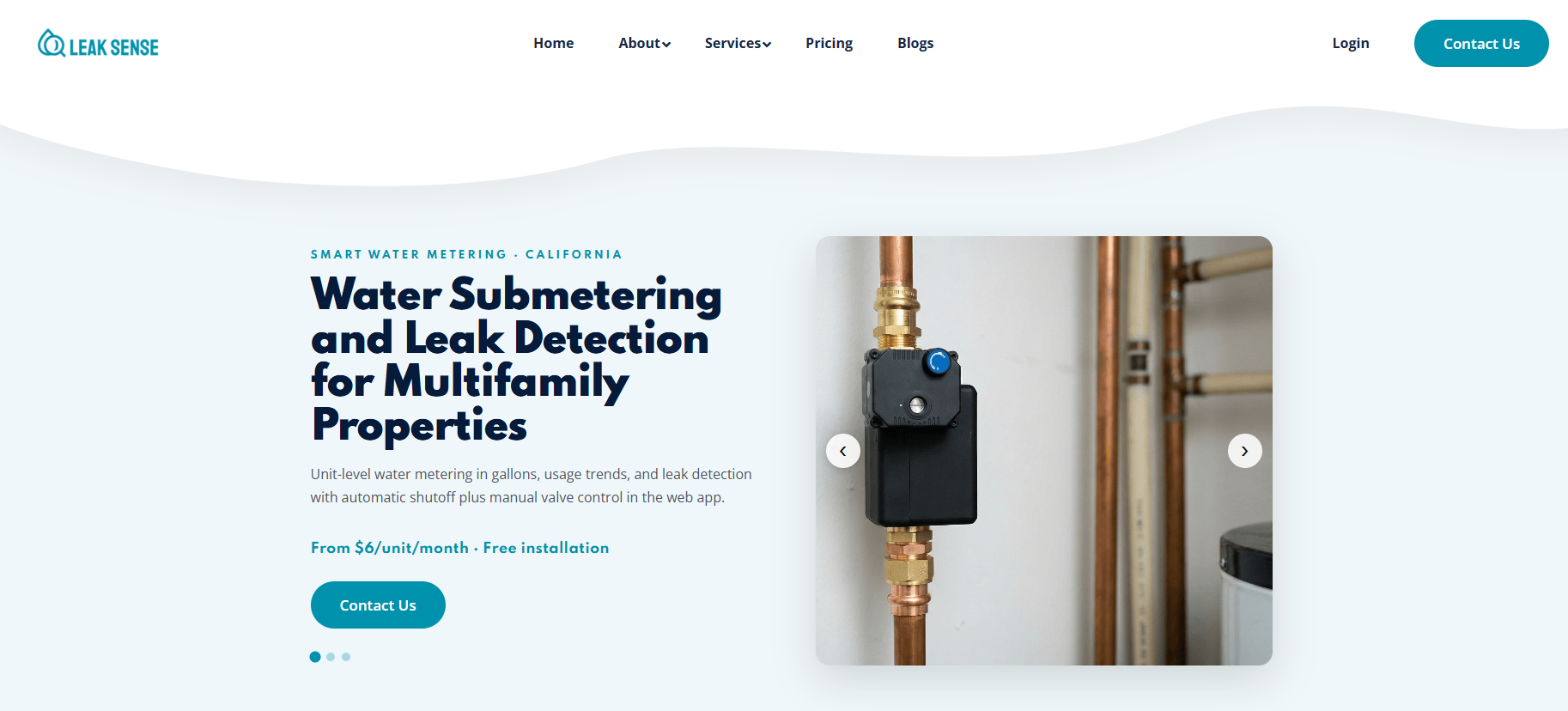
LeakSense offers purpose-built automatic leak detection service solutions for multifamily and commercial properties in California, combining professional installation, real-time monitoring, and automated shutoff capabilities. You can compare hardware options directly through the metering system comparison page, and explore how smart water metering solutions support both compliance reporting and tenant billing in a single integrated platform. The tools exist to protect your property, reduce your costs, and keep you ahead of California’s evolving regulatory requirements.
Frequently asked questions
How do plumbing sensors detect leaks in multifamily buildings?
Plumbing sensors use moisture detection, flow tracking, and real-time alerts to identify leaks quickly, often triggering automatic shutoff before major damage occurs. AI and edge analytics reduce false positives by cross-referencing signals with normal building usage patterns.
What types of sensors are most effective for California properties?
Layered sensor strategies combining point detectors, leak cables, and automatic shutoff valves provide the best results, since no single sensor type covers all leak scenarios found in multifamily and commercial buildings.
What are the maintenance requirements for plumbing sensor systems?
Regular calibration and testing, ideally on an annual schedule, ensure sensors function reliably and reduce false positives or missed detections. Many insurers also require documented maintenance records as a condition of flood prevention coverage.
How much can property managers save with sensor-based leak detection?
Most multifamily and commercial property managers report 15-30% cost reductions in water-related expenses and 70-90% fewer claims after deploying a layered sensor system. Actual savings vary based on building size, system calibration quality, and maintenance consistency.