TL;DR:
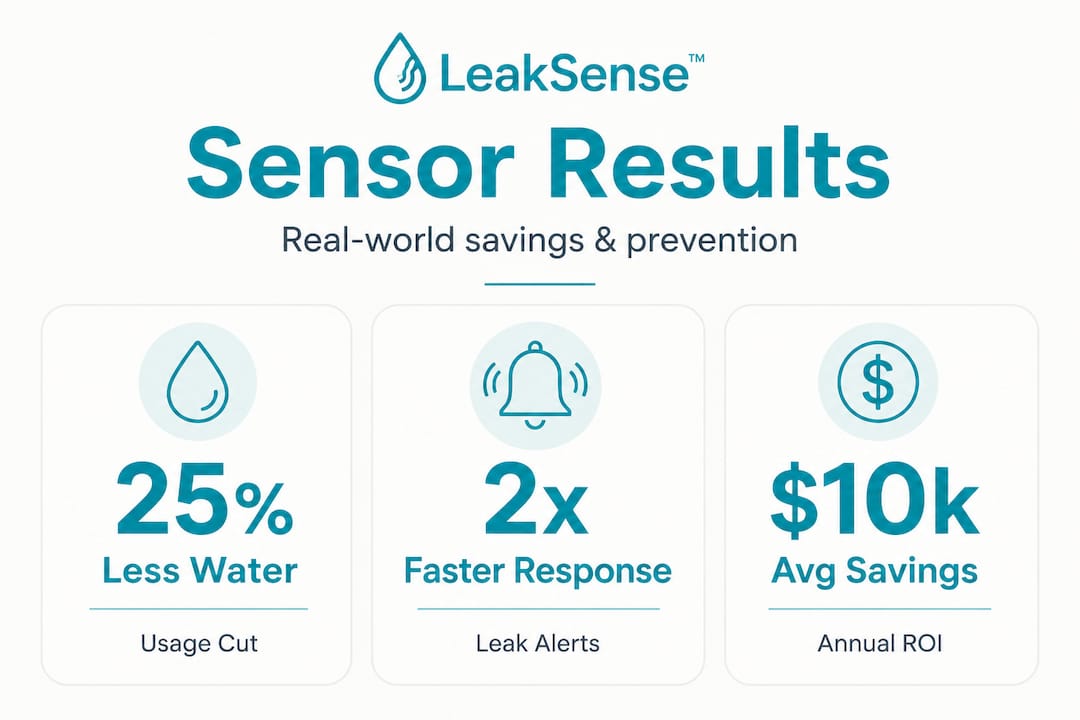
- Sensor deployment reduces water use by 20-25% in older buildings, protecting assets and lowering costs.
- Multiple sensor types, including flow, moisture, and acoustic, ensure comprehensive leak detection.
- Implementing layered sensors and automated shutoffs maximizes ROI and minimizes water damage risks.
Water leaks in multifamily and commercial buildings rarely announce themselves before causing serious damage. In fact, older properties averaged a 20–25% reduction in gallons used after sensor deployments, which means that gap represents real money lost every billing cycle before intervention. For California property managers facing rising water costs, tightening regulations, and aging infrastructure, sensor-driven water management is no longer a luxury option. It is a measurable, strategic investment that turns reactive maintenance into proactive protection and delivers returns that go well beyond the water bill.
- Why water management matters for California properties
- How modern water sensors work
- Real-world results: water savings and damage prevention
- Maximizing ROI: best practices for deploying sensors
- Why most property owners underestimate sensor ROI
- Ready to transform your building’s water management?
- Frequently asked questions
Key Takeaways
| Point | Details |
|---|---|
| Sensors reduce water loss | Deployed smart sensors can cut water use by up to 25% in older properties. |
| Layered sensing boosts accuracy | Using multiple sensor types together reduces missed leaks and false positives. |
| ROI greatest for older assets | Older buildings see the highest savings due to higher baseline leak risk. |
| Best results need expert planning | Proper placement, layering, and post-install support maximize value. |
Why water management matters for California properties
California’s water story is well known, but the financial and operational consequences for property managers are still underappreciated. Water rates in major California metros continue to climb year over year. Drought conditions have pushed municipalities to impose usage restrictions, and regulatory frameworks are evolving to demand greater accountability from building owners. When you manage dozens or hundreds of units, even a slow, undetected leak can escalate into a six-figure insurance claim within days.
Consider the scale of the problem:
- Leaks in common plumbing systems such as risers, cooling towers, and irrigation lines can waste thousands of gallons daily without triggering any visible symptom in the building.
- Insurance claims tied to water damage routinely rank among the most expensive losses for multifamily portfolios, often disrupting tenants and triggering extended unit vacancies.
- Regulatory fines for excessive water use or failure to report usage accurately are an increasing reality under California’s evolving submetering and Title 24 requirements.
- Tenant dissatisfaction from flooding events, mold concerns, or unexplained utility surcharges can spike turnover rates at exactly the wrong time.
The data reinforces the urgency. Sensor deployments consistently reduce water use and damage response times in multifamily portfolios, making the business case clear. Sensor-driven water conservation is not just an environmental talking point. It is a practical tool for protecting asset value and keeping operating costs under control.
The regulatory landscape is also shifting decisively. California’s Title 24 building standards and municipal water authority programs increasingly require or incentivize metering, submetering, and automated shutoff systems. Property owners who invest in data-driven infrastructure now are positioning themselves ahead of mandates that could otherwise force rushed, costly upgrades. Automated, sensor-based systems give you accurate usage data to satisfy regulators, evidence to resolve billing disputes, and the early warning capability to stop a small drip from becoming a major remediation project.
Now that we understand what’s at stake, let’s break down how sensors change the equation.
How modern water sensors work
Many property managers assume water sensors are simple devices that trigger an alarm when a pipe bursts. The reality is far more capable. Modern sensor technology spans several distinct types, each suited to a different detection scenario, and the most effective deployments use a combination of these to eliminate blind spots.
Flow sensors are installed on the main supply line or branch lines and measure the rate of water moving through the pipe in real time. They detect anomalies like continuous low-level flow during off-hours, which often signals a running toilet or a slow leak that no one has noticed. Flow sensors also generate the usage data that feeds into submetering and tenant billing systems.
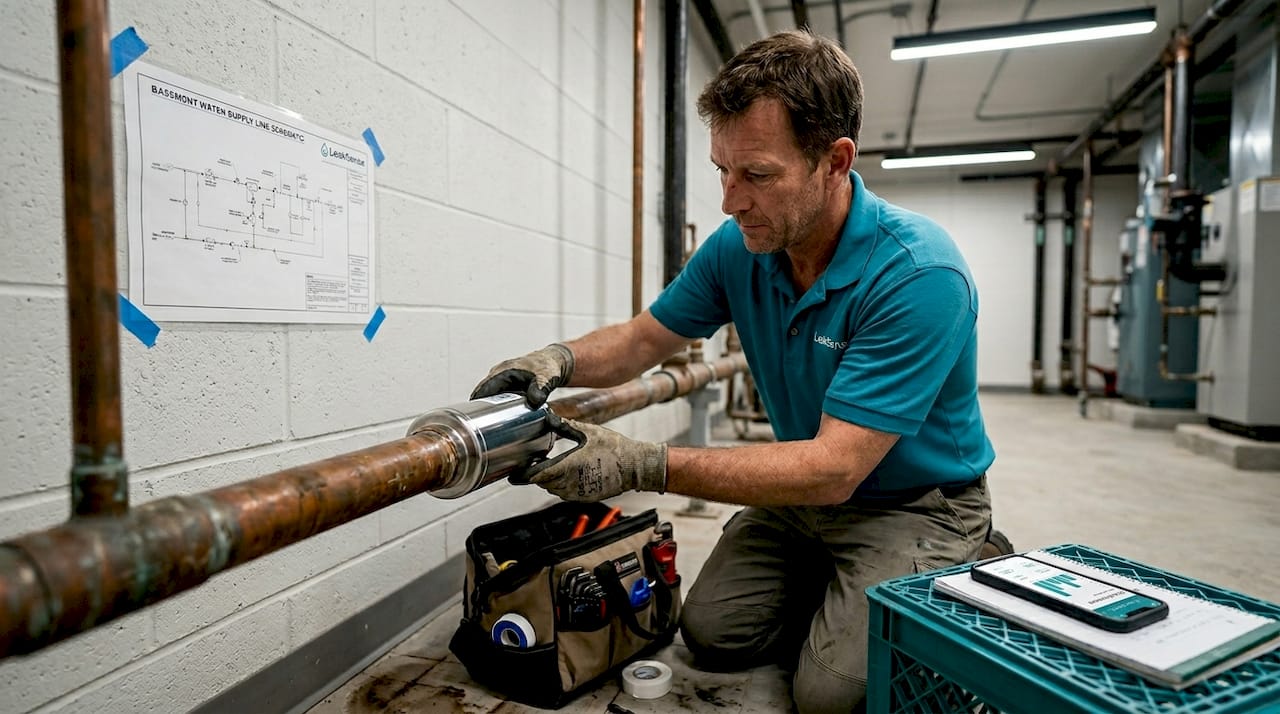
Moisture sensors sit at or near potential leak points such as under sinks, near water heaters, beneath dishwashers, and along basement floors. When water contacts the sensor pad, it triggers an immediate alert. These sensors are inexpensive, easy to place, and extremely effective at catching leaks at their source before water spreads.
Acoustic sensors listen for the high-frequency sound signatures that pressurized water produces when escaping through a crack or joint. They are particularly valuable for buried or enclosed pipes where visual inspection is impossible and where a leak could go undetected for months.
Pressure and ultrasonic sensors monitor changes in pipe pressure that indicate a breach or blockage. Ultrasonic variants are non-invasive, clamping onto the outside of a pipe rather than requiring a cut-in, which reduces installation complexity in occupied buildings.
| Sensor type | Best use case | Key strength | Limitation |
|---|---|---|---|
| Flow | Main lines, submetering | Continuous usage data | May miss very slow leaks |
| Moisture | Point-of-risk areas | Low cost, fast alarm | Limited spatial coverage |
| Acoustic | Hidden or buried pipes | Detects pressurized leaks | Requires calibration |
| Pressure/Ultrasonic | Supply lines, risers | Non-invasive installation | Less precise on old pipes |
Exploring the full range of smart leak sensor options available for multifamily buildings can help you match technology to the specific vulnerabilities in your property. Pairing sensors with automatic leak detection and automated shutoff controls creates a system that not only alerts your team but also responds immediately to stop water flow before damage spreads.
A multi-sensor approach combining flow and moisture or acoustic sensors is emphasized specifically for reducing blind spots and false positives, which is one of the most common concerns property managers raise about sensor programs.
Pro Tip: Resist the temptation to rely on a single sensor type. A layered deployment, for example pairing flow sensors on main lines with moisture sensors under high-risk fixtures, dramatically reduces both false alarms and missed leaks, keeping your maintenance team focused on real events.
With this foundation, we can explore the tangible outcomes and real-world impact.
Real-world results: water savings and damage prevention
The results from sensor deployments across multifamily portfolios are not theoretical. They show up on utility bills, insurance invoices, and maintenance logs. The key is understanding which properties and scenarios generate the strongest returns so you can set realistic expectations and prioritize accordingly.
Water savings by property type:
| Property profile | Typical water savings | Primary benefit driver |
|---|---|---|
| Older buildings (pre-2000) | 20–25% reduction in use | Leak detection, fixture monitoring |
| Mid-age properties (2000–2015) | 10–15% reduction | Usage analytics, irrigation control |
| New construction (post-2015) | Minimal to negligible | Compliance data, early warning |
Older properties averaged a 20–25% reduction in gallons used after sensor deployments, while the impact on new construction was negligible due to already-efficient fixtures and modern plumbing systems. This distinction matters when building your business case. If you manage a 1980s-era garden apartment complex in Southern California, the ROI math looks very different from a newly built luxury tower with WaterSense fixtures throughout.
Key insight: A 20% reduction in water use for a 100-unit building consuming 3 million gallons annually translates to roughly 600,000 gallons saved. At California’s average multifamily water rates, that can represent tens of thousands of dollars in annual savings, often enough to recover sensor installation costs within one to two years.
Beyond raw water savings, the avoided-cost picture is equally compelling:
- Faster leak response means fewer units affected when something does go wrong. 24/7 leak detection in practice shows that automated alerts typically trigger repair within hours rather than days, dramatically limiting structural damage.
- Fewer insurance claims reduce your loss history, which directly influences your premium renewal rates. Multiple carriers now offer discounts for properties with certified leak detection systems in place.
- Reduced tenant disruption from water events translates into fewer vacancy days and stronger lease renewal rates. Tenant satisfaction is an often-overlooked factor in the total value calculation.
- Accurate usage data supports fair and transparent billing, reducing disputes and the administrative time your team spends resolving them. Reviewing apartment leak detection solutions purpose-built for multifamily use can give you a clearer picture of what’s achievable in your specific building type.
Of course, every property is unique, so let’s clarify where sensors deliver the strongest ROI.
Maximizing ROI: best practices for deploying sensors
Knowing that sensors work is only half the battle. Deploying them strategically is what separates properties that see strong, measurable returns from those that install equipment and then wonder why the results are underwhelming. The following implementation practices reflect what consistently produces the best outcomes across California multifamily and commercial portfolios.
-
Prioritize older and high-occupancy buildings first. Savings vary significantly based on age and plumbing condition, with older and leak-prone portfolios generating higher returns. Start your sensor program where the risk and potential savings are greatest, then expand methodically.
-
Begin with leak-prone zones. Water heater rooms, laundry facilities, mechanical rooms, and ground-floor units are historically where the most frequent and costly leaks originate. Deploying moisture sensors in these areas first captures the highest-probability events with minimal upfront investment.
-
Use layered sensor deployments. Layered sensor strategies reduce blind spots and liability risk across the property. Combine flow sensors on main supply lines with moisture sensors at fixture level and acoustic sensors on concealed pipe runs to achieve complete coverage.
-
Integrate with automated shutoff controls. Sensors that only alert are useful. Sensors that automatically close a shutoff valve when an anomaly is detected are a genuine risk management tool. Automated shutoff can prevent catastrophic water loss during off-hours when no maintenance staff are on site.
-
Add submetering for billing accuracy. Smart water metering adds a layer of value beyond leak detection by giving you unit-level consumption data. This supports equitable tenant billing under California’s submetering regulations and creates a feedback loop that encourages conservation behaviors among residents.
-
Plan for post-installation support. Sensors require periodic calibration, firmware updates, and threshold adjustments as your building’s usage patterns change. Working with a provider that offers ongoing support and monitoring services ensures the system continues to perform accurately over time.
Pro Tip: Before finalizing your sensor deployment plan, conduct a simple water audit using your existing meter data to identify hours or zones with unexplained consumption. This will help you place sensors precisely where the evidence already points to risk, maximizing impact from day one.
With these strategies, property teams can see measurable impact. But what’s the bigger lesson here?
Why most property owners underestimate sensor ROI
There is a persistent tendency in the industry to evaluate sensor programs solely on water savings. You calculate reduced gallons, multiply by your rate, compare to installation cost, and decide whether the payback period is acceptable. That math is a starting point, not a finish line.
The real value of a sensor program is much wider than the water bill. Think about what a single significant water event actually costs your operation. There is the remediation contractor. The drywall and flooring replacement. The temporary relocation of affected tenants. The mold testing and clearance. The weeks of lost rent. The claim that triggers a 15% premium increase at renewal. The three-star review a frustrated tenant posts online before you can even finish the repair. None of those costs appear in a simple water savings calculation, but they are very real.
Study outcomes suggest that savings may be much smaller in new construction versus older properties, which underscores the need for context-specific ROI calculations. For older portfolios especially, the avoided event costs, not the reduced utility bill, often represent the majority of actual financial benefit.
There is also a compliance dimension that standard ROI models ignore. California’s regulatory environment is moving steadily toward mandatory submetering, real-time monitoring, and automated shutoff requirements for multifamily properties. Property owners who invest now are buying future compliance at today’s prices. Those who wait will face the same investment under deadline pressure, likely at higher cost and with less flexibility in implementation.
The unexpected value of sensors also shows up in ways that affect your asset’s long-term valuation. A building with documented water management infrastructure, accurate usage data, and a clean insurance loss history commands stronger terms during refinancing and presents more favorably in acquisition due diligence. That is a real, measurable premium that traditional ROI formulas simply do not capture.
The most successful property managers we work with treat sensor programs as operational infrastructure, not a line item to optimize or delay. They calculate ROI broadly, account for risk, and recognize that the cost of inaction compounds quietly every day a building runs without automated monitoring.
Ready to transform your building’s water management?
Sensor technology is proven, the regulatory direction in California is clear, and the financial case is stronger than most standard calculations suggest.
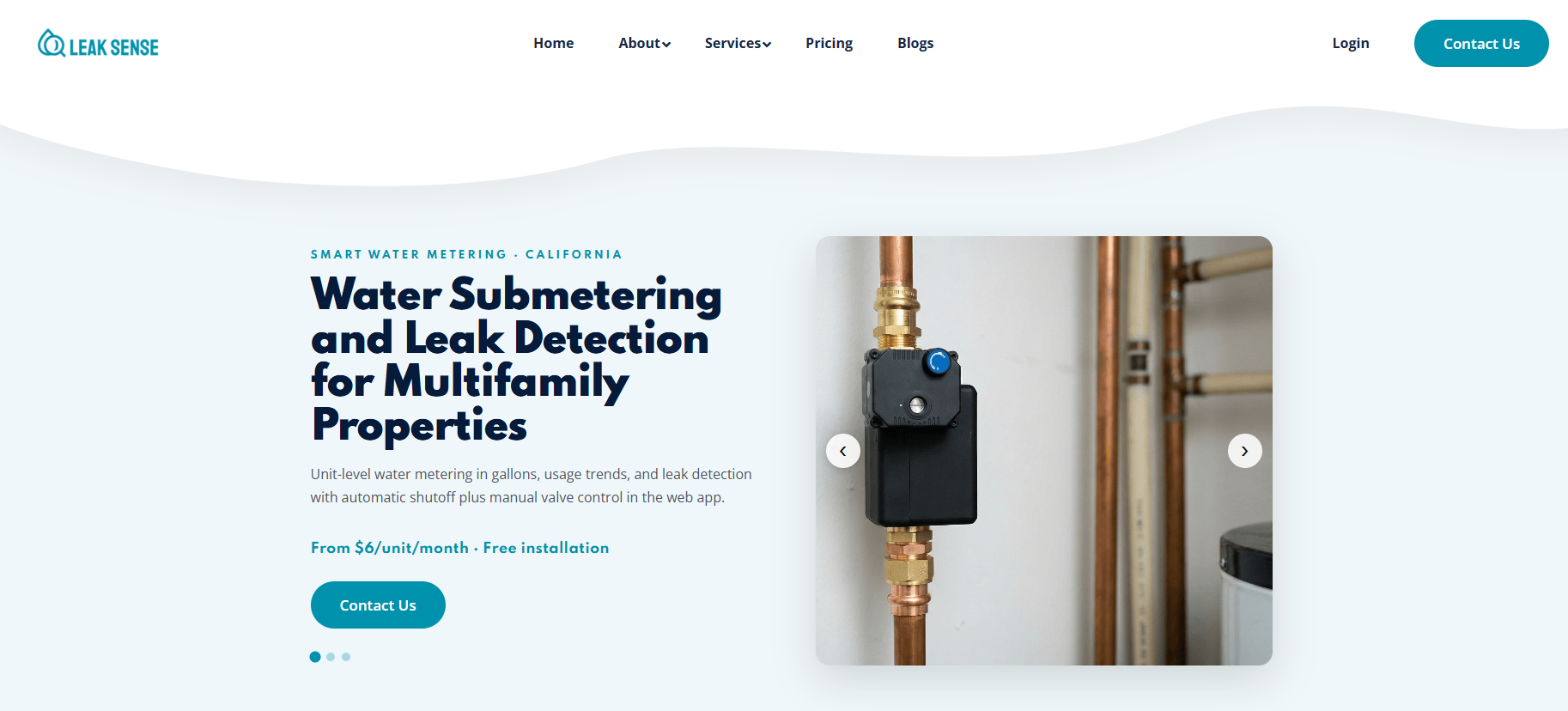
LeakSense specializes in helping California property managers and building owners deploy tailored water management solutions that deliver real, documented results. From automatic leak detection services with automated shutoff to full water metering systems that support accurate tenant billing, our team brings both the hardware and the California compliance expertise your portfolio needs. Whether you manage a single aging apartment complex or a diverse commercial portfolio, our water submetering solutions can help you reduce waste, lower costs, and manage risk proactively. Reach out to our team to discuss a sensor strategy built for your specific building profile.
Frequently asked questions
How quickly can sensors detect leaks in multifamily buildings?
Modern sensor deployments typically detect leaks within minutes to hours, far faster than traditional scheduled inspections. Participants reported faster detection and significantly reduced damage after sensor programs were implemented across multifamily portfolios.
Do sensors work better in older or newer properties?
Sensors deliver the greatest water savings in older properties because aging infrastructure carries higher leak risk and less efficient fixtures. Older properties averaged a 20–25% reduction in water use, while the impact on new construction was negligible.
What is a layered sensor approach?
A layered sensor approach combines flow, moisture, and sometimes acoustic sensors across different points in the building’s plumbing system to eliminate coverage gaps. A multi-sensor approach is specifically recommended to reduce both blind spots and false positives in detection.
Is smart water metering required for California properties?
California increasingly favors submetering and smart metering for new multifamily developments, and regulatory pressure for existing buildings is growing steadily under Title 24 and local water authority requirements. Property owners who implement metering proactively are better positioned for current and future compliance.