
TL;DR:
- Water usage analytics enable real-time detection of leaks, saving significant water and costs.
- California law requires submeters and analytics for compliance and proactive management.
- Integrating analytics with property management enhances operational efficiency and tenant engagement.
A single running toilet in a 50-unit multifamily building can waste more than 6,000 gallons per month without triggering a single maintenance call. Multiply that across multiple units and you are looking at thousands of dollars in avoidable costs, potential regulatory exposure, and damage that compounds quietly behind walls. Water usage analytics changes that equation entirely. It moves property managers from reactive damage control to proactive, data-driven oversight. This article walks you through what analytics actually means in practice, which technologies deliver the best results, how to implement them across your portfolio, and how to maximize both savings and California compliance.
- The basics: What is water usage analytics?
- Choosing the right technology: Smart meters, submetering, and leak detection options
- How water usage analytics prevents leaks and saves money
- Integrating analytics into property management: Alerts, billing, and compliance
- Maximizing ROI: Strategies for implementation and behavioral change
- Our perspective: What most property managers miss about water usage analytics
- Ready to bring smart water analytics to your properties?
- Frequently asked questions
Key Takeaways
| Point | Details |
|---|---|
| Analytics is proactive | Modern solutions spot leaks instantly and turn usage data into actionable savings for California property managers. |
| Smart meters outpace legacy | Digital submeters with ML-powered leak detection save more water and money compared to older or manual systems. |
| Compliance means savings | SB-7-driven submetering cuts water use by up to 30% while ensuring legal billing and tenant transparency. |
| Tenant engagement multiplies results | Billing and transparent analytics drive conservation behaviors and amplify financial returns for building owners. |
The basics: What is water usage analytics?
Water usage analytics is not simply reading a meter at the end of the month. It is a continuous, intelligent process that collects consumption data at the unit level, runs it through cloud-based software, and surfaces actionable insights in real time. Smart water usage analytics for California property managers involves unit-level submetering, real-time monitoring, and machine learning algorithms that flag abnormal patterns before they become costly problems.
Here is what a modern analytics stack typically includes:
- Unit-level submeters that measure individual consumption rather than relying on a single master meter for the whole building
- Smart sensors embedded in pipes or fixtures that detect flow anomalies, pressure drops, and micro-leaks
- Cloud-based dashboards that aggregate data and display usage trends, alerts, and billing summaries
- Machine learning (ML) algorithms that learn baseline consumption patterns for each unit and flag deviations automatically
Legacy systems rely on manual reads, monthly billing cycles, and reactive maintenance. Smart systems, by contrast, deliver data every few minutes and can send an alert within hours of a leak starting. That speed difference is where the real value lives.
Understanding the benefits of submetering is the first step toward building a business case for your ownership group. For a deeper technical breakdown, water metering explained covers the full spectrum from analog meters to IoT-enabled devices.
From a compliance standpoint, California’s SB-7 legislation requires individual submeters in newly constructed multifamily buildings, making analytics infrastructure not just a smart investment but a legal obligation for many properties.
Pro Tip: Even if your building predates SB-7 requirements, retrofitting submeters and connecting them to an analytics platform positions you ahead of future regulations and gives you immediate cost visibility.
Choosing the right technology: Smart meters, submetering, and leak detection options
Not all metering solutions are equal. The right choice depends on your building’s age, budget, connectivity infrastructure, and compliance obligations. Here is a direct comparison of the three main options based on California water monitoring benchmarks:
| Technology | Accuracy | Cost per unit | Best for |
|---|---|---|---|
| Mechanical submeters | ±2-5% | $150-$300 | Budget retrofits, older buildings |
| Smart digital submeters | ±1-2% | $400-$700 | New builds, compliance-focused properties |
| Integrated leak detection | ±1% | $800-$1,200 | High-value assets, full automation |
Mechanical submeters are the entry point. They are affordable and straightforward, but they require manual reads and offer no real-time data. Smart digital submeters connect via cellular or WiFi and push data to cloud dashboards automatically. Integrated leak detection systems combine metering with embedded sensors and automated shutoff valves, giving you the highest level of protection.
For California multifamily in 2026, ML-enhanced leak detection is increasingly considered standard rather than a premium add-on. Insurance carriers are beginning to offer discounts for properties with automated shutoff capabilities, which changes the ROI calculation significantly.
Here is a practical checklist for selecting the right system:
- Confirm SB-7 compliance requirements for your specific property type and construction date
- Assess your building’s existing pipe infrastructure for sensor compatibility
- Evaluate connectivity options (cellular vs. WiFi) based on building layout
- Request accuracy certifications from vendors and compare against California billing standards
- Review the vendor’s support model, including firmware updates and sensor replacement timelines
Following usage monitoring steps ensures you cover every requirement before committing to a vendor.
Pro Tip: Always ask vendors for a sample data export before signing a contract. If the data format does not integrate cleanly with your property management software, you will spend more time on manual reconciliation than you save on leak detection.
How water usage analytics prevents leaks and saves money
The financial case for analytics is well documented. California multifamily properties typically achieve a 15-30% reduction in water usage after deploying submetering and analytics, which translates to roughly $24,000 per year in savings for a 50-unit building.
Here is how the detection process actually works:
- Continuous flow monitoring identifies low-level leaks (like a running toilet or dripping fixture) that fall below the threshold of human notice
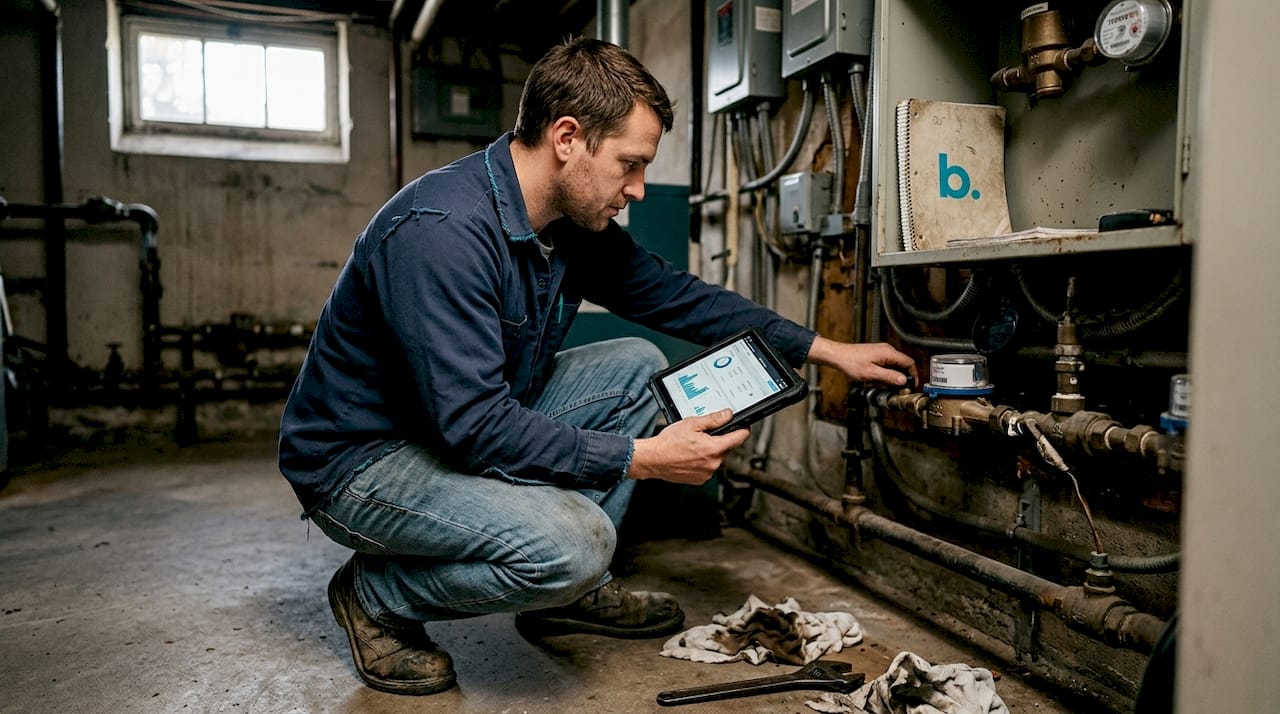
- Burst detection catches sudden high-flow events and triggers immediate alerts before water reaches flooring or walls
- Nighttime baseline analysis compares usage during low-activity hours to identify persistent leaks that would otherwise hide in daytime consumption data
- Unit-level attribution pinpoints exactly which apartment or fixture is responsible, eliminating the guesswork from maintenance dispatches
“High-frequency data plus ML detection boosts leak catch rates to over 92%. A Fresno 32-unit building found a major leak in 24 hours versus weeks with traditional monitoring, cutting waste to under 400 gallons.”
The compliance dimension matters equally. California SB-7 mandates individual submeters for multifamily buildings with direct access and billing rules. Properties that fail to comply face fines and potential liability if water damage occurs and records show no monitoring was in place.
The link between analytics and smart meter savings is direct and measurable. Pair that with real-time leak monitoring and you reduce both the frequency and severity of water-related incidents across your portfolio.
Integrating analytics into property management: Alerts, billing, and compliance
Analytics platforms deliver the most value when they are woven into your existing property management workflow, not treated as a standalone tool. Modern systems connect via API to software like Yardi, AppFolio, or Buildium, enabling seamless data flow between usage readings and tenant accounts.
Here is a practical integration sequence:
- Connect your submeters to the cloud dashboard and verify data is flowing accurately for each unit
- Configure alert thresholds based on your property’s baseline consumption patterns, setting separate rules for low-flow leaks and burst events
- Set up dual notifications so both the property manager and the affected tenant receive alerts simultaneously, which accelerates response and builds tenant trust
- Automate billing exports that pull verified usage data directly into your billing system, eliminating manual entry errors
- Generate compliance reports monthly and store them in a format ready for regulatory audits or insurance inspections
Cloud-based analytics with pattern recognition and ML anomaly detection, combined with software integration for billing and alerts, forms the backbone of a fully operational system. California rules prohibit markup on water resale and require fee disclosure to tenants, so automated billing with a clear audit trail protects you legally.
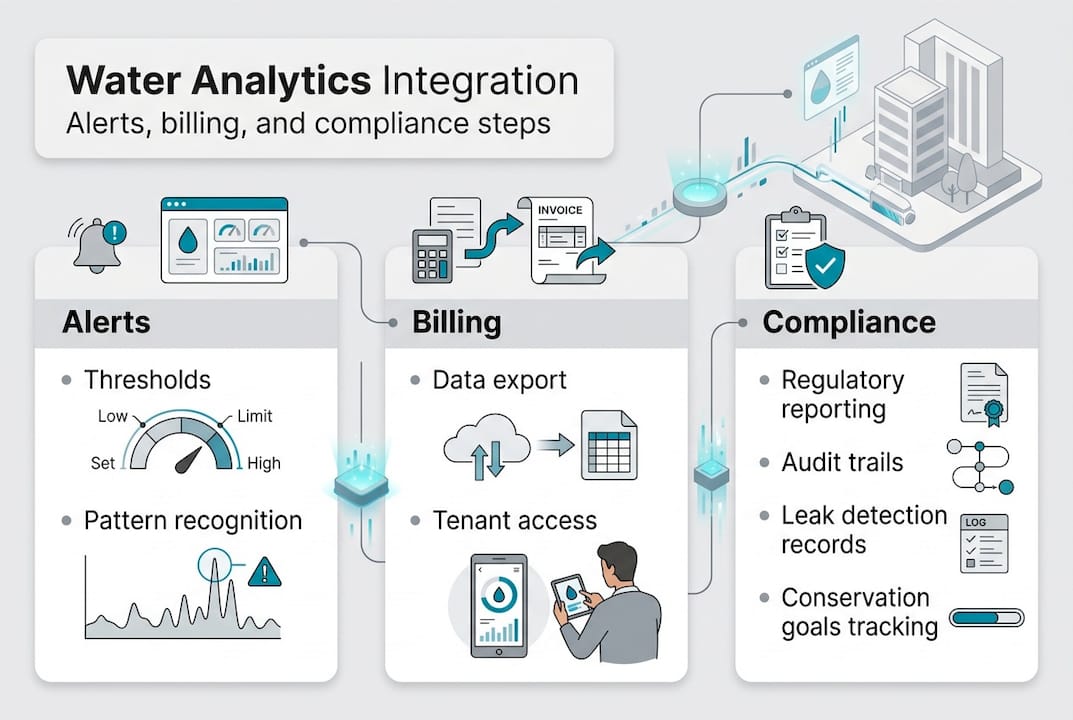
Engaging tenants through their own usage data is one of the most underutilized features of modern platforms. When tenants can see their consumption compared to building averages, behavioral shifts follow naturally. Research on machine learning for leak detection confirms that tenant-facing data tools amplify the conservation impact of the underlying technology.
For properties ready to move forward, professional installation services ensure sensors are placed correctly and integrated with your existing infrastructure from day one.
Pro Tip: Schedule a quarterly review of your alert thresholds. As seasonal usage patterns shift, thresholds calibrated in January may generate false positives by July, leading to alert fatigue and slower response times.
Maximizing ROI: Strategies for implementation and behavioral change
Deploying analytics hardware is the beginning, not the finish line. The properties that see the strongest returns are those that combine technical implementation with deliberate tenant engagement and ongoing system optimization.
Behavioral changes from tenant billing drive over 15% in additional savings beyond what leak detection alone achieves. ML models excel at anomaly detection but require robust training data to handle edge cases accurately, which means data quality management is an ongoing responsibility.
Here are the key strategies that separate high-performing implementations from average ones:
- Vendor assessment: Prioritize vendors with California-specific compliance experience, documented accuracy certifications, and a clear support escalation path for sensor failures
- Tenant onboarding: Provide a one-page summary explaining how submetering works, what data is collected, and how billing will change. Informed tenants generate fewer disputes and adopt conservation habits faster
- Tiered alert design: Create three alert levels (informational, warning, critical) to ensure maintenance teams prioritize correctly without becoming desensitized to notifications
- Ownership reporting: Use monthly analytics summaries to demonstrate ROI to investors and ownership groups. Data-backed reports accelerate approval for future capital investments
- Training data hygiene: Regularly audit your ML model’s performance by reviewing cases where leaks were detected late or missed entirely. Feed corrected data back into the system to improve future accuracy
Following a step-by-step implementation framework reduces the risk of common pitfalls, including inconsistent meter placement, misconfigured alert rules, and incomplete billing integrations.
Pro Tip: Run a 90-day post-installation audit comparing pre- and post-deployment consumption data by unit. This gives you concrete numbers to share with insurance carriers when negotiating premium adjustments.
Our perspective: What most property managers miss about water usage analytics
After working with multifamily properties across California, one pattern stands out consistently. Property managers invest in the hardware, confirm the alerts are working, and then stop. They treat analytics as a detection device rather than a continuous improvement platform.
The richest value in modern analytics is not the leak alert. It is the behavioral and operational intelligence buried in the reporting layer. Individual usage billing, consumption trend analysis, and unit-level comparisons are features that most platforms include by default, yet most managers never configure them beyond the initial setup.
The properties achieving real financial outcomes treat their analytics platform the way a CFO treats a financial dashboard: reviewing it regularly, acting on trends, and using it to drive decisions. They share usage data with tenants, adjust billing structures based on consumption patterns, and use compliance reports proactively rather than reactively.
The uncomfortable truth is that compliance, billing, and conservation are not three separate goals. They are one integrated strategy. When you align all three through a single analytics platform, the savings and risk reduction compound in ways that a basic leak alert system simply cannot replicate.
Ready to bring smart water analytics to your properties?
Understanding the technology is one thing. Putting it to work across your portfolio is where the real gains happen.
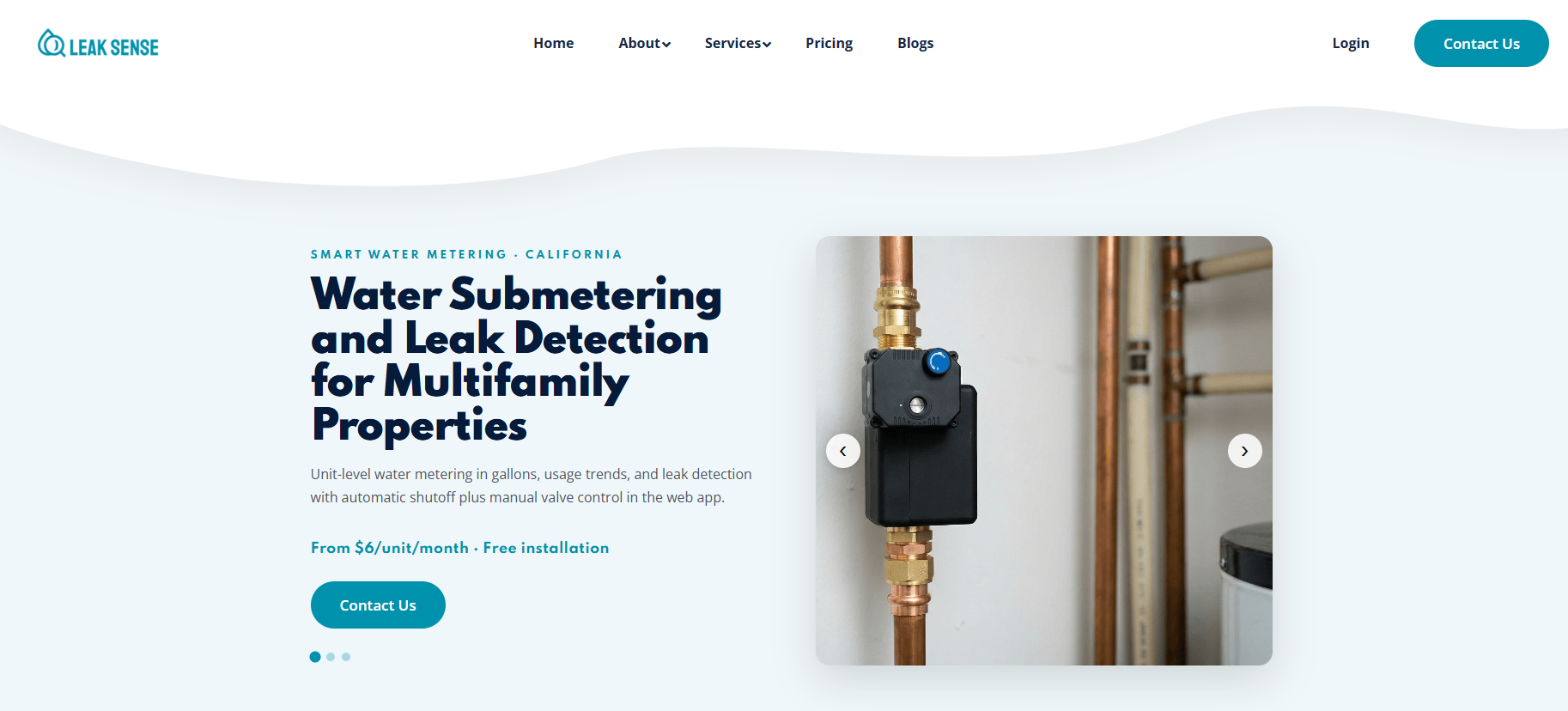
LeakSense offers integrated solutions purpose-built for California multifamily properties, covering automatic leak detection, certified metering systems, and end-to-end multifamily water submetering designed to meet SB-7 requirements from day one. Whether you are retrofitting an older building or equipping a new development, the platform handles monitoring, billing, alerts, and compliance documentation in one place. Stop absorbing preventable water costs and start building a measurable case for operational efficiency. The data is ready to work for you.
Frequently asked questions
How accurate are modern water usage analytics systems?
Smart digital submeters reach ±1-2% accuracy and integrated leak detection systems can achieve ±1%, making both options highly reliable for multifamily billing and compliance purposes.
How quickly can leaks be detected and stopped using analytics?
Advanced analytics with ML and real-time monitoring can identify leaks in under 24 hours and limit total waste to under 400 gallons, as demonstrated in documented California case studies.
What is the estimated water and cost savings from deploying analytics?
California multifamily properties typically achieve a 15-30% reduction in water usage, translating to approximately $24,000 per year in savings for a 50-unit building.
Are water usage analytics required for compliance in California?
California SB-7 mandates individual submeters for newly constructed multifamily buildings and enforces specific billing disclosure and access rules that property managers must follow.