TL;DR:
- Proper installation by professionals ensures compliance, accurate sensing, and reliable leak detection.
- Cellular backup is essential for continuous monitoring during WiFi outages in California properties.
- Routine testing, proper sensor placement, and thorough documentation are key to system performance and regulatory compliance.
Waking up to a flooded apartment unit is every property manager’s nightmare. Water can travel through walls, compromise structural integrity, and trigger mold growth within 24 to 48 hours, turning a minor drip into a six-figure repair bill. California’s Title 24 regulations now add another layer of urgency, imposing clear water efficiency and monitoring standards on multifamily and commercial properties. This guide walks you through everything you need to know about setting up a leak alarm system correctly, from prerequisites and installation steps to performance optimization and troubleshooting, so you can protect your building, satisfy regulators, and give tenants confidence.
- Requirements and prerequisites for leak alarm setup
- Step-by-step leak alarm installation process
- Optimizing alarm system performance for California compliance
- Troubleshooting and common mistakes in leak alarm setup
- Why compliance and early detection matter more than ever
- How LeakSense helps you achieve compliance and protection
- Frequently asked questions
Key Takeaways
| Point | Details |
|---|---|
| Professional installation matters | Having a qualified expert set up your leak alarm helps you meet Title 24 and avoid costly mistakes. |
| Flow monitoring detects faster | Choosing flow monitoring over basic moisture sensors gives earlier warnings and better water loss prevention. |
| Cellular backup ensures reliability | Alarms with cellular backup keep you protected even during WiFi outages or network downtime. |
| Documentation aids compliance | Keeping records and testing logs is essential for regulatory audits and smooth insurance claims. |
Requirements and prerequisites for leak alarm setup
Before a single sensor gets mounted, you need to do thorough groundwork. Skipping this stage is one of the most common reasons leak alarm systems underperform or fail compliance audits entirely.
Hardware and materials checklist
Gather all necessary components before scheduling installation. Missing even one item can delay the project and leave your building exposed. Here is what a complete setup typically requires:
- Flow monitoring sensors (installed at main shutoffs and branch lines)
- Moisture sensors (placed at water heaters, under sinks, near appliances)
- Automated shutoff valves (electric ball valves compatible with your pipe diameter)
- Central controller or hub (manages sensor communication and trigger logic)
- Cellular backup module (essential for connectivity during WiFi outages)
- Power source (hardwired preferred; battery backup required as secondary)
- Mounting hardware (pipe clamps, brackets, conduit for wiring)
- WiFi router or cellular SIM card (depending on your connectivity plan)
Compliance documentation requirements
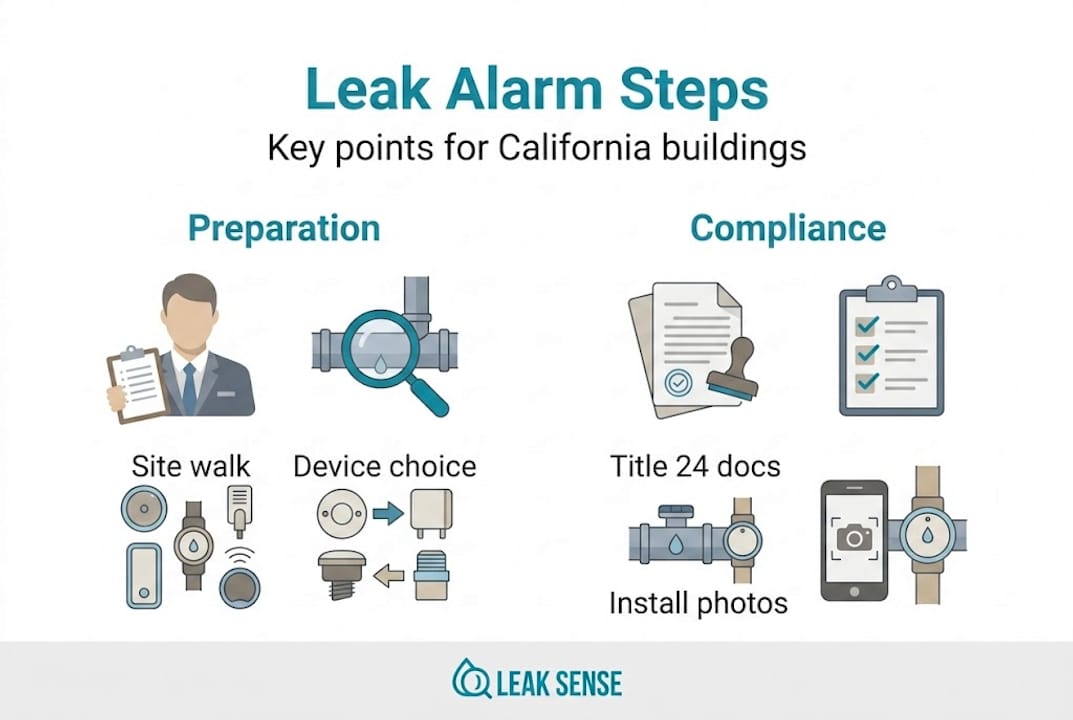
California’s Title 24 adds specific reporting and documentation demands that go beyond simply installing hardware. You will need permits pulled before installation in most jurisdictions, specifications showing device certifications, and records of professional sign-off after commissioning. Keep copies of all sensor model numbers, installation dates, and test logs. These documents are your evidence during any Title 24 audit.

Why professional installation is the standard
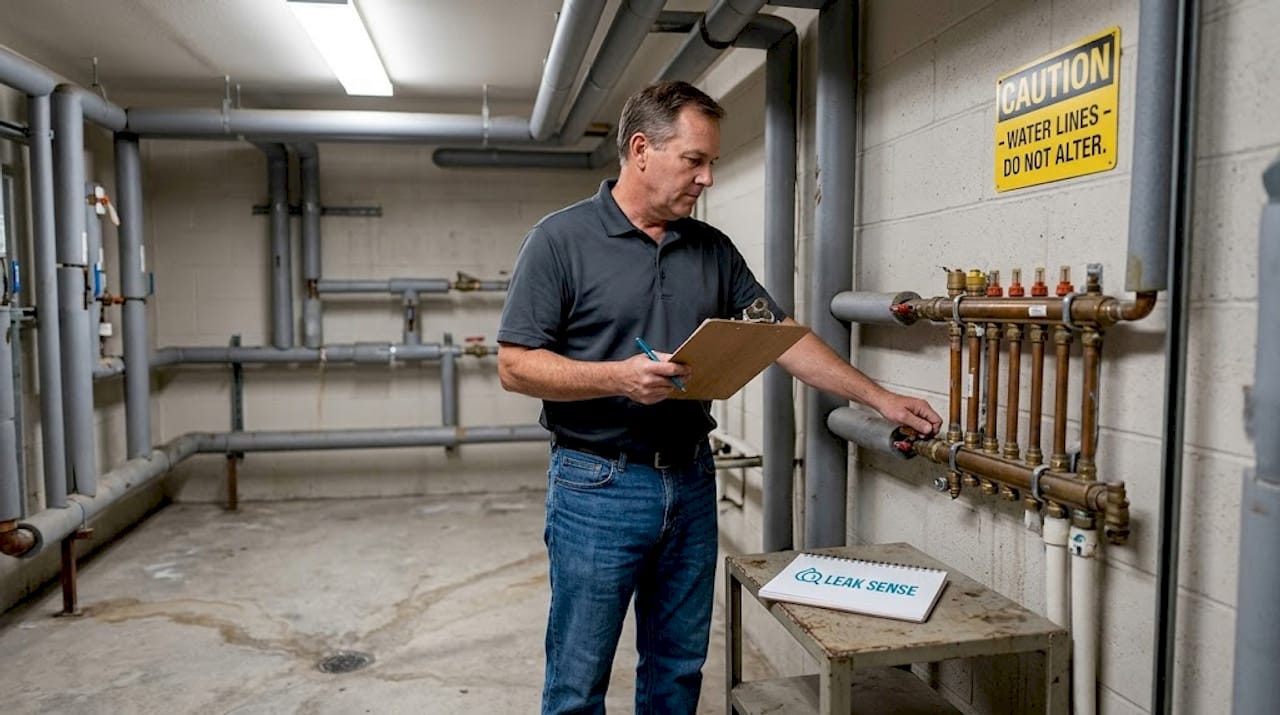
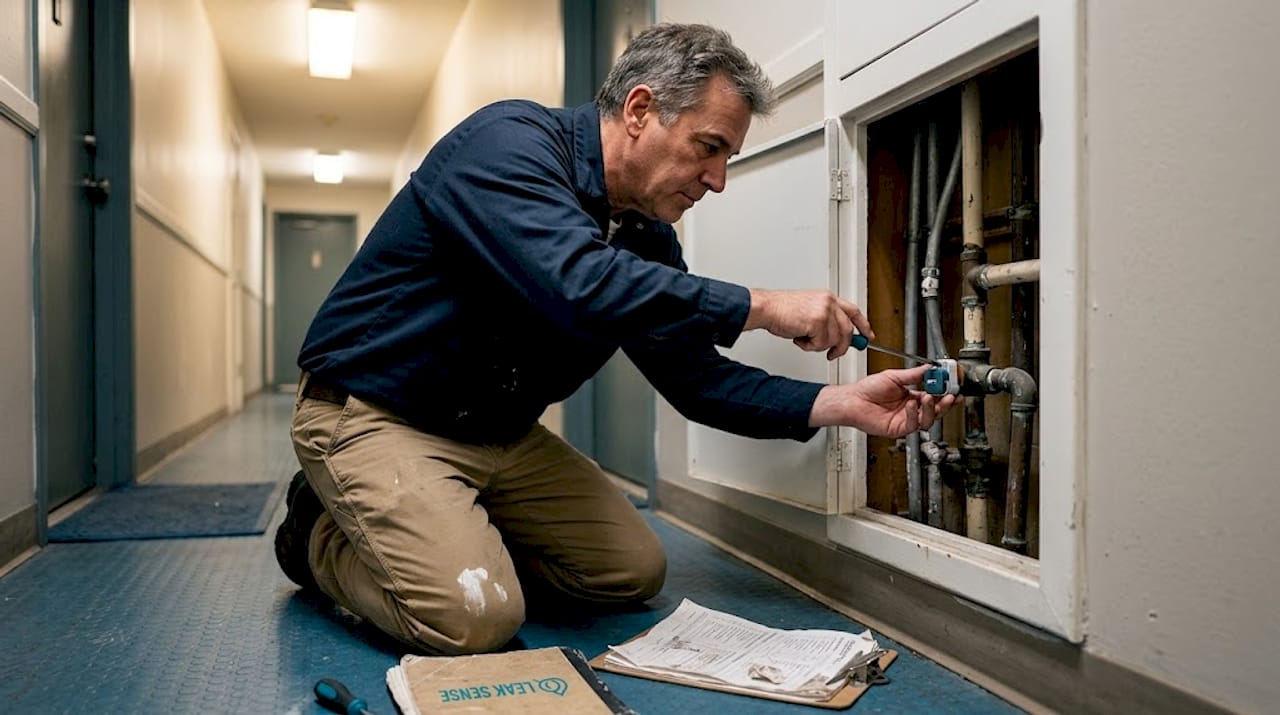
Understanding how water conservation sensors work at a technical level is one thing. Installing them to code is another. Professional installation ensures correct pipe connection, verified device communication, accurate shutoff calibration, and full compliance documentation that DIY setups simply cannot guarantee. A DIY approach might save money upfront, but system gaps, missed connections, and liability exposure can create costs that far exceed the initial savings. If your property has multiple units or a complex plumbing layout, professional installation is not optional. It is the baseline expectation.
| Prerequisite | DIY approach | Professional installation |
|---|---|---|
| Permit acquisition | Often skipped | Handled systematically |
| Sensor placement accuracy | Variable | Optimized by code |
| Compliance documentation | Incomplete | Full audit-ready records |
| Shutoff valve calibration | Inconsistent | Verified and logged |
| Liability exposure | High | Minimized |
Pro Tip: In new construction or major renovation projects, coordinate with your general contractor during the rough-in phase. Installing conduit and running wiring before walls close is far less expensive than cutting through finished drywall for a retrofit.
Step-by-step leak alarm installation process
With your materials ready and compliance prerequisites checked, you can move into the installation itself. Follow this sequence carefully to ensure every component works together and your system is audit-ready from day one.
-
Shut off the main water supply. Never install flow monitoring devices or shutoff valves on live pressurized lines. Mark the shutoff location and notify tenants at least 24 hours in advance to reduce service disruption complaints.
-
Map all sensor locations. Walk every utility room, mechanical space, and unit with a building plan in hand. Mark locations for flow monitors at main and branch lines, and moisture sensor positions under sinks, near water heaters, washing machine connections, and HVAC drain pans. Thorough mapping now prevents expensive repositioning later.
-
Install the flow monitoring device first. Flow monitors attach to the main supply line and measure water volume over time. This positions them to detect slow leaks and pipe bursts before water ever reaches the floor. According to early detection research, flow monitoring is superior to moisture sensors because it identifies a leak before visible floor damage occurs. Moisture sensors, while useful as secondary alerts, only trigger after water has already escaped the pipe.
-
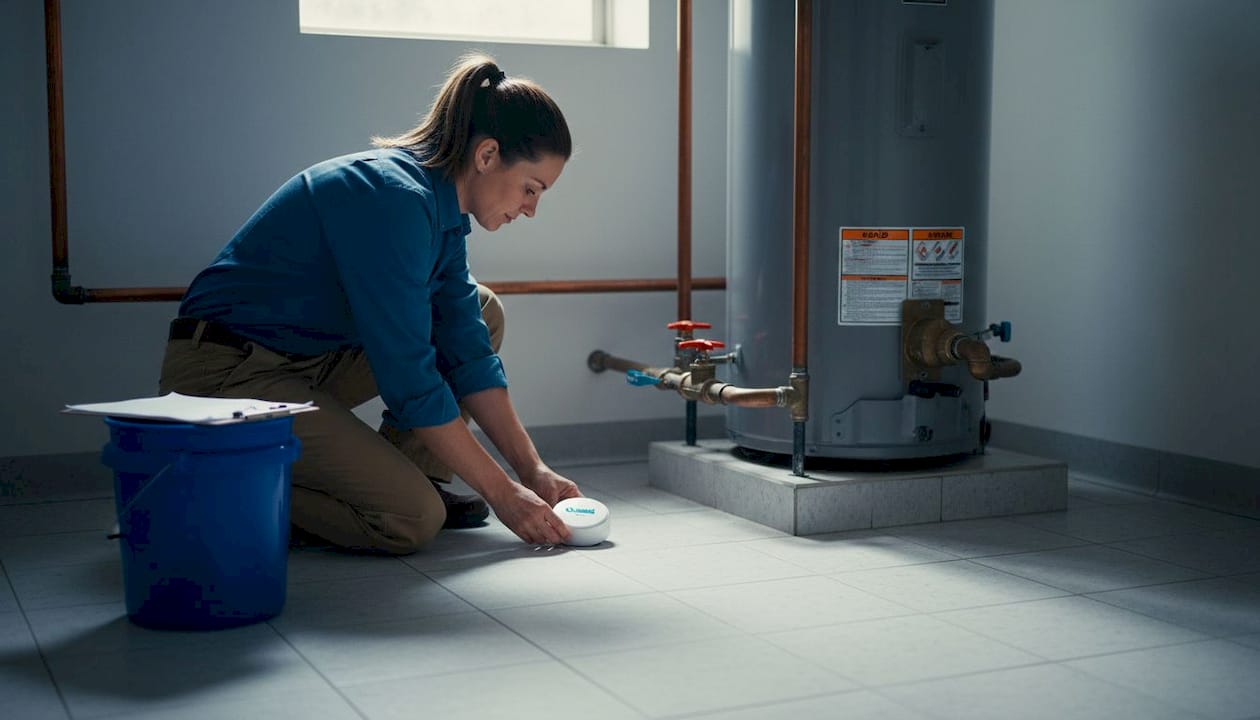
Mount moisture sensors at secondary risk points. Place them flat on the floor surface near appliances and connections. Ensure they have clear contact with the floor and are not elevated by debris or mats. Confirm each sensor pairs with the central hub before moving to the next location.
-
Connect and test the cellular backup module. Do not rely solely on WiFi. Insert the SIM card, confirm signal strength at the controller location, and document the cellular carrier and plan details. This step is non-negotiable for buildings in areas prone to power outages or network disruptions.
-
Configure notification and automated shutoff settings. Set alert thresholds based on your baseline water usage data. For multifamily buildings, typical flow rates vary significantly between daytime and overnight hours. Program the system to flag unusual flow during low-use periods, such as between midnight and 5 a.m., when any significant flow likely signals a leak or burst pipe. Assign notification recipients including the property manager, maintenance lead, and a backup contact.
-
Run a full system test. Simulate a leak condition using a small amount of water near each moisture sensor. Verify that the alert reaches all configured recipients within the expected response time. Test the automated shutoff by triggering a controlled event and confirming the valve closes and reopens on command. Document all test results.
-
Complete compliance paperwork. File all installation records, device certifications, test logs, and signed inspector forms. Reference your local jurisdiction’s requirements under Title 24 for specific formatting. You can find practical guidance through step-by-step leak monitoring resources that align with California standards.
| Installation step | Tool needed | Compliance checkpoint |
|---|---|---|
| Main supply flow monitor | Pipe cutter, thread tape | Permit verification |
| Moisture sensor placement | Level, adhesive mounts | Sensor placement log |
| Cellular module setup | SIM card, signal meter | Backup connectivity record |
| Shutoff valve wiring | Wire stripper, multimeter | Valve certification on file |
| Full system test | Leak simulation kit | Signed test results form |
Pro Tip: For automatic leak detection systems with automated shutoff, test the shutoff valve quarterly. Valves that sit open for extended periods can seize and fail to close when needed. A quarterly test cycle prevents this mechanical failure.
Optimizing alarm system performance for California compliance
Installation is the beginning, not the end. Keeping your system performing reliably over months and years requires deliberate maintenance and configuration discipline.
Cellular backup as your reliability foundation
WiFi is convenient but fragile. Power outages, router failures, and ISP disruptions can all sever your leak alarm’s connection to the monitoring platform. Research confirms that WiFi fails during outages while cellular-connected devices continue reporting normally. For a California multifamily property, where a single undetected pipe burst can displace dozens of tenants and trigger insurance claims, cellular backup is not a luxury feature. It is fundamental to your risk management strategy.
Your 24/7 water monitoring platform should confirm cellular connectivity status on your dashboard at all times. If the cellular module goes offline, investigate immediately.
Routine testing schedule
Establish a formal testing calendar and stick to it. Here is a practical framework:
- Monthly: Confirm all sensors report online to the central hub. Review alert logs for any missed notifications. Check battery levels on wireless sensors.
- Quarterly: Trigger a simulated leak at two to three sensor locations and verify automated shutoff and notification response. Test the cellular backup by temporarily disabling WiFi and confirming continued connectivity.
- Annually: Conduct a full system review with your installation provider. Inspect all pipe connections, valve conditions, and sensor placements. Update firmware on the controller and cellular module.
Reducing false alarms without compromising sensitivity
False alarms frustrate property managers and can lead to alarm fatigue, where staff begin ignoring notifications. To minimize them without losing real detection capability:
- Calibrate flow thresholds to seasonal demand. Summer irrigation use is higher than winter baseline. Update alert parameters at least twice a year.
- Set appropriate moisture sensor sensitivity. Sensors placed in humid environments like laundry rooms may trigger false positives if sensitivity is set too high.
- Use time-based logic. Program the system to apply stricter thresholds overnight and lighter ones during peak usage hours.
Documentation for Title 24 audits
Every test, every maintenance visit, and every alert event should be logged with a timestamp and outcome. Many property managers use a shared spreadsheet or a dedicated facility management platform. During a Title 24 audit, inspectors will ask for evidence that the system is functional and maintained. Your logs are your proof.
“A professionally installed and maintained leak alarm system is your best defense against water damage and compliance penalties.”
Pro Tip: Document all tests and maintenance activities with photos when possible. A timestamped photo of a closed shutoff valve during a quarterly test is compelling evidence during any compliance review.
Troubleshooting and common mistakes in leak alarm setup
Even well-planned systems encounter problems. Knowing the most common mistakes and how to fix them saves time and protects compliance standing.
Most common installation errors
- Improper sensor placement. Moisture sensors placed on elevated surfaces, inside cabinets where water pools at the base, or on non-level floors will miss real leaks. Always position sensors at the lowest point water would naturally reach.
- Skipping connectivity testing. Installers sometimes complete hardware setup without confirming that every sensor successfully pairs with the hub. One missing sensor creates a blind spot that defeats the purpose of a whole-building system.
- Failing to verify shutoff valve operation. The shutoff valve is the most critical component. If it does not close on command during testing, the system cannot stop damage. This step must not be skipped.
- Relying solely on WiFi. As discussed above, WiFi-only systems are vulnerable. DIY installation risks include system gaps and noncompliance that emerge specifically from inadequate connectivity planning.
Troubleshooting checklist
If your system is not performing as expected, work through this sequence:
- Devices not reporting: Check hub power, confirm sensor pairing, inspect for firmware update requirements.
- No notifications received: Verify notification settings in the platform, check spam filters for email alerts, confirm phone numbers in the SMS alert list.
- Frequent false alarms: Review placement of triggering sensors, adjust sensitivity settings, and update flow thresholds to reflect current usage patterns.
- Shutoff valve not responding: Inspect wiring connections at the valve, test the controller output signal, and check for mechanical seizing on older valves.
The cost of undetected leaks
Undetected building leaks account for a striking share of total water loss in commercial and multifamily properties. Studies on best leak detection systems for multifamily buildings consistently show that slow, hidden leaks like running toilets, pinhole pipe leaks, and dripping irrigation valves can waste tens of thousands of gallons per month before anyone notices. Across a large property portfolio, this adds up to significant utility cost increases and accelerated infrastructure wear.
Investing in water submetering alongside your leak alarm system gives you granular usage data at the unit or zone level, making it far easier to pinpoint abnormal consumption before it becomes a repair emergency. The combination of real-time leak alarms and submeter data turns reactive maintenance into genuinely proactive water management.
Stat callout: Properties with no leak detection infrastructure lose an estimated 6 to 10 percent of their total water supply annually to undetected leaks, according to water efficiency research in commercial building operations.
Why compliance and early detection matter more than ever
Here is something worth saying clearly: the “DIY is good enough” approach to leak alarm installation is a myth that costs property managers real money. We see it repeatedly. A property owner installs consumer-grade sensors from a hardware store, skips the professional commissioning step, and assumes they are covered. Then a slow slab leak runs for three months undetected, or a shutoff valve fails to close during a pipe burst at 2 a.m. because no one verified it worked.
The regulatory environment in California is not getting more lenient. Title 24 compliance requirements are expanding, and enforcement is becoming more consistent. The property managers who invest in properly installed and documented systems today are building an operational advantage, not just checking a regulatory box.
There is also a financial argument. Every dollar spent on professional installation and maintenance typically returns three to five times that value in avoided damage, reduced insurance premiums, and lower utility bills. The automatic leak detection insights available for California apartment communities make this cost-benefit case with real building data.
Patchwork fixes and deferred compliance have a way of compounding. Investing up front in a fully documented, professionally installed system is not just the smart choice. It is the responsible one.
How LeakSense helps you achieve compliance and protection
Putting all of these steps into practice is significantly easier with the right partner.
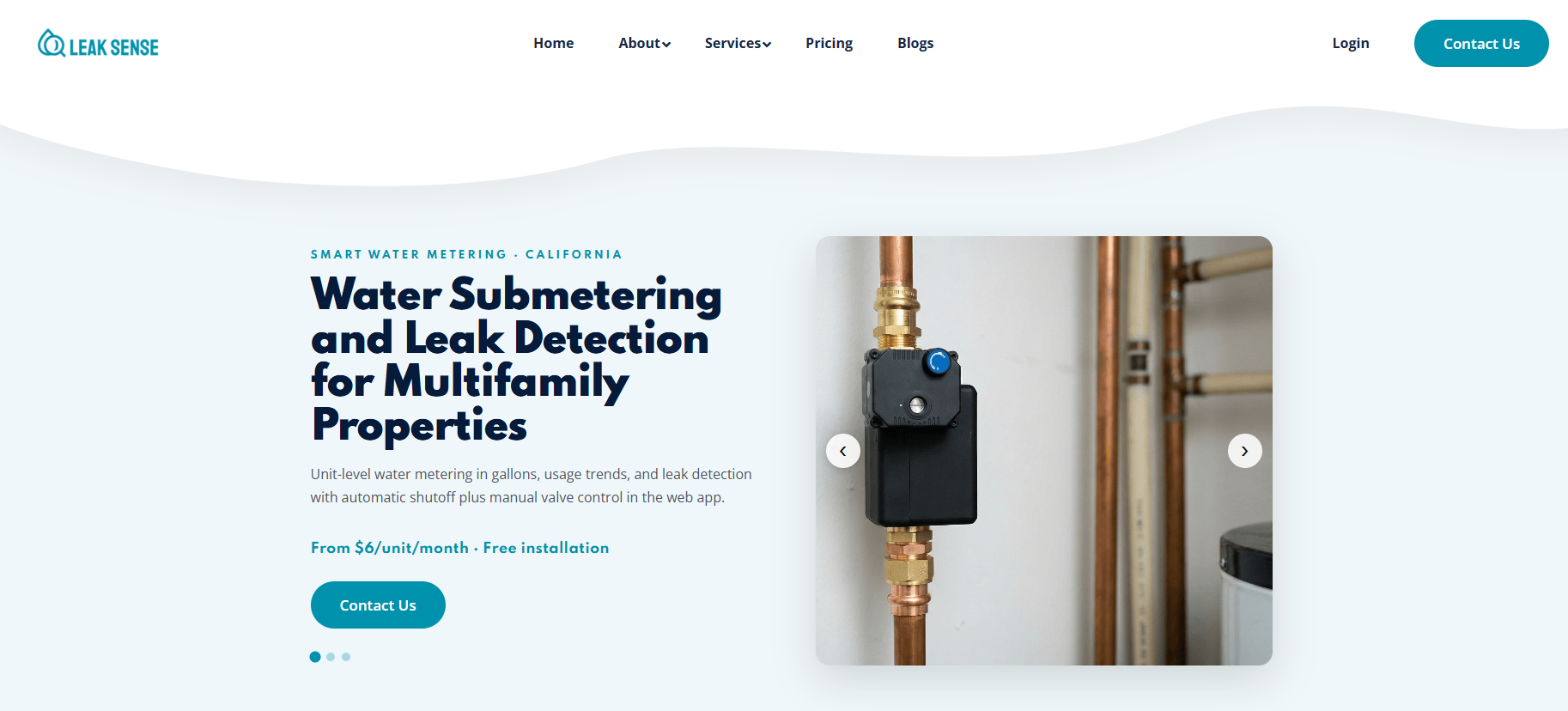
LeakSense provides California property managers with fully integrated automatic shutoff solutions that combine professional installation, real-time monitoring, and complete Title 24 compliance documentation from day one. Our team handles permitting, sensor placement, connectivity configuration, and system commissioning so you get a fully operational, audit-ready system without the guesswork. We also offer California compliance support to keep your documentation current through regulatory updates. Explore our full range of water metering options to add submeter data to your water management strategy. Contact us to schedule a property assessment and take the first step toward complete protection.
Frequently asked questions
Do I need a professional to install a leak alarm system in California apartments?
Yes, professional installation is typically required for regulatory compliance and to ensure the system functions reliably without gaps that create liability exposure.
What’s the difference between flow monitoring and moisture sensors?
Flow monitoring detects leaks earlier in the supply system before water causes visible floor damage, while moisture sensors only trigger after water has already escaped the pipe and reached the floor surface.
Will a leak alarm system work during a WiFi outage?
Only leak alarms with cellular backup will continue to operate and report during a WiFi outage. WiFi-only systems go silent when the network fails.
How do I maintain compliance with Title 24 after installing a leak detection system?
Maintain system event logs, perform monthly and quarterly testing on a documented schedule, and keep all installation certifications and compliance paperwork current and accessible for audits.
What are the most common mistakes property managers make when installing leak alarms?
Improper sensor placement, skipping post-installation testing, and relying solely on WiFi connectivity are the most frequent errors, all of which are documented DIY installation risks that undermine system effectiveness and compliance standing.