TL;DR:
- Water management is a critical yet often overlooked risk in multifamily real estate, especially in California, where leaks can cause extensive damage and regulatory penalties. Smart metering systems provide real-time, unit-level water usage data, enabling early leak detection, regulatory compliance, and substantial cost savings. Implementing these systems transforms water management from reactive to proactive, reducing waste, increasing tenant satisfaction, and preventing costly repairs.
Water management is one of the most underestimated operational risks in multifamily real estate, and most property managers don’t realize it until they’re staring at a catastrophic repair bill or a regulatory notice. The assumption that metering is simply about generating tenant water bills misses the bigger picture entirely. In California, where water costs are climbing, conservation mandates are expanding, and leak-related damage can run into tens of thousands of dollars per incident, smart metering has become a critical management tool, not just a billing convenience. This guide breaks down exactly why that distinction matters and what it means for your properties.
- The pitfalls of traditional water management
- What is smart metering and how does it work?
- Core benefits: Leak prevention, compliance, and savings
- Smart metering in action: Real-world examples from California
- The smart metering advantage: What most property managers miss
- Take control of your property’s water management
- Frequently asked questions
Key Takeaways
| Point | Details |
|---|---|
| Detect leaks early | Smart metering alerts you instantly to leaks, preventing costly property damage. |
| Comply with California law | Smart water meters help you comply with state regulations on water usage tracking. |
| Reduce water bills | Multifamily properties save up to 30 percent on water costs with smart metering. |
| Simplify tenant billing | Unit-level metering enables fair, accurate billing and reduces tenant disputes. |
| Data-driven property management | Smart water analytics reveal usage trends, helping you optimize buildings and budgets. |
The pitfalls of traditional water management
Legacy water management systems were built for a different era. A single master meter at the property level tells you how much water the building consumed, but it tells you almost nothing about where that water went or whether it was wasted. This is the core limitation that leaves California property managers exposed.
Traditional water bills arrive monthly, which means a significant leak can run unchecked for weeks or even longer before anyone notices an anomaly. By then, the damage is done, both to the physical structure and to your operating budget. Many leaks in multifamily buildings go undetected for weeks or months, resulting in unexpected spikes in water bills and substantial property damage. That’s not a rare edge case. It’s a predictable failure mode of systems that lack real-time visibility.
The most common pitfalls of traditional water management include:
- Delayed leak detection: Without unit-level monitoring, a slow leak behind a wall or under a fixture can persist for weeks without triggering any alarm.
- Inaccurate usage readings: Manual meter reads are prone to human error, resulting in overbilling or underbilling that creates tenant disputes.
- No baseline for comparison: Without granular usage data, it’s nearly impossible to identify whether consumption is spiking due to a leak, a behavior change, or seasonal variation.
- Reactive, not proactive, maintenance: Problems surface only after visible damage appears or a bill spikes, by which point repair costs are already escalating.
- Compliance blind spots: California’s evolving submetering regulations require documented water tracking. Without the right infrastructure, you may be unknowingly out of compliance.
“Treating water management as a billing-only function is one of the most expensive mistakes a property owner can make. The real cost isn’t the bill itself. It’s the damage, the disputes, and the missed compliance window.”
Consider a realistic scenario: a slow toilet flapper leak in one unit goes unnoticed because the tenant assumes the landlord handles water costs and never reports it. Over eight weeks, that single fixture wastes tens of thousands of gallons. The property’s master meter reads high, the water utility bill spikes, but without professional meter installation that provides unit-level data, you have no way to isolate the source quickly. You pay the bill, call a plumber weeks later, and never recover those costs.
What is smart metering and how does it work?
Smart metering replaces guesswork with data. At its core, a smart metering system uses IoT-enabled sensors installed at both the property level and individual unit level to track water flow continuously. Smart water meters use sensors and real-time wireless data to track property-level and unit-level water usage, transmitting that data to a cloud-based analytics platform that you can access from anywhere.
Here’s how a smart metering system actually functions in a multifamily building:
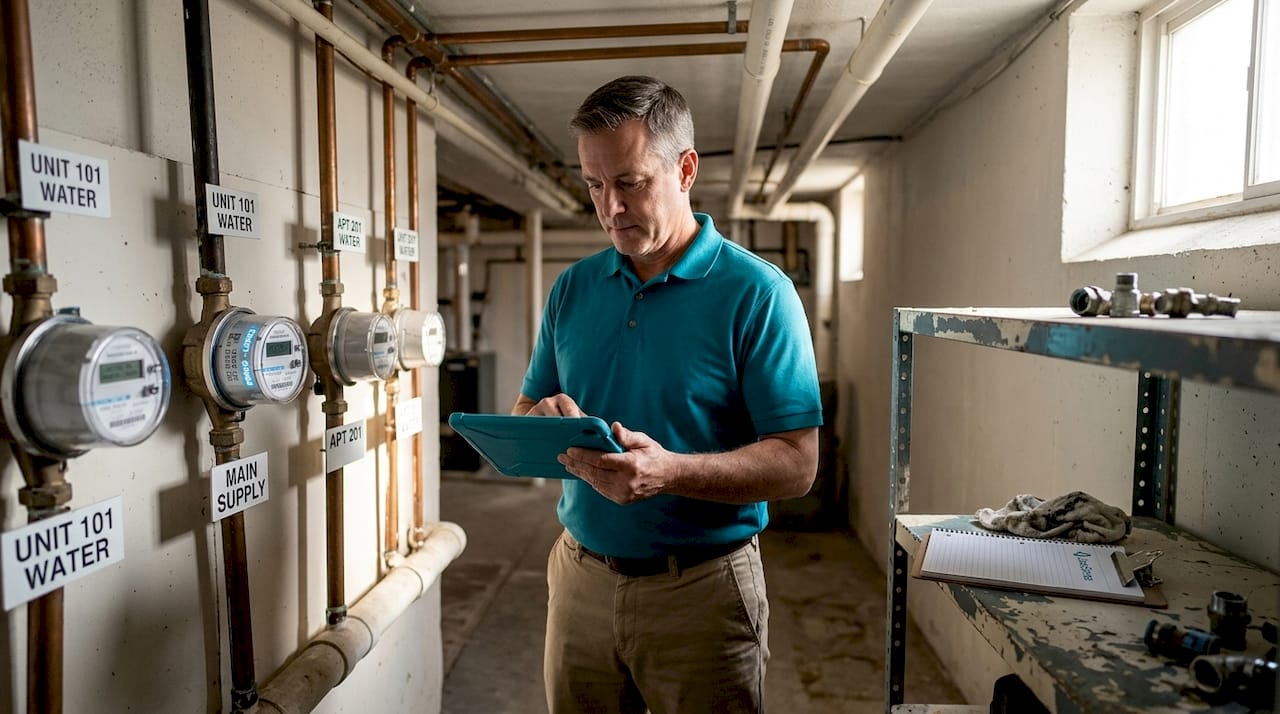
- Sensor installation: Flow sensors are placed at each unit’s water supply line and at the main building connection. These sensors measure water movement continuously, not just at the end of a billing cycle.
- Wireless data transmission: Sensors send usage data in real time via wireless protocols to a central hub and then to the cloud platform.
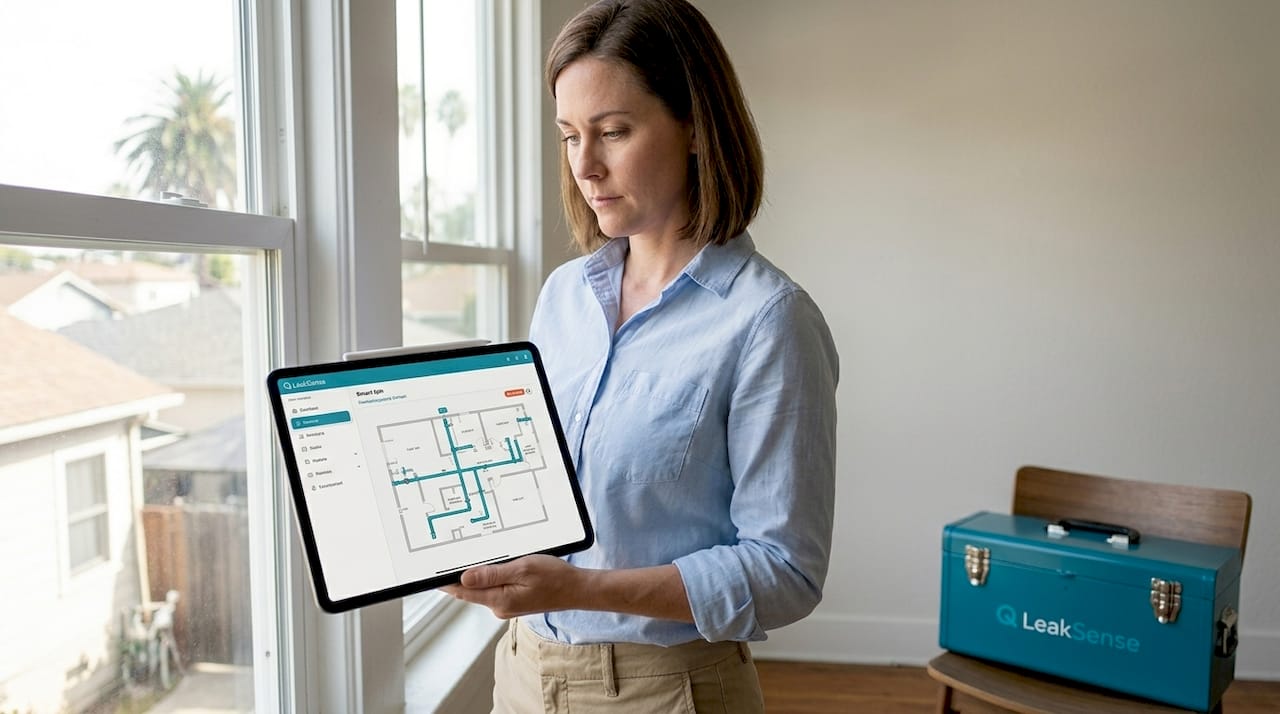
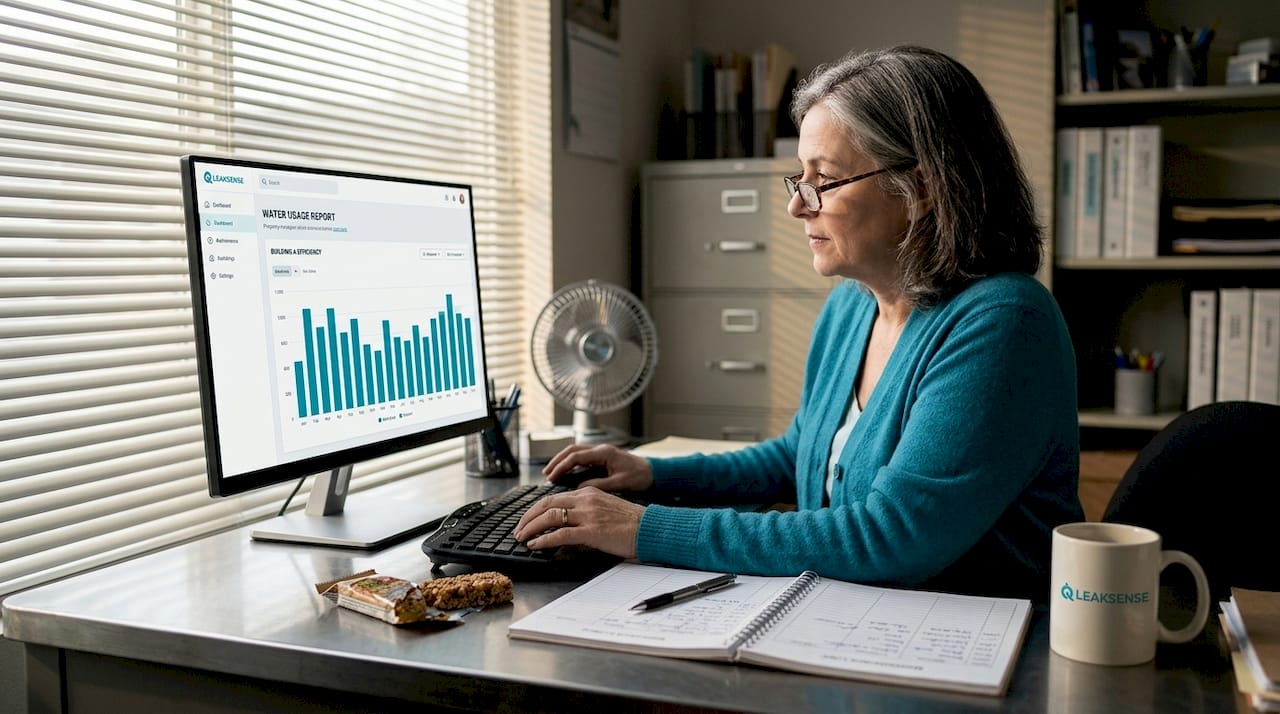
- Real-time analytics dashboard: Property managers log in to view current consumption, historical trends, unit-by-unit comparisons, and flagged anomalies.
- Automated leak alerts: When usage patterns indicate abnormal flow (such as continuous water movement at 3 a.m. when no resident should be using water), the system sends an immediate alert via text or email.
- Automated reporting: Monthly usage reports are generated automatically for tenant billing, regulatory documentation, and operational review.
- Integration with shutoff systems: Advanced systems allow remote shutoff of water supply to a specific unit, enabling fast response to confirmed leaks without waiting for an on-site technician.
The submeter installation process is designed to work with both new construction and existing buildings, which matters significantly in California’s older housing stock. Retrofitting is far less disruptive than most property managers expect, typically requiring only a brief access window per unit.
Pro Tip: When evaluating smart metering vendors, make sure the system provides both property-level and unit-level visibility. A system that only monitors the master meter is barely an improvement over traditional methods. Unit-level data is where the actionable intelligence lives.
Core benefits: Leak prevention, compliance, and savings
Now that you understand how smart meters work, let’s break down the specific advantages they deliver for California multifamily properties. The value of smart metering falls into three clear categories: leak prevention, regulatory compliance, and direct cost savings. Each one is significant on its own. Together, they create a compelling case for immediate adoption.
Leak prevention and property protection
Rapid leak detection is the most immediate risk-reduction benefit. When a sensor detects abnormal flow, you receive an alert within minutes, not weeks. This allows you to intervene before water migrates into walls, subfloors, or neighboring units, where remediation costs multiply fast. Smart metering benefits include reducing exposure to the kind of structural water damage that routinely costs $15,000 to $50,000 or more to remediate in multifamily settings.
Regulatory compliance
California’s regulatory environment is tightening around water accountability. California regulations increasingly require property-level or unit-level water tracking for multifamily housing, and meeting those requirements without a metering infrastructure in place is extremely difficult. Smart metering systems generate the documentation you need for compliance, automatically and without manual record-keeping burden.
Cost savings and operational efficiency
Properties using smart meters reduce water costs by up to 30% and detect leaks far faster than properties relying on traditional methods. These savings come from a combination of reduced waste, faster leak response, fair tenant billing that incentivizes conservation, and fewer expensive emergency repair calls.
| Feature | Traditional metering | Smart metering |
|---|---|---|
| Leak detection speed | Weeks to months | Minutes to hours |
| Usage visibility | Property-level only | Property and unit-level |
| Billing accuracy | Manual, error-prone | Automated, precise |
| Regulatory documentation | Manual compilation | Auto-generated reports |
| Tenant dispute resolution | Slow, contested | Data-backed, fast |
| Cost savings potential | Minimal | Up to 30% reduction |
| Compliance readiness | Reactive | Proactive |
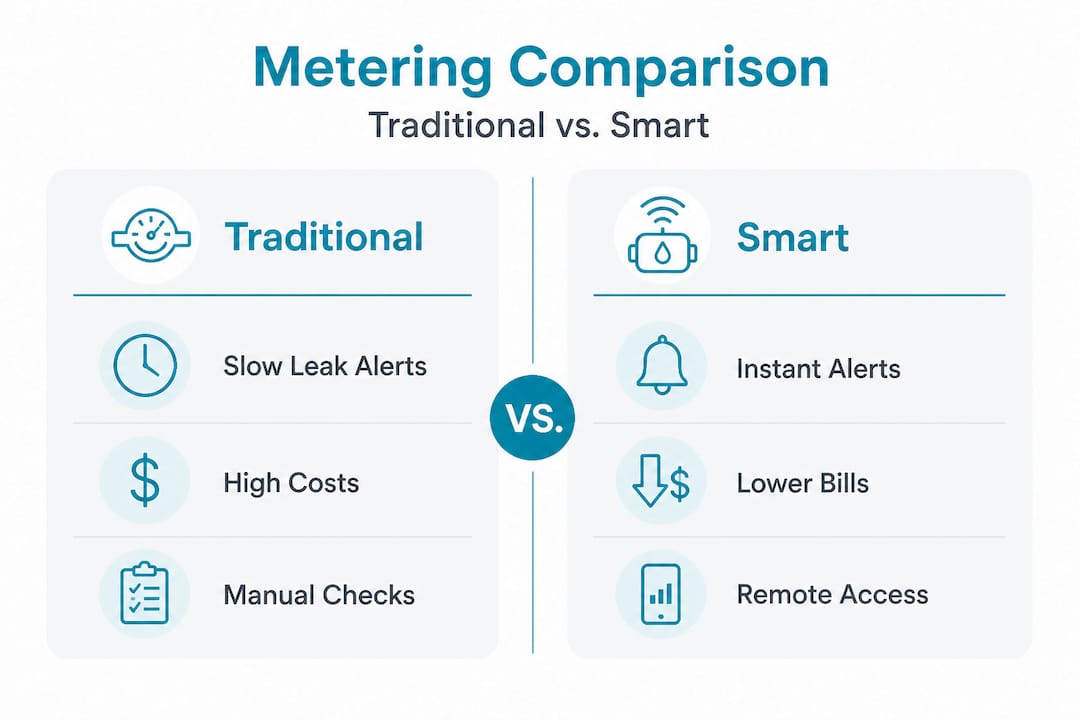
When you use a metering solutions comparison to evaluate your options, the difference in operational impact between legacy systems and modern smart metering becomes immediately obvious. The table above captures the core gaps, but the real-world implications go even deeper when you factor in staff time, tenant retention, and insurance considerations.
Additional operational benefits of smart metering include:
- Faster resolution of billing disputes because usage data is time-stamped, accurate, and unit-specific
- Reduced emergency maintenance calls because anomalies are caught early
- Better data for capital planning, helping you identify aging infrastructure before it fails
- Potential insurance premium reductions from documented, proactive water management
Smart metering in action: Real-world examples from California
It’s not just theory. Here’s how smart metering plays out in actual multifamily properties across California.
Case study: 50-unit building cuts water bills by 28%
A property manager overseeing a 50-unit apartment community in the Central Valley switched from a master-metered system to full smart submetering. Within the first six months, total water consumption dropped by 28%. The shift had two primary drivers. First, tenants who began receiving individual usage bills changed their behavior. When residents see their own consumption data, conservation becomes personal and immediate. Second, two slow leaks that had been silently driving up the master meter reading were identified within the first week of operation through abnormal flow alerts. Both were repaired before any structural damage occurred.
Case study: Avoiding a $20,000 water damage event
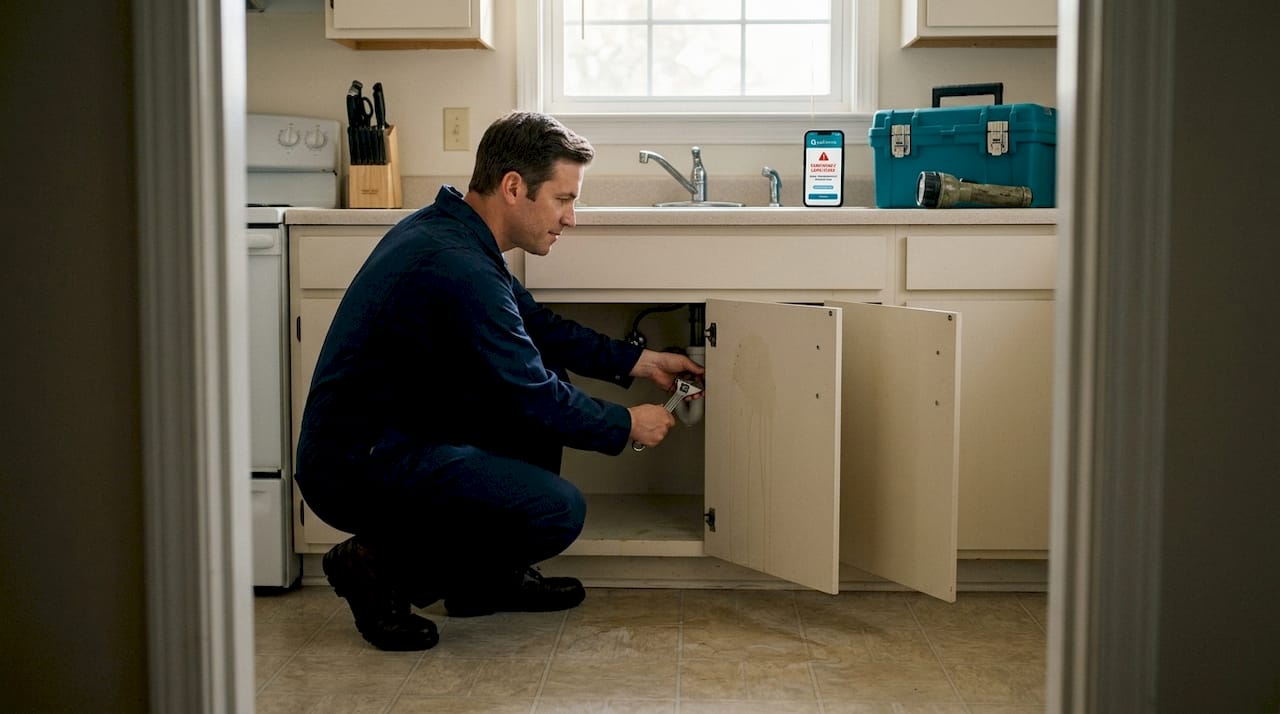
A property in Southern California received an overnight alert flagging continuous water flow in a second-floor unit during a period when the building’s occupancy sensors indicated no activity. Maintenance was dispatched early the next morning and discovered a supply line failure under the kitchen sink. The water had already saturated the cabinet base but had not yet penetrated the subfloor. Remediation cost less than $800. Without the smart alert, that scenario likely would have progressed over several more days, migrating into the ceiling of the unit below and triggering a restoration job that commonly runs $15,000 to $25,000 in that building type.
Quick wins checklist for property managers adopting smart metering:
- Review your first week of usage data to establish a baseline for each unit and the property overall.
- Respond to every anomaly alert within 24 hours, even if the cause turns out to be benign.
- Update tenant lease agreements to reflect individual metering and billing procedures.
- Document all alerts and responses for your regulatory compliance file.
- Schedule a monthly usage review to compare unit-level trends against property averages.
California regulations increasingly require property-level or unit-level water tracking, and staying ahead of those requirements protects your operating license and your reputation with tenants. Staying informed about top 2026 metering solutions helps you select systems that are built to meet current and emerging California standards.
Pro Tip: Don’t just react to alerts. Review usage trends weekly during your first 90 days with a smart metering system. Gradual upward trends across multiple units often signal systemic plumbing issues, like aging supply lines under increased pressure, that need attention before they fail completely.
The smart metering advantage: What most property managers miss
Here’s an uncomfortable truth worth stating plainly: most property managers treat smart metering as a compliance checkbox or a billing upgrade. They wait until a regulatory deadline forces action, install the minimum required infrastructure, and then wonder why they’re still getting hit with surprise repair costs and tenant complaints.
The problem with that approach is that it misses the entire strategic value of the technology. Smart metering isn’t primarily a billing tool. It’s a risk management platform. And many property managers wait for mandated retrofit deadlines, missing years of savings and tenant goodwill in the process.
Think about what early adopters actually gain. They build a complete historical usage dataset for every unit in their building. That data has real capital planning value. When you know which units consistently use three times more water than comparable units, you have a concrete basis for identifying plumbing inefficiencies, appliance failures, or tenant behaviors that drive operating costs. That kind of intelligence doesn’t come from reactive management.
There’s also the tenant relations dimension that rarely gets discussed. Residents in buildings with transparent, individualized metering report higher satisfaction with utility billing because they can see and verify their own usage. Disputes drop sharply. Turnover attributable to billing conflicts decreases. These aren’t soft benefits. They translate directly to lower vacancy rates and reduced administrative overhead.
The myth that smart meters add complexity to property operations is simply wrong. The opposite is true. Automated readings, automated reports, and automatic leak detection reduce the manual workload on your maintenance and management staff considerably. What was once a time-consuming, error-prone process becomes a largely automated function that surfaces only the issues that genuinely require human attention.
Early adoption positions you as a more credible operator in the eyes of insurers, regulators, and prospective tenants. That positioning has compounding value over time.
Take control of your property’s water management
Smart metering delivers measurable results, but the technology only works when it’s implemented correctly and supported by a platform built specifically for multifamily properties in California.
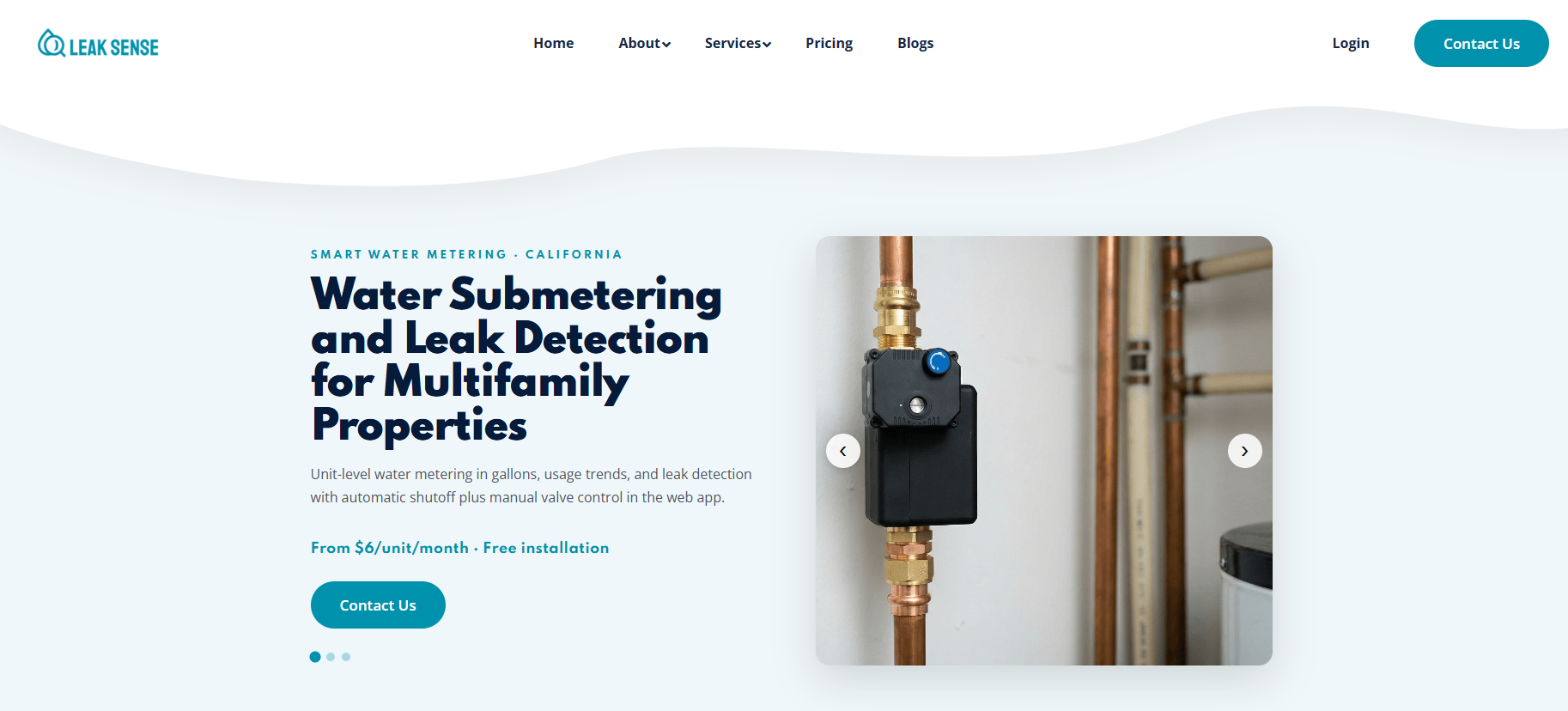
Leaksense.io offers the full stack of smart water management solutions your properties need, from automatic leak detection that sends real-time alerts to your phone, to cloud-based analytics that simplify tenant billing and regulatory reporting. You can compare metering plans to find the right configuration for your building size and compliance requirements. If you’re ready to move from reactive water management to a proactive, data-driven approach, explore multifamily smart submetering solutions designed specifically for California property managers. The savings and risk reduction begin from day one.
Frequently asked questions
How much can smart metering actually save on water bills?
Many properties save between 20% and 30% on water bills within the first year after smart metering installation, driven by reduced waste and faster leak response.
Are smart meters required for multifamily buildings in California?
California regulations increasingly require property-level or unit-level water tracking for new and retrofitted multifamily buildings, making proactive adoption the safer path.
Can smart meters help prevent costly water damage?
Yes. Smart meters provide real-time alerts that let you catch leaks early, and many leaks go undetected for weeks in traditional systems, causing damage that is far more expensive to remediate than the leak itself.
How hard is it to add smart metering to an older multifamily building?
Modern smart water systems are designed for retrofit and use real-time wireless data to minimize installation complexity, allowing professional installation with minimal disruption to residents.