Water leaks in multifamily buildings can go unnoticed until costly damage is already done. As a property manager, you know how even a small leak can disrupt residents and drain your maintenance budget. Finding the right tools and systems to catch leaks early is a real challenge, especially when you’re juggling aging infrastructure and regulatory demands across your properties.
There are practical solutions designed for every kind of building and risk. From simple detectors that sense water instantly to advanced systems that provide real-time alerts and analytics, you have more options than ever to protect your properties and your bottom line. These proven approaches deliver fast detection, large area coverage, and smarter response to water problems.
Get ready to discover which technologies and strategies will help you manage leaks faster, prevent major damage, and stay ahead of compliance requirements. The insights ahead give you clear choices for safeguarding your multifamily buildings.
- 1. Simple Spot Leak Detectors For Quick Placement
- 2. Rope-Style Sensors For Large Area Coverage
- 3. Smart IoT Leak Detectors With Remote Alerts
- 4. Automatic Shutoff Valves For Immediate Protection
- 5. Flow-Based Monitoring Systems For Water Usage Analytics
- 6. Integrated Building Solutions For Multifamily Compliance
Quick Summary
| Takeaway | Explanation |
|---|---|
| 1. Spot leak detectors enable early detection | These compact sensors prevent costly water damage by alerting you immediately when moisture is detected. |
| 2. Rope sensors provide extensive coverage | Ideal for complex piping systems, rope sensors monitor long runs and help eliminate coverage gaps found in older buildings. |
| 3. Smart IoT systems enhance response time | With real-time alerts to your devices, you can react to leaks instantly, minimizing potential damage and costs. |
| 4. Automatic shutoff valves prevent major damage | These valves instantly stop water flow during major leaks, reducing the risk of significant property damage and repair costs. |
| 5. Integrated solutions streamline management systems | Combining detection, analytics, and automated responses improves efficiency and compliance, ultimately enhancing property management. |
1. Simple Spot Leak Detectors for Quick Placement
Simple spot leak detectors are the first line of defense for property managers dealing with multifamily buildings. These devices sit quietly in vulnerable spots, waiting to catch water where it shouldn’t be.
Think of them as your building’s early warning system. A spot leak detector is a compact sensor that identifies water presence before small leaks become expensive disasters. They work through water conductivity, triggering an alarm the moment moisture touches the sensor.
Why does this matter for your properties? Early detection prevents catastrophic water damage to units, shared walls, and mechanical systems. A leak caught in hour one costs far less to remediate than one discovered after days of silent water damage.
How They Work
These detectors rely on a straightforward mechanism. When water bridges two conductive points on the sensor, electrical resistance drops dramatically. This change triggers an immediate alert, notifying you or your team.
The setup is refreshingly simple. No complex calibration. No professional configuration needed. You place the sensor where risk is highest and let it do its job.
Key advantages for multifamily properties include:
- Fast placement in HVAC mechanical rooms, water heater closets, and under sinks
- Low cost compared to comprehensive monitoring systems
- Battery-powered operation requiring minimal maintenance
- Immediate alerts via audible alarm or connected notification
- No false positives from humidity or condensation alone
Spot detectors excel at catching leaks at their source before water spreads to multiple units or structural components.
Where you install these matters significantly. Water heater pans are obvious choices. Under-sink cabinets in kitchens and bathrooms are critical. HVAC condensation lines frequently overflow in California’s older multifamily buildings. Washing machine supply line connections fail regularly.
California property managers increasingly rely on water detection systems for compliance with local moisture management standards. The minimal upfront investment makes widespread deployment across your portfolio practical.
These detectors work independently or as part of larger monitoring networks. Many property managers use them for immediate local alerts while also feeding data to centralized systems for pattern analysis.
Pro tip: Place detectors in locations where you can hear the alarm clearly during business hours, and ensure backup notifications reach your maintenance team through connected smart systems for after-hours coverage.
2. Rope-Style Sensors for Large Area Coverage
Rope-style sensors represent a major leap forward for property managers protecting expansive water infrastructure. Unlike spot detectors that watch single locations, rope sensors monitor entire runs of piping and wet areas continuously.
Imagine running a detection system along every vulnerable pipe in your building without installing dozens of separate sensors. That’s the efficiency rope-style sensors deliver. They consist of sensor cables that run the length of your water lines, detecting leaks through changes in signal characteristics as water approaches the sensing material.
For multifamily buildings with complex piping networks, rope sensors eliminate coverage gaps. Older California buildings often hide water lines in walls, ceilings, and mechanical chases where spot detectors can’t reach. Rope sensors solve this problem.
How do they detect leaks? These sensors work through acoustic or pressure variation detection along the cable length. When water contacts the rope, signal characteristics change measurably. The system pinpoints approximately where the leak occurs, not just that one exists.
Rope-style sensors excel in several scenarios your properties likely face:
- Long horizontal runs in crawl spaces and attics
- Vertical stacks in walls separating units
- Mechanical room piping carrying chilled water or hot water
- Under-slab areas in ground-floor units
- Equipment rooms with multiple overlapping supply lines
Rope sensors transform reactive pipe monitoring into proactive protection across your entire water distribution system.
The installation advantage matters too. A single rope can monitor what would require five to ten spot detectors. This reduces overall system complexity while actually improving coverage.
California’s water conservation standards mean detecting leaks quickly protects your compliance position. Acoustic signal detection along pipes identifies problems before water accumulates behind walls or damages insulation.
These sensors integrate well with smart building systems. Data streams to your central monitoring platform, creating a complete picture of water distribution integrity. You receive alerts before visible damage occurs.
Rope sensors do require professional installation to position correctly along pipe routes. The upfront cost exceeds spot detectors, but covering 200 linear feet of piping with one rope versus fifteen spot devices makes economic sense.
Pro tip: Install rope sensors along the longest or most critical piping runs first, then add spot detectors at branch points and appliances where budget allows for comprehensive building coverage.
3. Smart IoT Leak Detectors with Remote Alerts
Smart IoT leak detectors represent the evolution of water protection for modern property managers. These devices detect leaks at your properties while sending instant notifications directly to your phone, whether you’re on-site or across California.
The game changes when you stop relying on tenants to report water problems. Real-time detection means you learn about leaks seconds after they start, not hours or days later when damage compounds. This transforms your approach from reactive crisis management to proactive prevention.
How do these systems work? IoT detectors use networked sensors that communicate with cloud-based platforms. When moisture triggers a sensor, the system instantly processes the alert and sends notifications via SMS, email, or mobile app. The entire process happens in seconds.
Why Remote Alerts Matter for Your Properties
Multifamily buildings don’t close at five o’clock. Water leaks happen at midnight, on weekends, and during holidays. Smart systems ensure you never miss critical alerts regardless of when incidents occur.
Consider the financial impact of a single undetected leak. Water seeping behind walls for just 24 hours can cause structural damage, mold growth, and liability issues. Remote alerts break this pattern entirely.
Key advantages of IoT leak detection include:
- Instant notifications reaching your maintenance team immediately
- Mobile access letting you monitor properties from anywhere
- Historical data showing leak patterns and vulnerability trends
- Machine learning integration improving detection accuracy over time
- Integration capability connecting with your existing building management systems
IoT systems with machine learning algorithms reduce false positives while catching real problems faster than human monitoring ever could.
Your team can respond faster when alerts include location data. Smart IoT systems pinpoint which unit or area triggered detection, eliminating guesswork. You dispatch maintenance to the exact spot needing attention.
For California property managers managing multiple buildings, centralized dashboards become invaluable. You monitor dozens of properties from one interface, comparing water usage patterns and identifying problem areas systematically.
These systems also support your sustainability goals. Real-time detection prevents wasted water while demonstrating commitment to conservation standards. This benefits both your operational efficiency and your community’s environmental responsibility.
Tenant communication improves too. When water issues affect specific units, you respond immediately with minimal disruption. Tenants appreciate the proactive approach and transparent communication about water management.
Pro tip: Set up tiered alert levels so critical leaks reach your maintenance supervisor immediately while minor alerts go to your standard notifications, preventing alert fatigue while protecting against serious water damage.
4. Automatic Shutoff Valves for Immediate Protection
Automatic shutoff valves are your building’s last line of defense against catastrophic water damage. When a major leak occurs, these valves activate instantly to stop water flow before disaster unfolds.
Think of them as emergency brakes for your water system. The moment a valve detects a problem, it closes to isolate affected sections of piping. What might have been thousands of dollars in damage becomes a contained incident.
For California property managers, automatic shutoff valves address a critical vulnerability. Many older multifamily buildings have piping that can rupture without warning. When rupture happens at three in the morning, automated response saves both money and your reputation.
How Automatic Shutoff Valves Work
These valves operate through pressure detection or manual trigger signals. Most modern systems respond to rapid pressure drops that indicate major leaks or ruptures. Some integrate with your leak detection sensors for intelligent activation.
The response happens in seconds, not minutes. Once triggered, the valve closes the main water supply or isolates the compromised section. Water stops flowing before significant pooling or structural damage occurs.
Key scenarios where shutoff valves provide critical protection include:
- Main water line ruptures in basements or mechanical rooms
- Supply line breaks behind walls in multistory buildings
- Catastrophic failures in aging copper or galvanized piping
- Burst pipes during freezing temperatures
- Equipment failure flooding mechanical spaces
Automatic shutoff valves reduce environmental impact by halting water waste immediately upon detecting major system failures.
Integrating shutoff technology with your leak detection creates a complete protection system. Sensors detect the problem while automated water shutoff devices prevent escalation. Your property stays protected around the clock.
One consideration with shutoff valves is pressure surge risk. When valves close rapidly, pressure spikes can occur in the system. Modern valves address this through gradual closure mechanisms, but professional evaluation remains important for your specific building configuration.
The upfront installation cost varies based on your building size and piping complexity. However, compare that against the cost of water damage affecting multiple units simultaneously. Most property managers find the investment justified within the first avoided incident.
Your insurance provider may recognize shutoff valve installation with premium discounts. This recognition reflects the genuine risk reduction these systems provide. Document your installation for potential coverage benefits.
Pro tip: Install automatic shutoff valves at main water entry points and secondary locations serving high-risk areas like mechanical rooms and upper-floor risers for layered protection.
5. Flow-Based Monitoring Systems for Water Usage Analytics
Flow-based monitoring systems give you the complete picture of how water moves through your building. Instead of just detecting leaks, these systems measure every gallon flowing through your pipes, revealing usage patterns and identifying waste.
Your multifamily property generates massive amounts of water data daily. Flow monitoring transforms that raw data into actionable intelligence. You discover which units use excessive water, when peak demand occurs, and where inefficiencies hide.
For California property managers managing water costs under increasingly strict regulations, flow analytics become strategic tools. You move beyond reactive maintenance into predictive, data-driven operations that reduce waste and expenses.
Understanding Flow-Based Monitoring
These systems use sensors measuring water velocity and volume continuously. The data streams to cloud platforms where data analytics support resource management objectives. Real-time dashboards show you exactly how much water your building consumes.
Unlike leak detectors focused on problems, flow systems analyze normal operations. They establish baseline usage patterns, then alert you to deviations that suggest problems developing. A unit suddenly using triple its normal water means something needs attention.
Key benefits of flow-based monitoring include:
- Usage transparency showing unit-level consumption patterns
- Anomaly detection identifying leaks before they cause damage
- Tenant billing accuracy supporting fair submetering practices
- Conservation tracking demonstrating environmental commitment
- Maintenance insights revealing equipment degradation early
Flow analytics reveal opportunities to reduce water consumption by 15 to 30 percent through behavioral insights and targeted interventions.
Step-by-step water usage monitoring implementation begins with main line measurement. You establish baseline consumption, then add sub-meters to identify which areas drive usage. Multifamily buildings benefit from unit-level metering that supports transparent tenant billing.
The data drives operational improvements. You identify units with aging fixtures needing replacement. You spot common areas with unexpected consumption. You understand seasonal variations affecting your budget.
For properties pursuing water conservation certification or LEED credits, flow data provides the documentation required. You demonstrate measurable water reduction over time with confidence. This strengthens your marketing position and property value.
Tenant engagement improves when residents see their actual consumption. Providing usage feedback encourages conservation behavior naturally. Properties reporting usage data to tenants consistently achieve 10 to 15 percent reductions.
Pro tip: Install master flow meters first to understand total building consumption, then add unit submeters systematically to identify the highest-usage areas deserving investment in efficiency upgrades.
6. Integrated Building Solutions for Multifamily Compliance
Integrated building solutions represent the future of multifamily water management. Rather than installing disconnected leak detectors and monitoring systems, you adopt a unified approach combining detection, shutoff, analytics, and compliance into one coordinated ecosystem.
This integration transforms how your properties operate. All systems communicate seamlessly, sharing data and triggering coordinated responses. A leak detected by one sensor automatically alerts shutoff valves, notification systems, and your analytics platform simultaneously.
For California property managers, integrated solutions address multiple regulatory pressures at once. Title 24 compliance, water conservation mandates, and liability protection all converge into a single strategic investment.
Why Integration Matters
Multifamily buildings contain dozens of interconnected systems. Water networks interact with mechanical systems, electrical infrastructure, and fire safety equipment. Siloed approaches create blind spots where problems develop undetected.
Integrated systems eliminate those gaps. When your leak detection, flow monitoring, shutoff automation, and building management systems talk to each other, you catch problems faster and respond more intelligently.
The benefits of integrated solutions include:
- Unified data platform eliminating manual reporting and analysis
- Coordinated response activating multiple protective systems simultaneously
- Predictive insights identifying emerging problems before they escalate
- Compliance documentation automatically tracking regulatory requirements
- Cost optimization reducing water waste and emergency repairs
- Insurance benefits qualifying for premium reductions through verified protection
Integrated approaches combining multiple detection and response technologies reduce water damage claims by up to 80 percent compared to standalone solutions.
Your maintenance team benefits significantly from integration. Instead of monitoring separate dashboards and managing different alert systems, they work from one central platform. Response times improve because all critical information appears in one place.
Compliance becomes demonstrable and automatic. Setting up leak detection systems for multifamily buildings within an integrated framework creates documented evidence of your water management commitment. This documentation supports regulatory audits and insurance claims.
The installation approach matters for integration success. Professional setup ensures all components communicate properly and respond in coordinated sequences. A poorly integrated system defeats its purpose through miscommunication and conflicting actions.
Tenant experience improves too. Integrated systems mean faster problem resolution and minimal service interruptions. When leaks occur, automated response contains damage before tenants even notice. This builds confidence in your property management.
Scalability is built in. You deploy integrated solutions across multiple properties, comparing performance and optimizing operations based on data from your entire portfolio. Learnings from one building improve operations at all properties.
Pro tip: Implement integrated solutions building by building, starting with your highest-risk properties to prove ROI, then expand systematically across your portfolio as you refine operational procedures and staff training.
Below is a comprehensive table summarizing the key water leak detection technologies and their uses in multifamily property management, as discussed in the article.
| Detection Technology | Description | Advantages |
|---|---|---|
| Spot Leak Detector | Compact sensors detecting water presence based on conductivity. | Early detection, low cost, and ease of placement. |
| Rope-Style Sensor | Cables monitoring entire pipe runs, detecting leaks through signal changes. | Broad coverage, ideal for complex piping networks. |
| Smart IoT Leak Detector | Networked sensors sending remote alerts upon detection. | Real-time notifications, advanced analytics, and remote access. |
| Automatic Shutoff Valve | Valves that instantaneously halt water flow when leaks occur. | Prevention of catastrophic damage and reduced water wastage. |
| Flow-Based Monitoring System | Sensors collecting water usage data for analysis and anomaly detection. | Improved resource management and proactive maintenance. |
Leverage these technologies strategically to proactively manage and protect your multifamily properties.
Protect Your Multifamily Properties with Advanced Water Leak Detection Solutions
Water damage is one of the most costly and disruptive challenges for property managers overseeing multifamily buildings. As highlighted in the article “6 Essential Types of Water Leak Detectors Explained,” early leak detection, real-time alerts, and automatic water shutoff are critical in preventing widespread damage, ensuring tenant safety, and maintaining regulatory compliance with California standards such as Title 24. If you want to avoid unexpected repair costs, reduce liability exposure, and promote sustainability, equipping your properties with smart IoT leak detectors, flow monitoring, and integrated shutoff systems is essential.
Leverage Leaksense.io’s cutting-edge water leak detection and metering solutions designed for multifamily and commercial properties. Our professional installation and cloud-based monitoring enable fast, accurate alerts and instant remote shutoff capabilities customizable to your building’s needs. You can monitor water usage patterns, optimize tenant billing, and secure insurance discounts while demonstrating your commitment to water conservation and regulatory compliance.
Take control of your water management strategy today with smart water leak detection and automated shutoff systems that proactively protect your portfolio and maximize operational efficiency.
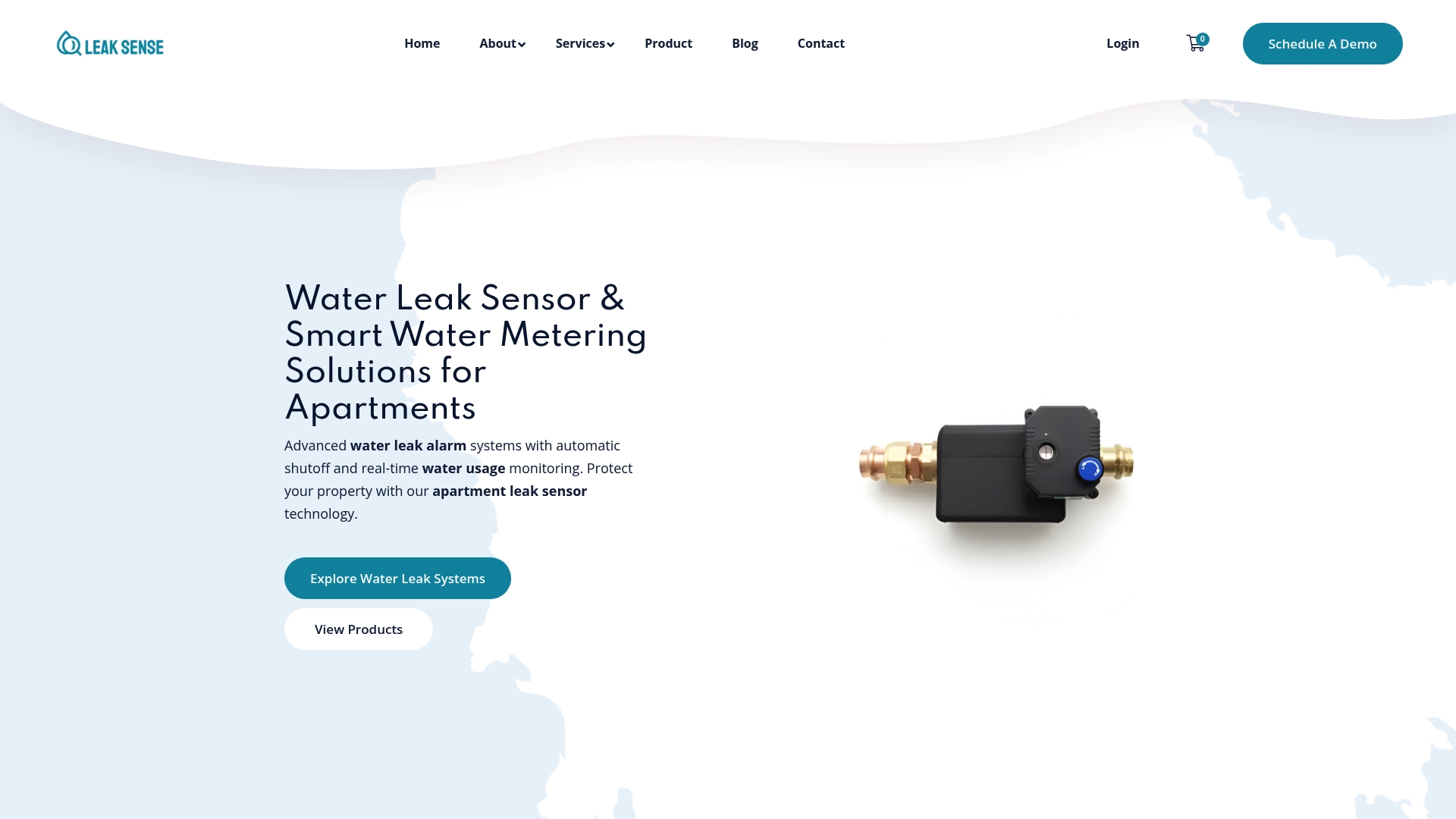
Explore how our solutions integrate the latest technologies to stop leaks before they become disasters. Visit Leaksense.io now to request a consultation and safeguard your investment with proven water protection tailored to California’s multifamily buildings.
Frequently Asked Questions
What is a spot leak detector and how does it work?
A spot leak detector is a compact sensor that detects water presence at specific locations. It works by measuring changes in electrical resistance when moisture contacts the sensor. To protect your property, place these detectors in high-risk areas like under sinks and near water heaters.
How do rope-style sensors improve leak detection in large properties?
Rope-style sensors monitor long sections of piping continuously, detecting leaks along their entire length. This eliminates the need for multiple spot detectors, providing more comprehensive coverage. For enhanced protection, install them along critical piping routes in your building.
What are the advantages of using smart IoT leak detectors?
Smart IoT leak detectors provide real-time notifications directly to your phone, allowing for immediate response to leaks. They offer features like historical data tracking and machine learning integration for improved accuracy. To enhance your property management, consider implementing these systems for faster problem resolution.
How do automatic shutoff valves prevent water damage?
Automatic shutoff valves activate instantly when a major leak is detected, stopping water flow to minimize damage. By isolating affected pipes, these valves protect your property efficiently. To safeguard your building, install these valves at main entry points and high-risk areas.
What is flow-based monitoring, and how can it help with water management?
Flow-based monitoring systems measure water usage across your property, providing insights into consumption patterns and anomalies. This allows for proactive leak detection and resource management. To optimize your water use, implement these systems to track and analyze water flow continuously.
How do integrated building solutions enhance leak detection and property management?
Integrated building solutions combine various water management systems into a unified platform for seamless communication and coordinated responses. This enables faster problem detection and compliance documentation. To improve your operational efficiency, consider adopting integrated solutions across your properties.