Water damage strikes California multifamily and commercial properties without warning, costing managers thousands in emergency repairs and insurance claims. Many believe leak detection only alerts after visible damage appears, but that’s outdated thinking. Real-time leak monitoring transforms water management by catching problems within minutes, preventing catastrophic losses before they escalate. This guide clarifies how modern systems work and why they’re essential for setting up leak detection systems that protect your investment.
- Introduction To Real-Time Leak Monitoring
- Technology Components Of Real-Time Leak Monitoring Systems
- Benefits Of Real-Time Leak Monitoring For Property And Facility Managers
- Common Misconceptions About Real-Time Leak Monitoring
- Comparison Of Leak Monitoring Solutions And Features
- Implementation Strategies For Real-Time Leak Monitoring
- Discover LeakSense Solutions For Real-Time Leak Monitoring
- Frequently Asked Questions
Key Takeaways
| Point | Details |
|---|---|
| Damage Reduction | Properties with real-time leak monitoring reduce water damage claims by 70 to 90 percent through instant detection and response. |
| Cost Savings | Insurance premiums drop 10 to 25 percent while emergency remediation costs fall 3 to 5 times compared to reactive approaches. |
| Detection Speed | Advanced IoT systems detect leaks within minutes of onset, stopping damage before it becomes visible or spreads. |
| Compliance Support | Real-time monitoring helps California properties meet Title 24 water efficiency standards with automated documentation and reporting. |
| Automated Response | Shutoff valves activate within seconds to minutes, preventing leak escalation and minimizing water waste. |
Introduction to Real-Time Leak Monitoring
Real-time leak monitoring uses IoT sensors to track water flow continuously throughout your property, delivering instant alerts when abnormal usage patterns emerge. Unlike traditional methods that rely on visual inspections or tenant reports, real-time leak detection systems use IoT sensors to monitor water flow continuously and provide instant alerts on abnormal usage, enabling quick response to prevent significant damage.
This technology matters especially for California’s multifamily and commercial buildings because water damage ranks among the costliest maintenance issues property managers face. Early detection through continuous monitoring addresses several critical challenges:
- Hidden leaks behind walls or under floors that escalate unnoticed
- Weekend or holiday leaks when staff isn’t on site
- Slow drips that waste thousands of gallons over months
- Sudden pipe bursts requiring immediate shutoff
- Tenant disputes over water billing accuracy
The role of leak alarms in California multifamily buildings extends beyond damage prevention to regulatory compliance and operational efficiency. When you set up leak detection systems properly, you gain 24/7 protection without adding staff hours. Automatic leak detection for apartments handles monitoring while you focus on other management priorities.
Modern smart property leak detection systems integrate seamlessly with building management platforms, providing centralized oversight across multiple properties. You receive alerts via text, email, or app notifications the moment sensors detect anomalies, giving you time to act before minor leaks become major disasters.
Technology Components of Real-Time Leak Monitoring Systems
Effective leak monitoring combines several technologies working together to detect, analyze, and respond to water issues instantly.
-
IoT Water Flow Sensors: These devices install at main lines, individual units, or high-risk zones to measure flow rates continuously. When usage exceeds preset thresholds, sensors trigger alerts immediately.
-
Moisture Detection Sensors: Placed near water heaters, under sinks, or in mechanical rooms, these sensors detect water presence on floors or surfaces before visible pooling occurs.
-
Automated Shutoff Valves: Integrated valves close automatically when real-time leak detection systems use IoT sensors to monitor water flow continuously and provide instant alerts on abnormal usage, stopping leaks within seconds to prevent escalation.
-
Cloud-Based Analytics Platform: Data flows from sensors to cloud servers where algorithms analyze patterns, distinguish between normal usage spikes and true leaks, and generate actionable alerts.
-
Alert Distribution System: When the platform identifies a leak, it pushes notifications through multiple channels to ensure the right staff members respond quickly.
Data flows continuously from sensors through gateways to the cloud platform. Machine learning algorithms establish baseline usage patterns for each monitored location, then flag deviations that indicate potential leaks. This intelligence reduces false alarms while ensuring genuine issues trigger immediate attention.
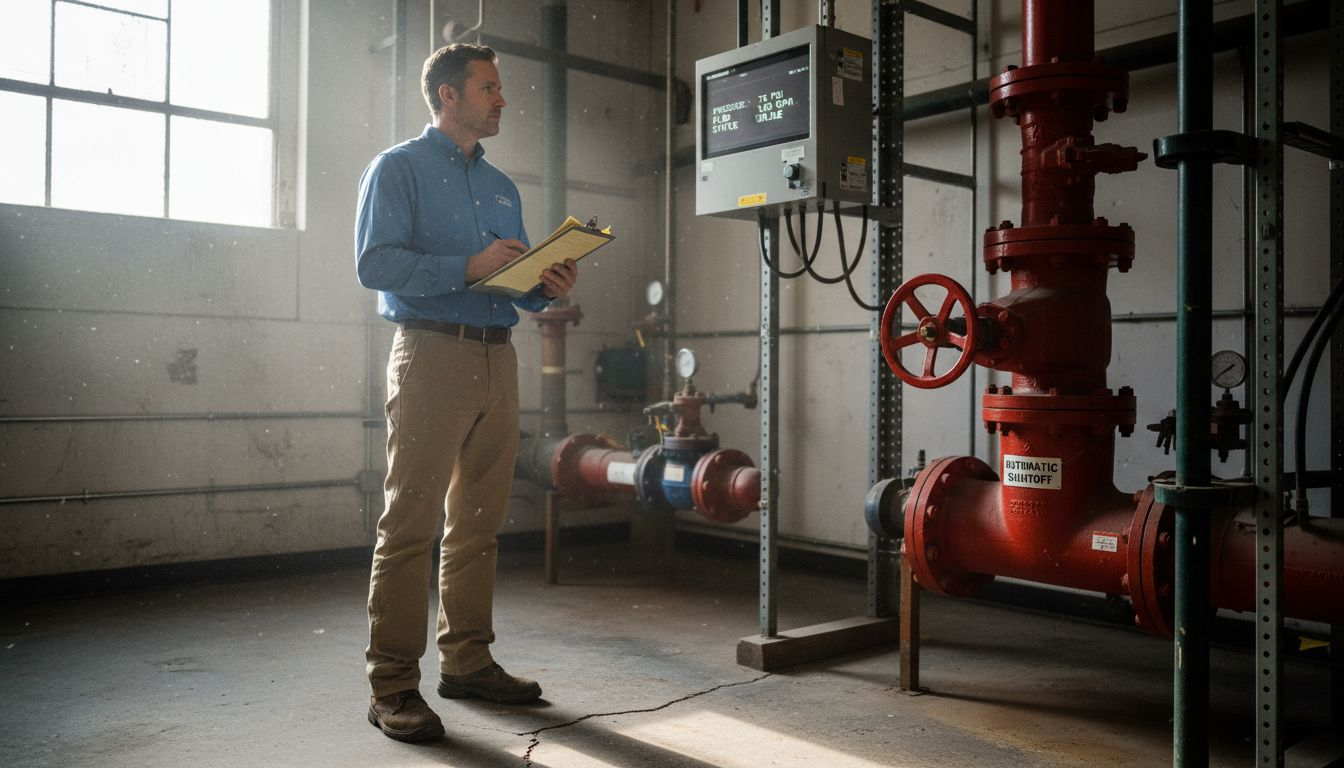
Automated leak alarms integrate with shutoff valves to create a closed-loop system. When sensors detect a leak, the system can automate water shutoff for leak prevention without waiting for human intervention. This automation proves critical during nights, weekends, or when properties lack on-site staff.
Pro Tip: Install moisture sensors in high-risk zones first like water heater closets, laundry rooms, and mechanical spaces. These locations cause the most expensive damage when leaks go undetected, delivering the fastest ROI on your monitoring investment.
Modern leak detection technology components offer flexible deployment options. You can start with main line monitoring and expand to individual units gradually, scaling your system as budget allows while protecting critical areas immediately.
Benefits of Real-Time Leak Monitoring for Property and Facility Managers
Real-time leak monitoring delivers measurable financial and operational advantages that transform how you manage water risk.
Properties deploying structured leak detection programs reduce water damage claims by 70 to 90 percent and can cut insurance premiums by 10 to 25 percent. These statistics translate to thousands of dollars saved annually per property. Insurance carriers recognize proactive monitoring systems reduce their risk exposure, offering premium discounts to properties with verified leak detection installations.
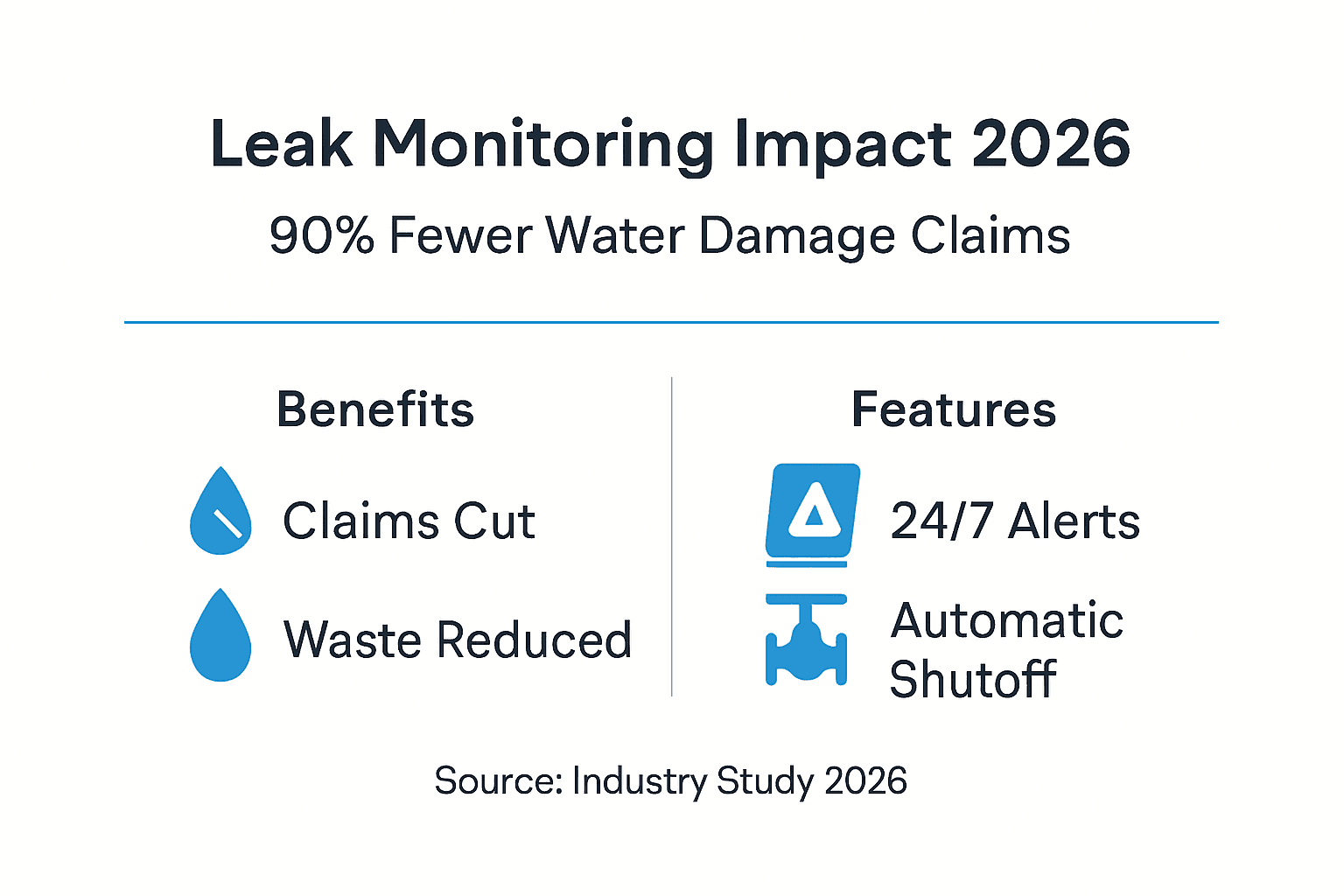
Smart leak detection leads to reduced repair costs by enabling identification and remediation within minutes rather than days, cutting emergency remediation costs by up to 3 to 5 times compared to traditional reactive approaches. A small leak caught early might require a $200 plumber visit. That same leak discovered after a weekend could mean $15,000 in drywall replacement, mold remediation, and displaced tenant costs.
Additional benefits include:
- Regulatory Compliance: Real-time monitoring helps meet California Title 24 water efficiency requirements with automated reporting and documentation
- Water Conservation: Detailed usage data identifies waste patterns and supports conservation initiatives
- Accurate Billing: Precise metering enables fair tenant billing and reduces disputes
- Tenant Satisfaction: Quick leak response prevents inconvenience and demonstrates proactive management
- Property Value Protection: Preventing water damage maintains building condition and market value
The automated leak alarm benefits extend to staff efficiency. Your team spends less time responding to emergencies and more time on preventive maintenance. California compliance benefits of water metering include simplified audits and documentation for regulatory inspections.
Properties with real-time monitoring report 90% fewer water damage insurance claims while reducing annual water waste by 15 to 25 percent through early leak detection and usage analytics.
These benefits of smart leak detection create compounding value over time. Initial system costs typically pay back within 2 to 3 years through combined savings on insurance, repairs, and water bills.
Common Misconceptions About Real-Time Leak Monitoring
Several myths prevent property managers from adopting leak monitoring systems despite proven benefits.
Myth 1: Leak Detection Systems Only Alert After Visible Damage Occurs
A common misconception is that leak detection systems only notify after visible water damage occurs; in reality, advanced systems detect leaks within minutes of onset before damage manifests. Modern sensors identify flow anomalies immediately, triggering alerts long before water pools on floors or soaks into walls.
Myth 2: Automated Shutoff Valves Are Slow or Unreliable
Some managers worry that automated valves won’t close fast enough or might malfunction. Quality systems feature valves that activate within 5 to 30 seconds of receiving shutoff commands, tested through millions of cycles. Regular maintenance ensures reliability exceeds 99 percent.
Myth 3: Leak Monitoring Is Unnecessary Until Damage Is Suspected
Waiting for visible damage defeats the purpose of proactive monitoring. Hidden leaks waste thousands of gallons monthly and cause structural damage before anyone notices moisture. Real-time systems catch these slow leaks early, when repairs cost hundreds instead of thousands.
Myth 4: Systems Generate Too Many False Alarms
Modern analytics platforms learn your property’s usage patterns and distinguish between legitimate usage spikes and actual leaks. Initial calibration takes 2 to 4 weeks, after which false alarm rates drop below 2 percent.
“Many property managers assume leak detection only works for catastrophic pipe bursts, but the real value comes from catching slow leaks and usage anomalies that traditional inspections miss entirely. These hidden issues create the majority of long-term damage and waste.”
Understanding automated leak alarm misconceptions helps you evaluate systems accurately. Focus on detection speed, integration capabilities, and proven reliability rather than outdated assumptions about leak monitoring technology.
The truth is that common misconceptions about leak detection often stem from experience with older systems that lacked sophisticated analytics. Today’s IoT platforms deliver precision and reliability that wasn’t possible even five years ago.
Comparison of Leak Monitoring Solutions and Features
Leak monitoring systems vary significantly in capabilities, deployment complexity, and cost structures.
| Solution Type | Detection Method | Response | Best For | Typical Cost |
|---|---|---|---|---|
| Basic Sensor Networks | Point sensors at fixtures | Manual shutoff, alerts only | Small properties, budget-conscious | $50 to $200 per sensor |
| Advanced IoT Systems | Flow monitoring plus moisture sensors | Automated shutoff, analytics | Multifamily buildings, commercial | $2,000 to $8,000 per property |
| Integrated Building Systems | Comprehensive monitoring with BMS integration | Automated response, predictive maintenance | Large commercial properties | $10,000+ enterprise pricing |
| Hybrid Approaches | Main line monitoring plus strategic point sensors | Configurable automated response | Medium multifamily properties | $3,000 to $6,000 per property |
Manual vs Automated Systems
Manual systems require staff response to every alert. Automated systems include shutoff valves that close water lines without human intervention, essential for properties with limited on-site staff or after-hours coverage.
Multifamily vs Commercial Features
Multifamily systems prioritize individual unit metering, tenant billing support, and common area monitoring. Commercial systems focus on main line protection, integrated HVAC monitoring, and enterprise reporting for portfolio management.
Key Selection Criteria:
- Detection speed and sensitivity thresholds
- Integration with existing building management systems
- Scalability for phased deployment across properties
- Cellular or WiFi connectivity options for reliable alerts
- Cloud analytics depth and reporting capabilities
- Professional installation vs DIY options
- Ongoing monitoring service costs
Phased deployment works well for budget management. Start with main line monitoring and high-risk common areas, then expand to individual units as ROI demonstrates value. This approach minimizes upfront costs while protecting against the largest potential losses immediately.
Review top leak detection systems for multifamily buildings to understand feature differences and deployment models. Match system capabilities to your specific property risks, staff resources, and regulatory requirements rather than choosing based solely on initial cost.
Implementation Strategies for Real-Time Leak Monitoring
Successful leak monitoring deployment requires strategic planning and systematic execution.
-
Conduct Risk Assessment: Identify high-risk zones like mechanical rooms, water heater closets, laundry facilities, and units with past leak history. Prioritize monitoring placement based on potential damage severity.
-
Select Appropriate System: Match technology to property type, budget, and staff capabilities. Consider cellular connectivity for properties with unreliable WiFi and ensure cloud platforms offer mobile app access.
-
Plan Phased Deployment: Install main line monitoring first to protect entire properties immediately. Add individual unit sensors gradually, targeting highest-risk units before standard deployments.
-
Integrate with Building Systems: Connect leak monitoring to existing BMS platforms for centralized oversight. Ensure alert systems reach appropriate staff through multiple channels.
-
Train Staff and Tenants: Educate maintenance teams on alert response procedures and system testing protocols. Inform tenants about monitoring benefits and what to expect during installations.
-
Establish Maintenance Protocols: Schedule quarterly sensor testing, annual valve cycling, and battery replacements per manufacturer specifications. Document all maintenance to support warranty claims and insurance certifications.
-
Configure Alert Hierarchies: Set escalation rules so minor alerts reach on-site staff first while critical leaks notify managers and emergency responders immediately. Adjust sensitivity thresholds after initial calibration period.
Common failure points include inadequate staff training, skipped calibration periods, and neglected maintenance schedules. Address these proactively through documented procedures and regular system audits.
Follow step-by-step leak detection implementation guides specific to your property type. Reference water leak monitoring best practices for ongoing system optimization.
Pro Tip: Configure alert fatigue prevention by setting different notification methods for various severity levels. Use texts for critical leaks requiring immediate response, emails for minor anomalies that need investigation within hours, and weekly reports for usage trends. This hierarchy keeps staff responsive without overwhelming them with constant alerts.
Integration with building management systems enables automated work order creation when leaks are detected, streamlining response workflows and ensuring nothing falls through cracks during busy periods.
Discover LeakSense Solutions for Real-Time Leak Monitoring
Protecting your California properties from water damage requires solutions designed specifically for multifamily and commercial buildings. LeakSense provides comprehensive leak monitoring systems combining IoT sensors, automated shutoff valves, and cloud analytics tailored to property management needs.
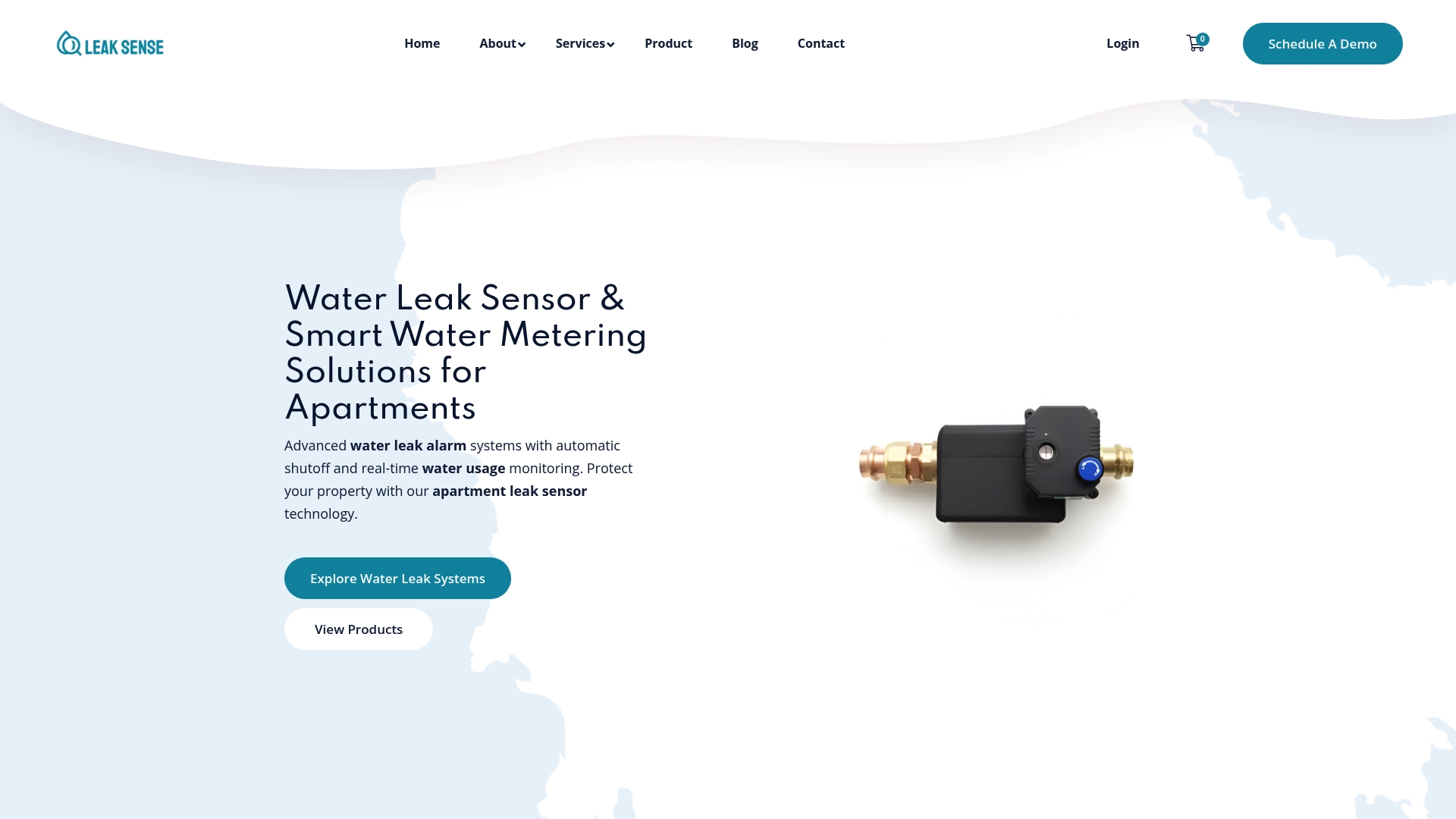
Our 24/7 automatic leak detection for apartments delivers continuous protection without adding staff burden. Systems include professional installation, real-time alerts through mobile apps, and automated leak detection with shutoff capabilities that respond within seconds to stop leaks before damage spreads.
LeakSense solutions help California properties meet Title 24 compliance requirements while reducing insurance costs and water waste. You can compare water metering systems designed for different property types and deployment scales, finding the right fit for your specific needs and budget. Explore how real-time monitoring transforms water management and protects your investment.
Frequently Asked Questions
What Is Real-Time Leak Monitoring?
Real-time leak monitoring uses IoT sensors installed throughout properties to track water flow continuously, detecting abnormal usage patterns within minutes of leak onset. Systems send instant alerts to property managers via text, email, or mobile apps, enabling quick response before minor leaks cause major damage. Advanced platforms integrate automated shutoff valves that close water lines immediately when critical leaks are detected, preventing escalation without requiring human intervention.
How Quickly Can Real-Time Leak Monitoring Detect Water Leaks?
Modern systems detect flow anomalies within 2 to 5 minutes of leak onset, compared to days or weeks with traditional visual inspection methods. This speed advantage prevents water damage from spreading and reduces repair costs dramatically. Automated shutoff valves can stop water flow within 5 to 30 seconds of receiving detection alerts.
Is Automated Shutoff Reliable and Necessary?
Automated shutoff valves deliver 99%+ reliability when properly maintained and tested quarterly. They respond within seconds to stop leaks before escalation, essential for properties lacking 24/7 on-site staff. This technology prevents catastrophic damage during nights, weekends, and holidays when manual response isn’t feasible, making it critical for comprehensive leak protection.
Can Real-Time Leak Monitoring Help with California Title 24 Compliance?
Real-time monitoring systems support California Title 24 water efficiency standards by providing detailed usage documentation and automated reporting for regulatory inspections. Systems track conservation metrics, identify waste patterns, and demonstrate proactive water management that satisfies compliance requirements. Many platforms generate compliance reports automatically, simplifying audit preparation and regulatory submissions.