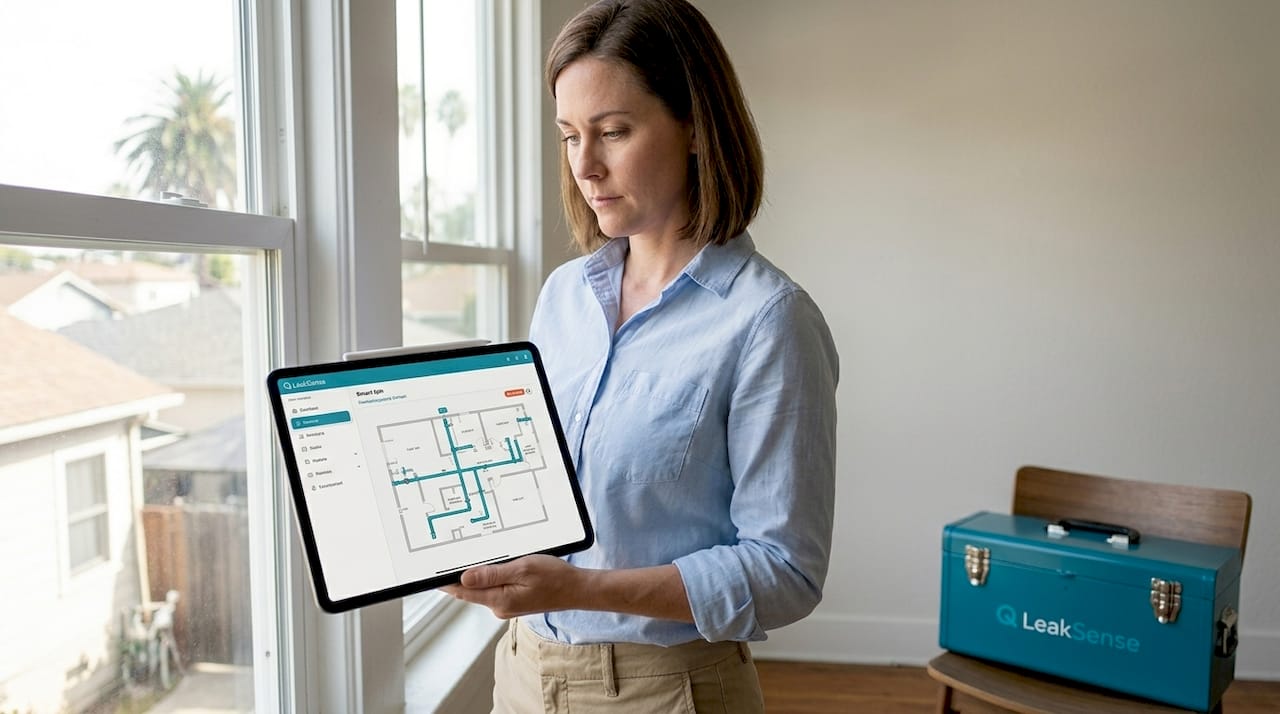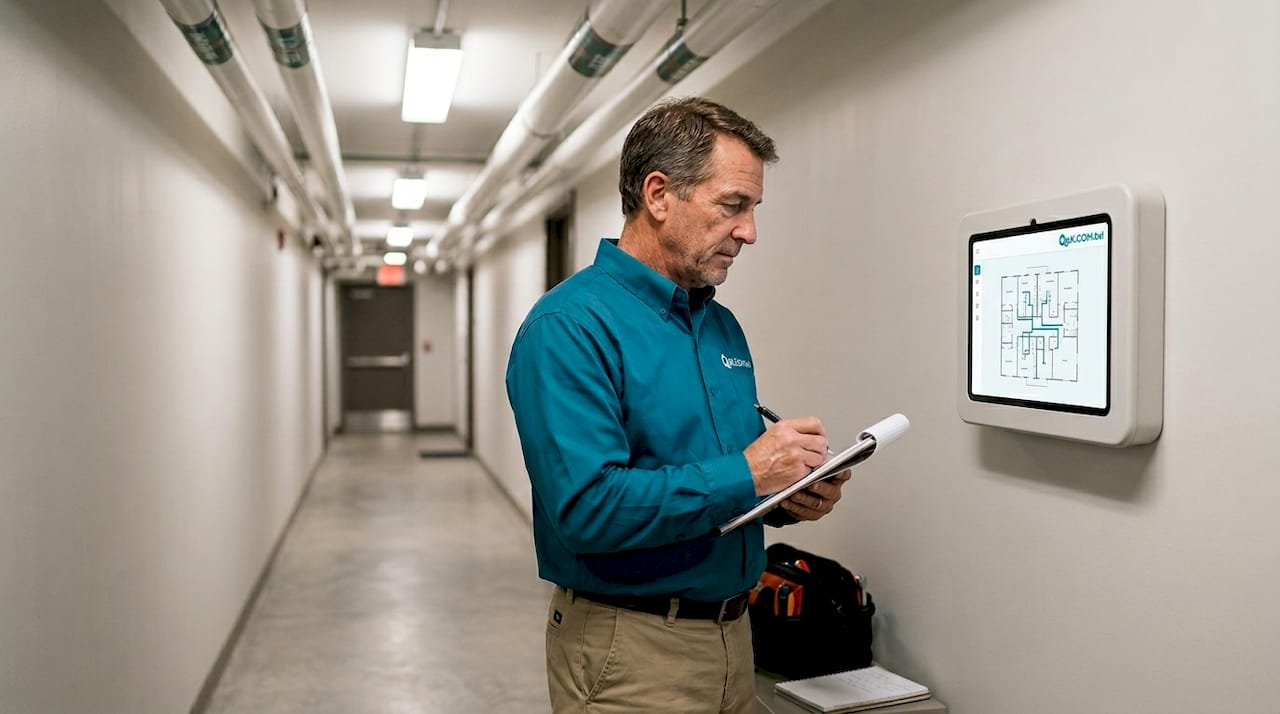
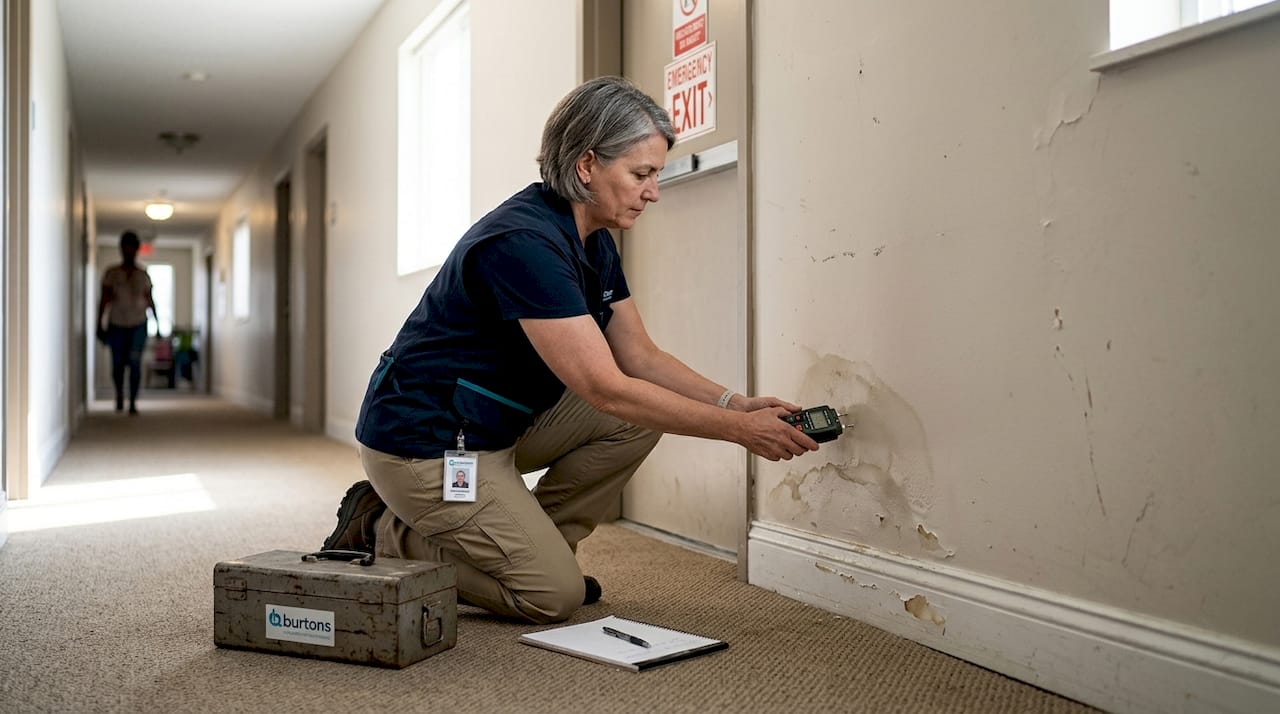
Water damage is the single most expensive and preventable risk facing California multifamily and commercial property owners today. Human error causes 40% of preventable water loss in multifamily buildings, yet most managers still rely on reactive repairs and insurance policies that may not cover the full scope of damage. This guide walks you through the true costs of water damage, the most common sources, proven prevention strategies, and exactly what California’s regulatory framework requires. Whether you manage a 20-unit apartment complex or a large commercial facility, understanding these factors is the first step toward protecting your asset and staying compliant.
- The true cost of water damage for California properties
- How water damage happens: Common sources and compliance risks
- Prevention strategies: What actually works in multifamily and commercial properties
- Regulatory compliance: Meeting California Title 24 and local mandates
- A myth busted: Insurance isn’t enough — why proactive prevention pays off
- Take the next step: Modern solutions for water damage prevention
- Frequently asked questions
Key Takeaways
| Point | Details |
|---|---|
| Water damage is costly | Unaddressed water damage leads to major financial, compliance, and reputational losses. |
| Prevention works best | Automated systems, regular maintenance, and training prevent up to 70% of damages. |
| Compliance is essential | Meeting California Title 24 standards prevents fines and ensures property marketability. |
| Insurance has limits | Insurance may not cover gradual leaks or code violations, making proactive strategies necessary. |
The true cost of water damage for California properties
Water damage rarely stays contained to a single repair bill. The financial impact spreads across multiple budget lines, and many of those costs are ones property managers don’t immediately see coming.
Direct costs are the most obvious: emergency plumber fees, drywall replacement, flooring restoration, mold remediation, and temporary relocation of residents. A single pipe burst in a multifamily building can easily exceed $50,000 in direct repair costs, especially when multiple units are affected.
Hidden costs are where the real damage accumulates:
- Resident turnover triggered by habitability concerns
- Insurance premium spikes following a claim
- Decline in asset value due to documented water damage history
- Lost rental income during extended repairs
- Legal fees from tenant disputes or code violation proceedings
Then there are compliance-related costs. California’s habitability standards require landlords to maintain functional plumbing at all times. Failure to do so can trigger fines, failed inspections, and in serious cases, loss of occupancy permits. Preventive maintenance is not just good practice; it is a direct requirement under California habitability law.
| Cost category | Reactive approach (annual estimate) | Preventive approach (annual estimate) |
|---|---|---|
| Emergency repairs | $15,000 to $60,000 | $2,000 to $5,000 |
| Insurance premiums | High, post-claim increases | Stable or discounted |
| Compliance fines | $500 to $10,000+ | Minimal to none |
| Resident turnover costs | $3,000 to $8,000 per unit | Reduced significantly |
| Preventive tech investment | None | $5,000 to $15,000 (one-time) |
Key insight: Automated detection reduces water damage by up to 70%. That single figure reframes the entire cost conversation. Prevention is not an expense; it is a return on investment.
For California properties specifically, the regulatory overlay makes this even more urgent. Cities like Los Angeles, San Francisco, and San Diego have layered local ordinances on top of state code, meaning a compliance failure can carry compounding financial consequences. Investing in water damage prevention now protects both your bottom line and your long-term operating license.
How water damage happens: Common sources and compliance risks
Most property managers assume water damage is caused by storms or obvious plumbing failures. The reality is more nuanced, and more preventable.
Human error in water loss accounts for 40% of preventable incidents. This includes improper fixture installation, missed maintenance intervals, incorrect valve operation, and inadequate staff training. These are not freak accidents; they are process failures.
Beyond human error, the most common sources in California properties include:
- Aging plumbing infrastructure — Galvanized or cast iron pipes in older buildings corrode from the inside out, often undetected until a failure occurs.
- Pressure regulation failures — Pressure reducing valves (PRVs) that malfunction can cause pressure spikes exceeding 80 psi, stressing joints and fixtures throughout the system.
- Backflow incidents — Without proper backflow prevention devices, contaminated water can reverse into the potable supply, creating both a health hazard and a code violation.
- Seismic activity — California’s earthquake risk is real. Unbraced water heaters and improperly anchored pipes are common post-seismic failure points.
- Roof and waterproofing failures — Flat commercial roofs and aging waterproof membranes allow water intrusion that is often mistaken for plumbing issues.
| Damage type | Regulatory impact | Insurance impact |
|---|---|---|
| Accidental burst pipe | Habitability inspection trigger | Usually covered |
| Gradual fixture leak | Code violation risk | Often excluded |
| Flood or seismic event | Requires seismic bracing compliance | Separate policy needed |
California Title 24 plumbing compliance mandates specific standards for all of these scenarios. Non-compliance can result in fines, failed inspections, and permit issues. For high-rise plumbing requirements, the standards are even more stringent, covering fire suppression integration, pressure zone management, and seismic bracing specifications.
Key compliance triggers property managers frequently overlook:
- Outdated low-flow fixtures that no longer meet current Title 24 water efficiency standards
- Missing or expired backflow prevention device certifications
- Unbraced water heaters in seismic zones
- Pressure zones exceeding 80 psi without documentation
- No documented maintenance log for plumbing systems
Pro Tip: Align your multifamily leak detection steps with your annual inspection calendar. When inspectors arrive, a documented maintenance history is one of the fastest ways to demonstrate compliance and avoid penalties.
Prevention strategies: What actually works in multifamily and commercial properties
Knowing the risks is only useful if it leads to action. The good news is that the most effective prevention strategies are well-documented and increasingly affordable to implement.
Automated leak detection is the highest-impact single investment you can make. Systems with 95% accuracy cut water damage by 70% by catching leaks before they escalate. These systems use IoT-enabled sensors placed at high-risk points, including under sinks, near water heaters, at main shutoffs, and along irrigation lines. When moisture is detected, the system sends an alert and, in automated configurations, triggers a shutoff valve.
The top five most effective preventive steps for California properties:
- Install automated leak sensors at every high-risk water access point in the building
- Schedule quarterly visual inspections of all plumbing fixtures, water heaters, and roof drainage systems
- Test PRVs and backflow preventers at least annually and document the results
- Train maintenance staff on proper valve operation, fixture installation, and escalation protocols
- Map your water systems so every team member knows shutoff locations and can respond within minutes
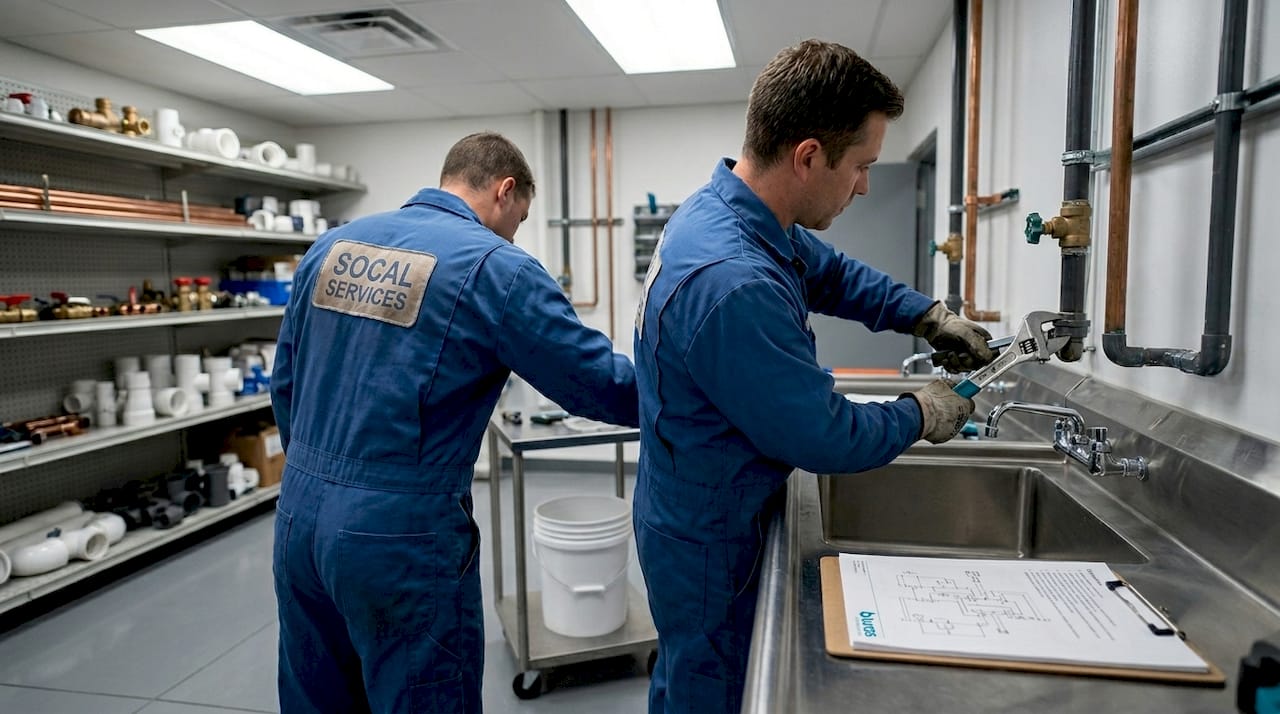
Routine inspection frequency matters more than most managers realize. Preventive maintenance is the proven method for cutting emergency costs while maintaining California habitability compliance. A building that has documented quarterly checks is far less likely to face a surprise inspection failure.
For preventive maintenance in Southern California, the combination of drought conditions, aging infrastructure, and seismic risk makes a structured program even more critical than in other regions.
Pro Tip: When you set up your automated leak alarms, coordinate the system’s annual calibration check with your compliance calendar. This way, you confirm sensor accuracy at the same time you prepare documentation for your inspection cycle.
Staff training is the often-skipped layer. Even the best technology fails if maintenance personnel don’t know how to respond to an alert. Build a written response protocol and review it with your team every six months. Pair it with a review of your top leak detection systems to ensure your equipment is still the right fit for your building’s current needs.
Regulatory compliance: Meeting California Title 24 and local mandates
Prevention and compliance are not separate goals. In California, they are the same goal expressed in different language.
California Title 24 plumbing standards cover Parts 5 and 6 of the California Building Standards Code. Part 5 addresses plumbing requirements including low-flow fixtures, backflow prevention, pressure zone limits under 80 psi, and seismic bracing for water heaters. Part 6 covers energy efficiency, which intersects with water heating systems and insulation requirements.
Four must-do Title 24 compliance steps for 2026:
- Audit all fixtures for current low-flow compliance. Toilets must not exceed 1.28 gallons per flush; showerheads must not exceed 1.8 gallons per minute.
- Certify backflow prevention devices through a licensed tester and keep records on file for at least three years.
- Verify pressure zones throughout the building. Any zone exceeding 80 psi requires a functioning PRV and documentation.
- Confirm seismic bracing on all water heaters and storage tanks per the California Plumbing Code Section 508.
The consequences of non-compliance are not theoretical. Cities across California have increased enforcement activity, and property managers who cannot produce maintenance records face fines starting at $500 per violation. Repeat violations or habitability failures can escalate to permit suspension.
Risk management for HOAs and commercial property managers alike hinges on documentation. An accurate leak detection system that logs sensor events automatically creates a digital audit trail, which is exactly what inspectors want to see.
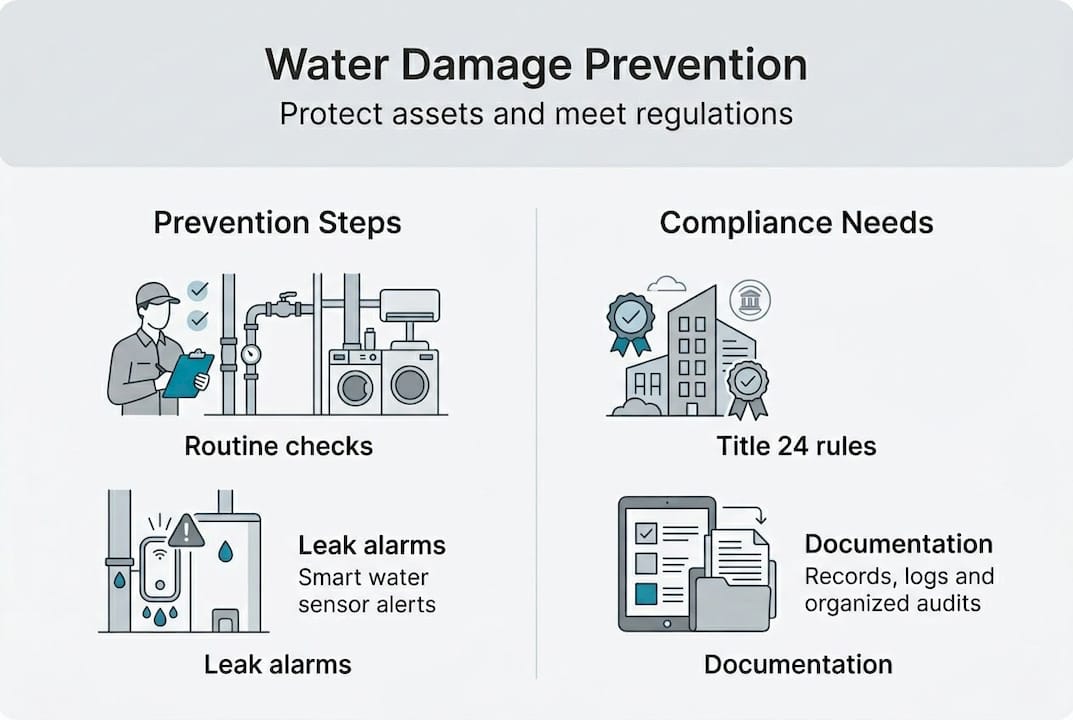
Insurance intersects here too. Many carriers now require proof of active leak detection systems before issuing or renewing policies on multifamily properties. Failing to meet this threshold can result in higher premiums or outright coverage denial.
A myth busted: Insurance isn’t enough — why proactive prevention pays off
Here is the uncomfortable truth most property managers learn too late: insurance is not a water damage strategy. It is a financial backstop for sudden, accidental events. Most policies explicitly exclude gradual leaks, meaning a slow drip behind a wall that causes months of mold growth is your problem, not your insurer’s.
Preventive maintenance protects long-term value in ways that insurance simply cannot replicate. A claim does not restore your reputation with tenants. It does not reverse a compliance fine. It does not undo the turnover costs when residents leave because of a habitability incident.
The managers who consistently avoid major water damage events are not lucky. They have invested in true prevention: documented maintenance programs, automated detection, and staff accountability. They treat compliance not as a checklist but as an operating standard.
Deferred maintenance is always more expensive than proactive investment. The data supports this, and so does every property manager who has dealt with a major water event. Build your prevention program now, before the next leak makes the decision for you.
Take the next step: Modern solutions for water damage prevention
Understanding the risks and regulations is essential, but having the right tools in place is what turns knowledge into protection. LeakSense.io provides California-specific solutions designed to close the gap between compliance requirements and real-world property management.
From automatic leak detection systems with real-time alerts and automated shutoff capabilities, to water metering systems that deliver usage analytics and support tenant billing, every solution is built for multifamily and commercial properties operating under California’s regulatory framework. Explore water submetering for multifamily to see how proactive water management reduces costs, supports Title 24 compliance, and gives you the audit trail that protects your property at every inspection.
Frequently asked questions
How much can automated leak detection reduce water damage costs?
Automated leak detection reduces water damage by up to 70% by identifying issues early and minimizing the scope of repairs. This translates directly into lower emergency response costs and reduced insurance claims.
What California regulations apply to water damage prevention in multifamily buildings?
Title 24 requires low-flow fixtures, backflow prevention, pressure zone limits under 80 psi, and seismic bracing for water heaters. Non-compliance can result in fines, failed inspections, or loss of occupancy permits.
Does insurance cover all water damage events?
Insurance covers sudden leaks but typically excludes gradual damage caused by slow leaks or deferred maintenance. Regulatory fines and tenant turnover costs are also outside the scope of most standard policies.
What are common sources of water damage in commercial properties?
The most frequent causes are plumbing failures, human error causing 40% of preventable water loss during installation or maintenance, and inadequate routine inspection programs.
How often should routine water damage prevention checks be done?
Inspections should be conducted at least annually, with targeted checks after any seismic activity and preventive maintenance intervals aligned to your compliance calendar to ensure habitability standards are continuously met.