Undetected water leaks in California’s multifamily and commercial buildings waste up to 25% of water supply, draining resources and inflating costs. For property managers and building owners, water leak detection technology offers a powerful solution combining smart sensors, real-time alerts, and automated responses to stop waste before it becomes catastrophic. This guide explains what water leak detection is, how California regulations shape its adoption, and why implementing these systems protects your assets while ensuring compliance.
- Introduction To Water Leak Detection
- Regulatory Context And Compliance In California
- Technology And System Components
- Benefits And Impact Of Leak Detection
- Common Misconceptions And Clarifications
- Implementation Guidelines For Property Managers
- Frequently Asked Questions About Water Leak Detection
Key Takeaways
| Point | Details |
|---|---|
| Water Loss Prevention | Leak detection systems can reduce water waste by up to 25% in multifamily properties. |
| California Compliance | Title 24 mandates leak detection and submetering in new multifamily buildings since 2020. |
| Technology Components | Systems combine moisture sensors, flow monitors, real-time alerts, and automated shutoff valves. |
| Financial Protection | Early detection prevents costly property damage and reduces insurance claims significantly. |
| Implementation Success | Professional installation with regular maintenance ensures reliable operation and regulatory compliance. |
Introduction to Water Leak Detection
Water leak detection technology represents a comprehensive monitoring approach that identifies, alerts, and often automatically responds to unwanted water flow in buildings. For California’s multifamily and commercial properties, these systems serve as the first line of defense against damage that can cost hundreds of thousands of dollars per incident. The technology integrates specialized sensors that continuously monitor water usage patterns, detecting anomalies that signal leaks ranging from minor drips to catastrophic pipe failures.
Commercial building water leak detection systems provide 24/7 flow monitoring with automatic shutoff capabilities, stopping damage before it spreads. This constant vigilance addresses the reality that most leaks occur during off-hours when maintenance staff aren’t present. Property managers face significant risks from undetected leaks including structural water damage, mold growth, inflated utility bills, and tenant disruption that can lead to vacancies and lost revenue.
The core value proposition centers on immediate notification and rapid response capability. Key features include:
- Continuous water flow monitoring across all building systems and individual units
- Instant mobile and email alerts when sensors detect unusual patterns or moisture
- Automated shutoff valves that stop water flow to affected zones within seconds
- Historical data analytics revealing usage trends and potential problem areas
- Integration with property management platforms for centralized oversight
Understanding how to set up leak detection systems properly ensures maximum protection. The EPA recognizes leak detection technologies as essential tools for water conservation, particularly in commercial and multifamily applications where scale amplifies both risks and savings potential. For property managers, the shift from reactive damage control to proactive leak prevention transforms operations and protects bottom lines.
Regulatory Context and Compliance in California
California’s water scarcity challenges have driven some of the nation’s strictest water efficiency regulations. Title 24 mandates water submetering and leak detection for new multifamily buildings, fundamentally changing how properties must manage water resources. These requirements, which took effect in 2020, reflect California’s broader sustainability goals and create clear compliance obligations for property owners and managers.
The regulatory framework serves multiple purposes beyond conservation. It establishes accountability through individual unit metering, enables fair tenant billing based on actual usage, and requires technology capable of detecting leaks before they waste significant water. Properties that fail to comply face potential penalties, difficulty obtaining certificates of occupancy for new construction, and increased scrutiny during inspections.
Compliance benefits extend beyond avoiding fines. California Title 24 compliance support helps property managers understand how proper leak detection:
- Reduces overall building water consumption, lowering utility costs for landlords in master-metered properties
- Provides documentation of water management efforts that can support LEED certification and green building credentials
- Demonstrates due diligence that may reduce liability in water damage disputes
- Positions properties favorably for environmentally conscious tenants and investors
- Creates audit trails proving responsible water stewardship to regulators
The legal landscape continues evolving as California addresses ongoing drought conditions and climate change impacts. Property managers who view compliance as an opportunity rather than a burden gain competitive advantages. Early adoption of leak detection technology positions buildings ahead of future regulatory expansions while immediately capturing operational benefits. The intersection of legal requirements and practical water management makes leak detection systems essential infrastructure rather than optional upgrades.
Technology and System Components
Modern water leak detection systems combine multiple technologies working together to provide comprehensive protection. Understanding each component helps property managers make informed decisions about system design and vendor selection. The foundation rests on two primary sensor types that serve different monitoring functions.
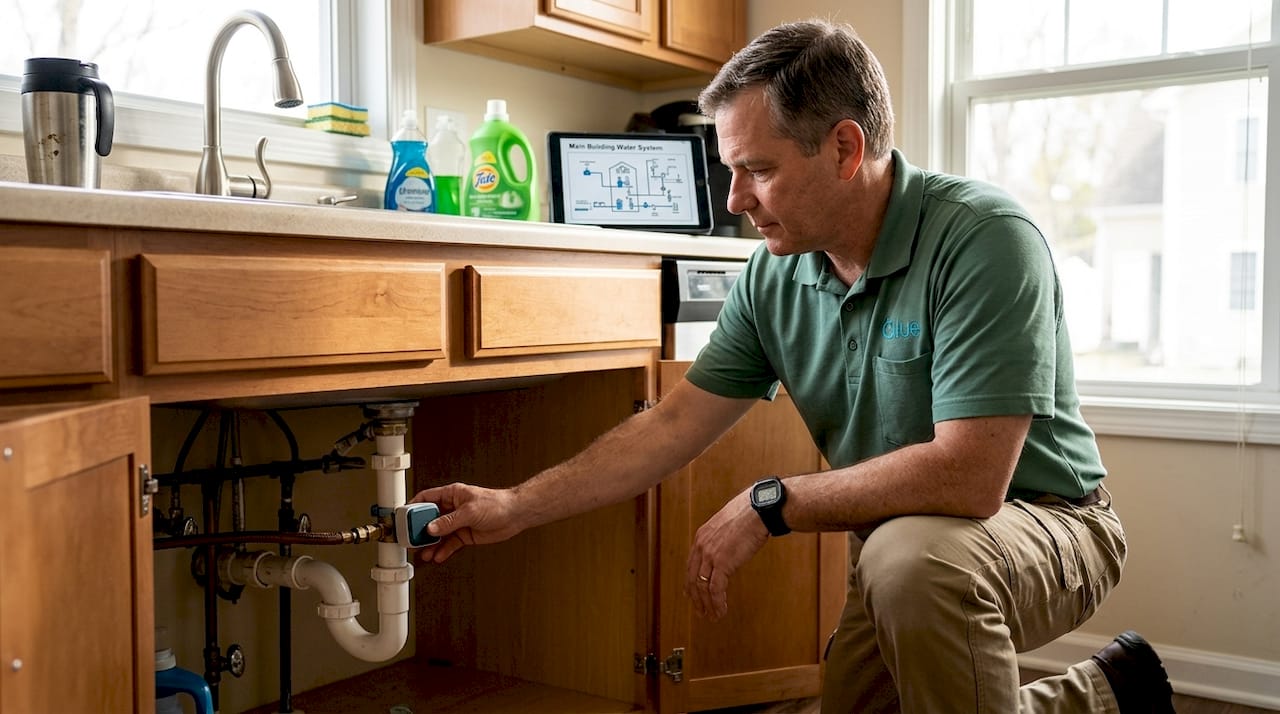
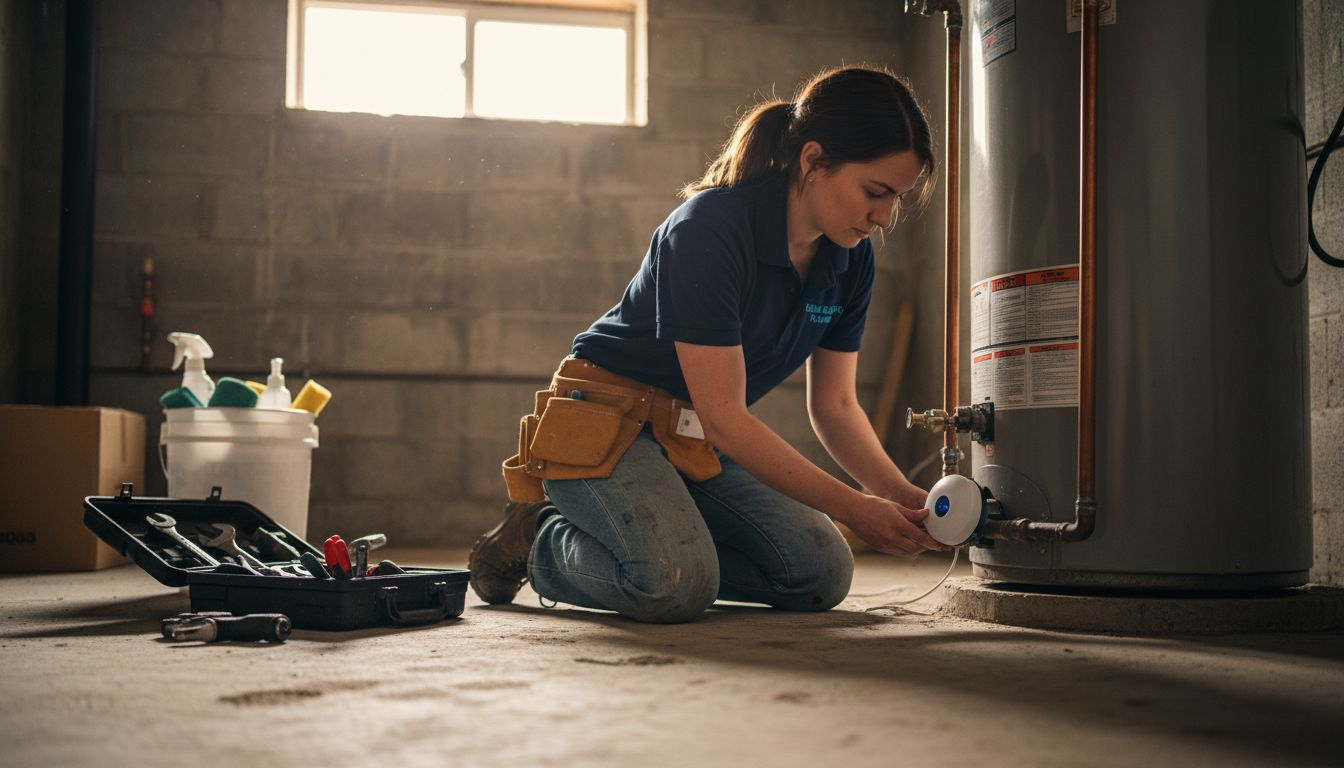
Moisture sensors detect water presence where it shouldn’t exist, such as under sinks, near water heaters, in mechanical rooms, or along baseboards. These devices trigger alerts when water contacts their sensors, providing early warning of leaks before visible damage occurs. Flow sensors monitor water moving through pipes, establishing baseline usage patterns and identifying anomalies that suggest leaks, running toilets, or unauthorized usage. The EPA notes that effective leak sensors use both detection methods, with alerts often triggered within seconds to minutes of unusual activity.
Real-time monitoring platforms serve as the system’s brain, processing sensor data and delivering actionable information to property managers. Cloud-based dashboards provide instant visibility into water usage across entire properties or individual units. When sensors detect problems, the platform sends immediate notifications via mobile apps, email, or text, enabling rapid response regardless of time or location. This connectivity transforms how maintenance teams operate, shifting from scheduled inspections to data-driven interventions.
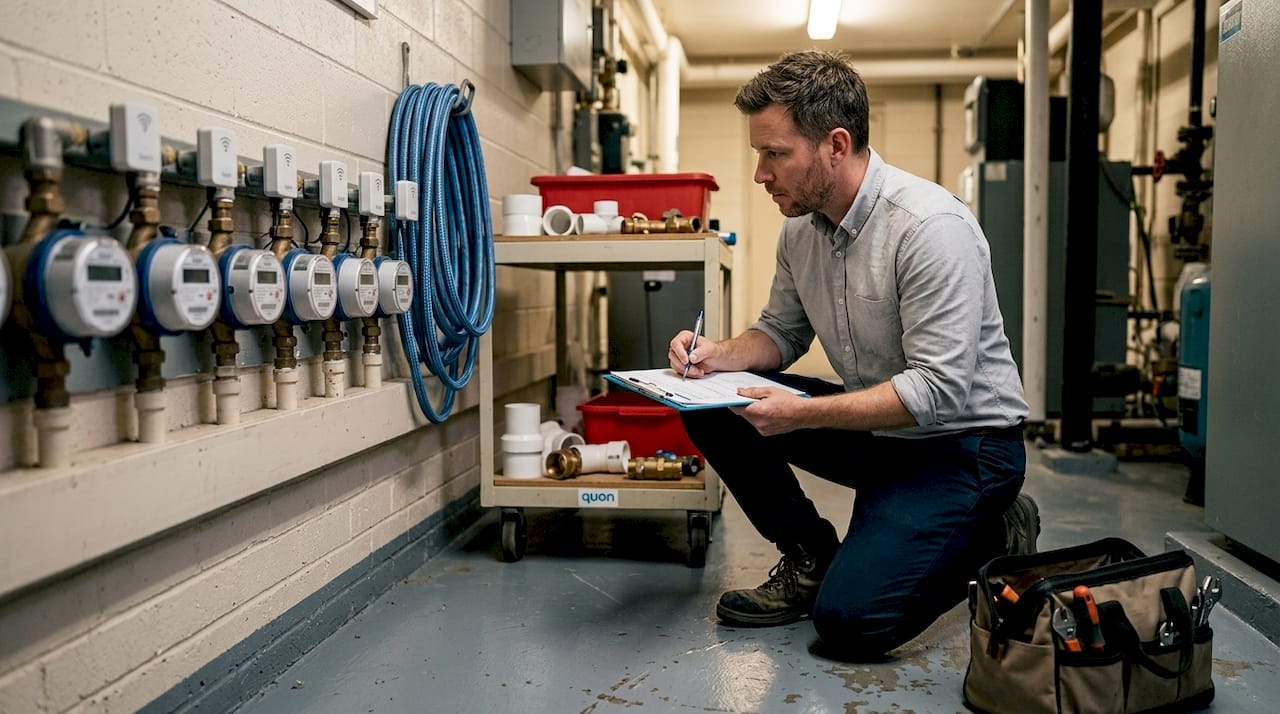
Automated shutoff valves represent the critical response mechanism. When integrated sensors detect leaks, these valves can automatically stop water flow to affected zones or individual units within seconds. Valve sizes support pipe diameters from 0.75" to 4", accommodating diverse commercial applications from individual fixtures to main supply lines. The automatic shutoff capability prevents the catastrophic damage that occurs when leaks run uncontrolled for hours or days.
Integration with Building Management Systems (BMS) enables centralized control and comprehensive reporting. Property managers can:
- Monitor water usage trends across entire portfolios
- Generate reports for compliance documentation and sustainability certifications
- Identify high-consumption units for targeted tenant education
- Schedule preventive maintenance based on system alerts rather than arbitrary timelines
- Track ROI through quantified water savings and avoided damage costs
| System Component | Primary Function | Key Benefit |
|---|---|---|
| Moisture Sensors | Detect water presence | Early warning before visible damage |
| Flow Sensors | Monitor usage patterns | Identify leaks through consumption anomalies |
| Monitoring Platform | Process data and alert managers | Real-time visibility and rapid response |
| Shutoff Valves | Stop water flow automatically | Prevent catastrophic damage |
| BMS Integration | Centralize control | Streamline operations across properties |
Pro Tip: Sensor placement matters as much as sensor quality. Focus on high-risk areas including water heater locations, bathroom and kitchen supply lines, HVAC equipment, and the building perimeter where foundation leaks can occur. Choosing the best leak detection systems for multifamily buildings requires understanding your property’s specific vulnerabilities and usage patterns.
Benefits and Impact of Leak Detection
The financial and operational case for water leak detection systems becomes compelling when you examine real-world impacts. Smart leak detection reduces water waste by up to 25% while preventing over $1.2 million in annual insurance claims per site, transforming these systems from expenses into strategic investments. For California property managers facing high water costs and stringent regulations, these numbers represent significant bottom-line improvements.
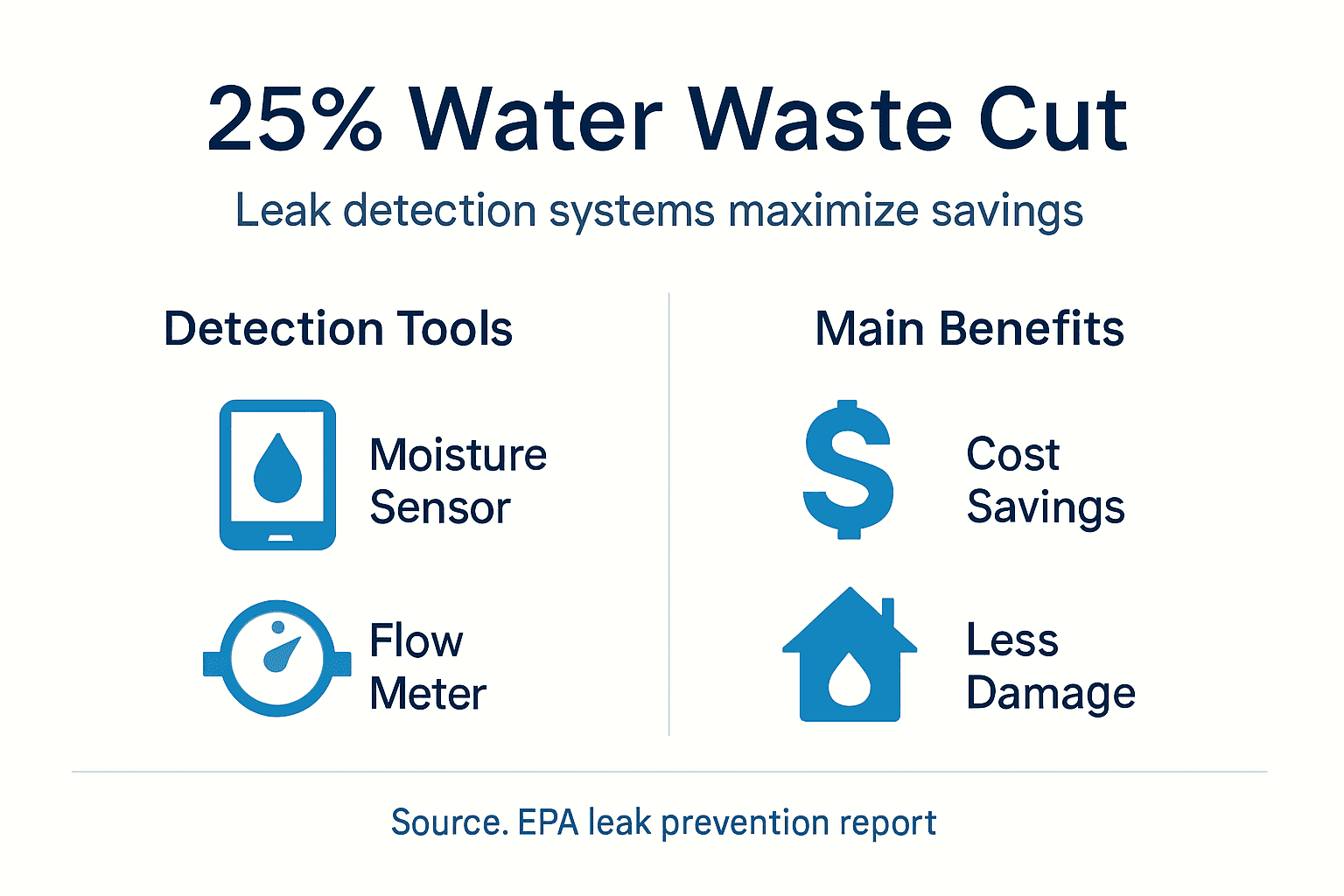
Water waste reduction delivers immediate utility cost savings. In multifamily buildings where landlords pay water bills, stopping leaks that waste thousands of gallons monthly adds up quickly. Even in individually metered properties, reducing common area water usage and preventing leaks in building systems cuts operational costs. The 25% waste reduction figure reflects both major leaks and the cumulative impact of minor issues like running toilets and dripping faucets across dozens of units.
Property damage prevention represents the largest financial benefit. A single undetected pipe burst can cause $50,000 to $500,000 in damage when factoring in structural repairs, mold remediation, temporary tenant relocation, and lost rent during restoration. Automated systems that detect and stop leaks within minutes rather than hours or days eliminate most catastrophic scenarios. Insurance companies recognize this risk reduction, with many offering premium discounts for properties with professionally monitored leak detection systems.
Tenant safety and satisfaction improve measurably when water issues receive immediate attention. Tenants value:
- Rapid response to leaks preventing damage to personal belongings
- Reduced disruption from emergency repairs and water shutoffs
- Lower utility bills in properties with individual metering
- Visible investment in property maintenance and modern amenities
- Peace of mind knowing systems actively protect their homes
Sustainability and regulatory compliance benefits position properties favorably for environmentally conscious tenants and investors. Documentation of water conservation efforts supports LEED certification applications, green building credentials, and corporate sustainability reporting. California’s emphasis on water stewardship makes these credentials increasingly valuable for competitive positioning and regulatory relations.
25% Water Waste Reduction • Properties with comprehensive leak detection systems cut water waste by up to one-quarter, translating to substantial cost savings and environmental impact reduction across large portfolios.
Operational efficiencies from proactive water management extend beyond direct cost savings. Maintenance teams work more effectively when directed by data rather than guessing where problems exist. Automatic alerts enhance water management efficiency by eliminating the need for constant manual monitoring while ensuring no leaks go unnoticed during nights, weekends, or holidays. The shift from reactive to predictive maintenance reduces emergency callouts, extends equipment life, and allows better resource allocation.
Common Misconceptions and Clarifications
Several myths about water leak detection systems create hesitation among property managers considering implementation. Addressing these misconceptions with factual information helps you make decisions based on reality rather than assumptions. Understanding what modern systems can and cannot do sets appropriate expectations for performance and ROI.
-
Myth: Leak detection only catches major floods after they start. Reality: Modern systems detect small leaks and running fixtures instantly, often within seconds, preventing major damage before it occurs. Flow monitoring identifies usage patterns inconsistent with normal operations, catching issues like continuously running toilets or slow drips that waste water without causing immediate visible damage.
-
Myth: All leak detection systems perform equally well. Reality: Significant quality differences exist between consumer-grade and commercial systems. Professional installations with commercial-grade sensors, redundant monitoring, and integrated shutoff valves provide reliability that standalone retail products cannot match. System architecture, sensor placement, and professional calibration dramatically impact effectiveness.
-
Myth: Installation costs make leak detection financially prohibitive. Reality: Upfront installation costs typically return within 18 to 36 months through combined water savings and avoided damage. When factoring in insurance premium reductions and compliance with mandatory California regulations, the financial case strengthens further. Many properties find that preventing just one major leak pays for the entire system.
-
Myth: Systems require constant maintenance and generate false alarms. Reality: Properly installed commercial systems need minimal maintenance, typically annual sensor testing and battery replacement for wireless units. False alarms occur most often with DIY installations where sensors sit in locations prone to condensation or humidity rather than actual leaks. Professional installation eliminates most false alarm scenarios through proper sensor selection and placement.
-
Myth: Leak detection replaces good maintenance practices. Reality: These systems complement rather than replace regular inspections and preventive maintenance. They provide continuous monitoring between inspections and catch issues that visual inspections miss, such as leaks inside walls or under floors. Understanding automated leak alarms for multifamily properties shows how technology and human expertise work together most effectively.
Pro Tip: Set realistic expectations by understanding your system’s capabilities and limitations. Sensors cannot detect every possible leak scenario, particularly those in locations without sensor coverage. Regular testing, including annual sensor verification and flow test simulations, ensures your system performs as expected when real leaks occur. Document all tests for compliance records and insurance purposes.
Implementation Guidelines for Property Managers
Successful water leak detection implementation follows a systematic process from initial planning through ongoing operations. Property managers who approach installation methodically achieve better results and maximize return on investment. The following steps outline a proven implementation framework.
-
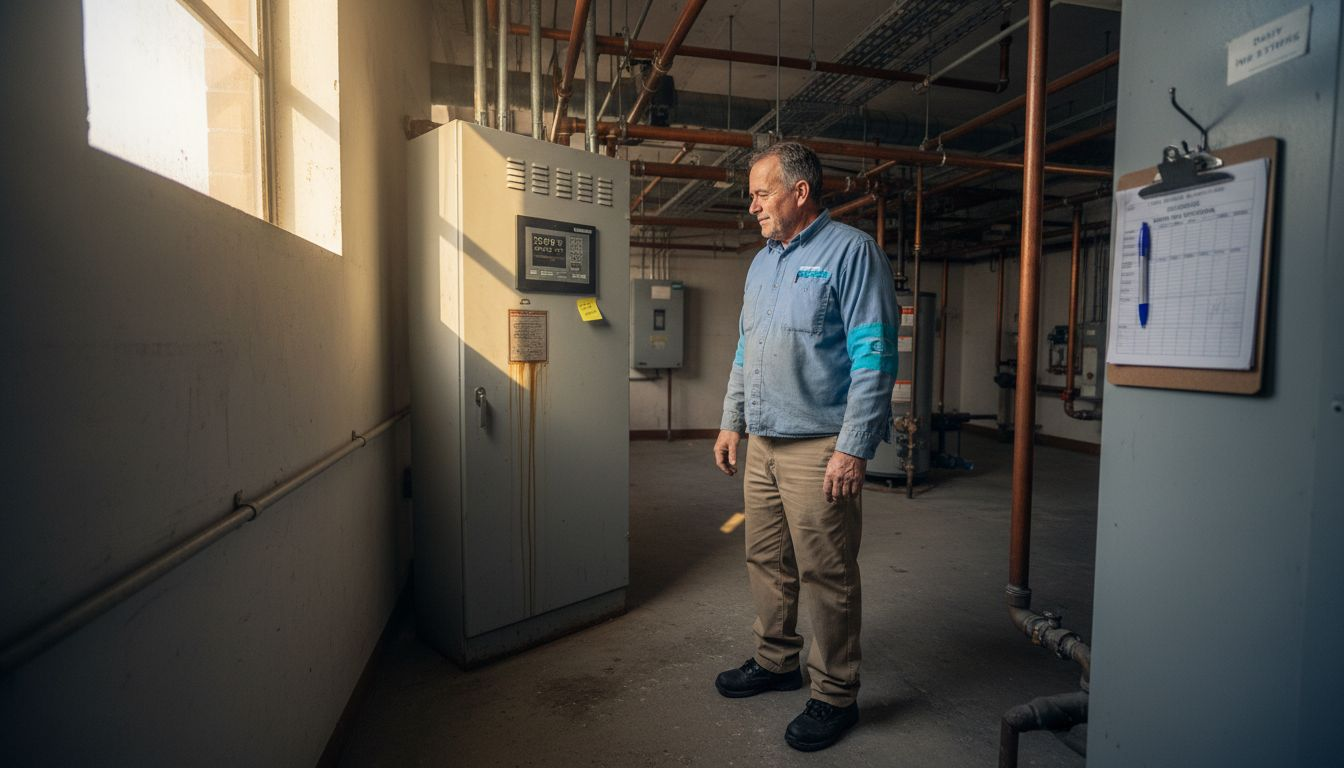
Conduct comprehensive risk assessment. Walk your property identifying all water sources, potential leak points, and high-risk areas. Document locations of water heaters, supply lines, bathrooms, kitchens, mechanical rooms, and previous water damage incidents. This assessment guides sensor placement and system design, ensuring coverage where it matters most.
-
Define system requirements based on building characteristics. Consider building age, plumbing condition, number of units, tenant demographics, and budget constraints. Older properties with original plumbing need more comprehensive coverage than newer construction. Large buildings benefit from zoned shutoff capabilities that isolate problems without affecting unaffected areas.
-
Select appropriate sensor types and quantities. Match sensor technology to monitoring needs:
- Moisture sensors for point detection under fixtures and appliances
- Flow sensors on main lines and individual unit supplies for consumption monitoring
- Combination systems providing both detection methods for comprehensive coverage
- Wireless versus hardwired options based on installation logistics and building infrastructure
-
Integrate automated shutoff valves at strategic locations. Install valves on main supply lines, individual unit supplies, or both depending on system design. Automated shutoff capability transforms detection systems from alert-only to active protection, stopping damage progression without requiring human intervention.
-
Hire qualified professionals for installation. Licensed plumbers familiar with California codes and commercial leak detection systems ensure compliant installations that perform reliably. Professional installation includes proper sensor calibration, system testing, and integration with monitoring platforms. Attempting DIY installations on commercial properties often results in code violations and system underperformance.
-
Establish maintenance schedules and response protocols. Create written procedures covering:
- Monthly system status checks reviewing sensor connectivity and battery levels
- Quarterly flow testing verifying sensors detect anomalies accurately
- Annual comprehensive inspections including sensor cleaning and calibration
- Emergency response procedures when alerts trigger, including authorization to shut off water and contact information for maintenance staff
-
Train maintenance teams and key personnel. Ensure staff understand how to interpret system alerts, respond to notifications, manually operate shutoff valves, and perform basic troubleshooting. Training should cover both normal operations and emergency scenarios, with regular refreshers maintaining readiness.
-
Document everything for compliance and insurance purposes. Maintain records of installation specifications, sensor locations, maintenance activities, system tests, and any leak incidents detected. This documentation proves compliance with California Title 24, supports insurance claims if damage occurs, and provides valuable data for system optimization over time.
Pro Tip: Start with step-by-step water leak monitoring guidance and follow comprehensive leak detection steps for multifamily properties to avoid common implementation pitfalls. Phased rollouts work well for large properties, allowing you to refine processes on a smaller scale before expanding systemwide.
Discover LeakSense—Your Partner in Proactive Water Leak Detection
Protecting your California multifamily or commercial property from water damage requires more than good intentions. It demands professional-grade technology, expert installation, and ongoing support that ensures systems perform when needed most. LeakSense specializes in comprehensive automatic leak detection with shutoff capabilities designed specifically for California’s regulatory environment and operational realities.
Our 24/7 monitoring platforms integrate smart water submetering solutions with leak detection, providing complete water management visibility across your entire portfolio. We handle everything from initial risk assessment through installation, calibration, and ongoing maintenance support. Our California-focused expertise ensures your systems meet Title 24 requirements while delivering the operational benefits and cost savings that justify investment.
Explore our step by step water leak monitoring guide to understand how professional systems protect your assets, reduce costs, and provide peace of mind knowing water issues receive immediate attention day or night.
Frequently Asked Questions about Water Leak Detection
How quickly do leak detection systems alert property managers?
Modern commercial systems send alerts within seconds to minutes of detecting abnormal water flow or moisture presence. Real-time monitoring platforms deliver notifications via mobile app, email, and text simultaneously, ensuring managers receive alerts regardless of location or time. Response speed depends on cellular or internet connectivity, but most alerts arrive within 30 seconds of detection.
Do leak detection systems work in older multifamily buildings?
Yes, leak detection technology adapts to buildings of any age. Older properties often benefit most from comprehensive monitoring since aging plumbing creates higher leak risks. Wireless sensor options eliminate the need for extensive retrofitting, while flow monitoring on main lines provides building-wide coverage. Professional assessment identifies optimal sensor placement considering each building’s unique characteristics and vulnerabilities.
What maintenance do water leak detection systems require?
Commercial systems need minimal ongoing maintenance when professionally installed. Monthly status checks verify sensor connectivity and battery levels. Quarterly flow tests confirm sensors accurately detect anomalies. Annual comprehensive inspections include sensor cleaning, calibration verification, and system performance testing. Most maintenance tasks take minutes and can be performed by property maintenance staff following simple checklists.
Can leak detection systems reduce insurance premiums?
Many insurance carriers offer premium discounts for properties with professionally monitored leak detection systems. Discounts typically range from 5% to 15% depending on coverage scope and insurance provider. The risk reduction from early leak detection and automated shutoff capabilities directly translates to fewer claims, which insurers recognize in pricing. Contact your insurance provider to understand specific discount availability and documentation requirements.
How does leak detection integrate with existing property management systems?
Modern platforms offer API integrations with major property management software, enabling centralized oversight across all building systems. Integration allows automated work order creation when leaks occur, water usage reporting within existing dashboards, and consolidated maintenance tracking. Cloud-based architecture ensures compatibility with most management platforms without requiring extensive custom development or IT infrastructure changes.