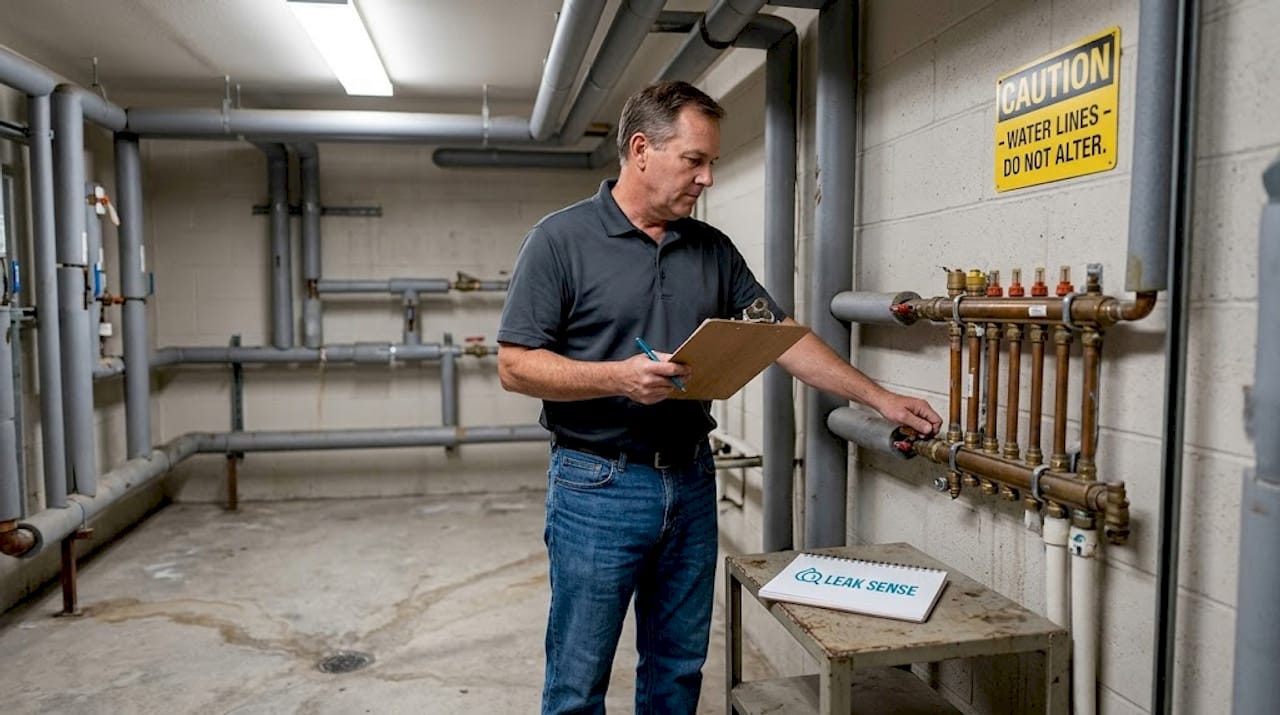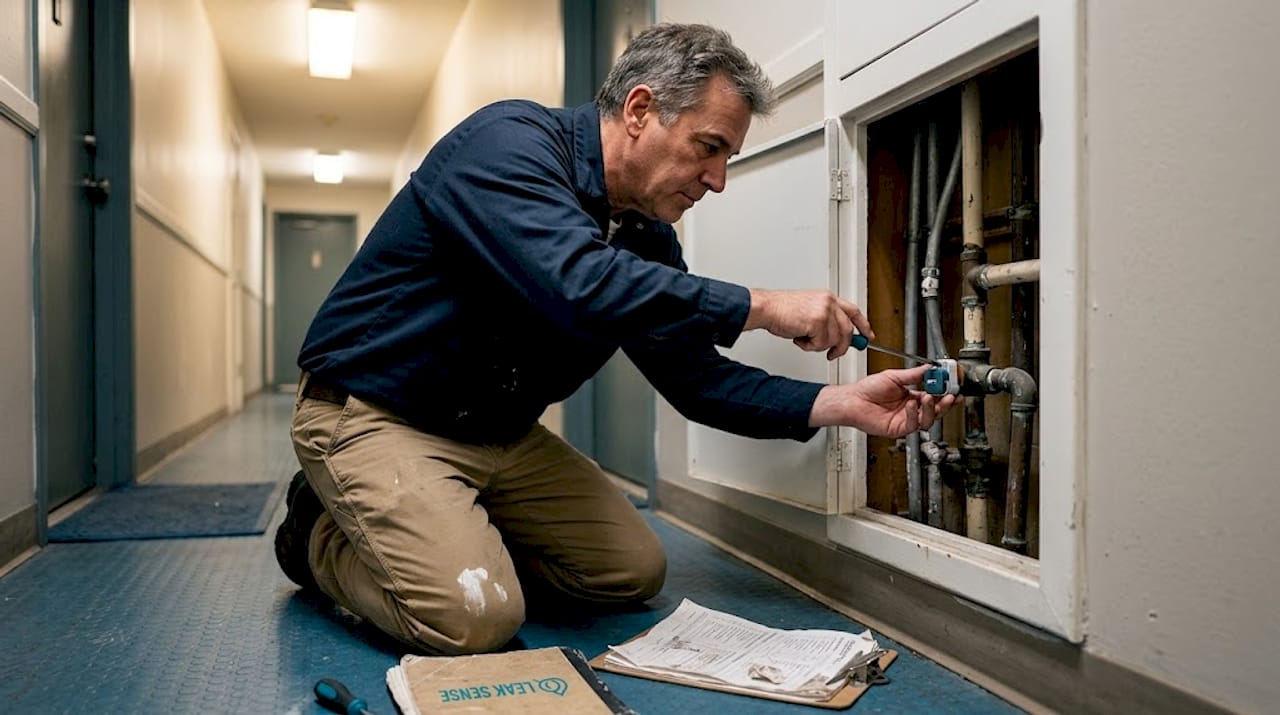
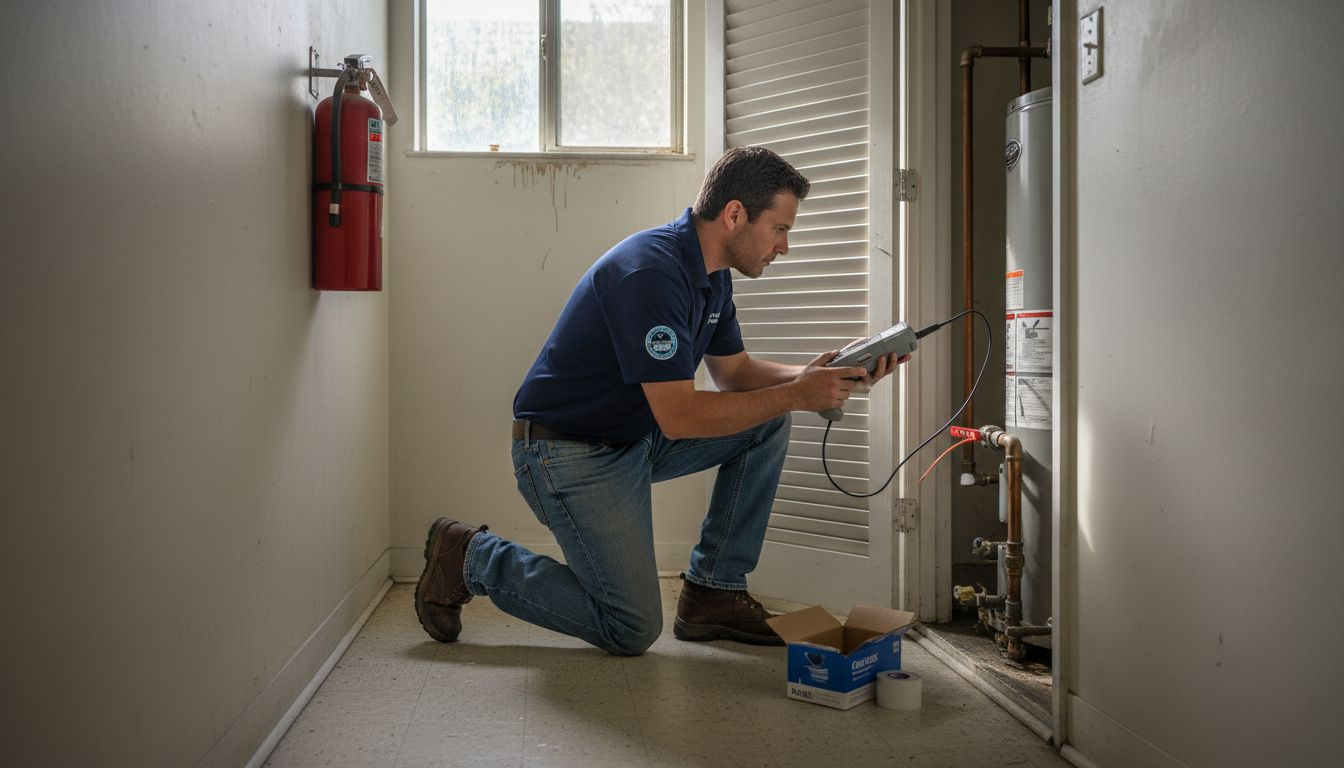
Water leaks represent the second highest insurance claim category for property managers in California, with individual incidents averaging over $10,000 in damage. Yet many building owners underestimate this risk, relying on periodic inspections that miss up to 25% of leaks for months. Proactive leak detection using smart IoT sensors not only prevents catastrophic damage but ensures compliance with California’s stringent Title 24 water efficiency regulations.
- Understanding The Risks: Why Water Leaks Are A Critical Concern
- California Regulatory Environment: Compliance Drivers For Water Leak Detection
- How Smart Water Leak Detection Technology Works And Its Advantages
- Financial And Operational Benefits Of Proactive Leak Detection
- Common Misconceptions About Water Leak Detection
- Implementing Water Leak Detection Solutions: Practical Steps For Property Managers
- Case Studies And Real-World Success Stories
- Explore Leaksense Solutions For Smart Water Protection
Key takeaways
| Point | Details |
|---|---|
| Hidden leaks cause severe damage | Water leaks often remain undetected for months, causing mold, structural damage, and escalating repair costs before visible signs appear. |
| California regulations mandate proactive detection | Title 24 requires water efficiency measures including leak detection systems for multifamily and commercial buildings to reduce waste. |
| Smart IoT technology dramatically reduces damage | Automated sensors and shutoff systems detect leaks within minutes and reduce water damage by up to 90% compared to reactive approaches. |
| Financial benefits are substantial | Properties report 35% lower repair costs, 20 to 30% water savings, and 5 to 15% insurance premium discounts with smart leak detection. |
| Continuous monitoring is essential | Routine visual inspections miss many leaks; real-time monitoring provides early alerts and prevents costly emergency repairs. |
Understanding the risks: why water leaks are a critical concern
Water damage claims rank as the second highest insurance cost nationally, averaging more than $10,000 per incident. For California property managers overseeing multifamily and commercial buildings, these statistics translate into serious operational and financial threats. Hidden leaks lurking behind walls, under floors, or in concealed plumbing create damage long before visible signs like water stains or puddles appear.
The insidious nature of these leaks compounds the problem. Slow drips corrode pipes, saturate drywall, promote mold growth, and weaken structural integrity over months. Tenants may notice slightly higher water bills or occasional dampness but often fail to report minor symptoms until major damage occurs. Property managers relying solely on routine inspections face a sobering reality: up to 25% of leaks remain undetected for extended periods without continuous monitoring.
Several factors contribute to this detection gap:
- Manual inspections occur infrequently and focus on accessible areas, missing concealed plumbing
- Aging infrastructure in older California buildings increases leak probability
- Tenant turnover and vacant units reduce early human detection of leaks
- Small leaks produce minimal immediate symptoms but cause exponential damage over time
The financial impact extends beyond repair costs. Water waste drives up utility bills, tenant dissatisfaction affects retention and property values, and emergency repairs disrupt operations. One property manager described the cascade effect:
A pinhole leak behind a bathroom wall went unnoticed for eight weeks. By discovery, we faced $47,000 in repairs, displaced three tenants, and lost two months of rental income. The leak was too small for anyone to notice until ceiling damage appeared.
These scenarios underscore why water damage prevention requires more than periodic walkthroughs. Traditional approaches leave dangerous gaps that smart detection systems can eliminate. Understanding water damage prevention tips helps property managers recognize vulnerability points and prioritize protective measures.
California regulatory environment: compliance drivers for water leak detection
California’s Title 24 Building Energy Efficiency Standards impose mandatory water efficiency requirements on multifamily residential and commercial buildings. These regulations extend beyond new construction to include existing properties undergoing renovations or system upgrades. Property managers must implement water conservation measures, including proactive leak detection systems, to meet compliance thresholds.
The regulatory framework aims to address California’s ongoing water scarcity challenges and promote sustainable building operations. Title 24 specifically requires:
- Installation of water metering systems to track consumption accurately
- Leak detection capabilities that provide timely alerts to building operators
- Documentation of water efficiency measures and maintenance protocols
- Regular reporting to demonstrate ongoing compliance and water conservation efforts
Non-compliance carries significant consequences. Regulatory agencies can impose fines, require costly retrofits, and mandate operational audits that disrupt property management. Beyond financial penalties, non-compliant properties face reputational damage and reduced marketability to environmentally conscious tenants and investors.
Compliance also creates competitive advantages. Properties demonstrating proactive water management attract quality tenants, command premium rents, and qualify for green building certifications like LEED. Insurance providers increasingly recognize compliant properties as lower risk, translating into favorable premium rates.
Understanding local municipal codes proves equally important. Some California jurisdictions layer additional requirements onto Title 24 baseline standards. Property managers should consult with regulatory signage in property management experts and local building departments to ensure comprehensive compliance across all applicable regulations.
The regulatory environment continues evolving as California pursues ambitious sustainability goals. Staying ahead of compliance requirements through early adoption of advanced leak detection technology positions properties favorably for future regulatory changes while immediately capturing operational and financial benefits.
How smart water leak detection technology works and its advantages
Smart water leak detection systems employ IoT-enabled sensors strategically placed throughout building plumbing infrastructure to monitor water flow, pressure, and usage patterns continuously. These sensors transmit real-time data to cloud-based analytics platforms that establish baseline consumption profiles for individual units and common areas. When deviations occur, such as unexpected flow during typically inactive hours or pressure drops indicating pipe breaches, the system generates instant alerts to property managers.
Smart water leak detection IoT sensors can detect leaks within minutes, reducing water damage by up to 90% compared to traditional reactive maintenance approaches. This rapid detection capability stems from several technological components working together:
- Flow-based sensors measure water volume passing through pipes and identify abnormal patterns
- Acoustic sensors detect the unique sound signatures of leaks in pressurized systems
- Humidity and moisture sensors placed in vulnerable areas alert to water presence
- Pressure monitors identify sudden drops indicating pipe ruptures or major leaks
- Temperature sensors detect unusual heat patterns that may indicate hot water line issues
Automated shutoff systems represent the critical complement to detection sensors. When sensors identify a leak exceeding preset thresholds, motorized valves close within seconds to isolate affected zones or shut down water supply entirely. This immediate response prevents the catastrophic damage that occurs when leaks continue unabated for hours or days.
Key advantages of integrated smart detection and shutoff systems include:
- Damage reduction approaching 90% through rapid leak isolation and response
- Water conservation by eliminating waste from undetected leaks
- Operational transparency via dashboards showing real-time consumption across properties
Sensor Type Detection Method Response Time Best Application Flow-based Volume measurement 1 to 3 minutes Main supply lines, unit meters Acoustic Sound signature analysis 30 seconds to 2 minutes Pressurized pipe networks Humidity Moisture presence 5 to 15 minutes Bathrooms, kitchens, basements Pressure PSI monitoring 15 to 45 seconds High-risk zones, aging infrastructure
The systems integrate seamlessly with facility management software, enabling maintenance teams to receive alerts via mobile apps, coordinate responses efficiently, and maintain detailed leak history logs. This integration supports accurate tenant billing by distinguishing between normal consumption and leak-generated waste.
Pro Tip: Prioritize automatic leak detection solutions offering open API connectivity to ensure compatibility with your existing property management systems and avoid vendor lock-in limitations. Cloud analytics provide long-term value by revealing consumption trends that inform infrastructure upgrades and tenant education initiatives. Understanding smart leak detection benefits helps property managers evaluate vendors based on proven outcomes rather than marketing claims.
Financial and operational benefits of proactive leak detection
The return on investment for smart leak detection systems manifests across multiple financial and operational dimensions. Properties deploying automated leak detection with remote shutoff report average water savings of 20 to 30% and reduced emergency repair costs by 35%. These savings accumulate rapidly, often recovering system installation costs within 18 to 24 months.
Repair cost reduction stems from early leak intervention. A small leak caught within hours requires minimal repair work, perhaps replacing a single pipe section or tightening a connection. The same leak undetected for weeks demands extensive drywall removal, mold remediation, structural repairs, and unit refurbishment. Emergency after-hours service calls compound expenses further.

Water conservation delivers direct utility bill savings while supporting California’s sustainability mandates. Continuous monitoring identifies inefficient fixtures, unusual consumption patterns, and tenant behaviors that drive waste. Property managers can address these issues proactively rather than discovering problems months later through anomalous bills.
Insurance benefits provide additional financial advantages:
- Premium discounts ranging from 5% to 15% for properties with certified leak detection systems
- Reduced deductibles on water damage claims due to demonstrable risk mitigation
- Improved claims experience leading to favorable rate renewals
- Enhanced insurability for older buildings previously considered high risk
| Approach | Detection Time | Damage Scope | Average Repair Cost | Water Waste | Insurance Impact |
|---|---|---|---|---|---|
| Traditional periodic inspections | Days to months | Extensive, multi-unit | $15,000 to $50,000 | High, prolonged | Claims increase premiums |
| Smart continuous monitoring | Minutes to hours | Localized, contained | $500 to $3,000 | Minimal | Qualifies for discounts |
Operational efficiencies extend beyond cost savings. Accurate water submetering for multifamily properties enables fair tenant billing based on actual consumption rather than estimated allocations. This transparency improves tenant satisfaction and incentivizes conservation. Maintenance teams benefit from detailed leak data that pinpoints problem locations, eliminating time-consuming investigative work.
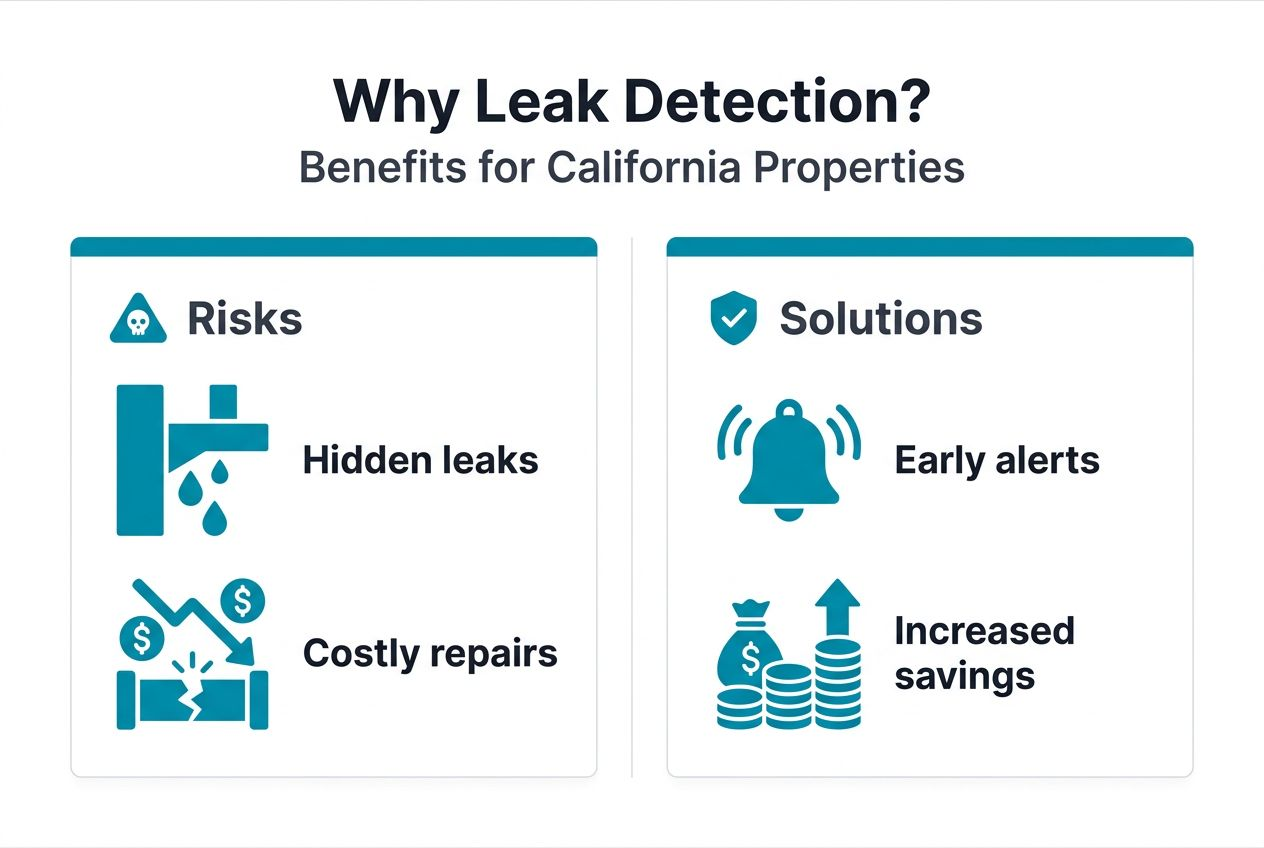
The cumulative effect transforms water damage prevention from a reactive expense center into a proactive value driver. Properties gain competitive positioning through demonstrable sustainability credentials, operational excellence, and tenant-focused amenities. These advantages translate into higher occupancy rates, premium pricing power, and increased asset values that benefit property owners and investors.
Real-world examples from automated leak detection success stories consistently demonstrate IRR exceeding 40% when accounting for all financial and operational benefits over five-year periods.
Common misconceptions about water leak detection
Several persistent myths prevent property managers from adopting proactive leak detection despite clear benefits. Addressing these misconceptions directly helps decision makers evaluate solutions based on evidence rather than assumptions.
Myth one: Routine visual inspections catch all significant leaks. Reality contradicts this belief. Studies show up to 25% of leaks remain undetected for months without continuous monitoring. Inspectors can only assess visible plumbing and accessible areas. Concealed pipes behind walls, under flooring, and in ceiling spaces leak undetected until catastrophic damage forces discovery.
Myth two: Small leaks do not warrant concern or immediate attention. A pinhole leak dripping one drop per second wastes over 2,000 gallons annually. More critically, even minor moisture intrusion promotes mold growth, corrodes pipes and electrical systems, and degrades building materials. The damage-to-leak-size ratio often shocks property managers when remediation bills arrive.
Myth three: Leak detection only matters after damage occurs. This reactive mindset ignores prevention economics. Installing smart detection systems before problems arise costs significantly less than emergency retrofits during crisis response. Proactive systems prevent the first incident, whereas reactive approaches merely limit subsequent damage.
Myth four: Technology generates too many false alarms to be practical. Modern IoT sensors with machine learning algorithms dramatically reduce false positives by establishing property-specific baseline patterns. Initial calibration periods teach systems to distinguish between normal usage variations and genuine anomalies. Alert thresholds can be customized to match building characteristics and management preferences.
Additional misconceptions include:
- Believing older buildings cannot accommodate smart sensors without major renovations
- Assuming implementation requires extensive tenant disruption or access
- Underestimating the importance of continuous monitoring versus periodic checks
- Thinking compliance with Title 24 is optional or easily deferred
Pro Tip: Invest in staff training to understand system alerts and response protocols. Educated teams interpret data accurately, respond appropriately to genuine emergencies, and adjust sensitivity settings to minimize nuisance notifications while maintaining protective coverage.
Understanding hidden leak detection statistics provides objective evidence to counter these myths. Data-driven decision making consistently favors proactive detection over reactive damage control.
Implementing water leak detection solutions: practical steps for property managers
Successful implementation follows a systematic approach that addresses technical, regulatory, and operational considerations. Property managers can follow these steps to deploy effective leak detection systems:
- Conduct a comprehensive infrastructure assessment identifying high-risk areas like aging pipe sections, previous leak locations, and vulnerable zones such as unoccupied units and mechanical rooms.
- Review Title 24 requirements and local municipal codes to ensure selected systems meet all regulatory compliance standards and documentation needs.
- Evaluate smart IoT leak detection vendors focusing on real-time alert capabilities, automated shutoff integration, cloud analytics platforms, and proven California installation experience.
- Develop a phased rollout plan prioritizing highest-risk areas first, then expanding to full property coverage as budget and experience allow.
- Integrate detection systems with existing facility management software and tenant billing platforms to maximize operational value and data utilization.
- Train maintenance staff thoroughly on alert interpretation, emergency response protocols, system maintenance requirements, and tenant communication procedures.
Phased implementation offers several advantages over attempting full property coverage immediately. Starting with high-risk zones demonstrates system value, allows staff to gain operational experience, and provides ROI data to justify expanded deployment. Vacant units and common areas make ideal initial targets as they minimize tenant interaction during installation.
Common implementation pitfalls to avoid include:
- Installing sensors without establishing clear response protocols for alerts
- Neglecting to verify regulatory compliance before purchasing equipment
- Failing to communicate system benefits and alert procedures to tenants
- Choosing incompatible systems that do not integrate with existing management platforms
- Skipping staff training and relying on vendor support for routine operations
Pro Tip: Leverage cloud-based water analytics platforms to gain insights beyond leak detection. These systems reveal consumption patterns, identify inefficient fixtures, support tenant education initiatives, and provide documentation for regulatory compliance reporting.
Detailed guidance on setting up leak detection systems and step by step leak detection implementation helps property managers navigate technical complexities. Professional installation by experienced automatic leak detection solutions providers ensures optimal sensor placement, proper calibration, and reliable system performance.
Integration with smart building systems extends benefits beyond leak detection. Coordinating with HVAC controls, lighting systems, and security platforms creates comprehensive facility management capabilities that improve efficiency across all operational domains. Understanding leak protection with smart appliances demonstrates how detection technology fits within broader smart building strategies.
Case studies and real-world success stories
California multifamily properties deploying smart leak detection systems consistently report impressive measurable outcomes. A 240-unit apartment complex in San Diego documented an 80% reduction in water-related damage incidents during the first 24 months after installing IoT sensors with automated shutoff valves. Prior to implementation, the property averaged 18 leak-related insurance claims annually. Post-installation, claims dropped to three per year, with significantly lower damage severity.
Financial benefits exceeded projections. The same San Diego property calculated annual savings surpassing $150,000 by combining reduced repair costs, lower water consumption, and insurance premium discounts. Tenant satisfaction scores improved markedly as accurate metering eliminated billing disputes and reduced disruptive emergency repairs during occupied hours.
A commercial office building in Los Angeles successfully navigated Title 24 compliance requirements by integrating comprehensive leak detection throughout its retrofit project. The system not only satisfied regulatory mandates but qualified the property for LEED certification points and favorable financing terms from environmentally focused lenders. Building management reports the detection system paid for itself within 19 months through water savings alone, with repair cost avoidance providing additional value.
Measurable outcomes from automatic leak detection case studies consistently demonstrate:
- Damage incident reduction ranging from 75% to 90% compared to pre-installation baselines
- Water consumption decreases averaging 20% to 30% through leak elimination and tenant behavior modification
- Emergency repair cost savings between 30% and 40% due to early intervention
- Insurance premium reductions of 5% to 15% within first policy renewal cycle
- Improved tenant retention rates attributed to billing accuracy and reduced disruptions
These real-world results validate the business case for proactive leak detection across diverse property types and sizes. The technology delivers quantifiable returns while simultaneously addressing regulatory compliance, sustainability goals, and operational excellence objectives that define successful California property management.
Explore LeakSense solutions for smart water protection
Property managers seeking proven leak detection technology can benefit from LeakSense’s specialized California-focused solutions. Their automatic leak detection systems combine IoT sensors with integrated automated shutoff to prevent damage within minutes of leak occurrence. The platform supports multifamily residential and commercial properties with scalable deployment options matching any property size or budget.
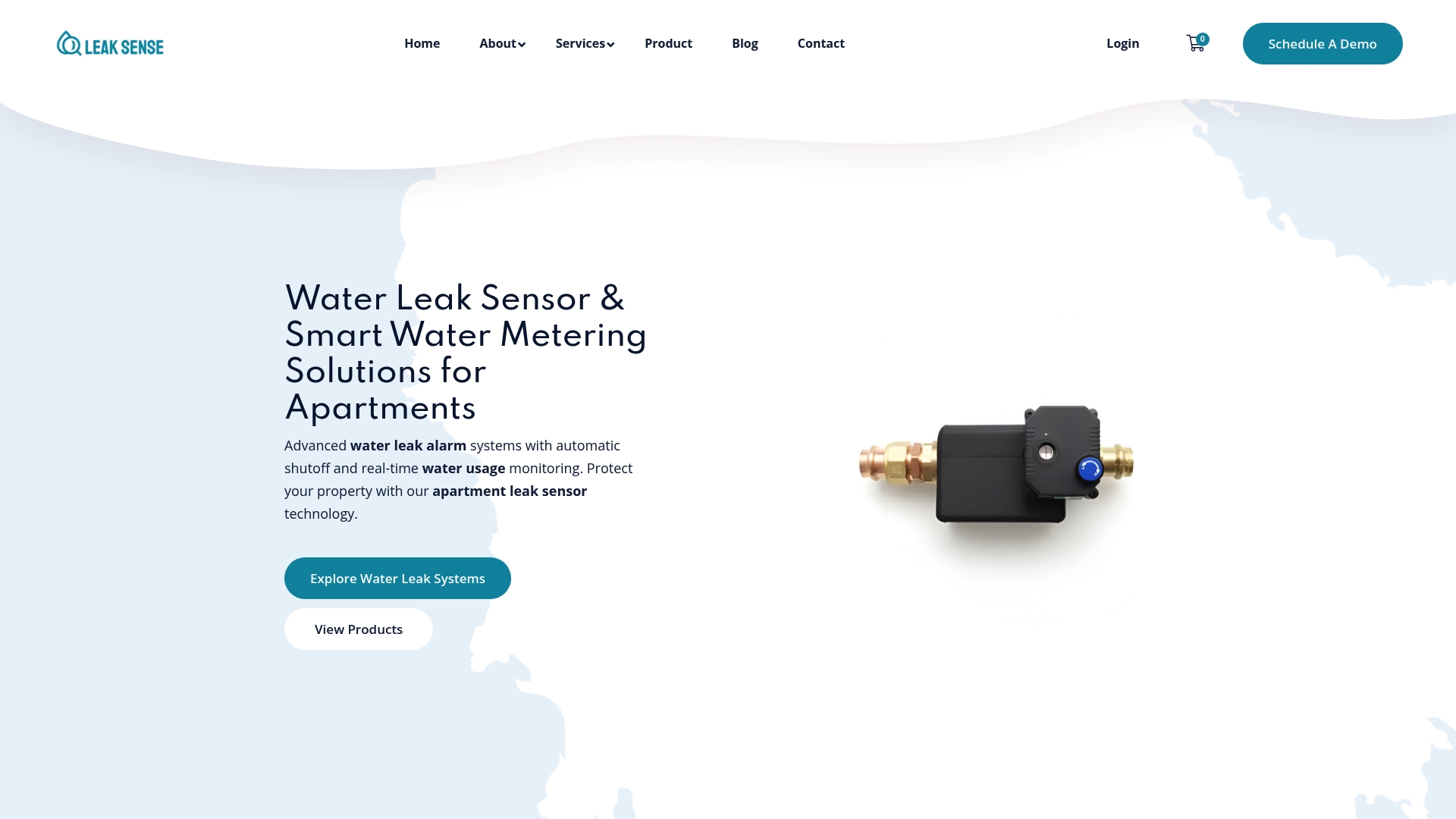
LeakSense water metering systems enable accurate tenant billing while providing consumption transparency that encourages conservation. Their water analytics platform delivers real-time monitoring dashboards, customizable alerts, and detailed reporting that satisfies Title 24 compliance documentation requirements. Professional installation ensures optimal sensor placement and system configuration tailored to each property’s unique infrastructure characteristics. Contact LeakSense to explore customized solutions that protect your California properties while delivering measurable financial and operational returns.
FAQ
What is the main cause of hidden water leaks in multifamily buildings?
Hidden leaks typically originate from aging or deteriorating pipes concealed behind walls, under floors, or above ceilings where visual inspections cannot detect them. Infrequent manual checks miss slow leaks that cause extensive damage over weeks or months before visible symptoms appear.
How does Title 24 affect water leak detection requirements?
Title 24 mandates water efficiency standards including leak detection capabilities for California multifamily and commercial buildings. Non-compliance risks regulatory fines, required retrofits, and legal challenges, making proactive detection systems effectively mandatory for covered properties.
Can automated shutoff systems prevent major water damage?
When paired with IoT sensors, automated shutoff valves close within seconds of detecting leaks, preventing the catastrophic damage that occurs when water flows uncontrolled for hours or days. Systems prove especially valuable in unoccupied units and vulnerable building zones where human detection lags.
What are the financial benefits of installing smart leak detection?
Smart leak detection reduces repair costs by approximately 35%, saves 20% to 30% on water utility bills, and qualifies properties for 5% to 15% insurance premium discounts. Additional operational efficiencies from accurate tenant billing and reduced emergency service calls compound these direct financial advantages.