TL;DR:
- Remote water shutoff systems reduce damage claims by up to 90% and claim costs by 85%.
- These systems rely on IoT sensors, LoRaWAN communication, and motorized valves for instant control.
- Installing such technology offers quick ROI through insurance discounts, water savings, and incident prevention.
Water damage claims represent 40% of all property damage claims in multifamily and commercial buildings, yet most California property managers still rely on manual shutoff procedures that can take hours to execute. That gap between a leak starting and someone physically turning off a valve is where six-figure losses are born. Remote water shutoff technology closes that gap in seconds, not hours. This guide explains exactly how these systems work, what California regulations actually require, and why the return on investment makes a compelling case for acting now rather than after your next major incident.
- Understanding remote water shutoff technology
- The real impact: Damage prevention and cost savings
- Compliance and California regulations: What you really need to know
- Smart investment: ROI, operational benefits, and tenant satisfaction
- Our perspective: What most property managers miss about remote shutoff
- Take the next step: Smarter water management for your property
- Frequently asked questions
Key Takeaways
| Point | Details |
|---|---|
| Cut water damage risk | Remote shutoff systems lower the chance and severity of costly water leaks or floods. |
| Ease compliance | Digital records and monitoring support regulatory documentation, even when systems are not mandatory. |
| Real return on investment | Insurance discounts, incident avoidance, and water savings usually pay off the system in under two years. |
| Future-proof properties | Early adoption builds smarter, safer, and more competitive buildings ahead of likely future regulations. |
Understanding remote water shutoff technology
Remote water shutoff systems are not a single device. They are an integrated network of components working together to give you real-time control over water flow across your entire property, from any location, at any time.
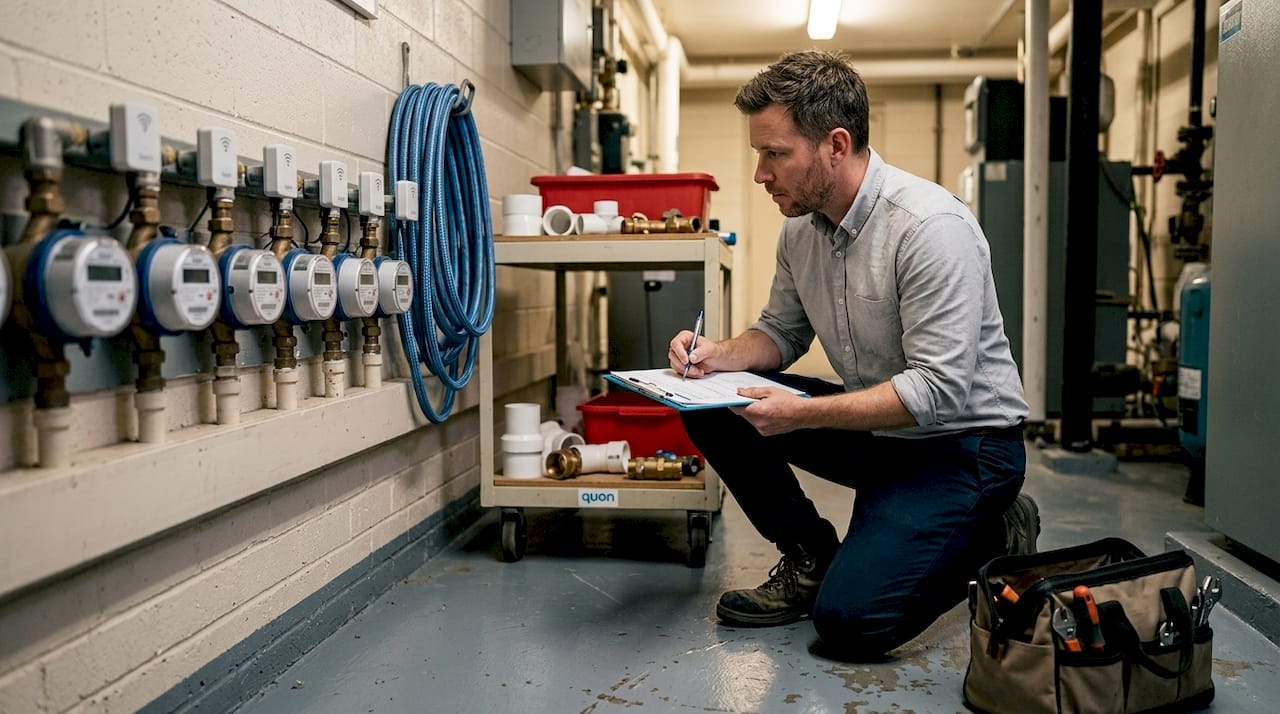
Remote water shutoff systems use IoT sensors for real-time flow and pressure monitoring, wireless communication like LoRaWAN for reliable signal through buildings, and motorized actuators on valves for instant remote or automatic closure via mobile apps. Each component plays a specific role:
- IoT sensors monitor flow rates, pressure anomalies, and moisture levels continuously. When readings fall outside normal parameters, the system triggers an alert or an automatic response.
- Wireless communication carries data between sensors, the cloud platform, and your device. LoRaWAN (Long Range Wide Area Network) is the preferred protocol in multifamily buildings because its signal penetrates concrete, steel, and multiple floors far more reliably than standard Wi-Fi.
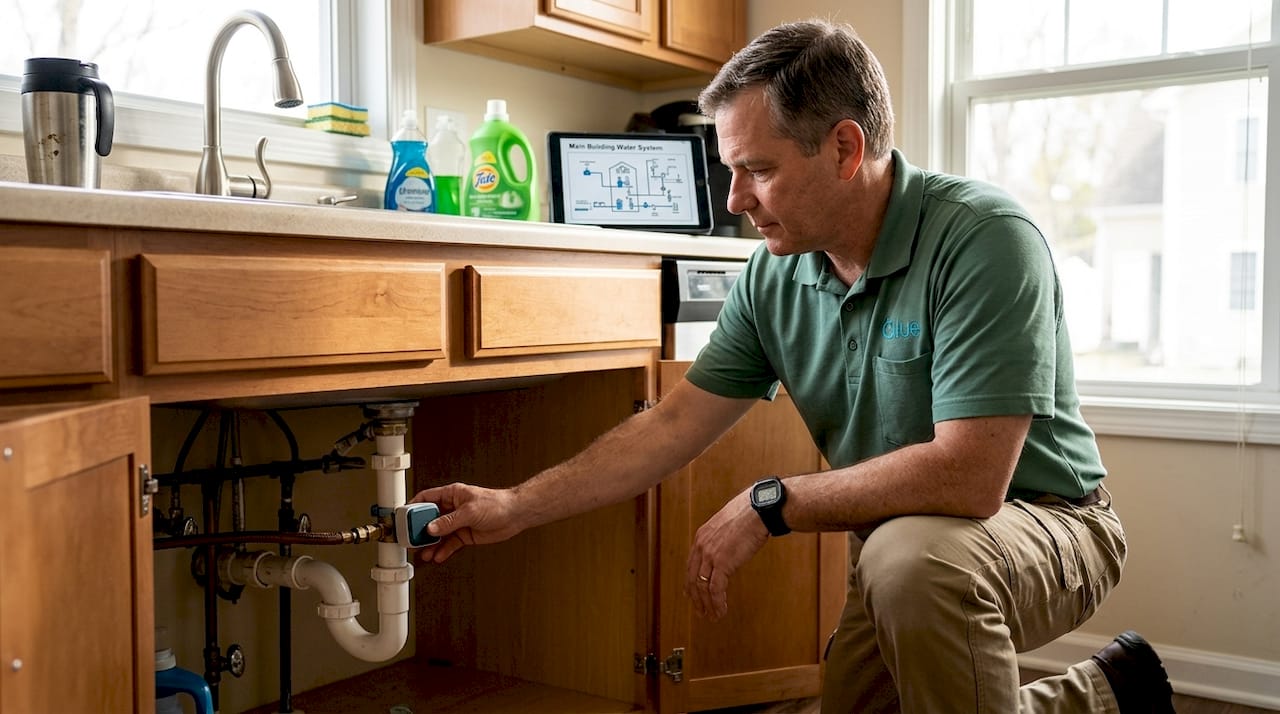
- Motorized actuators are the mechanical components attached to your main or branch valves. They receive the shutoff command and physically close the valve within seconds.
- Mobile apps and dashboards give property managers and building owners a centralized interface to monitor usage, receive alerts, and trigger shutoffs remotely.
Why does LoRaWAN matter so much in multifamily settings? Standard Wi-Fi signals degrade significantly through dense building materials. A sensor on the third floor of a concrete structure may lose connectivity entirely with a Wi-Fi-based system. LoRaWAN maintains a stable connection across much larger distances and through more obstructions, which is critical when you need reliable communication during an actual emergency.
The best practice is to automate water shutoff by pairing motorized valves with leak detection sensors placed near high-risk areas: under sinks, near water heaters, behind appliances, and at main supply lines. This combination means the system can act without any human input when a sensor detects moisture. You can also learn more about how IoT water sensors integrate into broader leak prevention strategies.
One maintenance point that is easy to overlook: test your motorized valves quarterly. Valves that sit in the open position for extended periods can seize, meaning they will not close when you need them most. A quick scheduled test cycle keeps them operational and gives you confidence the system will perform under real conditions.
The real impact: Damage prevention and cost savings
With a grasp on how the systems work, let’s quantify their value: just how much risk and expense can they slash?
The numbers are striking. Remote shutoff reduces damage by up to 90% compared to manual response, and a recent study found that smart shutoff devices reduce claim frequency by 81% and severity by 85%, saving insurers between $1.1 million and $1.8 million per 10,000 policies annually.
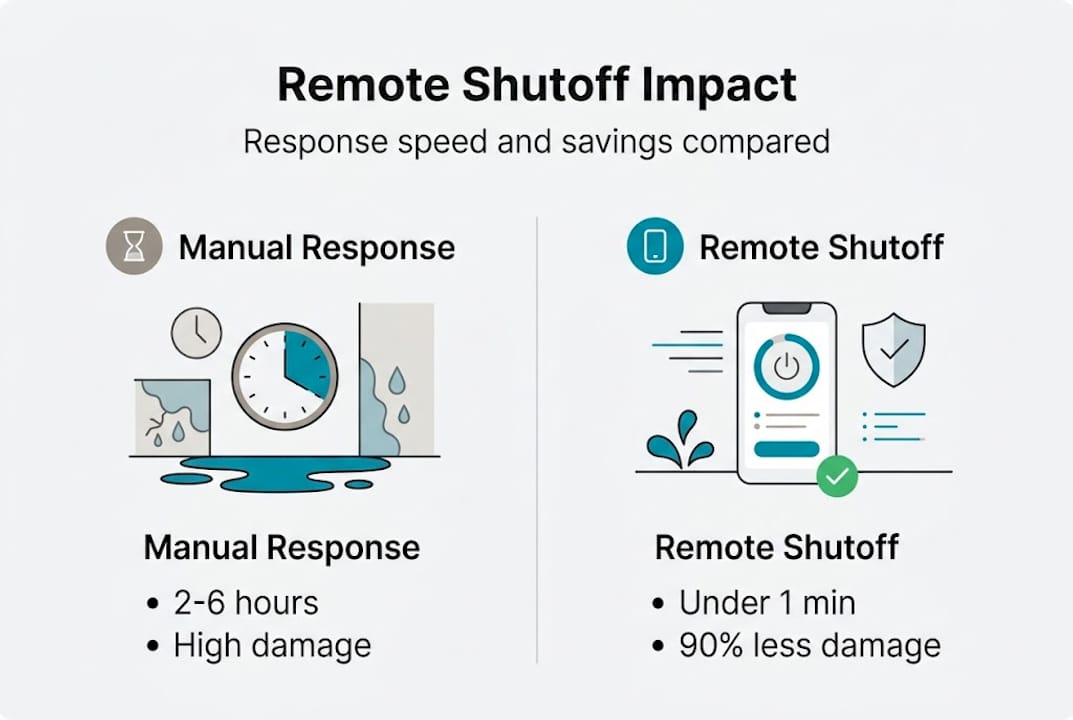
| Metric | Manual response | Remote shutoff system |
|---|---|---|
| Average response time | 2 to 6 hours | Under 60 seconds |
| Damage reduction | Baseline | Up to 90% |
| Claim frequency reduction | Baseline | 81% fewer claims |
| Claim severity reduction | Baseline | 85% lower cost per claim |
| Typical incident cost avoided | N/A | $50,000 or more |
For a property with 50 or more units, even a single prevented incident can cover the entire cost of system installation. The water damage prevention math is straightforward: one avoided major loss event pays for the technology, and every subsequent year represents pure risk reduction.
Insurers are paying attention. Many carriers now view smart shutoff installations as a material risk reduction factor, and some offer premium discounts specifically for properties with automated systems in place. When you pair that with the operational reality that automated shutoff cuts damage claims 90%, the financial case becomes difficult to argue against.

Beyond insurance, consider the hidden costs that never appear on a claims report: tenant displacement, temporary housing reimbursements, contractor premiums for emergency work, and the management time consumed by a major water event. These costs are real and significant, and they are almost entirely avoidable.
Pro Tip: Configure your system to log every sensor trigger, valve activation, and alert with timestamps. This event documentation becomes invaluable when filing insurance claims, demonstrating due diligence, or responding to tenant disputes about water service interruptions.
Compliance and California regulations: What you really need to know
Beyond protecting your buildings, are remote shutoff systems actually required by law? Let’s tackle the regulations directly.
The short answer is no, there is no California law that mandates remote water shutoff systems. But the regulatory picture is more nuanced than a simple yes or no, and understanding it helps you make smarter decisions.
Title 24 is California’s building standards code, covering energy efficiency and water conservation requirements for new construction and major renovations. It sets standards for plumbing fixtures, irrigation systems, and water-efficient appliances. Title 24 does not mandate remote shutoff, but systems support compliance documentation by creating verifiable records of water usage and conservation performance.
SB 998 (the Water Shutoff Protection Act) establishes specific procedural requirements for residential water service shutoffs, including notice periods and tenant protections. SB 3 builds on this framework with additional affordability and access provisions. Neither law requires remote shutoff technology, but both create compliance obligations around how and when you can interrupt water service.
Here is where remote shutoff systems provide real regulatory value:
- Automated documentation of every shutoff event, including time, duration, and the triggering condition, creates a clear record that demonstrates procedural compliance.
- Audit trails protect property managers if a tenant disputes a shutoff or alleges improper notice.
- Monitoring data supports future compliance reporting as California continues to tighten water conservation standards.
Remote water shutoff systems do not replace legal compliance procedures under SB 998 or SB 3. They support those procedures by making documentation automatic and reliable, reducing the administrative burden on property management staff.
The remote shutoff regulatory guide covers this distinction in detail. The practical takeaway: you should install these systems because they protect your property and your tenants, not because a specific law forces you to. That said, the documentation they generate is increasingly valuable as California’s regulatory environment continues to evolve. Review the full California compliance for remote shutoff overview to stay current.
Smart investment: ROI, operational benefits, and tenant satisfaction
With compliance in context, let’s get practical: does remote water shutoff actually pay off, and how else does it make life easier for managers?
Systems pay for themselves in 18 to 24 months through a combination of insurance discounts averaging 10 to 15%, roughly 8% reduction in water costs from early leak detection, and the avoided expense of major incident events that routinely exceed $50,000. Here is how the ROI typically builds:
- Insurance premium reduction. Many carriers apply discounts of 10 to 15% for properties with certified smart leak detection and shutoff systems. On a $60,000 annual premium, that is $6,000 to $9,000 per year.
- Water cost savings. Early leak detection catches slow leaks before they become floods. An 8% reduction in water usage on a 100-unit building translates to meaningful annual savings on utility bills.
- Deductible avoidance. A single major water event can trigger a deductible of $25,000 or more. Preventing even one incident per year eliminates that exposure entirely.
- Reduced emergency labor costs. Automated response means fewer after-hours emergency calls to plumbers and contractors, which carry premium rates.
- Tenant retention. Properties with fewer maintenance disruptions and faster response times see higher tenant satisfaction scores and lower turnover rates.
Explore multifamily water solutions to see how other California properties have structured their systems for maximum operational benefit. You can also review smart water metering options that complement remote shutoff with detailed usage analytics for tenant billing.
Pro Tip: Set up after-hours alert thresholds that are more sensitive than your daytime settings. Leaks that start at 2 a.m. on a weekend can run for 12 or more hours before anyone notices. Tighter overnight monitoring parameters dramatically reduce your worst-case exposure.
Our perspective: What most property managers miss about remote shutoff
After covering the facts, it is important to look at the bigger picture through an expert lens.
Most property managers we work with installed remote shutoff technology after a significant loss event. That is understandable, but it is also the most expensive way to learn this lesson. The managers who benefit most are the ones who treat remote shutoff as infrastructure, not as a reaction to disaster.
Here is what that shift in thinking looks like in practice. Properties that pair remote shutoff with comprehensive leak detection sensors do not just prevent individual incidents. They build a data foundation that supports smarter capital planning, better insurance negotiations, and faster response to the regulatory changes California consistently introduces. The impact for properties that take this integrated approach is measurably different from those that install only a basic shutoff valve.
The regulatory environment in California is not getting simpler. Water conservation mandates will tighten. Insurance underwriting for water risk will become more sophisticated. Properties that have already built smart water infrastructure will adapt easily. Those that have not will face higher costs and steeper compliance curves.
Do not just meet the minimum standard. Build systems that position your property ahead of where regulations are heading, not just where they are today.
Take the next step: Smarter water management for your property
Ready to take control of your property’s water risk? Here’s how LeakSense can help.
The case for acting now is clear. Water damage is expensive, preventable, and becoming more scrutinized by insurers and regulators alike. LeakSense builds smart water management systems specifically for California multifamily and commercial properties, combining automatic leak detection with remote shutoff, real-time monitoring, and detailed usage analytics.
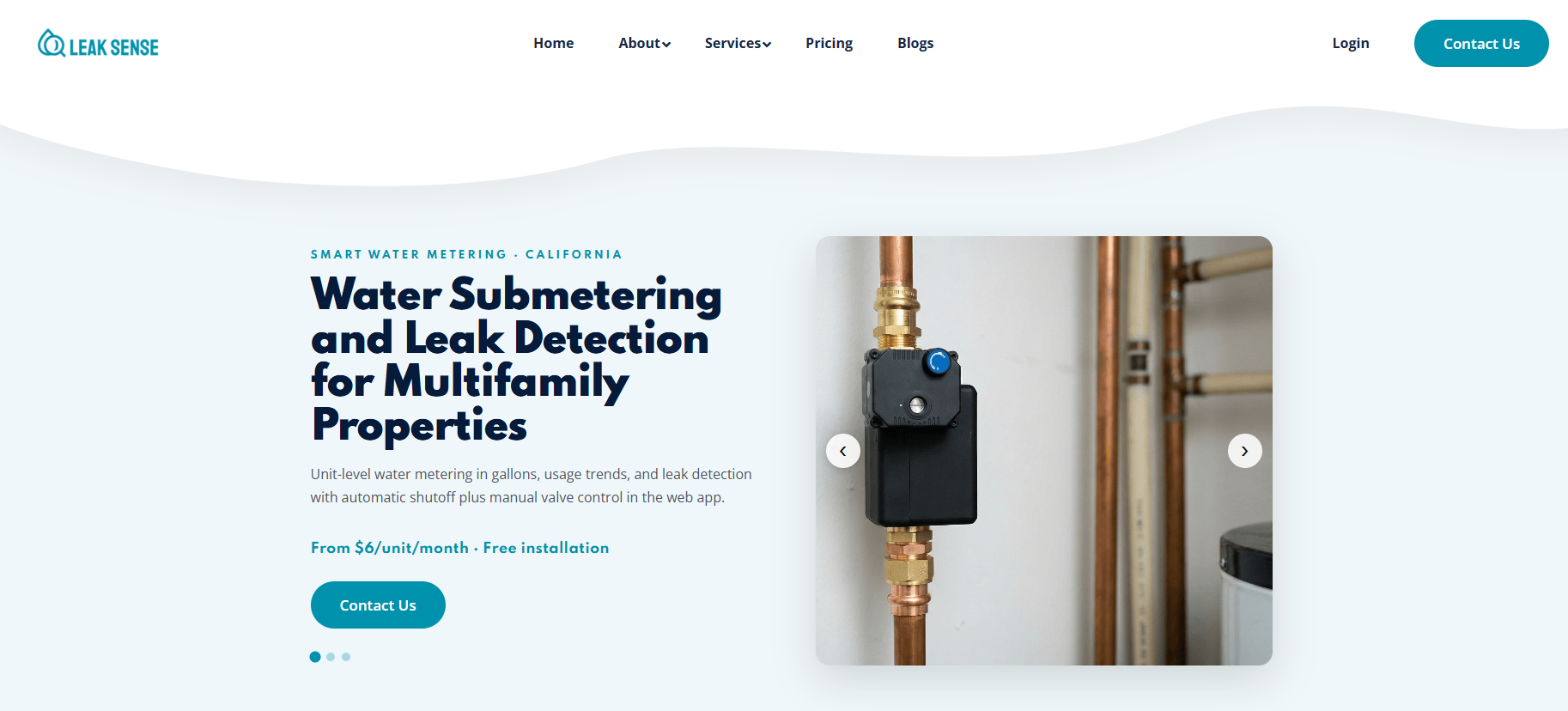
Whether you manage 20 units or 2,000, multifamily water submetering and automated shutoff solutions scale to fit your property’s needs. Our team handles professional installation, system configuration, and ongoing support so you can focus on running your building, not chasing leaks. Visit LeakSense to schedule a consultation or request a demo and see exactly how quickly these systems pay for themselves.
Frequently asked questions
Does Title 24 require remote water shutoff systems in California?
No, Title 24 does not mandate remote shutoff, but systems support compliance documentation by creating verifiable records of water usage and conservation performance.
How much can remote water shutoff reduce water damage claims?
Smart water shutoff devices reduce claim frequency by 81% and severity by 85%, making them one of the most effective risk management tools available to property managers.
Do remote water shutoff systems qualify properties for insurance discounts?
Yes, many insurers offer discounts of 10 to 15%, and systems pay for themselves within 18 to 24 months through those savings combined with avoided incident costs.
How do remote shutoff systems support compliance with SB 998?
They assist by aiding SB 998 compliance through automated documentation and monitoring of shutoff events, creating reliable records that align with the law’s notice and procedural requirements.