Water damage from leaks costs the US economy over $13 billion annually, yet many California property managers remain uncertain about how smart leak detection systems influence insurance premiums and coverage eligibility. With insurers increasingly requiring leak mitigation measures for multifamily and commercial buildings, understanding the concrete insurance benefits of these systems has become essential for protecting your investment. This guide breaks down the data-backed insurance advantages, California-specific requirements, and practical implementation strategies that help you reduce premiums, maintain coverage, and minimize catastrophic losses.
- Key takeaways
- Understanding water damage risks and insurance challenges
- How smart leak detection systems reduce insurance claims and losses
- Insurance incentives and requirements for leak detection in California
- Choosing and implementing leak detection for maximum insurance benefit
- Protect your investment with LeakSense smart leak detection
- What are the insurance benefits of leak detection?
Key Takeaways
| Point | Details |
|---|---|
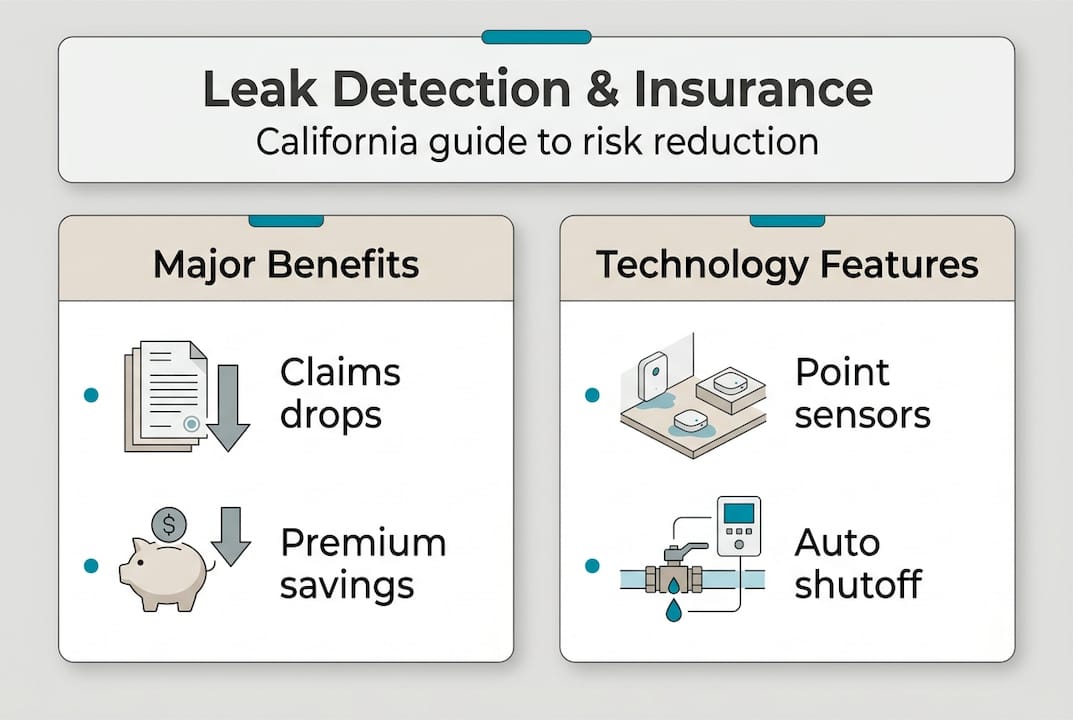
| Claims reduction | Smart leak detection reduces water damage claims by 70 to 90 percent by enabling rapid detection and isolation of leaks. |
| California premium rewards | In California, insurers offer premium reductions or eligibility enhancements for properties that install leak detectors and automatic shutoff. |
| Point leak sensors | Point leak sensors with automatic shutoff are favored by insurers for accuracy and rapid containment, reducing false alarms compared to flow based monitors. |
| Payback period | Systems typically pay for themselves in 18 to 36 months through insurance savings and reduced water damage losses. |
| Full building coverage | Full building coverage ensures comprehensive protection and better access to insurance benefits when leak mitigation is in place. |
Understanding water damage risks and insurance challenges
Non-weather water damage causes $13 billion in annual US losses, creating severe insurance availability problems for properties with frequent claims. Many buildings with repeated water incidents become completely uninsurable or face deductibles exceeding $100,000, effectively transferring catastrophic risk back to owners. California’s aging multifamily and commercial infrastructure compounds this challenge, with deteriorating plumbing systems dramatically increasing leak probability and insurance underwriting scrutiny.
Insurance providers have responded by tightening coverage requirements. Properties demonstrating poor water management history now struggle to secure affordable coverage or any coverage at all. Carriers evaluate historical claim patterns, building age, plumbing condition, and existing mitigation measures when determining premiums and eligibility. Without proactive leak prevention, you risk entering an insurance death spiral where rising premiums and reduced coverage options threaten property viability.
The California market presents unique pressures. Drought conditions, strict water conservation mandates, and Title 24 compliance requirements create a regulatory environment where insurers expect modern water management infrastructure. Properties lacking leak detection for multifamily buildings in California increasingly face coverage denials or prohibitive premium increases that make operations financially unsustainable.
Key risk factors driving insurance challenges include:
- Aging plumbing infrastructure in buildings over 20 years old
- Lack of automated leak detection and shutoff capabilities
- History of water damage claims exceeding $50,000 in aggregate
- Absence of documented maintenance and inspection protocols
- Inadequate tenant education about leak reporting procedures
Understanding these foundational risks clarifies why insurers now view leak detection as essential rather than optional. The question has shifted from whether to implement smart systems to which technology delivers maximum insurance benefit.
How smart leak detection systems reduce insurance claims and losses
Smart leak detection systems reduce water damage claims by 70-90% in multifamily and commercial properties, transforming insurance risk profiles overnight. This dramatic reduction stems from early detection capabilities that identify leaks within seconds rather than hours or days, preventing minor drips from escalating into catastrophic floods requiring six-figure remediation.
The technology advantage centers on point-of-leak sensors paired with automatic shutoff valves. Point-of-leak sensors detect leaks in seconds and trigger auto-shutoff, isolating affected areas before water spreads to adjacent units or structural components. This localized response minimizes both claim frequency and severity, the two primary factors insurers use to calculate premiums and coverage terms.

Field studies demonstrate remarkable performance differences between sensor types. Point-of-leak systems achieve near-zero false alarm rates while detecting actual leaks with 95% accuracy, compared to flow-based monitors that frequently trigger false positives from normal usage variations. This reliability matters enormously to insurers evaluating mitigation effectiveness. A system generating constant false alarms provides little practical protection and may even increase operational costs through unnecessary emergency responses.
The insurance value extends beyond simple claim reduction. Rapid detection and shutoff capabilities mean that when leaks do occur, damage remains confined to small areas requiring minimal repair. Instead of replacing drywall across multiple units, remediation might involve only a single bathroom or kitchen. This containment dramatically reduces average claim severity, making your property statistically less risky from an underwriting perspective.
Consider the practical difference. A traditional leak might run undetected for 48 hours over a weekend, saturating multiple floors and requiring $80,000 in remediation. The same leak caught by automatic leak detection within 30 seconds results in perhaps $2,000 in localized repair. This 40x reduction in claim severity fundamentally changes your insurance risk profile and premium calculations.
Pro Tip: Prioritize systems offering both point-of-leak sensors and automatic shutoff valves rather than monitoring-only solutions. The combination delivers maximum claim reduction and strongest insurance benefits while minimizing tenant disruption from false alarms. Verify leak detection accuracy results before committing to any technology platform.
Insurance incentives and requirements for leak detection in California
California insurers increasingly require leak detectors due to rising claims and aging plumbing infrastructure across multifamily and commercial properties. What began as optional risk mitigation has evolved into a coverage prerequisite for many carriers, particularly for buildings with prior water damage history or construction dates before 2000. Insurers now explicitly ask about leak detection systems during underwriting and renewal processes, using their presence or absence as a key rating factor.
The incentive structure varies by carrier but typically includes premium reductions ranging from 5% to 15% for verified leak mitigation systems. Some insurers offer improved coverage terms, such as lower deductibles or higher coverage limits, rather than direct premium discounts. Properties demonstrating comprehensive leak protection may also gain access to carriers that otherwise would decline coverage based on building age or claim history.
California’s regulatory environment creates additional leverage opportunities. Compliance with Title 24 water efficiency requirements combined with smart leak detection may qualify properties for utility rebates and state incentive programs. These stacked benefits accelerate ROI beyond insurance savings alone. Properties pursuing LEED certification gain additional points for water management infrastructure, enhancing market positioning and tenant appeal.
Documentation plays a crucial role in capturing insurance benefits. Insurers want verification that systems are professionally installed, properly maintained, and actually operational. Alert logs from smart detectors provide concrete evidence of mitigation efforts during claims disputes and underwriting reviews. This data trail strengthens your negotiating position when discussing premiums or coverage terms, transforming leak detection from a cost center into a strategic insurance asset.
Key insurance advantages of verified leak detection include:
- Premium reductions averaging 5-15% across major California carriers
- Improved coverage eligibility for properties with prior claim history
- Lower deductibles and higher coverage limits for water damage
- Faster claims processing with documented mitigation evidence
- Enhanced underwriting appeal for properties over 20 years old
The California market continues evolving toward mandatory leak detection for multifamily properties. Early adoption positions you ahead of regulatory curves while capturing immediate financial benefits. Properties waiting until insurers mandate systems lose negotiating leverage and face potential coverage gaps during transition periods.
Pro Tip: Maintain detailed service records and system performance logs to maximize insurance incentives. Schedule annual professional inspections and provide documentation to your insurance carrier during renewal negotiations. This proactive approach demonstrates serious risk management and strengthens requests for California compliance support and premium reductions.
Choosing and implementing leak detection for maximum insurance benefit
Comprehensive sensor placement across your entire building prevents missed leaks and maximizes insurance advantages. Building-wide coverage is essential because unit-only installations miss inter-unit pipe failures, such as leaks originating from floors above or within common area plumbing. These missed leaks still generate insurance claims but without the mitigation benefits that reduce premiums, creating a false sense of protection that insurers quickly identify during underwriting reviews.
Point sensors with automatic valves enable localized shutoff that minimizes tenant disruption and claim severity. When a leak occurs in one unit, the system isolates only that area rather than shutting off water to the entire building. This surgical response maintains service for unaffected tenants while containing damage, a capability insurers prefer over flow monitors for accuracy and operational efficiency.
| Feature | Point-of-Leak Sensors | Flow-Based Monitors |
|---|---|---|
| Detection speed | Seconds | Minutes to hours |
| False alarm rate | Near zero | 15-30% |
| Damage containment | Single fixture/room | Entire unit or building |
| Insurance preference | Strongly preferred | Limited acceptance |
| Installation cost | Moderate | Lower |
| Ongoing maintenance | Minimal | Regular calibration |
Follow these sequential steps for effective leak detection implementation:
- Conduct a comprehensive building assessment identifying all water sources, including unit fixtures, common area plumbing, HVAC systems, and rooftop equipment.
- Prioritize high-risk locations such as water heaters, washing machine connections, toilets, and any plumbing over 15 years old.
- Select point-of-leak sensors with proven accuracy rates above 90% and automatic shutoff valve compatibility.
- Install sensors at every potential leak source, not just in occupied units, ensuring complete building coverage including mechanical rooms and storage areas.
- Integrate systems with property management platforms for centralized monitoring and rapid response coordination.
- Train building staff on system operation, alarm response protocols, and basic troubleshooting to prevent false negatives.
- Document installation with photos, sensor locations, and system specifications for insurance carrier verification.
- Establish quarterly inspection schedules and maintain detailed service logs demonstrating ongoing system reliability.
Technology selection directly impacts insurance benefits. Systems offering real-time alerts, cloud-based monitoring, and automatic valve control deliver the strongest risk reduction and premium advantages. Basic leak detectors without shutoff capabilities provide minimal insurance value because they still require human intervention, introducing response delays that allow damage escalation.
Consider integration capabilities when evaluating platforms. Systems connecting with building automation, tenant portals, and emergency response protocols create comprehensive protection that insurers recognize during underwriting. Standalone sensors lacking integration offer limited operational value and weaker insurance positioning.
Pro Tip: Invest in professional installation rather than DIY approaches to ensure proper sensor placement and system configuration. Insurers scrutinize installation quality when evaluating mitigation effectiveness, and professional certification strengthens your coverage negotiations. Review how to set up leak detection systems and step-by-step leak detection for multifamily properties for detailed implementation guidance.
Protect your investment with LeakSense smart leak detection
LeakSense delivers comprehensive automatic leak detection solutions engineered specifically for California multifamily and commercial properties facing insurance challenges. Our point-of-leak sensor systems with automatic shutoff capabilities help property managers achieve the 70-90% claim reduction that insurers reward with premium discounts and improved coverage terms. We handle everything from initial building assessment through professional installation and ongoing monitoring, ensuring your system meets carrier verification requirements.
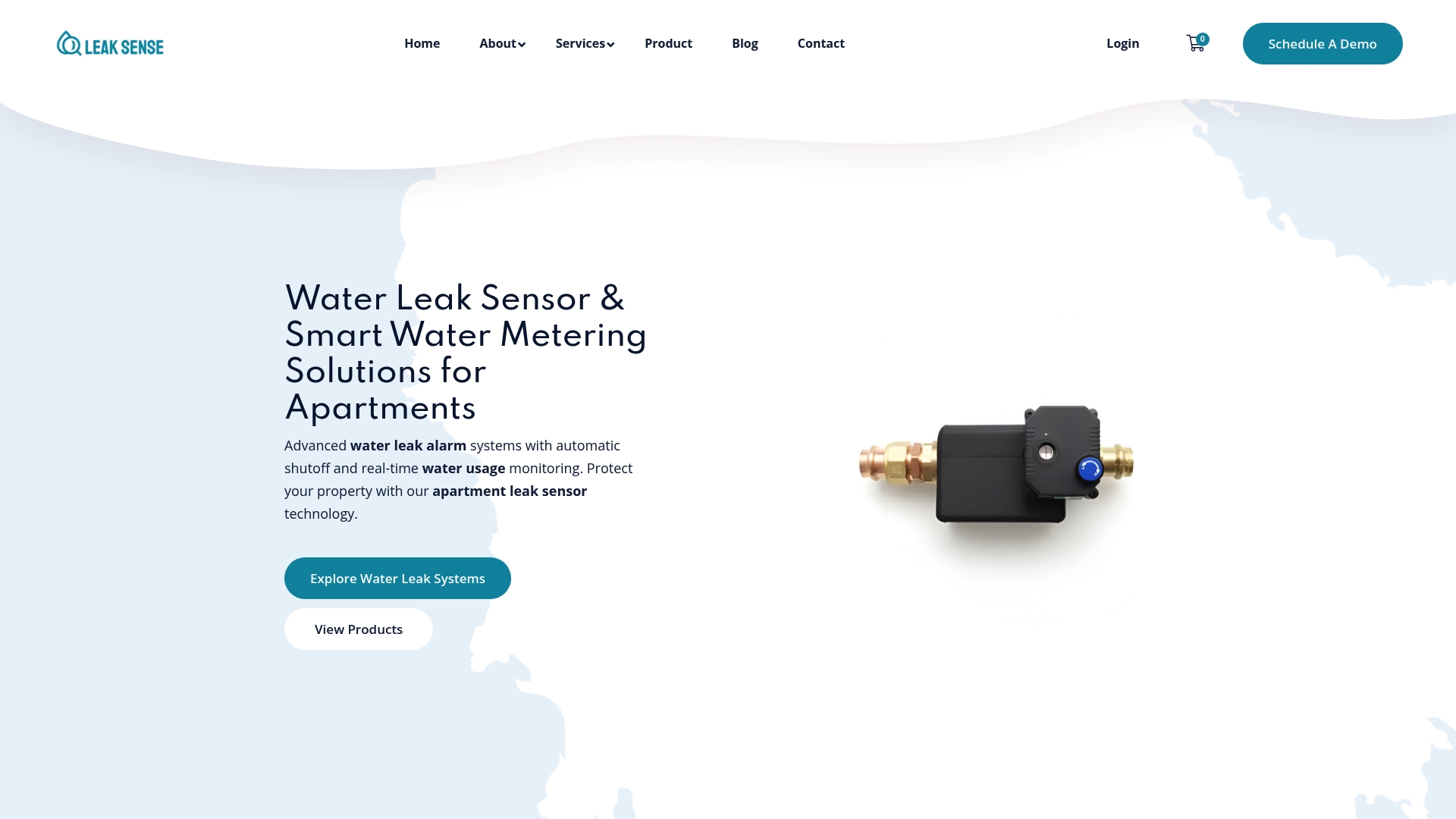
Our water metering systems integrate leak detection with usage analytics, providing the comprehensive water management infrastructure that California insurers increasingly expect. We offer specialized California compliance support to help you navigate Title 24 requirements while maximizing available rebates and insurance incentives. Contact us today to discover how LeakSense technology can reduce your insurance costs while protecting your property investment from catastrophic water damage.
What are the insurance benefits of leak detection?
Do California insurers actually reduce premiums for leak detection systems?
Yes, most major California insurers now offer premium reductions ranging from 5% to 15% for verified leak detection systems in multifamily and commercial properties. Some carriers provide improved coverage terms or lower deductibles instead of direct discounts. The specific benefit depends on your carrier, building characteristics, and claim history.
How quickly do leak detection systems pay for themselves through insurance savings?
Most systems achieve ROI within 18 to 36 months through combined insurance premium reductions, avoided claims, and water conservation savings. Properties with higher insurance costs or prior claim history often see faster payback periods. The 70-90% reduction in water damage claims dramatically improves your risk profile and financial performance.
What type of leak detection technology do insurers prefer?
Insurers strongly prefer point-of-leak sensors with automatic shutoff valves over flow-based monitoring systems. Point sensors deliver near-zero false alarms, detect leaks within seconds, and enable localized shutoff that contains damage. This accuracy and rapid response translates to measurably lower claim frequency and severity, which insurers reward with better coverage terms.
Is leak detection becoming mandatory for California multifamily properties?
While not yet legally mandated statewide, many California insurers now require leak detection systems as a condition of coverage for multifamily buildings, particularly those with prior water damage claims or construction dates before 2000. This trend is accelerating as carriers tighten underwriting standards in response to rising water damage losses.
How do I prove to my insurer that my leak detection system is effective?
Maintain detailed documentation including professional installation certificates, system specifications, sensor location maps, and ongoing maintenance logs. Modern smart systems generate alert histories and performance reports that provide concrete evidence of mitigation effectiveness. Share this documentation with your carrier during renewal negotiations to maximize premium reductions and coverage improvements.