TL;DR:
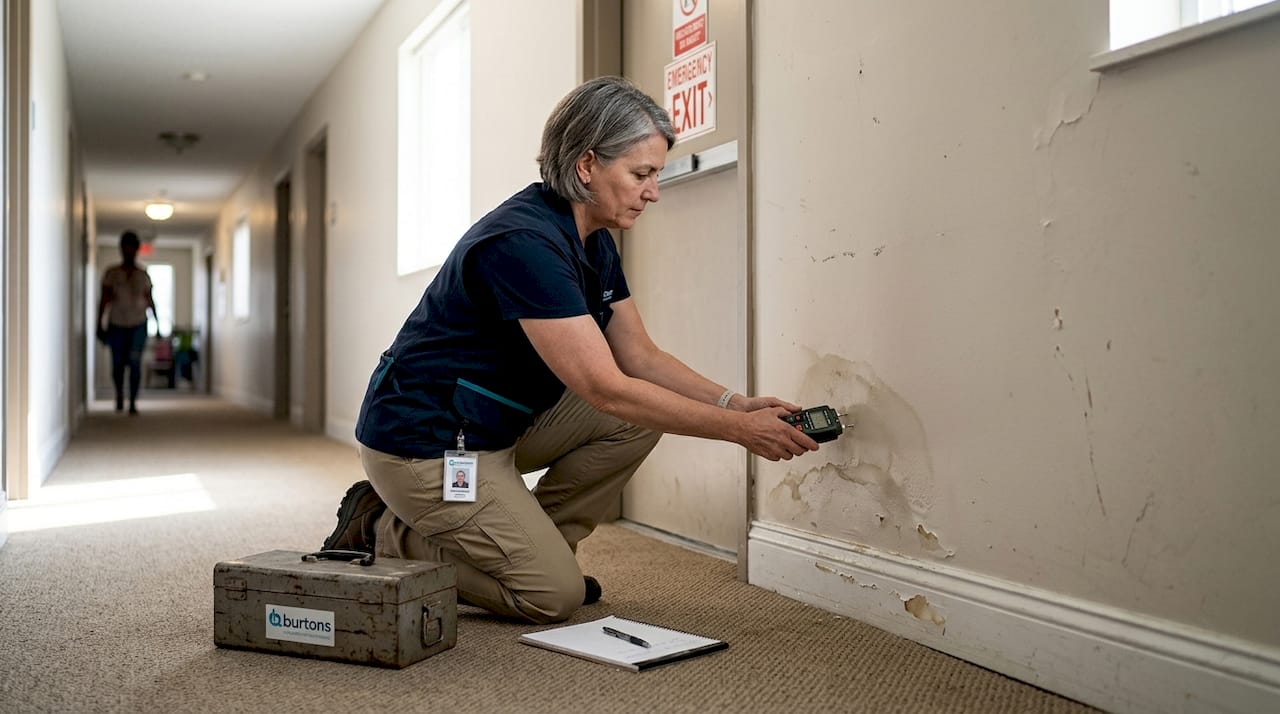
- Water damage claims in California cost $15,000 to $21,000 per incident and are often unseen.
- IoT water sensors enable real-time leak detection, reducing water waste, costs, and liability.
- Compliance with state regulations plus proactive monitoring significantly enhances asset performance and cost savings.
Water damage accounts for 40% of multifamily and commercial insurance claims, with average incident costs running between $15,000 and $21,000. For California property managers, that figure is not a distant risk. It is a recurring operational reality. Most building owners assume leaks are obvious and infrequent. The truth is that the majority of water loss events are invisible, slow, and cumulative. This guide covers everything you need to know about IoT water sensors: how they work, what California regulations require, and how they translate directly into lower costs, reduced liability, and stronger asset performance.
- The reality of water waste and risk in California buildings
- How IoT water sensors work: key technologies and workflows
- California regulations driving IoT water sensor adoption
- Direct cost savings and risk reduction from IoT water sensors
- Implementation pitfalls and success factors for property managers
- The overlooked value: why proactive water monitoring is now non-negotiable
- Unlock real savings: your path to compliance and risk reduction
- Frequently asked questions
Key Takeaways
| Point | Details |
|---|---|
| Hidden water waste is common | California buildings face 25% average unseen water loss, driving costs and risks. |
| Real-time detection slashes damage | IoT sensors cut water damage by 90% and enable immediate cost recovery. |
| Compliance is non-optional | SB7 and Title 24 require submeters and documentation for most properties. |
| ROI realized in months | Sensors often pay for themselves within the first billing cycle through savings and claim prevention. |
| Proper planning prevents headaches | Plan for calibration, wireless reliability, and easy integration to avoid false alarms and downtime. |
The reality of water waste and risk in California buildings
The scale of water loss in multifamily and commercial properties is consistently underestimated. Buildings lose water through slow-moving failures that traditional inspections simply cannot catch. A running toilet can waste up to 200 gallons per day. A pinhole leak in a supply line may go undetected for months. By the time damage becomes visible, the financial and structural consequences are already significant.
Research on smart water metering outcomes shows that properties experience an average of 6 risk events per site per year, with 25% average invisible water waste across monitored buildings. A 50-unit building deploying smart metering can recover an average of $24,000 annually through waste reduction and early intervention.
“Water-related claims represent 40% of all multifamily and commercial property insurance incidents, with per-event costs averaging $15,000 to $21,000. These are not outliers. They are the norm for unmonitored buildings.”
The most common sources of water loss in California multifamily and commercial properties include:
- Running or leaking toilets and flapper valves
- Slow drips at supply line connections and shutoff valves
- Gradual failures in irrigation and common-area plumbing
- Burst pipes during temperature fluctuations or seismic events
- HVAC condensate line overflows
- Roof drain and waterproofing failures
Traditional inspections catch only the most obvious failures. A quarterly walkthrough cannot detect a slow drip inside a wall cavity or a toilet that runs intermittently at night. Real-time leak monitoring changes this equation entirely, flagging anomalies the moment usage patterns deviate from baseline. The water sensor cost savings realized through early detection are not marginal. They are transformative for portfolio-level risk management.
| Metric | Traditional monitoring | IoT sensor monitoring |
|---|---|---|
| Leak detection speed | Days to months | Minutes to hours |
| Invisible waste identified | Rarely | Consistently |
| Risk events flagged per year | 0 to 1 | Up to 6 per site |
| Annual savings (50-unit building) | Minimal | ~$24,000 |
Now that we have set the context with costs and risks, let’s examine the technologies that make detection and prevention possible.
How IoT water sensors work: key technologies and workflows
An IoT water sensor system is not a single device. It is a layered network of hardware, connectivity, and analytics working together in real time. Understanding each layer helps property managers evaluate solutions and ask the right questions during procurement.
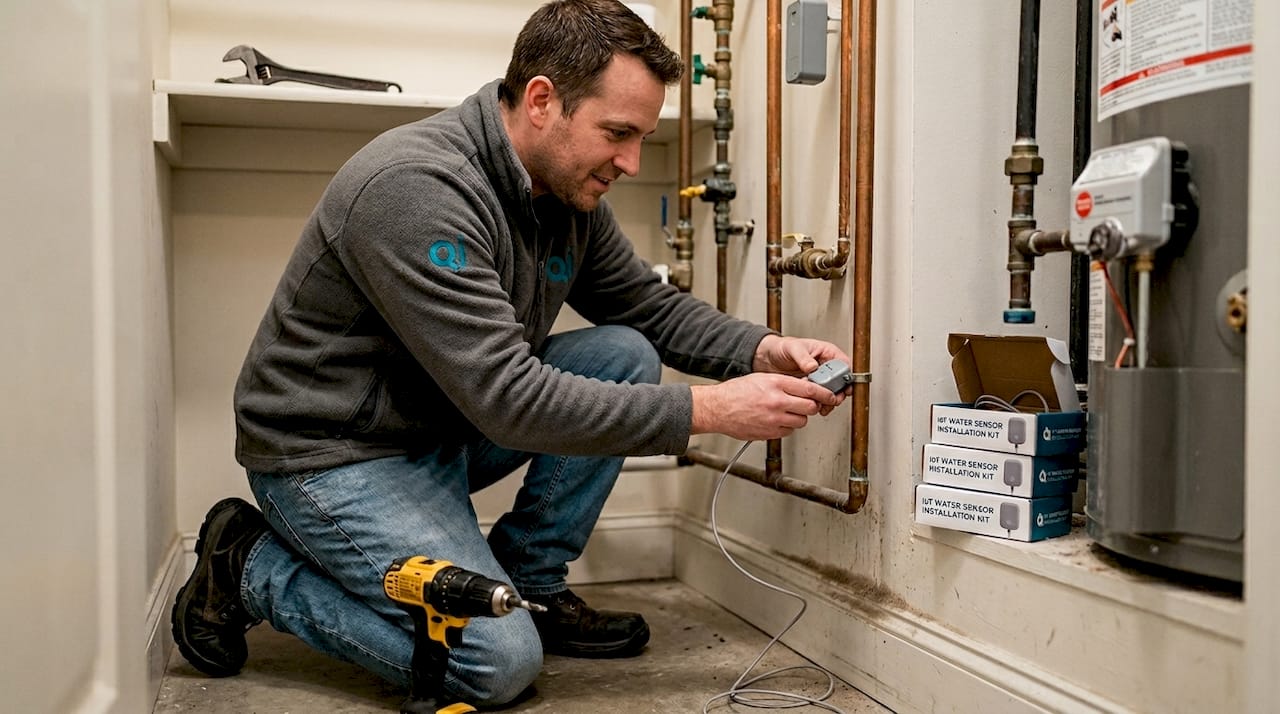
IoT water metering basics start with three core hardware types: flow meters that measure water volume moving through pipes, pressure sensors that detect drops indicating a break or leak, and flood detectors placed at high-risk locations like water heater pans and under sinks. These devices connect to a central gateway using LoRaWAN (a low-power wide-area wireless protocol) or cellular networks, transmitting data continuously to cloud-based analytics platforms.
Here is how the detection and response workflow operates:
- Sensors collect data continuously, measuring flow rates, pressure, and moisture at defined intervals.
- AI analyzes usage patterns, comparing real-time readings against historical baselines to identify anomalies.
- Alerts are triggered instantly when deviations exceed thresholds, notifying property managers via SMS, email, or app.
- Automated shutoff activates for critical events, closing the water supply remotely or automatically to stop damage before it spreads.
- Data is logged for compliance reporting, insurance documentation, and tenant billing.
| Feature | Real-time IoT sensors | Manual reads / spot checks |
|---|---|---|
| Alert speed | Instant | Days to weeks |
| Anomaly detection | AI-driven, continuous | Human-dependent, periodic |
| Automated shutoff | Yes | No |
| Compliance documentation | Automated | Manual |
| Tenant billing support | Integrated | Requires separate process |
Pro Tip: When selecting a platform, prioritize solutions that integrate directly with your property management software. Seamless data flow between your sensor network and your operations platform eliminates manual reporting and reduces the risk of missed alerts during staff transitions.
The importance of instant alerts versus monthly reads cannot be overstated. A monthly read tells you water was consumed. A real-time alert tells you water is being wasted right now, and gives you the ability to act before a $500 repair becomes a $20,000 restoration project. CA water metering basics provide a strong foundation for understanding how these systems fit within the state’s broader regulatory framework.
Understanding the technology enables a deeper look at the regulatory context and why modern sensors are not just optional in California.
California regulations driving IoT water sensor adoption
California has some of the most specific water management requirements in the country. For property managers, this is not background information. It is a compliance obligation with real financial consequences.
SB7 (the Water Conservation Act) and Civil Code §1954.2 require mandatory submeters for new multifamily residential buildings permitted after January 2018. Submetering (the practice of measuring individual unit water consumption rather than billing based on shared building totals) enables accurate tenant billing and creates the data foundation that IoT sensors rely on. Title 24, California’s building energy and resource efficiency standard, further encourages conservation measures and supports documentation practices that IoT systems automate.
Key regulatory benefits of deploying IoT water sensors include:
- Tenant transparency: Individual consumption data supports fair billing and reduces disputes.
- Automated documentation: Compliance records are generated and stored without manual effort.
- Insurance discounts: Carriers recognize proactive monitoring as a risk reduction measure.
- ESG and LEED support: Water usage data feeds directly into sustainability reporting and certification applications.
- Audit readiness: Real-time logs provide defensible records for utility audits and regulatory inspections.
Stat callout: Properties with compliant submetering and IoT monitoring report 20 to 40% utility savings compared to buildings using shared-cost billing models.
Pro Tip: Choose a sensor platform that automatically archives consumption data in a format compatible with California’s reporting requirements. This eliminates the manual work of pulling records during audits and ensures you are always audit-ready without additional staff time.
For older buildings not yet covered by the post-2018 mandate, the business case for voluntary adoption is strong. The 2026 water submetering guide outlines how both new and existing properties can align with current standards. Integration with LEED certification programs also adds measurable property value, making IoT sensors a strategic investment beyond regulatory compliance for 2026.
With compliance requirements and regulatory incentives clarified, it is important to evaluate the tangible ROI and broader business benefits these systems deliver.
Direct cost savings and risk reduction from IoT water sensors
The financial case for IoT water sensors is straightforward. The question is not whether they save money. It is how quickly and by how much.
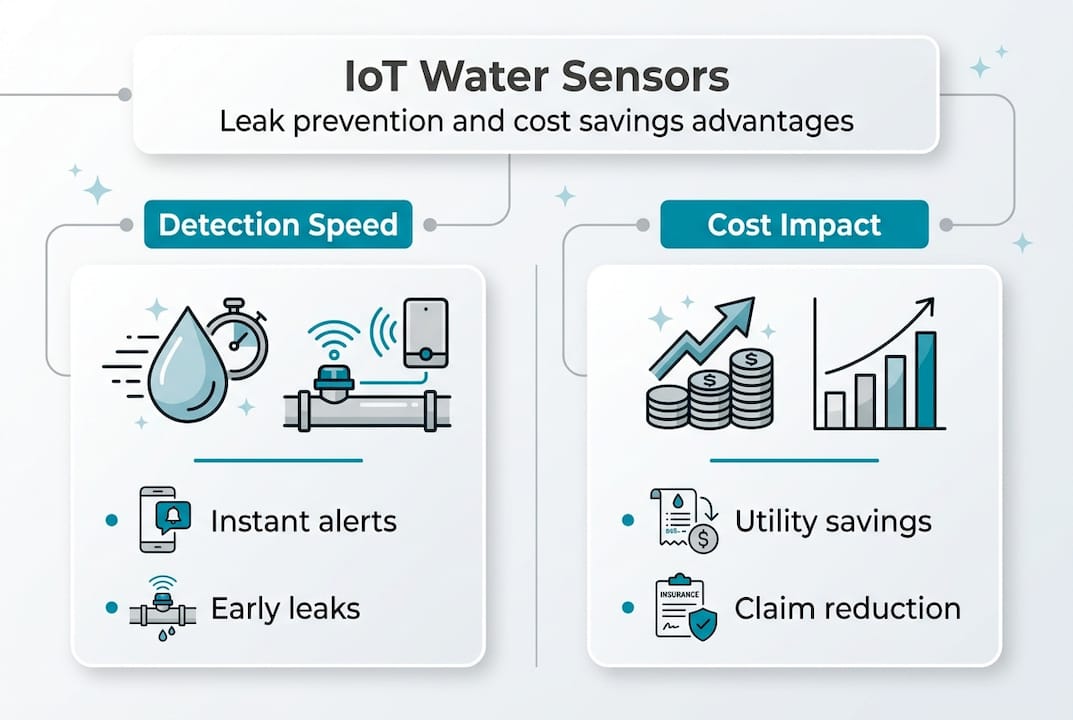
Smart water meter data consistently shows 15 to 30% consumption reduction, with buildings avoiding over $1 million in combined water costs and claims over a multi-year period. ROI is typically realized within the first billing cycle through recovered utility costs alone. Insurance carriers offering discounts of 5 to 15% on property policies for buildings with active leak detection systems add another layer of financial benefit.
| Savings category | Estimated annual value |
|---|---|
| Utility cost reduction (15-30%) | $8,000 to $24,000 per building |
| Avoided water damage claims | $15,000 to $21,000 per incident |
| Insurance premium discounts | 5 to 15% of policy cost |
| Tenant cost recovery (submetering) | Varies by unit count and usage |
Key financial benefits property managers can expect:
- Utility savings through early leak detection and consumption accountability
- Reduced maintenance costs by catching failures before they escalate
- Insurance premium reductions tied to documented monitoring programs
- Tenant cost recovery via accurate submetering and individual billing
- Avoided restoration costs through automated shutoff that limits damage scope
“Automated shutoff systems cut water damage severity by up to 90% by stopping flow within minutes of a detected event. That is the difference between a service call and a full unit restoration.”
The water loss statistics at the industry level reinforce why these systems pay for themselves quickly. The monitoring checklist available for multifamily properties helps managers structure their implementation to capture maximum savings from day one. For a broader view of financial outcomes, the cut water costs in 2026 resource outlines specific scenarios and savings projections by building type.
Finally, let’s clarify real-world considerations, challenges, and best practices for California building managers implementing these systems.
Implementation pitfalls and success factors for property managers
IoT water sensors deliver strong results, but only when deployed and maintained correctly. Rushing installation or underestimating operational requirements leads to false alarms, missed events, and frustrated staff.
The most common implementation pitfalls include:
- AI false positives: Poorly calibrated systems flag normal usage spikes (irrigation cycles, laundry peaks) as leak events, eroding staff trust in alerts over time.
- Sensor fouling: Mineral deposits and debris accumulate on flow meters and pressure sensors, degrading accuracy without obvious warning signs.
- Connectivity interruptions: Gaps in LoRaWAN or cellular coverage create blind spots where leak events go undetected.
- Retrofit complexity: Older buildings with non-standard plumbing configurations require additional planning and sometimes partial pipe access.
- Inadequate staff training: Sensors generate data, but staff must know how to interpret alerts and escalate appropriately.
“Scheduled calibration every 3 to 6 months is not optional maintenance. It is the difference between a system that protects your building and one that gives you false confidence while leaks go undetected.”
Pro Tip: For retrofit projects in older California buildings, prioritize wireless, non-invasive sensor options that attach to existing pipe exteriors or fit into standard meter locations. These systems reduce installation disruption and avoid the cost of opening walls or ceilings.
Building a calibration and maintenance schedule into your property management calendar from day one prevents the drift that leads to false alarms and missed detections. The management checklist for multifamily properties provides a practical framework for ongoing sensor oversight. LoRaWAN networks are the preferred connectivity choice for most California multifamily deployments because of their long range, low power consumption, and reliability in dense urban environments.
The overlooked value: why proactive water monitoring is now non-negotiable
Most property managers initially view IoT water sensors as a compliance checkbox. Install the required submeters, satisfy SB7, move on. That framing misses the larger opportunity entirely.
The buildings that gain the most from these systems are not the ones that installed sensors to satisfy a regulator. They are the ones that treated sensor data as a strategic asset. Proactive monitoring enables insurance discounts, measurable risk event reduction, and ESG and LEED attainment that directly supports asset valuation and investor reporting.
Consider what the data actually gives you. A property with 12 months of clean water usage records, zero undetected leak events, and documented automated shutoff activations is a fundamentally different negotiating position than a building with a quarterly inspection log. You can use that data to renegotiate insurance premiums, demonstrate stewardship to institutional investors, and support LEED recertification cycles without scrambling for documentation.
The uncomfortable truth is that reactive water management is not a cost-neutral strategy. Every month without real-time monitoring is a month where a slow leak, a running toilet, or a pressure anomaly is accumulating cost that will eventually surface as a claim, a restoration project, or a tenant dispute. Why metering matters in 2026 is not a question of technology preference. It is a question of operational discipline. The California property managers who move proactively gain a compounding advantage in cost control, risk reduction, and asset performance that their reactive peers simply cannot match.
Unlock real savings: your path to compliance and risk reduction
LeakSense has helped California property managers across multifamily and commercial portfolios move from reactive maintenance to proactive water management with measurable results. Our IoT-enabled solutions are built specifically for California’s regulatory environment and the operational realities of managing occupied buildings.
Whether you are starting with automatic leak detection for a single property or scaling multifamily water submetering across a full portfolio, our team provides professional installation, real-time monitoring, and full CA compliance support. Book a consultation today to get a tailored recommendation for your building type, size, and compliance timeline. The data you need to protect your asset and reduce your costs is available now.
Frequently asked questions
Are IoT water sensors required for all multifamily buildings in California?
They are mandatory for new multifamily construction permitted after 2018 under SB7 and Civil Code §1954.2, and strongly encouraged for older properties through Title 24 conservation standards.
How much can IoT water sensors save on utilities and claims?
Buildings typically see 20 to 40% utility savings with most properties achieving immediate ROI in the first billing cycle and significantly reducing exposure to major water damage claims.
What’s the difference between real-time sensors and manual meter reads?
Real-time sensors provide instant anomaly detection and automated shutoff capability, while manual reads only capture periodic consumption totals and cannot identify or respond to active leak events.
How often do sensors need maintenance or calibration?
Plan for calibration every 3 to 6 months along with regular checks for sensor fouling, especially in buildings with older plumbing or high mineral content in the water supply.