Real-time water monitoring can detect leaks within minutes, a capability that reduces water damage claims by up to 90%. For property managers overseeing multifamily and commercial buildings in California, this technology represents a fundamental shift from reactive repairs to proactive prevention. Traditional leak detection methods often miss small leaks until they cause significant damage, resulting in costly emergency repairs and tenant disruptions. Modern monitoring systems use IoT sensors and AI analytics to identify anomalies instantly, enabling immediate response before minor issues escalate into major incidents. This guide explains how real-time monitoring works, quantifies its benefits, and provides actionable strategies for successful implementation in your properties.
- Key takeaways
- How real-time water monitoring works: technologies and devices
- Benefits of real-time water monitoring for California property managers
- Challenges and expert strategies for effective leak monitoring
- Implementing real-time water monitoring: best practices and integration
- Explore LeakSense solutions for proactive water management
- Frequently asked questions about real-time water monitoring
Key Takeaways
| Point | Details |
|---|---|
| Rapid leak detection | Real time monitoring can detect leaks within minutes, reducing water damage claims significantly. |
| Hybrid sensor strategy | Deploy a layered system combining flow meters, acoustic sensors, and moisture sensors to maximize coverage and minimize blind spots. |
| California compliance ROI | In California properties, these systems support regulatory requirements while delivering a fast return on investment through reduced losses and lower insurance costs. |
| Around the clock monitoring | Smart leak sensors provide automatic detection across all units in multifamily buildings. |
How real-time water monitoring works: technologies and devices
Real-time water monitoring relies on multiple sensor types working together to provide comprehensive leak detection coverage. Each technology serves a specific purpose in identifying different leak scenarios across your property.
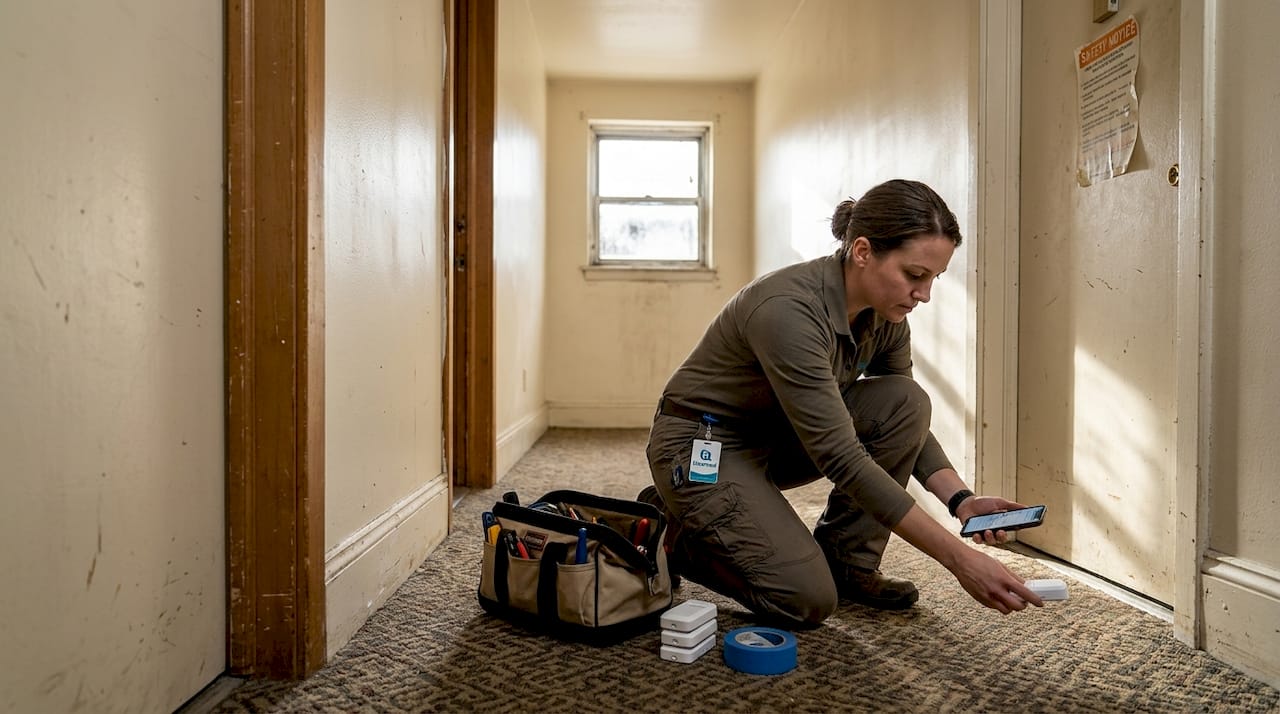
Flow meters track water usage continuously at main supply lines and individual units. These devices measure volume and velocity, establishing baseline consumption patterns for each space. When flow exceeds normal parameters or continues during periods of expected inactivity, the system triggers an alert. IoT sensors like flow meters and pressure sensors track water usage with 95% accuracy, making them essential for detecting both catastrophic pipe bursts and slow drips that waste thousands of gallons over time.
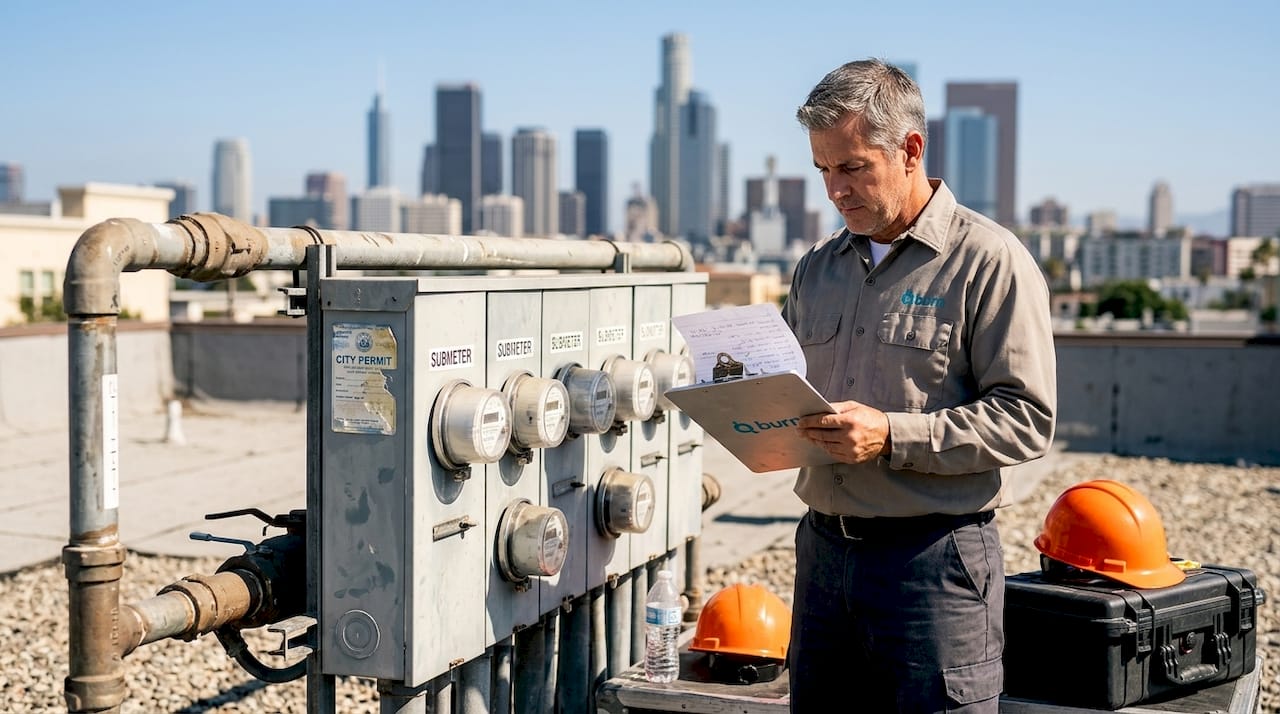
Moisture sensors provide localized detection in high-risk areas. Property managers typically install these devices under sinks, near water heaters, around toilets, and in mechanical rooms. They detect the presence of water where it should not exist, offering an additional layer of protection for spaces where flow meters might not catch localized leaks immediately.
Acoustic sensors listen for the distinct sound signatures of water escaping from pipes. These devices excel at finding hidden leaks within walls, under floors, and in other concealed locations. By analyzing frequency patterns, acoustic technology identifies leaks that produce no visible moisture yet waste significant water and potentially damage structural elements.
Pressure sensors monitor system pressure continuously. Sudden drops indicate major breaches, while gradual declines suggest developing leaks. Combined with flow data, pressure readings help pinpoint leak locations and estimate severity.
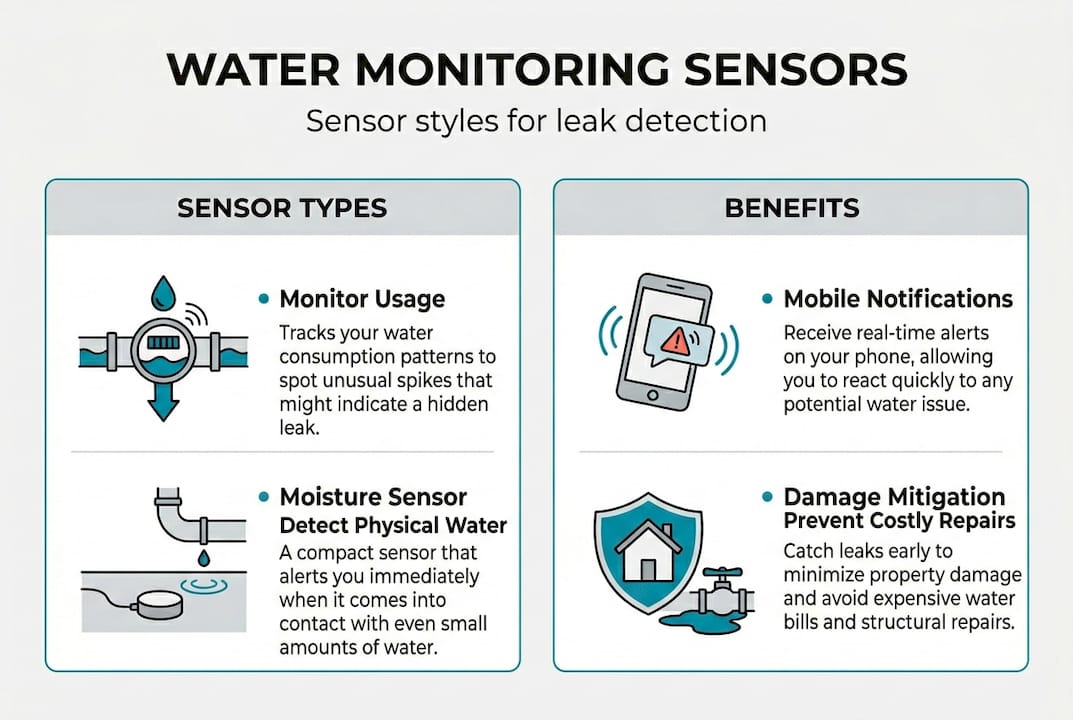
Modern systems integrate these sensors through IoT networks, typically using LoRaWAN wireless technology that provides reliable connectivity across large properties without depending on WiFi infrastructure. Data transmits to cloud platforms every minute, where AI/ML techniques filter false positives and reduce false alarms by 85%. Machine learning algorithms distinguish between actual leaks and innocuous events like condensation or HVAC vibrations that might otherwise trigger unnecessary alerts.
Pro Tip: Deploy hybrid sensor setups combining flow meters at main lines with acoustic sensors in critical pipe runs and moisture sensors at fixtures. This layered approach maximizes detection coverage while minimizing blind spots where leaks might go unnoticed.
| Sensor Type | Detection Method | Accuracy | Typical Placement | Best For |
|---|---|---|---|---|
| Flow Meters | Volume/velocity measurement | 95-98% | Main supply lines, unit risers | Continuous monitoring, usage analytics |
| Moisture Sensors | Water presence detection | 90-95% | Under fixtures, mechanical rooms | Localized leaks, appliance failures |
| Acoustic Sensors | Sound frequency analysis | 85-92% | Pipe runs, walls, ceilings | Hidden leaks, pipe degradation |
| Pressure Sensors | System pressure monitoring | 93-96% | Main lines, zone manifolds | Burst detection, system integrity |
For property managers seeking comprehensive protection, smart leak sensors for multifamily buildings offer the most effective solution. These systems provide automatic leak detection capabilities that work around the clock, including 24/7 automatic leak detection for apartments that monitors every unit simultaneously.
Benefits of real-time water monitoring for California property managers
The financial impact of real-time monitoring extends far beyond preventing catastrophic floods. Properties using these systems report measurable improvements across multiple operational areas.
Water damage represents one of the costliest maintenance issues for multifamily properties. Real-time monitoring reduces water damage claims by 70-90% and water loss by 20-40%, with properties achieving $24K annual savings per apartment building through combined damage prevention and conservation. Early detection means staff can address leaks before they compromise drywall, flooring, or structural elements, eliminating the need for extensive reconstruction.
Insurance carriers recognize the risk reduction these systems provide. Properties have cut insurance premiums by 10-25% and achieved ROI in 2-4 years after installing monitoring technology. Some insurers now offer specific discounts for properties with certified leak detection systems, viewing them as proactive risk management tools that reduce claim frequency and severity.
“Real-time water monitoring has transformed our maintenance operations. We now catch leaks within minutes instead of discovering them days later through tenant complaints or visible damage. Our water damage claims dropped 82% in the first year, and we recovered our investment through insurance savings and avoided repairs in under three years.”
Tenant satisfaction improves when properties prevent water-related disruptions. Nobody wants to deal with emergency repairs, displaced belongings, or temporary relocation due to leak damage. By catching issues early, you maintain unit availability and demonstrate responsive management that values resident comfort.
California’s regulatory environment makes monitoring particularly valuable. Title 24 requirements push properties toward water efficiency, and many municipalities offer rebates for smart water technology adoption. Real-time systems provide the documentation needed to demonstrate compliance while supporting sustainability reporting for properties pursuing LEED certification or similar environmental credentials.
Operational benefits compound over time:
- Accurate tenant billing based on actual consumption rather than estimates
- Data-driven maintenance scheduling that addresses developing issues before they require emergency response
- Water usage analytics that identify inefficient fixtures or unusual consumption patterns
- Reduced truck rolls and after-hours emergency calls that inflate maintenance costs
- Portfolio-wide visibility for managers overseeing multiple properties
For California property managers looking to understand the full scope of benefits, resources on why monitor water usage in California and detailed leak monitoring benefits provide additional context. Implementing step-by-step water leak monitoring ensures you capture all available advantages.
Challenges and expert strategies for effective leak monitoring
Despite significant benefits, property managers face practical obstacles when deploying monitoring systems. Understanding these challenges and applying proven solutions ensures reliable performance.
False alarms represent the primary concern. When systems generate excessive alerts for non-issues, staff develop alert fatigue and may ignore genuine warnings. False positives from condensation and HVAC noise can be high, causing this exact problem. However, smart systems reduce these by 85% using AI and proper sensor placement. Machine learning establishes baseline usage patterns for each space, distinguishing between normal fluctuations and genuine anomalies.
Technical limitations emerge in older buildings. Older buildings and WiFi coverage pose installation challenges, particularly in properties with thick concrete walls or sprawling layouts. LoRaWAN wireless technology extends range effectively in these situations, providing connectivity where traditional WiFi fails.
Sensor placement requires careful planning. Installing devices in wrong locations creates blind spots where leaks go undetected. High-risk areas like mechanical rooms, riser closets, and areas below fixtures demand priority coverage.
Expert strategies for optimal monitoring performance:
- Conduct thorough site surveys before installation to identify all critical monitoring points and potential connectivity challenges
- Select systems with proven AI filtering capabilities that learn your property’s unique usage patterns and environmental conditions
- Establish accurate baseline data during the first 30 days by ensuring normal operations and documenting any unusual events
- Train maintenance staff on system operation, alert interpretation, and proper response protocols for different leak scenarios
- Schedule quarterly sensor audits to verify calibration, clean devices, and replace batteries in wireless units
- Document all alerts and responses to identify patterns that might indicate needed system adjustments or recurring maintenance issues
Pro Tip: Implement a tiered alert system where minor anomalies generate notifications for review while significant events trigger immediate alarms with automatic shutoff. This approach reduces alert fatigue while ensuring critical situations receive immediate attention. Combine flow monitoring with acoustic sensors in areas with complex plumbing to catch both obvious and hidden leaks.
For properties selecting systems, reviewing the best leak detection systems for multifamily buildings helps identify solutions with proven track records. Following step-by-step leak detection for multifamily properties ensures proper deployment and configuration.
Implementing real-time water monitoring: best practices and integration
Successful implementation requires strategic planning and integration with existing building systems. Property managers must evaluate options and deploy technology that aligns with operational workflows.
System selection involves choosing between standalone monitoring and integrated platforms. Standalone systems focus exclusively on leak detection, offering simplicity and lower initial costs. Integrated platforms combine monitoring with automatic shutoff valves, usage analytics, and building management system connectivity. While more expensive upfront, integrated solutions provide comprehensive water management capabilities.
| System Type | Initial Cost | Shutoff Capability | Analytics Depth | BMS Integration | Best For |
|---|---|---|---|---|---|
| Standalone Monitoring | $800-1,500/unit | Manual only | Basic alerts | Limited | Smaller properties, budget-conscious managers |
| Integrated Platform | $2,000-4,000/unit | Automatic | Advanced usage analytics | Full API support | Large portfolios, properties seeking comprehensive management |
| Hybrid Approach | $1,200-2,500/unit | Selective automatic | Moderate analytics | Partial integration | Mid-size properties balancing cost and features |
Integration with Building Management Systems and Computerized Maintenance Management Systems multiplies monitoring value. Minute-by-minute flow data and integration with BMS/CMMS enable automated response actions, improving leak prevention through coordinated system responses. When a leak triggers an alert, integrated systems can automatically shut off water to the affected area, create maintenance work orders, and notify relevant staff simultaneously.
Implementation best practices ensure smooth deployment:
- Begin with a comprehensive site survey documenting all water entry points, high-risk areas, and connectivity requirements
- Prioritize sensor placement in mechanical rooms, unit bathrooms and kitchens, laundry facilities, and irrigation system connections
- Install flow meters at main supply lines and individual unit risers for granular monitoring
- Configure alert thresholds based on building-specific usage patterns rather than generic defaults
- Establish clear response protocols defining who receives alerts and required actions for different scenarios
- Test the complete system under various conditions before relying on it for primary leak detection
- Provide hands-on training for all maintenance staff, including alert interpretation and manual override procedures
Measuring ROI requires tracking multiple metrics beyond direct water savings. Calculate avoided damage costs by comparing historical water damage incidents and repair expenses to post-installation performance. Document insurance premium reductions and any rebates received for system installation. Track maintenance efficiency improvements through reduced emergency calls and faster issue resolution.
For property managers exploring monitoring options, LeakSense’s water analytics platform provides comprehensive visibility into water usage patterns and leak events. Combined with smart water metering services, these tools deliver the data needed for informed decision-making. Following proven step-by-step water leak monitoring processes ensures successful implementation.
Explore LeakSense solutions for proactive water management
Transitioning from understanding monitoring benefits to implementing effective systems starts with selecting technology designed specifically for multifamily and commercial properties. LeakSense specializes in smart water solutions tailored to California property managers’ unique needs.
Our automatic leak detection systems combine advanced sensors with intelligent shutoff valves that stop leaks before they cause damage. These systems work 24/7, monitoring every unit and common area to catch issues within minutes of occurrence.
We offer comprehensive water metering systems that scale from small apartment buildings to large commercial complexes. Each solution includes professional installation, cloud-based analytics, and ongoing support to ensure optimal performance. Our smart water metering services provide the visibility and control needed to reduce costs while meeting California’s water efficiency requirements. Contact us to explore how tailored monitoring solutions can protect your properties and deliver measurable ROI.
Frequently asked questions about real-time water monitoring
What types of leaks can real-time monitoring detect?
Real-time systems detect catastrophic pipe bursts, slow drips from fixtures, hidden leaks within walls, toilet flapper failures, and irrigation system leaks. Flow meters catch continuous usage anomalies while moisture sensors identify localized water presence, providing comprehensive coverage across all leak scenarios.
How does real-time monitoring help comply with California’s water regulations?
Monitoring systems provide detailed usage data that demonstrates compliance with Title 24 water efficiency requirements. They enable accurate reporting for municipal water conservation programs and support documentation needed for LEED certification and similar environmental credentials that California properties increasingly pursue.
What is the typical payback period for installing a monitoring system?
Most properties achieve ROI within 2 to 4 years through combined water savings, avoided damage costs, and insurance premium reductions. Properties with higher historical water damage claims often see faster payback, sometimes recovering costs in under two years.
How are false alarms minimized in these systems?
AI algorithms learn each property’s normal usage patterns and environmental conditions, filtering out innocuous events like condensation or pressure fluctuations. Proper sensor placement away from HVAC equipment and regular calibration further reduce false positives by 85% compared to basic threshold-based systems.
Can real-time water monitoring integrate with existing building management software?
Yes, modern monitoring platforms offer API integrations with most BMS and CMMS systems. This connectivity enables automated work order creation, coordinated shutoff responses, and consolidated reporting that combines water data with other building performance metrics for comprehensive facility management.
Recommended
- Real-Time Leak Monitoring Cuts Water Damage 90% in 2026
- How to Reduce Property Water Waste for Cost Savings
- Automated Water Shutoff Cuts Damage Claims 90% for CA Owners
- Enhance Efficiency with Cloud-Based Water Analytics | LeakSense
- Benefits of smart irrigation for your garden in 2026 – AMAZING GARDEN