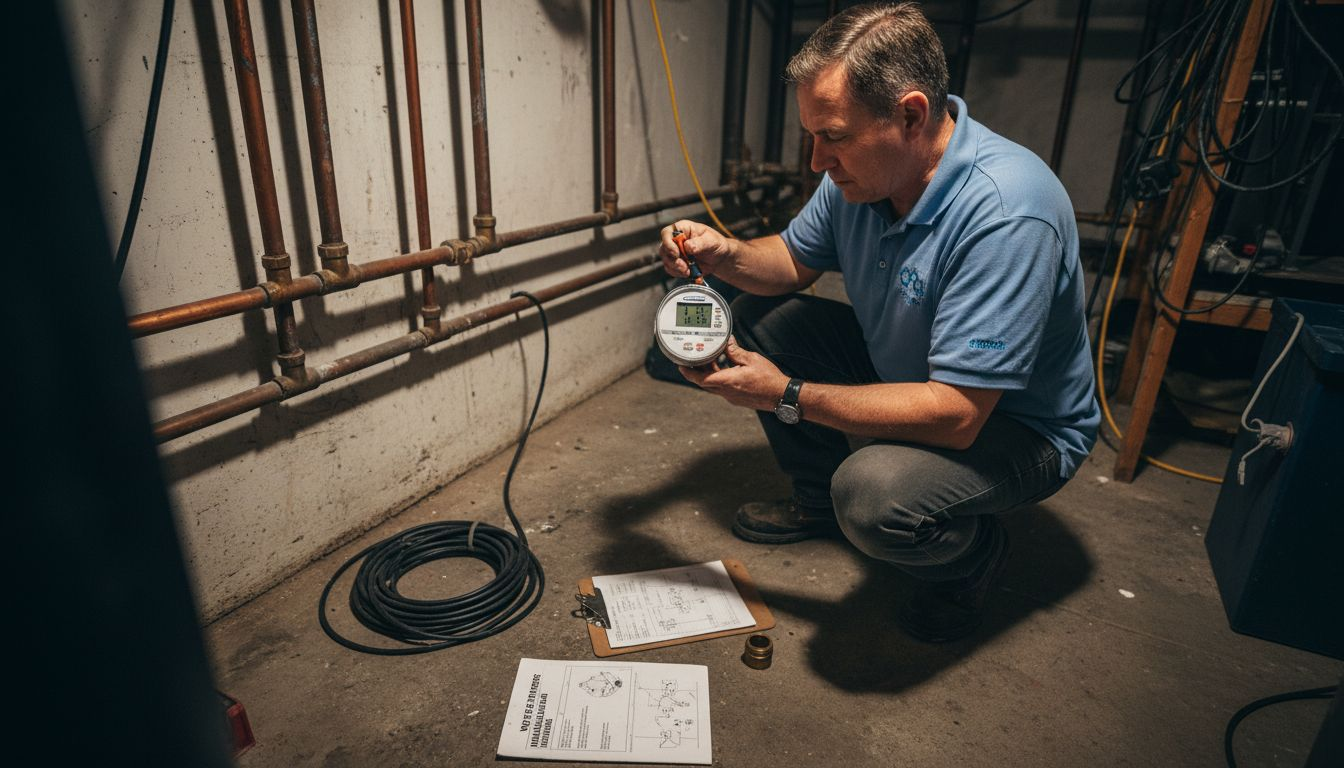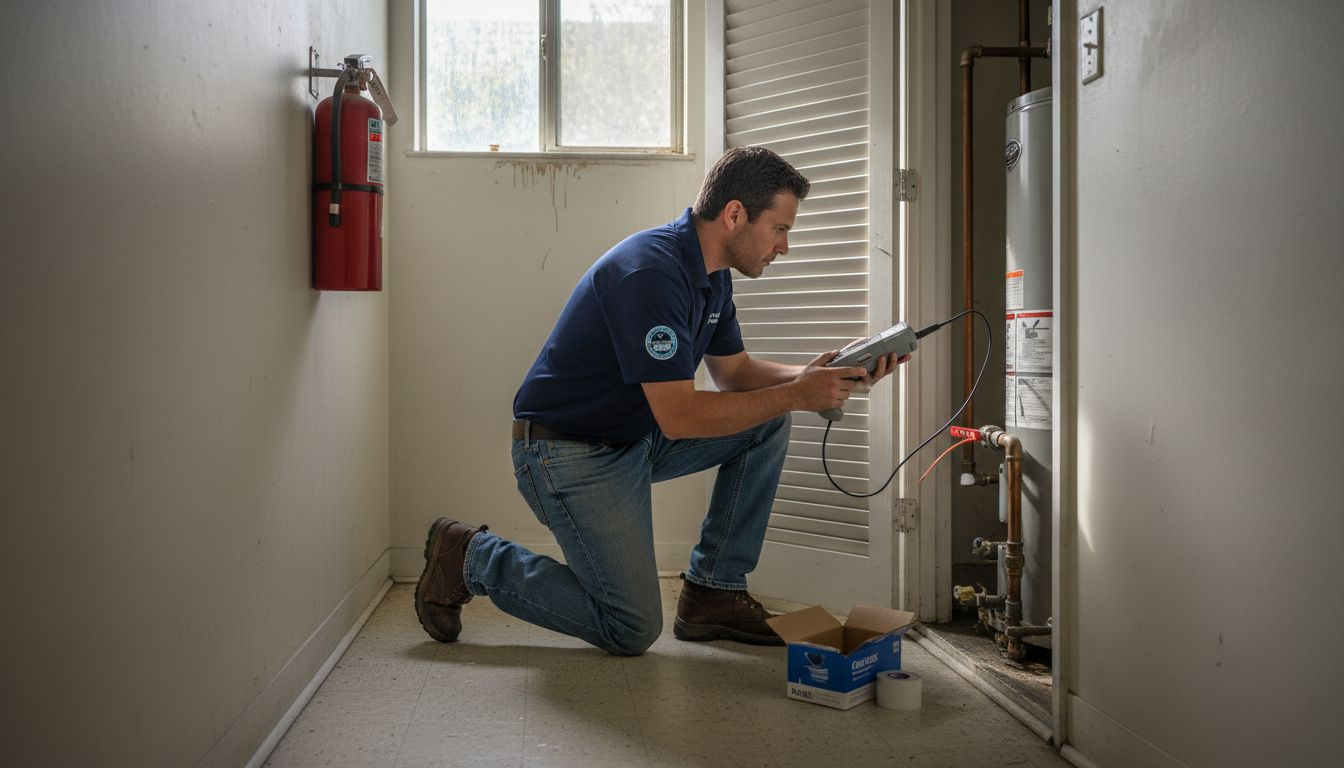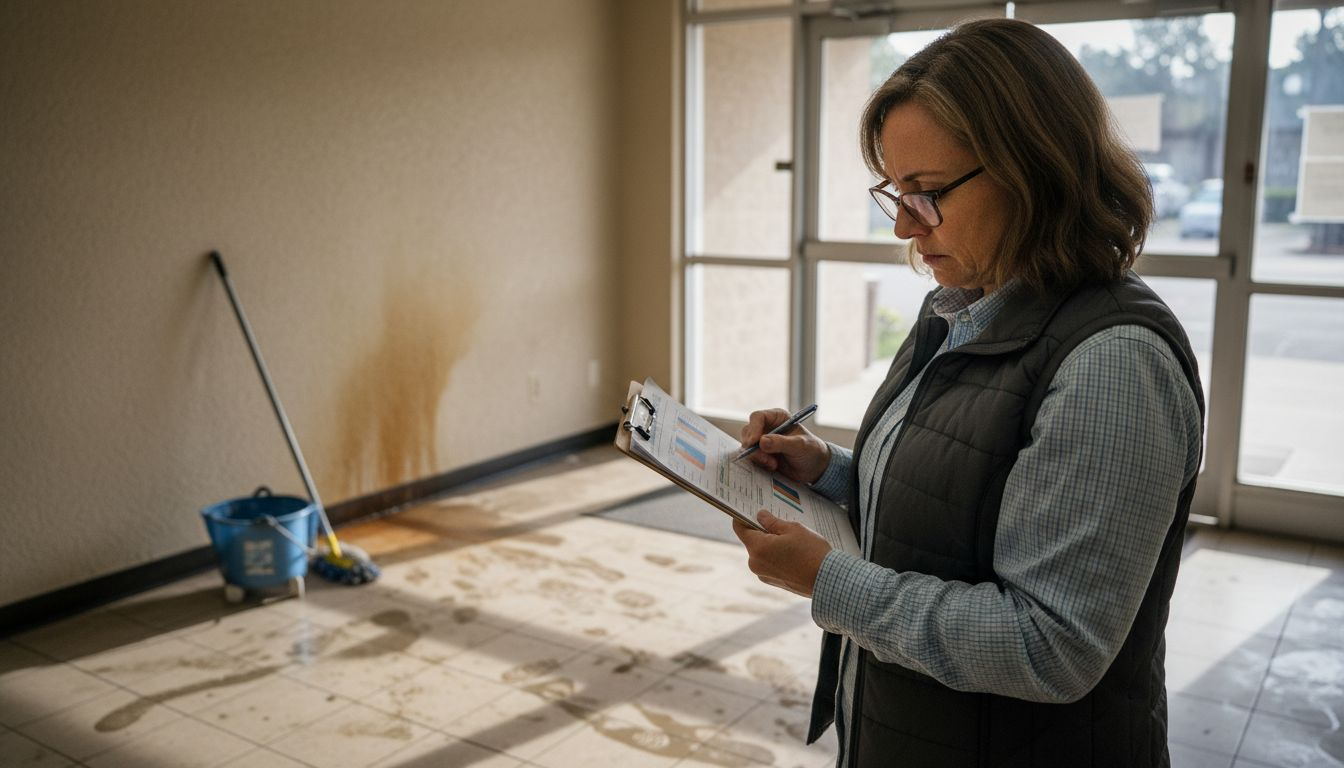

Water damage claims account for 40% of property damage claims in multifamily and commercial buildings. Remote water shutoff technology uses IoT sensors and wireless communication to enable property managers to control water valves instantly from anywhere, preventing catastrophic damage. This guide explains how these systems work, their benefits for California properties, regulatory compliance requirements, and practical implementation steps to protect your investments and tenants.
- Introduction To Remote Water Shutoff
- How Remote Water Shutoff Systems Work
- Why Remote Water Shutoff Is Important For Property Managers
- Benefits Of Remote Water Shutoff For California Property Managers
- Regulatory Compliance And Legal Considerations In California
- Common Misconceptions About Remote Water Shutoff
- Implementation And Maintenance Considerations
- Explore LeakSense Remote Shutoff Solutions
Key takeaways
| Point | Details |
|---|---|
| Remote control prevents damage | Instant valve shutoff from mobile apps reduces water damage by up to 90% compared to manual response |
| IoT sensors enable detection | Real time leak detection triggers alerts, allowing immediate remote valve control to stop flow |
| California mandates compliance | SB 998 requires written shutoff policies with tenant notice, which remote systems facilitate |
| Wireless tech powers reliability | LoRaWAN communication works through walls and floors, supporting retrofit in existing buildings |
| Professional installation critical | Expert setup ensures sensor accuracy, valve reliability, and minimizes false alarms |
Introduction to remote water shutoff
Remote water shutoff gives you the power to control building water valves instantly from your phone or computer using IoT technology. For property managers overseeing multifamily residential complexes and commercial buildings in California, this capability transforms how you respond to water emergencies.
Traditional leak response requires staff to physically access valve locations, often during off hours or in tenant occupied units. Response delays of even 30 minutes can turn a minor leak into thousands of dollars in damage, displaced tenants, and lost rental income. Water damage costs average $10,000 per incident in commercial properties, with repair timelines extending weeks.
Remote water shutoff systems integrate three core components. IoT sensors continuously monitor water flow and pressure throughout your plumbing infrastructure. When abnormal patterns indicate leaks, wireless communication networks transmit alerts to cloud based platforms. You receive instant notifications and can actuate motorized shutoff valves remotely through mobile or desktop interfaces.
These systems serve properties ranging from 20 unit apartment buildings to 500 unit residential towers and mixed use commercial developments. Typical applications include:
- Main water line protection for entire buildings
- Individual unit shutoff valves for targeted leak isolation
- Equipment specific controls for water heaters, HVAC systems, and irrigation
- Tenant occupied spaces where access delays cause extended damage
The technology addresses the reality that most water damage occurs outside business hours when maintenance staff availability is limited. Remote access eliminates the scramble to find personnel with physical valve access, cutting response times from hours to seconds.
How remote water shutoff systems work
The technical architecture combines sensor networks, wireless communication protocols, and user interfaces to deliver instant valve control capabilities.
IoT sensors installed at strategic points detect leaks through multiple methods. Flow sensors measure water movement rates and trigger alerts when usage patterns deviate from baseline norms. Pressure sensors identify sudden drops indicating pipe failures. Moisture detectors placed near water heaters, under sinks, and in mechanical rooms provide early warning when water escapes containment.
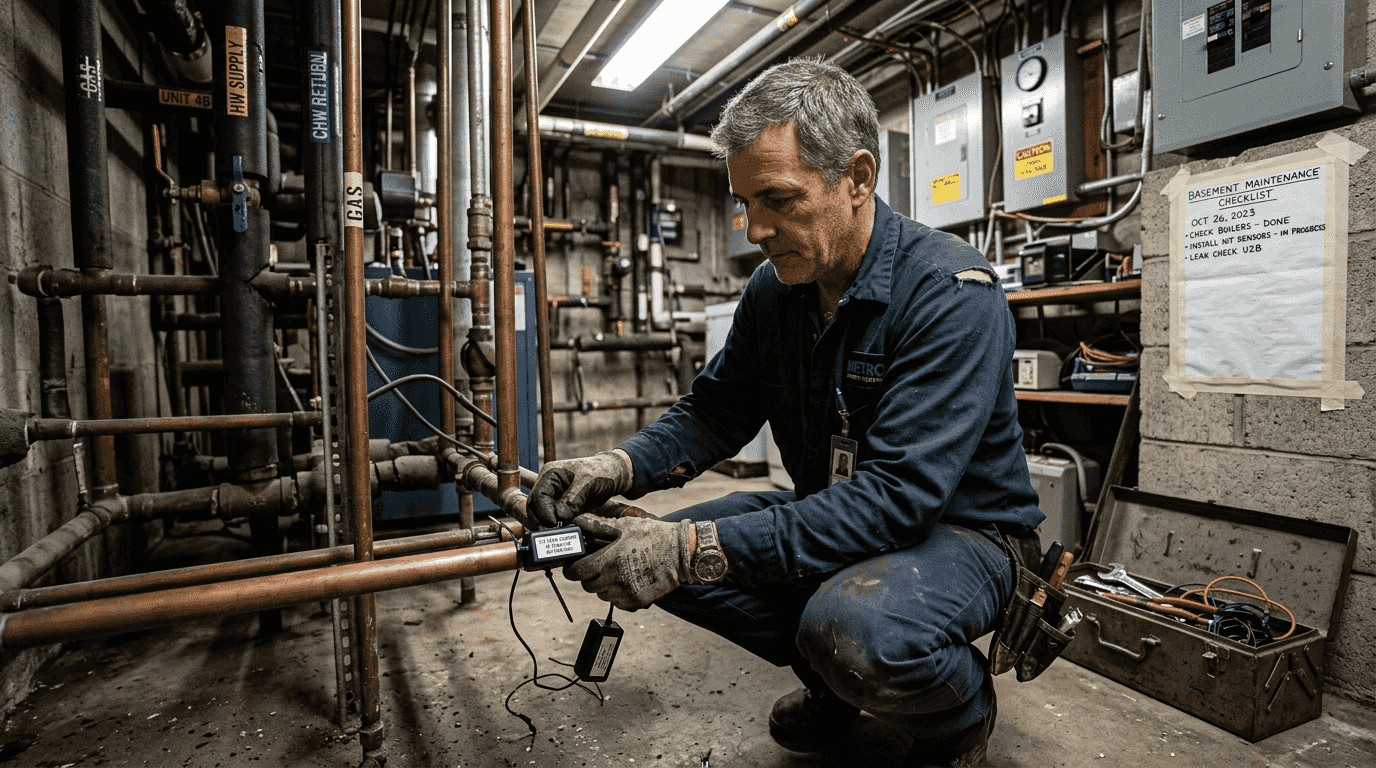
Wireless communication represents the critical enabler for reliable remote control. LoRaWAN wireless technology enables long range communication through walls and floors, supporting water sensors and actuators more effectively than Wi-Fi or Bluetooth in large buildings. LoRaWAN signals penetrate concrete and metal infrastructure that blocks other protocols, maintaining connectivity across multiple floors and through building cores.
| Communication Technology | Range | Wall Penetration | Power Consumption | Best Use Case |
|---|---|---|---|---|
| LoRaWAN | Up to 2 miles | Excellent | Very Low | Large multifamily and commercial buildings |
| Wi-Fi | 150-300 feet | Limited | High | Small properties with strong network coverage |
| Bluetooth | 30-100 feet | Poor | Low | Single units or adjacent spaces |
| Cellular | Unlimited | Excellent | Medium | Remote locations without local networks |
Mobile and desktop applications provide the control interface. When sensors detect issues, you receive push notifications with leak location details and severity assessments. The app displays real time water flow data and allows you to shut off individual valves or main lines with a single tap. Automatic leak detection systems can trigger valve closure without human intervention when parameters exceed preset thresholds.
AI integration adds validation layers to reduce false alarms. Machine learning algorithms analyze historical usage patterns to distinguish actual leaks from legitimate high flow events like landscape irrigation or commercial equipment operation. This intelligence prevents unnecessary shutoffs that disrupt building operations or tenant activities.
Pro Tip: Verify that remote shutoff systems use battery backup power for valve actuators. During water emergencies that also cause electrical outages, battery powered valves remain operable when you need them most.
Choosing compatible systems requires assessing your existing infrastructure. Buildings with older plumbing may need valve upgrades to accommodate motorized actuators. Properties with weak cellular signals benefit from LoRaWAN systems that function independently. Understanding how you can automate water shutoff for leaks helps align technology selection with building characteristics.
Why remote water shutoff is important for property managers
Water damage represents one of the most financially destructive risks in property management. The ability to stop water flow instantly from remote locations directly impacts your bottom line and operational efficiency.
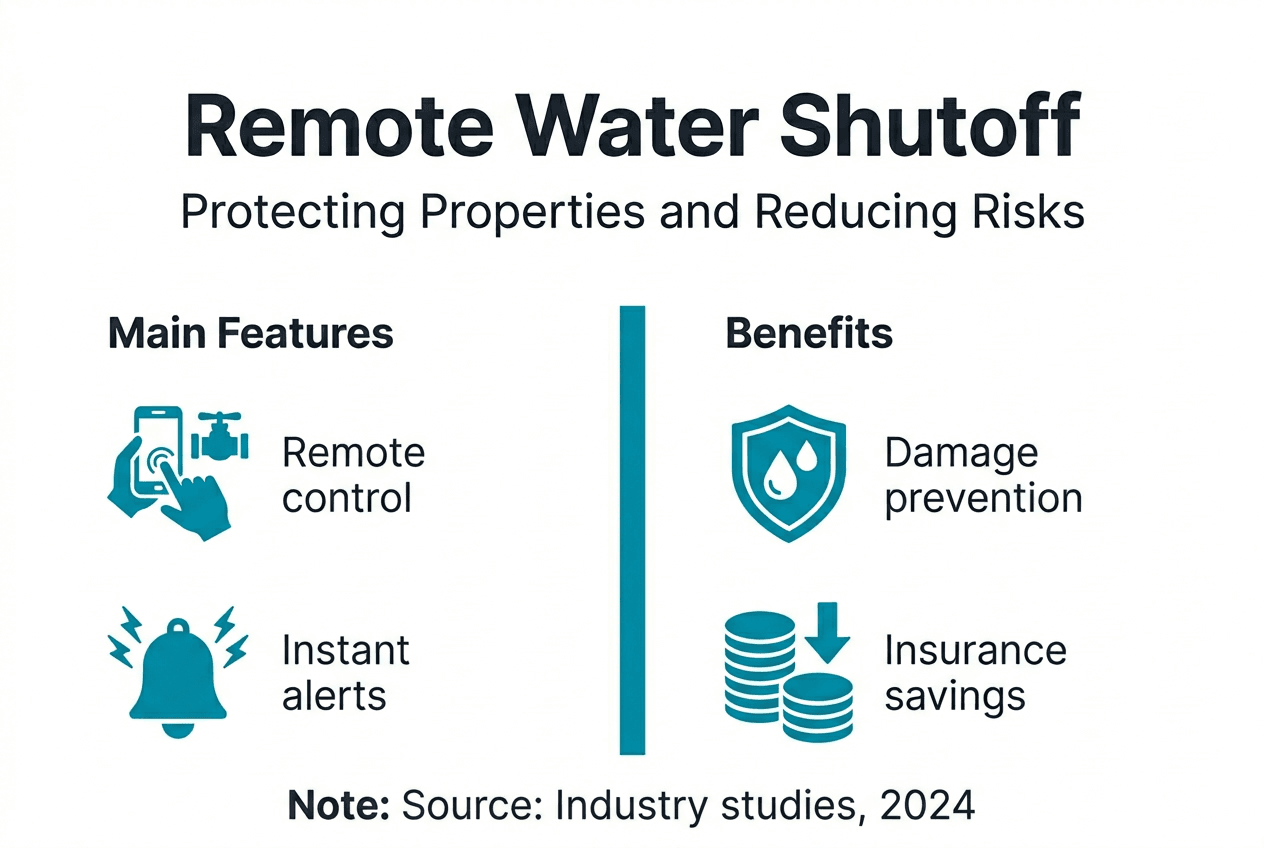
Water damage claims account for 40% of property damage claims in commercial and multifamily buildings. These incidents trigger cascading costs including emergency repairs, tenant relocation expenses, lost rental income during remediation, and potential liability claims. A burst pipe flooding multiple units can easily exceed $50,000 in total costs when accounting for all impact categories.
Remote shutoff capability transforms response timelines. Traditional detection only systems alert you to problems but cannot prevent ongoing damage. You still face the challenge of physically accessing valves, which may be locked inside tenant units, located in hard to reach mechanical spaces, or require specialized tools. Response delays of 15 to 60 minutes are common, during which water continues flowing and damage compounds exponentially.
Compare these scenarios:
- Sensor only detection: Leak discovered at 2 AM, maintenance called, arrival in 45 minutes, damage affects three units
- Remote shutoff: Leak detected at 2 AM, valve closed from phone in 30 seconds, damage contained to origin point
Properties using automated water shutoff see damage reductions approaching 90% compared to manual response systems. This dramatic improvement stems from eliminating the time gap between detection and water flow cessation.
“Every minute of water flow during a leak multiplies repair costs and tenant disruption. Remote shutoff technology removes the variable of human response time, protecting properties 24/7 regardless of staff availability or emergency access challenges.”
Financial benefits extend beyond direct damage reduction. Insurance carriers increasingly offer premium discounts for properties with automated shutoff systems, recognizing the lowered risk profile. Reduced claim frequency improves your loss history, supporting better rates at renewal. Shorter repair timelines mean faster return to full occupancy and revenue generation.
Operational advantages matter equally. Tenant satisfaction improves when you prevent damage to personal belongings and minimize displacement. Your maintenance team focuses on strategic improvements rather than emergency response. Building reputation benefits from proactive risk management demonstrating professional operations.
Benefits of remote water shutoff for California property managers
California property managers face unique regulatory requirements and operational challenges that make remote water shutoff particularly valuable. The technology delivers measurable advantages across financial, legal, and operational dimensions.
Financial savings dominate the value proposition. Properties implementing remote shutoff systems report up to 90% reduction in water damage claim severity. For a 100 unit multifamily property averaging three significant leaks annually at $15,000 each, the technology prevents $40,500 in annual damage costs. Insurance premium reductions of 10 to 20% provide ongoing savings that compound over time.
Regulatory compliance support addresses California specific mandates. California’s Water Shutoff Protection Act SB 998 requires water systems to adopt written shutoff policies protecting tenants from unannounced service interruptions. Remote shutoff systems facilitate compliance by enabling controlled, documented shutoffs with proper advance notification when needed for maintenance or emergencies.
Top five benefits for California property managers:
- Damage cost reduction of 85 to 90% through instant leak response
- Insurance premium discounts averaging 15% for automated shutoff systems
- Simplified California compliance with SB 998 shutoff notification requirements
- LEED certification points under Water Efficiency credits for smart water management
- Tenant satisfaction improvements reducing turnover and vacancy costs
Sustainability credentials matter increasingly to commercial tenants and residential demographics. LEED certified buildings command rent premiums and attract environmentally conscious occupants. Smart water technologies including remote shutoff contribute points under the Water Efficiency category, supporting certification goals while delivering operational benefits.
Tenant communication improves through system integration. When planned shutoffs occur for maintenance, automated notifications via text and email keep residents informed. During emergencies, you can explain protective actions taken and expected restoration timelines. This transparency builds trust and reduces complaint volumes.
Operational efficiency gains include reduced emergency callout costs, lower overtime expenses, and better allocation of maintenance resources. Staff can validate and respond to issues remotely, reserving physical site visits for situations requiring hands on intervention. This optimization becomes particularly valuable for property managers overseeing multiple buildings across geographic areas.
Properties demonstrating strong loss control attract higher quality insurance coverage at competitive rates. Underwriters view automated water shutoff in California properties as evidence of professional risk management, improving your negotiating position during policy renewals.
Regulatory compliance and legal considerations in California
California’s regulatory framework creates specific requirements that influence how property managers implement and operate remote water shutoff systems. Understanding these mandates ensures legal compliance while maximizing system benefits.
California’s Water Shutoff Protection Act SB 998 establishes tenant protection measures for water service interruptions. The law requires public water systems serving more than 200 service connections to adopt written shutoff policies. While primarily targeting water utilities, the regulations affect property managers who control building level water distribution.
Key SB 998 requirements include:
- Written policies documenting when and how water shutoffs occur
- Advance notice to affected residents before planned shutoffs
- Restrictions on shutoffs during extreme weather or vulnerable hours
- Procedures for restoring service and handling emergencies
Remote water shutoff systems support compliance by providing documentation trails. Every valve actuation generates timestamped records showing who initiated the shutoff, the reason, and duration. When emergency leaks require immediate action, the system logs justify unannounced shutoffs permitted under life safety exceptions.
Tenant notification capabilities integrated with shutoff systems streamline compliance. Scheduled maintenance shutoffs trigger automated alerts via multiple channels, satisfying advance notice requirements. Emergency shutoffs followed by immediate explanation messages demonstrate good faith efforts to minimize disruption and maintain communication.
Legal risks of noncompliance extend beyond regulatory fines. Tenants experiencing unannounced water service interruptions may pursue habitability claims or lease violations. Documentation from remote shutoff systems provides evidence that actions were necessary to prevent greater harm, supporting your legal position.
Title 24 building standards add another compliance layer. California’s energy code includes water efficiency requirements for multifamily and commercial new construction. While not mandating remote shutoff specifically, the technology supports water conservation goals and provides data for compliance reporting.
Best practices for regulatory compliance:
- Develop written water shutoff policies aligned with SB 998 requirements
- Configure systems to generate compliance documentation automatically
- Implement tenant notification protocols for both planned and emergency shutoffs
- Train staff on legal requirements and proper system operation
- Maintain records of all shutoff events with justification details
Commercial properties and large residential complexes face heightened scrutiny due to their scale and tenant populations. Proactive compliance through smart technology adoption demonstrates responsible property management and reduces regulatory risk exposure.
Common misconceptions about remote water shutoff
Several myths about remote water shutoff technology create unnecessary hesitation among property managers considering adoption. Addressing these misconceptions helps you make informed decisions based on actual capabilities and limitations.
Myth: Remote shutoff only works in new construction buildings. Reality is that wireless LoRaWAN communication enables cost effective retrofit installations in existing properties without extensive plumbing modifications. Modern motorized valve actuators mount onto standard ball valves already present in most buildings. The wireless sensor network eliminates the need for hardwired connections that would require opening walls and running new conduit.
Myth: All shutoffs happen automatically without human oversight. Most systems operate in supervised mode where AI validates potential leaks and notifies property managers for manual confirmation before valve closure. You maintain control over when shutoffs occur, preventing disruptions from false positives. Fully automatic mode remains available for high risk scenarios like vacant units or after hours emergencies where immediate action outweighs confirmation delays.
Myth: False alarms and unnecessary shutoffs are constant problems. Quality installations with proper sensor calibration and AI validation layers minimize false positives to less than 2% of alerts. Professional commissioning establishes baseline usage patterns that algorithms use to distinguish legitimate high flow events from actual leaks. Regular maintenance and software updates continuously improve detection accuracy.
Myth: Systems require constant internet connectivity to function. Battery powered sensors and valves operate independently during network outages. Local controllers can execute preset emergency protocols without cloud connectivity. Once networks restore, systems sync event data and resume normal operation without gaps in protection.
Key misconceptions corrected:
- Retrofit installations cost 40 to 60% less than new construction integration
- Manual control modes prevent unwanted automatic shutoffs during normal operations
- Professional calibration reduces false alarms to negligible levels
- Battery backup ensures protection continues during power and network failures
Pro Tip: When evaluating vendors, prioritize those with extensive experience retrofitting systems in occupied buildings similar to yours. Ask for references from properties built in the same era with comparable plumbing infrastructure to verify installation feasibility and performance.
Understanding realistic capabilities and limitations allows you to set appropriate expectations. Remote water shutoff delivers substantial benefits but requires proper implementation and realistic operational protocols to achieve optimal results.
Implementation and maintenance considerations
Successful remote water shutoff deployment requires systematic planning and ongoing maintenance to ensure long term reliability and effectiveness.
Implementation follows this sequence:
- Conduct comprehensive plumbing infrastructure assessment identifying critical valve locations and leak risk points
- Select communication technology matching building characteristics and coverage requirements
- Design sensor network layout providing adequate coverage without excessive redundancy
- Install motorized valve actuators at strategic shutoff points with battery backup
- Commission system through calibration, baseline establishment, and alert threshold configuration
- Train maintenance staff and relevant managers on system operation and emergency protocols
- Document installation details, valve locations, and operational procedures for future reference
Professional installation and maintenance prove critical for system reliability and performance. Experienced technicians understand valve compatibility, optimal sensor placement, and calibration requirements that prevent false shutoffs. DIY installations often fail due to improper setup creating more problems than they solve.
Maintenance schedules ensure continued effectiveness:
- Quarterly sensor battery level checks with replacement before depletion
- Semi annual valve actuator testing confirming proper mechanical operation
- Annual system recalibration adjusting for changes in building usage patterns
- Software updates applied promptly to maintain security and add enhanced features
Common failure points and prevention strategies:
- Sensor battery depletion: Implement proactive replacement schedules based on manufacturer specifications
- Valve actuator mechanical failure: Test monthly and replace units showing delayed response
- Wireless signal interference: Site survey during installation identifies and resolves coverage gaps
- False positive alerts: Baseline recalibration after occupancy changes or seasonal usage shifts
Integration with existing building management systems streamlines operations. Many remote shutoff platforms offer APIs connecting to property management software, creating unified dashboards displaying water data alongside HVAC, security, and access control systems. This consolidation reduces the number of platforms staff must monitor.
Pro Tip: Schedule valve actuator testing during regular plumbing maintenance visits to avoid additional service calls. Exercise valves quarterly even without alerts to prevent mechanical seizure from extended inactivity.
Documentation supports troubleshooting and system optimization. Maintain detailed records of all installations, configuration settings, alert events, and maintenance activities. When issues arise, this history enables faster diagnosis and resolution. During property transitions or management changes, comprehensive documentation ensures continuity.
Properties achieving best results approach remote water shutoff as an integrated risk management system rather than isolated technology. Combining automated water shutoff with regular plumbing inspections, preventive maintenance, and staff training creates comprehensive protection. Review damage reduction case studies to understand implementation patterns that maximize return on investment.
Budgeting should account for both initial installation and ongoing operational costs. Typical expenses include equipment purchase, professional installation, annual maintenance contracts, and periodic sensor battery replacement. However, these costs consistently prove minimal compared to water damage expenses and insurance savings generated by effective systems.
Explore LeakSense remote shutoff solutions
Now that you understand how remote water shutoff protects your properties and reduces operational costs, LeakSense offers integrated solutions designed specifically for California multifamily and commercial buildings. Our automatic leak detection systems combine real time monitoring with remote valve control, providing the comprehensive protection discussed throughout this guide.
LeakSense water metering systems use LoRaWAN wireless technology proven effective in buildings ranging from 20 to 500 units. We handle complete installation, calibration, and staff training to ensure your system delivers maximum damage reduction from day one. Our California compliance support services help you navigate SB 998 requirements while implementing smart water management that qualifies for insurance discounts and LEED certification points.
Contact our team to schedule a property assessment and discover how remote water shutoff can transform your risk management approach. We’ll evaluate your infrastructure, recommend optimal sensor placement, and provide detailed cost benefit analysis showing expected savings and ROI timelines tailored to your specific properties.
FAQ
What is remote water shutoff and how does it protect my property?
Remote water shutoff lets property managers control building water valves instantly using mobile apps or computers, stopping leaks within seconds of detection. IoT sensors monitor water flow continuously and trigger alerts when abnormal patterns indicate leaks, enabling immediate valve closure before damage spreads. This technology reduces water damage severity by up to 90% compared to manual response systems that require physical valve access.
How difficult is it to retrofit remote water shutoff in older multifamily buildings?
Wireless LoRaWAN technology enables cost effective retrofits without major plumbing modifications since sensors and valve actuators communicate wirelessly through building structures. Professional installers mount motorized actuators onto existing ball valves and place sensors at strategic leak risk points without opening walls or running new wiring. Installation typically completes in days rather than weeks, minimizing tenant disruption.
What are the maintenance requirements for remote water shutoff systems?
Quarterly battery checks and semi annual valve testing maintain system reliability, with annual recalibration ensuring detection accuracy as building usage patterns evolve. Professional maintenance contracts typically include these services along with software updates and technical support. Proper maintenance prevents false alarms and ensures valves function correctly during actual emergencies.
How does remote water shutoff help with California’s SB 998 compliance?
Remote systems generate automatic documentation of all shutoff events including timestamps, reasons, and restoration details required under SB 998 tenant protection regulations. Integrated notification features send advance alerts for planned maintenance shutoffs while providing immediate explanations during emergencies, satisfying legal communication requirements. This documentation protects property managers from liability claims related to service interruptions.
Is remote water shutoff fully automatic or does it require manual action?
Most systems operate in supervised mode where AI algorithms validate potential leaks and alert property managers for manual confirmation before shutoff, preventing unnecessary disruptions. You can configure fully automatic mode for high risk situations like vacant units or after hours emergencies where immediate action takes priority over human verification. This flexibility balances protection with operational needs while minimizing false positive shutoffs.